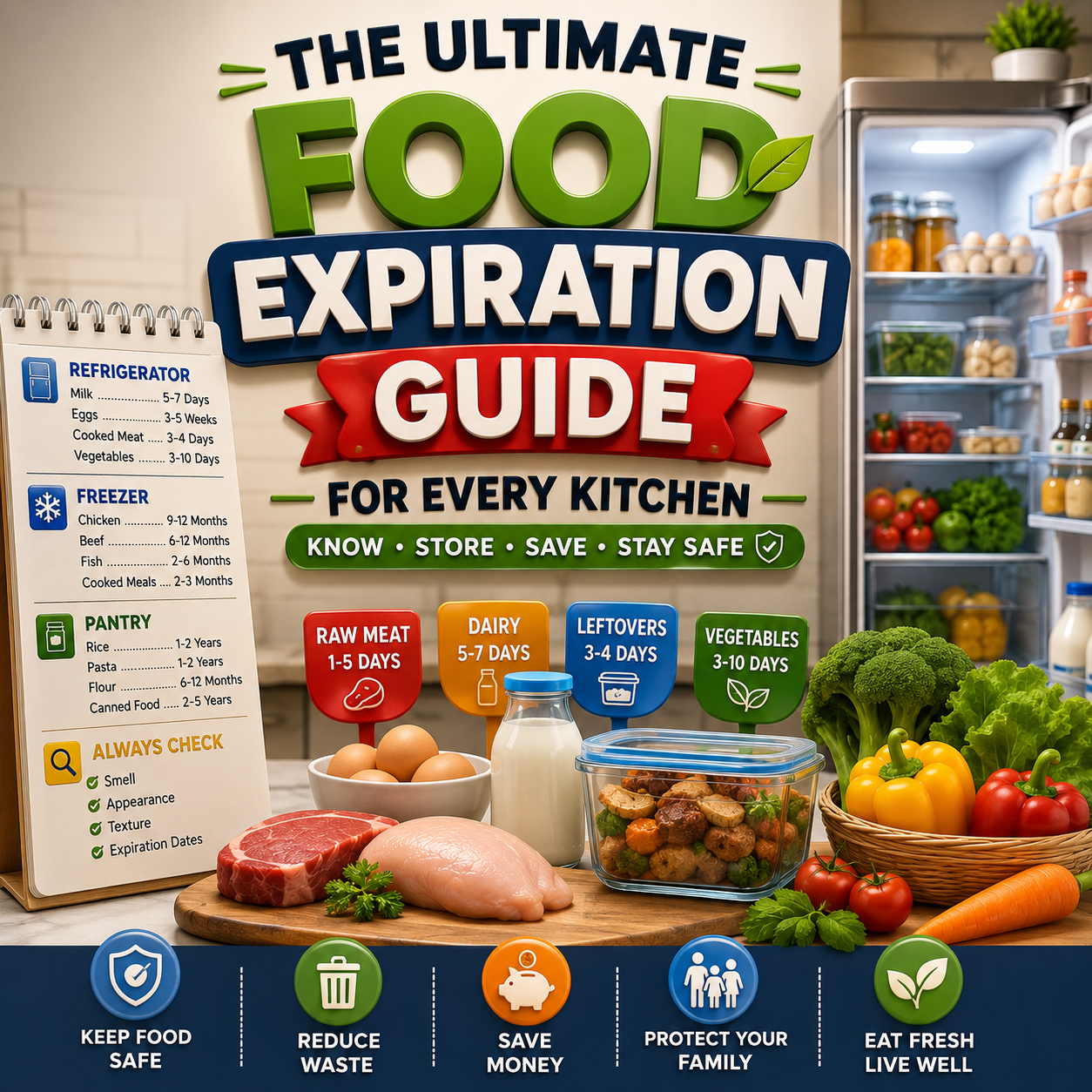
Food waste and foodborne illness are two common problems that affect millions of households every year. Many people throw away perfectly good food simply because they misunderstand expiration labels, while others unknowingly consume spoiled food because they rely only on printed dates instead of checking its actual condition. Learning how to store food properly and understanding the meaning of expiration dates can save money, reduce waste, and protect your family’s health.
This Food Expiration Guide explains everything every home cook should know about food shelf life, expiration labels, storage methods, refrigerator safety, freezer guidelines, and signs that food should be discarded. Whether you’re stocking your pantry, organizing your refrigerator, or planning weekly meals, this guide will help you make informed decisions.
By the end of this article, you’ll understand how long common foods typically last, how to recognize spoilage, and how proper storage extends freshness while maintaining food safety.
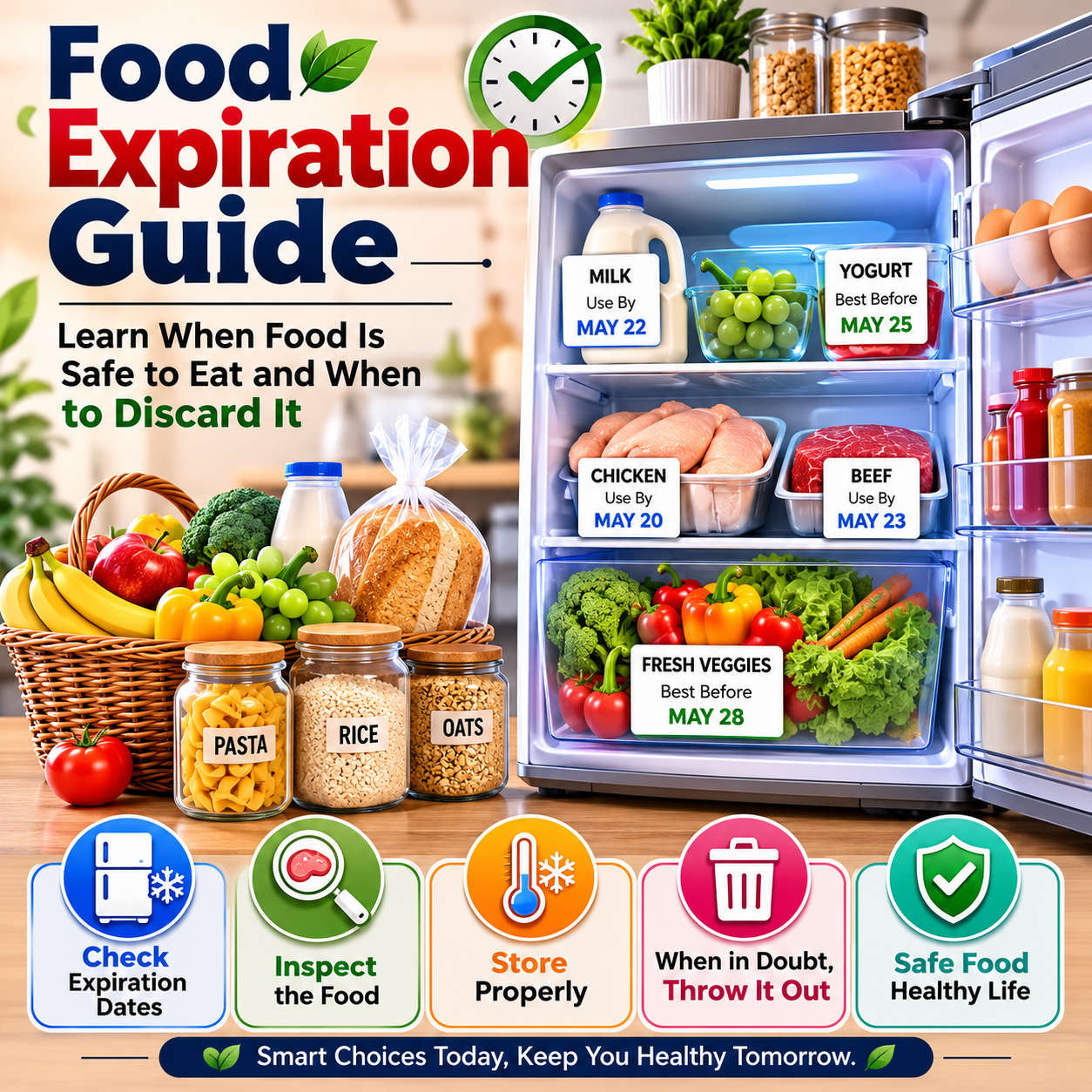
What Is a Food Expiration Guide?
It is a practical resource that helps consumers understand how long different foods remain safe and maintain their best quality under proper storage conditions. It combines information about manufacturer date labels, recommended storage temperatures, spoilage indicators, and food safety practices into one easy-to-follow reference.
Rather than relying solely on printed dates, a comprehensive food expiration guide encourages evaluating the food’s appearance, smell, texture, packaging condition, and storage history. This approach helps prevent unnecessary food waste while minimizing the risk of foodborne illness.
Understanding expiration guidance is especially important for perishable foods such as dairy products, meat, seafood, eggs, cooked leftovers, and fresh produce, which require careful temperature control.
Why Understanding Food Expiration Matters
Many consumers assume that every printed date indicates the exact moment food becomes unsafe. In reality, most packaged foods are labeled with dates that indicate peak quality rather than food safety. Misinterpreting these labels leads to billions of kilograms of edible food being discarded every year.
Knowing how food expiration works offers several benefits:
- Reduces unnecessary food waste
- Saves money on grocery shopping
- Prevents foodborne illnesses
- Improves meal planning
- Helps organize refrigerators and pantries
- Supports sustainable living
- Increases confidence in food safety decisions
By combining expiration dates with proper storage practices and spoilage checks, households can maximize freshness without compromising safety.
Understanding Food Date Labels
Food packaging often includes several different date labels, each serving a different purpose. Understanding these terms is one of the most important steps in safe food handling.
Best Before
A Best Before date indicates when a product is expected to maintain its best flavor, texture, aroma, and nutritional quality. Foods may remain safe after this date if they have been stored correctly and show no signs of spoilage. Dry goods, canned foods, cereals, and snacks commonly use this label.
Use By
A Use By date is generally associated with highly perishable foods. Manufacturers recommend consuming these products before the specified date to ensure safety and quality. Foods such as ready-to-eat meals, fresh dairy products, and refrigerated meats often carry this label.
Sell By
The Sell By date is intended primarily for retailers. It helps stores manage inventory and rotate stock efficiently. Consumers can often use these products safely for several days after purchase if stored properly.
Freeze By
A Freeze By date recommends when food should be frozen to preserve peak quality. Freezing before this date helps maintain taste, texture, and nutritional value for longer periods.
Best Before vs Expiration Date vs Use By Date
| Label | Primary Purpose | Is Food Automatically Unsafe After Date? |
| Best Before | Quality | Usually No |
| Use By | Safety | Often Yes for perishable foods |
| Sell By | Inventory Management | No |
| Freeze By | Preserve Quality | No |
The most important takeaway is that date labels should always be considered alongside proper storage and visible signs of spoilage.
Factors That Affect Food Shelf Life
Food does not spoil based solely on the calendar. Several environmental and handling factors determine how long it remains safe to eat.
Temperature
Temperature has the greatest influence on food safety. Bacteria multiply rapidly between approximately 4°C and 60°C (40°F–140°F), often called the “danger zone.” Keeping refrigerators at or below 4°C and freezers at or below −18°C slows bacterial growth and helps maintain food quality.
Moisture
Excess moisture encourages mold, yeast, and bacterial growth. Dry storage conditions help preserve grains, flour, spices, cereals, and other pantry staples for longer periods.
Air Exposure
Exposure to oxygen accelerates oxidation, leading to stale flavors, discoloration, and nutrient loss. Airtight containers help extend freshness for many foods.
Light
Sunlight and artificial light can degrade vitamins, fats, oils, and certain food colors. Store oils, spices, and dry goods in cool, dark locations whenever possible.
Packaging
Damaged, swollen, leaking, or punctured packaging may indicate contamination or spoilage. Foods with compromised packaging should be discarded if safety is uncertain.
Food Storage Temperature Guidelines
Maintaining the correct storage temperature is one of the simplest ways to extend food freshness and reduce the risk of foodborne illness. Even the freshest ingredients can spoil quickly if they are stored outside safe temperature ranges. Regularly checking refrigerator and freezer temperatures with an appliance thermometer can make a significant difference in preserving food quality.
| Storage Area | Recommended Temperature |
| Refrigerator | 4°C (40°F) or below |
| Freezer | -18°C (0°F) or below |
| Pantry | Cool, dry, 10–21°C |
| Hot Food Holding | Above 60°C (140°F) |
Avoid leaving perishable foods at room temperature for more than two hours, or one hour in very hot weather, as bacterial growth increases rapidly under these conditions.
Refrigerator Storage Guide
Proper refrigerator storage is one of the most effective ways to keep food fresh, reduce waste, and prevent foodborne illness. Keeping your refrigerator at 4°C (40°F) or below slows bacterial growth, but it does not stop it completely. Organizing foods correctly also helps prevent cross-contamination. Raw meat, poultry, and seafood should always be stored on the lowest shelf in sealed containers to prevent juices from dripping onto ready-to-eat foods.
Avoid overcrowding the refrigerator, as cold air must circulate freely to maintain a consistent temperature. Regularly clean shelves, check expiration dates, and rotate older items to the front using the First In, First Out (FIFO) method.
Refrigerator Storage Chart
| Food Item | Refrigerator Shelf Life |
| Raw chicken | 1–2 days |
| Raw beef | 3–5 days |
| Raw fish | 1–2 days |
| Cooked meat | 3–4 days |
| Cooked rice | 3–4 days |
| Eggs (in shell) | 3–5 weeks |
| Milk | 5–7 days after opening (or as directed) |
| Yogurt | 1–2 weeks |
| Cheese (hard) | 3–4 weeks after opening |
| Fresh vegetables | 3–10 days (varies) |
| Fresh fruit | 5–14 days (varies) |
| Leftover soups | 3–4 days |
| Deli meats | 3–5 days after opening |
Expert Tip: Label leftovers with the preparation date to avoid forgetting how long they have been stored.
Freezer Storage Guide
Freezing food at −18°C (0°F) or below significantly slows microbial growth and preserves food quality for extended periods. While frozen foods can remain safe for a long time if continuously frozen, their taste, texture, and nutritional quality gradually decline over time.
For best results, package food in freezer-safe bags or airtight containers, remove as much air as possible, and label each package with the freezing date. Defrost frozen foods safely in the refrigerator, cold water, or the microwave—never on the kitchen counter.
Freezer Storage Chart
| Food | Best Quality Duration |
| Chicken | 9–12 months |
| Beef steaks | 6–12 months |
| Ground meat | 3–4 months |
| Fish | 2–6 months |
| Bread | 2–3 months |
| Vegetables | 8–12 months |
| Fruits | 8–12 months |
| Cooked meals | 2–3 months |
| Soup | 2–3 months |
| Butter | 6–9 months |
Freezing preserves safety but does not improve food quality. Always inspect thawed food for unusual odors, discoloration, or texture changes before eating.
Pantry Storage Guide
Pantry foods generally have a much longer shelf life because they contain less moisture than fresh foods. However, heat, humidity, sunlight, and pests can shorten their lifespan considerably. Store dry foods in airtight containers and keep your pantry cool, dry, and well-ventilated.
Regularly inspect pantry items for signs of insects, moisture damage, or broken packaging. Rotating stock and keeping shelves clean helps maintain freshness and prevents waste.
Common Pantry Shelf Life
| Food | Typical Shelf Life |
| Rice | 1–2 years |
| Pasta | 1–2 years |
| Flour | 6–12 months |
| Sugar | Indefinite (properly stored) |
| Salt | Indefinite |
| Honey | Indefinite |
| Canned vegetables | 2–5 years |
| Peanut butter | 6–9 months after opening |
| Cooking oil | 6–12 months |
| Spices | 1–3 years |
Remember that these timeframes assume proper storage conditions and unopened packaging unless otherwise noted.
How to Tell If Food Has Gone Bad
Expiration dates provide useful guidance, but your senses also play an important role in determining whether food is safe to eat. Spoilage can occur before the printed date if food has been stored improperly, while some foods remain perfectly acceptable after the date if handled correctly.
Watch for these common warning signs:
Unpleasant Odor
A sour, rotten, rancid, or otherwise unusual smell is often one of the earliest indicators of spoilage. Trust your sense of smell, especially with dairy, meat, seafood, and leftovers.
Mold Growth
Visible mold is an obvious sign that many foods should be discarded. While some hard cheeses can be safely trimmed according to food safety guidance, soft foods, bread, cooked meals, and leftovers with mold should generally be thrown away.
Discoloration
Unexpected color changes, such as gray meat, green patches, or darkened produce, may indicate spoilage. While some discoloration is harmless oxidation, evaluate it alongside odor and texture.
Texture Changes
Slimy meat, sticky vegetables, mushy fruit, or unusually thick dairy products often signal bacterial growth or deterioration. Changes in texture should never be ignored.
Damaged Packaging
Discard food if cans are bulging, leaking, rusted, or severely dented near the seams. Swollen packages can indicate bacterial activity and may pose a serious health risk.
Common Food Storage Mistakes
Even with good intentions, many people unknowingly shorten the shelf life of their food through everyday storage mistakes. Avoiding these habits can improve both food safety and food quality.
1. Overfilling the Refrigerator
An overcrowded refrigerator restricts airflow, leading to uneven cooling and warmer spots where bacteria can multiply more quickly.
2. Storing Raw Meat Above Ready-to-Eat Foods
Raw meat juices can drip onto salads, cooked foods, and fresh produce, increasing the risk of cross-contamination. Always keep raw meat on the lowest shelf.
3. Leaving Food Out Too Long
Perishable foods should not remain at room temperature for more than two hours, or one hour if the ambient temperature is very high.
4. Ignoring Refrigerator Temperature
Many households never check their refrigerator temperature. Using an appliance thermometer helps ensure food stays within the safe temperature range.
5. Refreezing Improperly Thawed Food
Food thawed at room temperature should not be refrozen because harmful bacteria may have multiplied. Foods thawed safely in the refrigerator can often be refrozen if quality remains acceptable.
6. Not Labeling Leftovers
Without labels, it’s easy to lose track of when leftovers were prepared. Dating containers helps ensure they are eaten or discarded within the recommended time.
Food Expiration Quick Reference Chart
| Food Category | Refrigerator | Freezer |
| Raw poultry | 1–2 days | 9–12 months |
| Raw beef | 3–5 days | 6–12 months |
| Raw fish | 1–2 days | 2–6 months |
| Eggs | 3–5 weeks | Not recommended in shell |
| Milk | About 1 week after opening | Not ideal for quality |
| Cheese | 2–4 weeks | Up to 6 months |
| Leftovers | 3–4 days | 2–3 months |
| Cooked rice | 3–4 days | 1–2 months |
| Fresh fruit | 5–14 days | 8–12 months |
| Fresh vegetables | 3–10 days | 8–12 months |
Best Practices to Extend Food Shelf Life
Proper food handling can significantly extend freshness without compromising safety. Following a few simple habits consistently can save money and reduce household food waste.
- Keep your refrigerator at or below 4°C (40°F).
- Freeze foods you won’t use soon.
- Store food in airtight containers.
- Rotate older products to the front.
- Label leftovers with dates.
- Wash produce only before use unless otherwise recommended.
- Separate raw and cooked foods.
- Follow recommended storage times.
- Keep your pantry cool, dry, and dark.
- Check food regularly for spoilage signs.
Expert Tips for Every Kitchen
Professional chefs and food safety specialists rely on simple routines to minimize waste and maximize freshness. Adopting these practices at home can make food storage more efficient and safer.
- Plan meals before grocery shopping.
- Buy only what you can realistically consume.
- Use transparent storage containers to see contents easily.
- Clean the refrigerator weekly.
- Keep an inventory of frozen foods.
- Store herbs correctly to extend freshness.
- Cool leftovers quickly before refrigerating.
- Use a refrigerator thermometer for accuracy.
- Understand the difference between quality dates and safety dates.
- When in doubt about a highly perishable food, discard it rather than take unnecessary risks.
Frequently Asked Questions (FAQs)
1. What foods expire the fastest?
Fresh seafood, raw poultry, ground meat, soft dairy products, leafy greens, and prepared meals are among the fastest-expiring foods. These products require refrigeration and should be consumed within their recommended storage periods to minimize the risk of foodborne illness.
2. Can I trust my senses instead of expiration dates?
Your senses are helpful but should not replace expiration guidance for highly perishable foods. While smell, appearance, and texture can indicate spoilage, some harmful bacteria do not produce noticeable changes. Always consider both the printed date and proper storage conditions before deciding whether food is safe.
3. Does cooking spoiled food make it safe?
No. Cooking may destroy some bacteria but cannot always eliminate toxins produced by certain microorganisms. If food has spoiled or has been stored improperly, cooking it does not guarantee safety. Discard food that shows clear signs of spoilage or has exceeded safe storage recommendations.
4. How often should I clean my refrigerator?
A thorough cleaning every one to two weeks helps prevent odors, mold, and cross-contamination. Immediately clean any spills, especially from raw meat or dairy products, and regularly discard expired or spoiled foods to maintain a hygienic storage environment.
5. Why do foods spoil even before the printed date?
Improper storage, frequent temperature changes, damaged packaging, or contamination can cause food to spoil before its printed date. Always store food according to the manufacturer’s recommendations and inspect it before eating, regardless of the date on the label.
6. Should leftovers be cooled before refrigeration?
Hot food should be cooled slightly, then refrigerated promptly within two hours. Divide large portions into shallow containers so they cool more quickly. Delaying refrigeration for extended periods allows bacteria to multiply rapidly.
7. Is freezer burn dangerous?
Freezer burn is generally not a food safety issue. It occurs when food loses moisture because of air exposure, resulting in dry spots and texture changes. Although freezer-burned food may have reduced quality, it is usually safe if it has been kept continuously frozen.
8. How can I organize my refrigerator for better food safety?
Store ready-to-eat foods on the upper shelves, dairy in the middle, fruits and vegetables in designated drawers, and raw meat on the bottom shelf in leak-proof containers. This arrangement helps reduce cross-contamination and maintains better organization.
9. Which pantry foods last the longest?
Sugar, salt, honey, dried beans, rice, pasta, and properly stored canned goods can remain usable for long periods. Their longevity depends on cool, dry storage conditions and intact packaging.
10. Why is understanding food expiration important?
Knowing how food expiration works helps prevent foodborne illness, reduces unnecessary food waste, saves money, improves meal planning, and supports sustainable household practices. It also encourages smarter purchasing and storage habits.
Key Takeaways
- Understand the difference between best before, use by, sell by, and freeze by dates.
- Keep refrigerators at 4°C (40°F) or below.
- Maintain freezers at −18°C (0°F) or below.
- Store raw meat separately from ready-to-eat foods.
- Label leftovers with preparation dates.
- Follow recommended storage times for refrigerated and frozen foods.
- Inspect food for spoilage signs before eating.
- Practice the First In, First Out (FIFO) method.
- Freeze foods before they spoil to reduce waste.
- When in doubt about the safety of highly perishable food, throw it out.
Conclusion
Understanding food expiration is more than simply reading a date on a package—it’s about combining proper storage, safe food handling, and informed decision-making to protect your health and reduce waste. By learning the meaning of food date labels, maintaining correct refrigerator and freezer temperatures, recognizing signs of spoilage, and following recommended storage guidelines, you can confidently determine when food is still safe to eat and when it should be discarded.
Making these practices part of your daily routine helps lower grocery costs, minimizes unnecessary food waste, and reduces the risk of foodborne illness. Small habits, such as labeling leftovers, rotating pantry items, storing foods correctly, and planning meals, can have a lasting impact on your kitchen’s efficiency and your family’s well-being.
Ready to make your kitchen safer and more organized? Start applying these food storage and expiration tips today, share this guide with friends and family, and explore our other food safety resources to build healthier, smarter