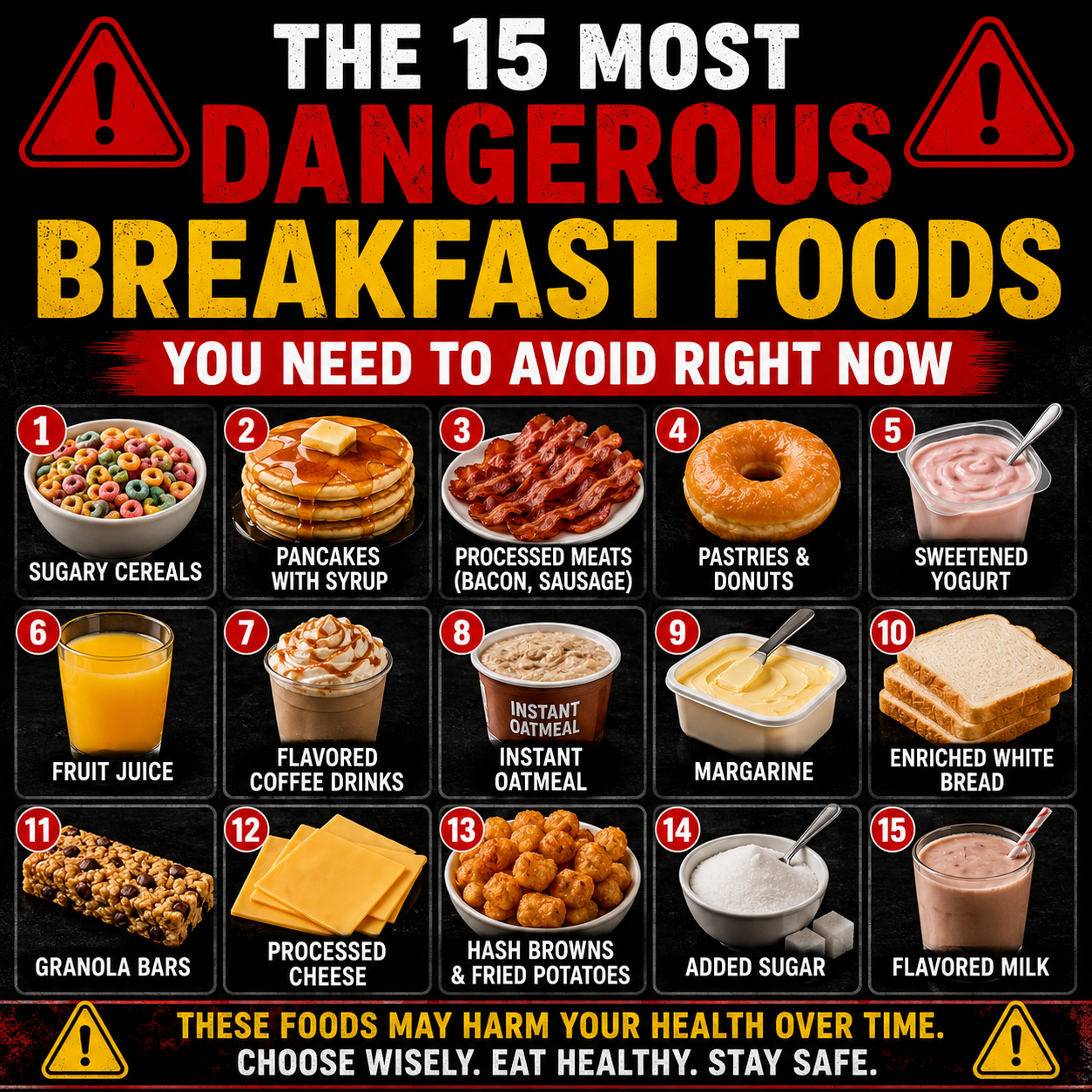
Dangerous breakfast foods may look healthy, but many contain excessive sugar, unhealthy fats, sodium, and artificial ingredients. Choosing the right breakfast is essential for maintaining long-term health—and for good reason. After hours of fasting during sleep, your body needs quality nutrients to restore energy, stabilize blood sugar, and fuel both your brain and muscles. Unfortunately, many of the foods marketed as “healthy breakfast options” are loaded with refined sugar, unhealthy fats, sodium, preservatives, and artificial ingredients.
These seemingly harmless breakfast choices can quietly damage your health over time. Regularly consuming highly processed morning foods has been linked to obesity, insulin resistance, type 2 diabetes, heart disease, chronic inflammation, fatty liver disease, and digestive issues. The problem is that these foods are widely available, heavily advertised, and often chosen simply because they are convenient.
The good news is that you don’t have to eliminate breakfast—you simply need to make smarter choices. Small changes, such as replacing sugary cereals with oats or flavored yogurt with plain Greek yogurt, can have a significant impact on your overall health.
In this comprehensive guide, you’ll discover the 15 most dangerous breakfast foods, understand why they can be harmful, and learn healthier alternatives that provide lasting energy and better nutrition.
Let’s explore the breakfast foods you should avoid before they begin affecting your long-term health.
Why Breakfast Quality Matters
Many people focus only on whether they eat breakfast, but the quality of that breakfast is far more important than simply eating something.
A nutritious breakfast should contain:
- High-quality protein
- Fiber-rich carbohydrates
- Healthy fats
- Vitamins and minerals
- Minimal added sugar
- Low sodium
- Whole-food ingredients
An unhealthy breakfast, on the other hand, often contains:
- Refined flour
- Added sugars
- Artificial colors
- Preservatives
- Trans fats
- Excess sodium
- Highly processed ingredients
These ingredients can trigger blood sugar spikes followed by energy crashes, leaving you hungry again within just a couple of hours. Over time, repeated spikes in blood sugar may contribute to insulin resistance and metabolic disorders.
1. Sugary Breakfast Cereals
Many breakfast cereals are marketed as healthy because they contain whole grains and added vitamins. However, a closer look at the nutrition label often reveals large amounts of added sugar, refined grains, and artificial ingredients.
Bright packaging, cartoon characters, and labels claiming “high in vitamins” can create the impression that these cereals are nutritious. In reality, many contain more sugar per serving than some desserts.
Why They’re Dangerous
Sugary cereals are rapidly digested because they contain refined carbohydrates and very little fiber. This causes a quick rise in blood glucose levels.
The body responds by releasing a large amount of insulin. After the sugar is cleared from the bloodstream, blood glucose often drops rapidly, leaving you hungry, tired, and craving more sugar.
Eating these cereals regularly may contribute to:
- Blood sugar spikes
- Increased insulin resistance
- Weight gain
- Excess calorie intake
- Poor concentration
- Increased hunger before lunchtime
Children are especially vulnerable because sugary cereals can establish long-term preferences for sweet foods.
Common Ingredients to Watch For
Always check ingredient labels for added sugars such as:
- High-fructose corn syrup
- Cane sugar
- Corn syrup
- Brown sugar
- Malt syrup
- Rice syrup
- Dextrose
- Fructose
Many cereals also contain artificial colors and preservatives that offer no nutritional value.
Better Alternative
Instead of sugary cereals, choose:
- Steel-cut oats
- Rolled oats
- Unsweetened whole-grain cereal
- Homemade oatmeal
Top your breakfast with:
- Blueberries
- Strawberries
- Banana slices
- Chia seeds
- Flaxseeds
- Walnuts
- Almonds
These additions provide natural sweetness, fiber, healthy fats, and antioxidants that help keep you full for hours.
2. Flavored Yogurt
Yogurt is generally considered one of the healthiest breakfast foods because it contains calcium, probiotics, and protein. However, flavored yogurt is often very different from plain yogurt.
Many fruit-flavored yogurts contain large amounts of added sugar, artificial flavors, fruit syrups, sweeteners, and food coloring. Some single-serving cups contain nearly as much sugar as a candy bar.
As a result, what appears to be a healthy breakfast can actually become a high-sugar dessert.
Why It’s Dangerous
Excess sugar in flavored yogurt may contribute to:
- Blood sugar spikes
- Increased fat storage
- Weight gain
- Higher risk of type 2 diabetes
- Increased inflammation
- Tooth decay
Although probiotics remain beneficial, the health advantages can be reduced when large amounts of added sugar are consumed regularly.
Many flavored yogurts also contain very little real fruit. Instead, manufacturers often use fruit concentrates, syrups, or artificial flavorings to create the desired taste.
Warning Signs on the Label
Look for ingredients such as:
- Added sugar
- Corn syrup
- Fruit concentrate
- Artificial flavors
- Artificial colors
- Modified starch
The nutrition facts panel can quickly reveal whether the yogurt contains excessive sugar.
Better Alternative
Choose plain Greek yogurt because it provides:
- Higher protein
- Lower sugar
- Better satiety
- Rich probiotics
Add natural sweetness with:
- Fresh strawberries
- Blueberries
- Kiwi
- Apple slices
- Banana
- Cinnamon
- Chopped almonds
- Pumpkin seeds
This combination delivers far more nutrition while keeping sugar intake under control.
3. Processed Breakfast Meat
Bacon, sausage, ham, and other processed breakfast meats are staples in many households. While they are rich in protein, they are also among the most processed foods commonly eaten at breakfast.
These meats are often cured, smoked, salted, and preserved using chemicals that extend shelf life but may negatively affect health when consumed frequently.
Why They’re Dangerous
Processed meats are typically high in:
- Sodium
- Saturated fat
- Nitrates and nitrites
- Preservatives
Frequent consumption has been associated with:
- Higher blood pressure
- Increased cardiovascular risk
- Elevated cholesterol
- Chronic inflammation
- Greater risk of certain cancers
- Weight gain
The high sodium content may also contribute to water retention and increased strain on the cardiovascular system.
Better Alternative
Instead of processed breakfast meats, consider healthier protein sources such as:
- Grilled chicken breast
- Eggs
- Tofu
- Cottage cheese
- Beans
- Lentils
- Smoked salmon (low sodium)
- Homemade turkey patties
These options provide quality protein without the excessive preservatives and sodium found in many processed meats.
4. Store-Bought Pastries
Muffins, Danish pastries, croissants, cinnamon rolls, toaster pastries, and similar baked goods are among the most popular grab-and-go breakfast options. While they may taste delicious and save time during busy mornings, they are often loaded with refined flour, added sugar, unhealthy fats, and preservatives.
Many commercial pastries are made with hydrogenated oils or highly refined vegetable oils to improve texture and extend shelf life. They are also typically low in protein and fiber, meaning they don’t keep you full for long.
Why They’re Dangerous
Most packaged pastries contain a combination of ingredients that can negatively affect your health when eaten regularly.
Potential health risks include:
- Rapid blood sugar spikes
- Increased calorie intake
- Weight gain
- High cholesterol
- Increased inflammation
- Greater risk of heart disease
- Mid-morning energy crashes
Because these foods digest quickly, they leave you feeling hungry shortly after eating, encouraging unnecessary snacking throughout the day.
Ingredients to Watch For
Read labels carefully and avoid products high in:
- Refined wheat flour
- Hydrogenated oils
- Palm oil
- High-fructose corn syrup
- Artificial flavors
- Artificial preservatives
Better Alternative
Choose homemade whole-grain muffins prepared with oats, bananas, or applesauce.
Other healthier options include:
- Whole-grain toast with peanut butter
- Oatmeal with fruit
- Whole-grain banana bread made with minimal sugar
- Cottage cheese with berries
These choices provide more fiber, protein, and essential nutrients while keeping blood sugar more stable.
5. Pancakes with Syrup
Pancakes are a weekend favorite in many households, but traditional pancakes made from refined white flour and topped with sugary syrup offer very little nutritional value.
Although they may provide quick energy, they’re usually low in protein and fiber, causing blood sugar to rise and fall rapidly.
Commercial pancake syrups are often made primarily from corn syrup rather than real maple syrup.
Why They’re Dangerous
Regularly eating pancakes with syrup may contribute to:
- Blood sugar spikes
- Increased insulin production
- Fat storage
- Weight gain
- Increased hunger later in the day
- Poor energy levels
Large restaurant portions can easily exceed several hundred calories before adding butter or other toppings.
Better Alternative
Try healthier versions made with:
- Oat flour
- Whole-wheat flour
- Almond flour
Top them with:
- Fresh strawberries
- Blueberries
- Bananas
- Greek yogurt
- Chopped walnuts
- Natural peanut butter
If using syrup, choose pure maple syrup in moderation instead of artificial pancake syrup.
6. White Bread Toast
White bread toast is one of the most common breakfast foods worldwide. Unfortunately, white bread is made using refined flour that has been stripped of most of its fiber and nutrients.
Without enough fiber, carbohydrates digest very quickly, leading to rapid increases in blood sugar.
Adding jam, sugary spreads, or chocolate hazelnut spread only increases the sugar content.
Why It’s Dangerous
Frequent consumption may contribute to:
- Blood sugar fluctuations
- Increased hunger
- Poor digestive health
- Weight gain
- Higher diabetes risk
White bread also has a relatively high glycemic index, meaning it can significantly impact blood glucose levels.
Better Alternative
Replace white bread with:
- Whole-grain bread
- Sprouted grain bread
- Rye bread
- Sourdough bread
Healthy toppings include:
- Avocado
- Peanut butter
- Almond butter
- Cottage cheese
- Eggs
- Hummus
Adding protein and healthy fats helps improve satiety and maintain stable energy levels.
7. Sweetened Fruit Juice
Many people believe fruit juice is a healthy breakfast choice because it contains fruit. However, most packaged fruit juices contain concentrated fruit sugars with very little fiber.
Even 100% fruit juice lacks the fiber found in whole fruit, allowing sugar to be absorbed rapidly.
Some fruit drinks contain added sugars, artificial colors, and flavorings while containing only a small percentage of real fruit juice.
Why It’s Dangerous
Drinking fruit juice instead of eating whole fruit may increase:
- Blood sugar spikes
- Daily sugar intake
- Weight gain
- Fatty liver risk
- Hunger shortly after breakfast
Liquid calories are generally less filling than calories from whole foods, making it easier to consume excessive amounts.
Better Alternative
Instead of fruit juice, choose:
- Whole oranges
- Apples
- Pears
- Berries
- Kiwi
- Water infused with lemon or cucumber
- Unsweetened herbal tea
Whole fruit provides fiber that slows sugar absorption and supports digestive health.
8. Energy Drinks
Some people replace breakfast entirely with an energy drink, believing it will improve focus and productivity.
Most energy drinks contain large amounts of caffeine, sugar, or artificial sweeteners along with stimulants that may temporarily increase alertness.
However, they do not provide the nutrients your body needs to start the day.
Why They’re Dangerous
Drinking energy drinks on an empty stomach may lead to:
- Increased heart rate
- Elevated blood pressure
- Anxiety
- Jitters
- Sleep disturbances
- Dehydration
- Blood sugar fluctuations
The temporary energy boost is often followed by fatigue, leaving you feeling worse later in the morning.
Better Alternative
For sustainable energy, try:
- Eggs with whole-grain toast
- Greek yogurt with berries
- Oatmeal with nuts
- Smoothies made from whole fruits and protein sources
For beverages, choose:
- Water
- Black coffee (without excessive sugar)
- Green tea
- Herbal tea
9. Breakfast Bars
Breakfast bars are marketed as healthy and convenient, but many resemble candy bars more than nutritious meals.
While some bars contain whole grains and nuts, many are high in sugar, refined carbohydrates, and artificial ingredients.
Some provide very little protein or fiber, making them poor choices for sustained energy.
Why They’re Dangerous
Many breakfast bars may contribute to:
- Excess sugar intake
- Increased hunger
- Weight gain
- Blood sugar instability
- Low satiety
Because they’re heavily processed, they often contain ingredients that provide calories without significant nutritional benefits.
Better Alternative
Choose:
- Homemade oat bars
- Mixed nuts
- Greek yogurt
- Hard-boiled eggs
- Fresh fruit with nut butter
- Cottage cheese
If purchasing packaged bars, look for:
- Less than 5 grams of added sugar
- At least 5 grams of protein
- High fiber
- Short ingredient lists
10. Frozen Breakfast Sandwiches
Frozen breakfast sandwiches are popular because they’re quick and convenient.
However, many contain processed meats, refined bread, processed cheese, preservatives, and large amounts of sodium.
Although they often contain protein, the overall nutritional quality can be poor.
Why They’re Dangerous
Eating frozen breakfast sandwiches regularly may increase:
- Sodium intake
- Blood pressure
- Saturated fat consumption
- Cholesterol levels
- Risk of heart disease
- Daily calorie intake
Many also contain preservatives and artificial additives designed to improve texture and shelf life.
Better Alternative
Prepare homemade breakfast sandwiches using:
- Whole-grain English muffins
- Whole-grain bread
- Eggs
- Spinach
- Tomatoes
- Avocado
- Low-fat cheese
- Grilled chicken
Homemade versions allow you to control sodium, fat, and ingredient quality while providing better nutrition.
Healthy Breakfast Tips to Follow Every Morning
Choosing healthier breakfasts doesn’t require a complete diet overhaul. A few simple habits can dramatically improve your nutrition.
Build a Balanced Plate
Aim to include:
- Lean protein
- High-fiber carbohydrates
- Healthy fats
- Fresh fruit or vegetables
Read Nutrition Labels
Pay close attention to:
- Added sugar
- Sodium
- Saturated fat
- Artificial ingredients
- Serving size
Stay Hydrated
Start your morning with a glass of water before coffee or tea. Proper hydration supports digestion, metabolism, and overall energy levels.
Prioritize Whole Foods
Whenever possible, choose foods that are minimally processed. Whole foods generally provide more vitamins, minerals, and fiber while reducing unnecessary additives.
11. Doughnuts
Doughnuts may be one of the most tempting breakfast treats, but they’re also one of the least nutritious. Made with refined flour, deep-fried in oil, and coated with sugar or frosting, doughnuts are packed with calories and provide very little nutritional value.
Many commercial doughnuts also contain artificial flavorings, preservatives, and unhealthy fats that can negatively affect long-term health.
Why They’re Dangerous
Eating doughnuts regularly can contribute to:
- Rapid blood sugar spikes
- Weight gain
- Increased insulin resistance
- High cholesterol
- Chronic inflammation
- Higher risk of type 2 diabetes
Since doughnuts contain very little protein or fiber, they don’t keep you full for long. This often leads to increased snacking later in the morning.
Better Alternative
Instead of doughnuts, enjoy:
- Whole-grain toast with almond butter
- Homemade banana muffins
- Greek yogurt with berries
- Fresh fruit and a handful of nuts
These alternatives provide lasting energy without excessive sugar.
12. Sweet Coffee Drinks
Coffee itself can be part of a healthy breakfast. However, many flavored coffee beverages sold in cafés contain large amounts of sugar, syrups, whipped cream, and high-fat milk.
Some specialty coffee drinks contain as many calories and as much sugar as an entire dessert.
Why They’re Dangerous
Regular consumption may lead to:
- Excess calorie intake
- Weight gain
- Blood sugar spikes
- Increased risk of metabolic syndrome
- Energy crashes later in the day
Better Alternative
Enjoy:
- Black coffee
- Coffee with low-fat milk
- Unsweetened almond milk
- Cinnamon for natural flavor
- Small amounts of natural sweetener if necessary
Pair your coffee with a balanced breakfast instead of relying on the drink alone.
13. Instant Flavored Oatmeal
Oatmeal is one of the healthiest breakfast choices—but flavored instant oatmeal packets often contain significant amounts of added sugar, artificial flavors, and sodium.
Although oats themselves are highly nutritious, the added ingredients reduce many of their health benefits.
Why It’s Dangerous
Many flavored oatmeal packets contain:
- Added sugars
- Artificial flavors
- Preservatives
- Sodium
These ingredients may contribute to:
- Blood sugar spikes
- Increased hunger
- Higher calorie intake
- Poor dietary habits
Better Alternative
Prepare plain rolled oats or steel-cut oats and customize them with:
- Blueberries
- Apples
- Bananas
- Cinnamon
- Walnuts
- Chia seeds
- Flaxseeds
You’ll enjoy all the benefits of oats without unnecessary sugar.
14. Fried Breakfast Foods
Hash browns, fried potatoes, fried eggs cooked in excessive butter, and deep-fried breakfast items are common in restaurants.
While occasional indulgence is fine, frequent consumption may increase the risk of several chronic diseases.
Why They’re Dangerous
Deep-fried foods are often high in:
- Saturated fat
- Calories
- Sodium
- Oxidized cooking oils
Potential health risks include:
- Obesity
- Heart disease
- High cholesterol
- Increased inflammation
- Digestive discomfort
Better Alternative
Choose:
- Roasted sweet potatoes
- Air-fried potatoes
- Boiled eggs
- Scrambled eggs with vegetables
- Avocado toast
Using healthier cooking methods significantly reduces unnecessary fat intake.
15. Fast Food Breakfast Combos
Fast-food breakfast meals often combine several unhealthy items into one large, high-calorie meal.
A typical combo may include:
- Sausage biscuit
- Hash browns
- Sugary coffee
- Soft drink
This combination can easily exceed half of an adult’s recommended daily calorie intake before lunchtime.
Why They’re Dangerous
Regularly eating fast-food breakfasts may increase the risk of:
- Obesity
- High blood pressure
- High cholesterol
- Type 2 diabetes
- Heart disease
- Excess sodium intake
Many meals also contain processed meats, refined carbohydrates, and added sugars.
Better Alternative
Prepare quick homemade breakfasts such as:
- Egg sandwiches on whole-grain bread
- Overnight oats
- Greek yogurt parfaits
- Fruit smoothies with protein
- Vegetable omelets
Meal prepping ahead of time makes healthy breakfasts just as convenient as fast food.
What Makes a Healthy Breakfast?
A healthy breakfast should include a balance of nutrients that fuel your body and support overall health.
Aim to include:
Protein
Protein helps build muscle, keeps you full, and supports steady energy.
Good sources include:
- Eggs
- Greek yogurt
- Cottage cheese
- Tofu
- Lean chicken
- Beans
Fiber
Fiber improves digestion and supports stable blood sugar.
Choose:
- Oats
- Whole grains
- Fruits
- Vegetables
- Chia seeds
- Flaxseeds
Healthy Fats
Healthy fats promote heart health and increase satiety.
Examples include:
- Avocados
- Nuts
- Seeds
- Natural nut butters
- Olive oil
Vitamins and Minerals
Fresh fruits and vegetables provide antioxidants, vitamins, and minerals that support immunity and overall wellness.
Expert Tips for Choosing a Better Breakfast
Healthy eating doesn’t require perfection. These practical habits can make a big difference over time:
- Read nutrition labels before buying packaged breakfast foods.
- Limit added sugars whenever possible.
- Include protein in every breakfast.
- Choose whole grains over refined grains.
- Drink water before sugary beverages.
- Prepare meals ahead of time to avoid unhealthy convenience foods.
- Eat slowly and pay attention to portion sizes.
- Choose fresh, minimally processed ingredients whenever possible.
Small, consistent improvements often have a greater long-term impact than drastic diet changes.
Frequently Asked Questions (FAQs)
1. Is it unhealthy to skip breakfast?
Skipping breakfast isn’t necessarily unhealthy for everyone. However, if you eat breakfast, choosing nutrient-dense foods is more important than simply eating early.
2. What is the healthiest breakfast?
A balanced breakfast containing protein, fiber, healthy fats, and whole foods is generally the healthiest option.
Examples include:
- Oatmeal with berries and nuts
- Greek yogurt with fruit
- Vegetable omelet
- Whole-grain toast with avocado and eggs
3. Are eggs healthy for breakfast?
Yes. Eggs provide high-quality protein, vitamins, and minerals and can be part of a healthy breakfast when prepared with minimal added fat.
4. Is coffee healthy in the morning?
Plain coffee can fit into a healthy diet for many adults. The biggest concern is excessive sugar, flavored syrups, and whipped cream added to specialty coffee drinks.
5. How much sugar should breakfast contain?
Aim for as little added sugar as possible. Choosing naturally sweet foods like fruit instead of sugary cereals or pastries is generally a healthier approach.
Key Takeaways
- Many popular breakfast foods contain hidden sugars, sodium, and unhealthy fats.
- Highly processed breakfast foods can contribute to obesity, diabetes, and heart disease over time.
- Whole foods provide longer-lasting energy and better nutrition.
- Protein, fiber, and healthy fats should be included in every breakfast.
- Reading nutrition labels helps identify hidden ingredients.
- Small daily changes can significantly improve long-term health.
Conclusion
Breakfast sets the tone for the rest of your day. While many convenient breakfast foods are heavily marketed as healthy, they often contain excessive amounts of sugar, refined carbohydrates, unhealthy fats, and sodium that can quietly harm your health over time.
Replacing processed breakfast foods with nutrient-rich whole foods doesn’t have to be difficult. Simple swaps—such as choosing oatmeal instead of sugary cereal, plain Greek yogurt instead of flavored yogurt, or whole fruit instead of fruit juice—can improve your energy levels, support healthy weight management, and reduce your risk of chronic diseases.
Remember, healthy eating isn’t about perfection. It’s about making better choices consistently. By avoiding these 15 dangerous breakfast foods and embracing wholesome alternatives, you can build a morning routine that supports your long-term health, keeps you energized, and helps you feel your best every day.
Read our Latest Blog- 25 Low-Cost Healthy Foods That Nutritionists Recommend