How Much Protein Does Your Child Need by Age?
Protein is one of the most important nutrients for growing children. It supports muscle development, healthy bones, skin, organs, hormones, and the immune system. Since children grow rapidly during infancy, childhood, and adolescence, they need enough protein every day as part of a balanced diet.
Many parents wonder whether their child is getting enough protein. Understanding age-based protein needs can help you plan healthy meals without overfeeding or relying on supplements.
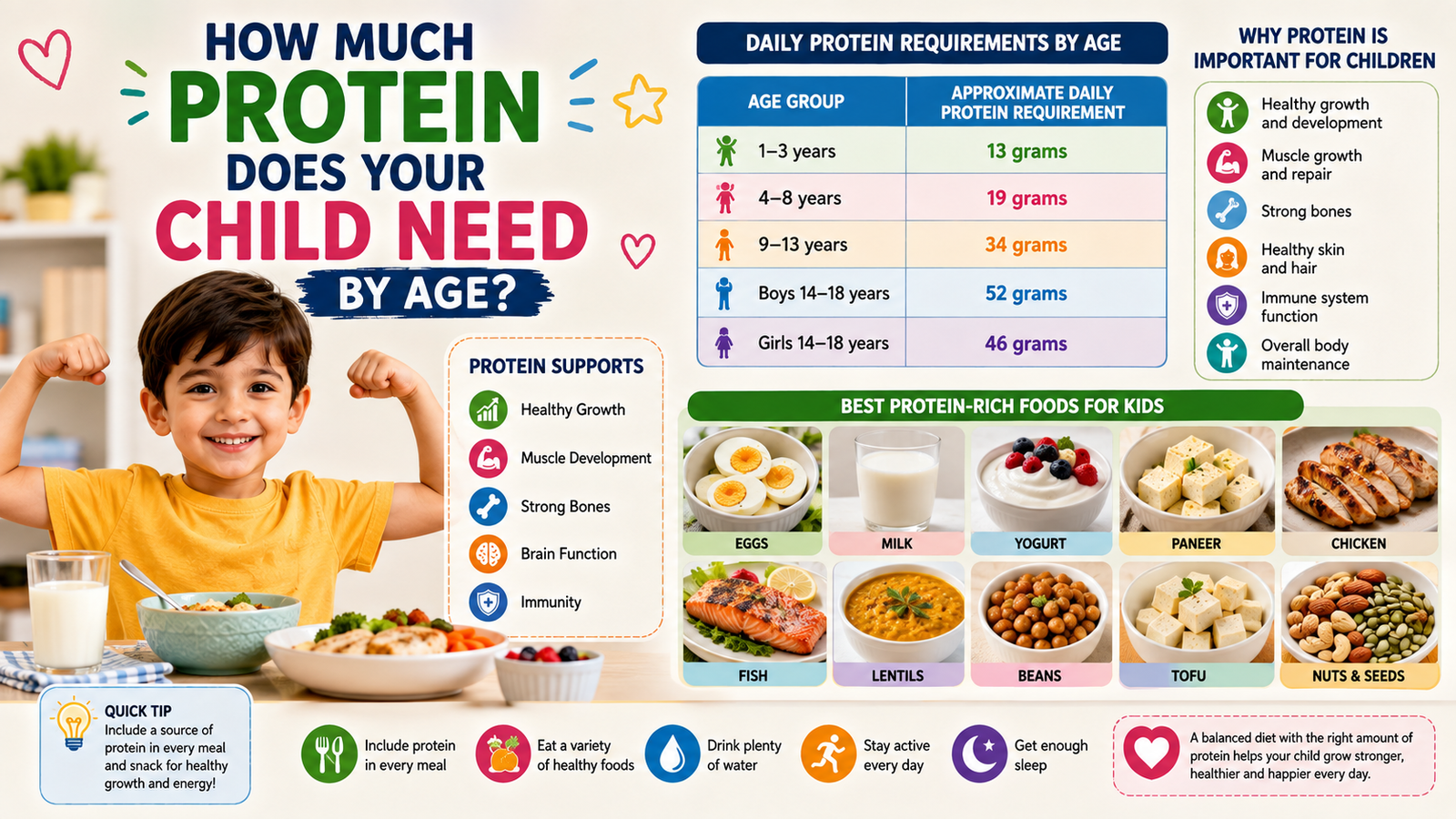
Why Protein Is Important for Children
Protein helps support:
- Healthy growth and development
- Muscle growth and repair
- Strong bones
- Healthy skin and hair
- Enzyme and hormone production
- Immune system function
- Overall body maintenance
Children should obtain protein from a variety of nutritious foods rather than focusing on a single source.
Daily Protein Requirements by Age
The following are general daily protein recommendations for healthy children.
| Age Group | Approximate Daily Protein Requirement |
|---|---|
| 1–3 years | 13 grams |
| 4–8 years | 19 grams |
| 9–13 years | 34 grams |
| Boys 14–18 years | 52 grams |
| Girls 14–18 years | 46 grams |
Protein needs may vary depending on growth, activity level, and individual health conditions.
Best Protein-Rich Foods for Kids
1. Eggs
Eggs provide:
- High-quality protein
- Vitamin D
- Vitamin B12
- Healthy fats
One egg is an excellent addition to breakfast or lunch.
2. Milk
Milk provides:
- Protein
- Calcium
- Vitamin D (if fortified)
It supports healthy bones and teeth.
3. Yogurt
Plain yogurt contains:
- Protein
- Calcium
- Probiotics (if it contains live cultures)
Serve with fresh fruit for a healthy snack.
4. Paneer
Paneer is a popular vegetarian protein source.
It also provides:
- Calcium
- Phosphorus
5. Chicken
Lean chicken provides high-quality protein and several important vitamins and minerals.
6. Fish
Fish contains:
- Protein
- Omega-3 fatty acids (depending on the type)
- Vitamin D (in some varieties)
Choose age-appropriate fish and prepare it safely.
7. Lentils
Lentils provide:
- Plant protein
- Fiber
- Iron
- Folate
Examples include:
- Moong dal
- Masoor dal
- Toor dal
8. Beans
Healthy options include:
- Kidney beans
- Chickpeas
- Black beans
These also provide fiber and important minerals.
9. Tofu
Tofu is an excellent plant-based protein option.
It can be added to stir-fries, sandwiches, or curries.
10. Nuts and Seeds
Older children can enjoy:
- Almonds
- Walnuts
- Pumpkin seeds
- Sunflower seeds
For younger children, offer age-appropriate forms such as nut butters to reduce choking risk.
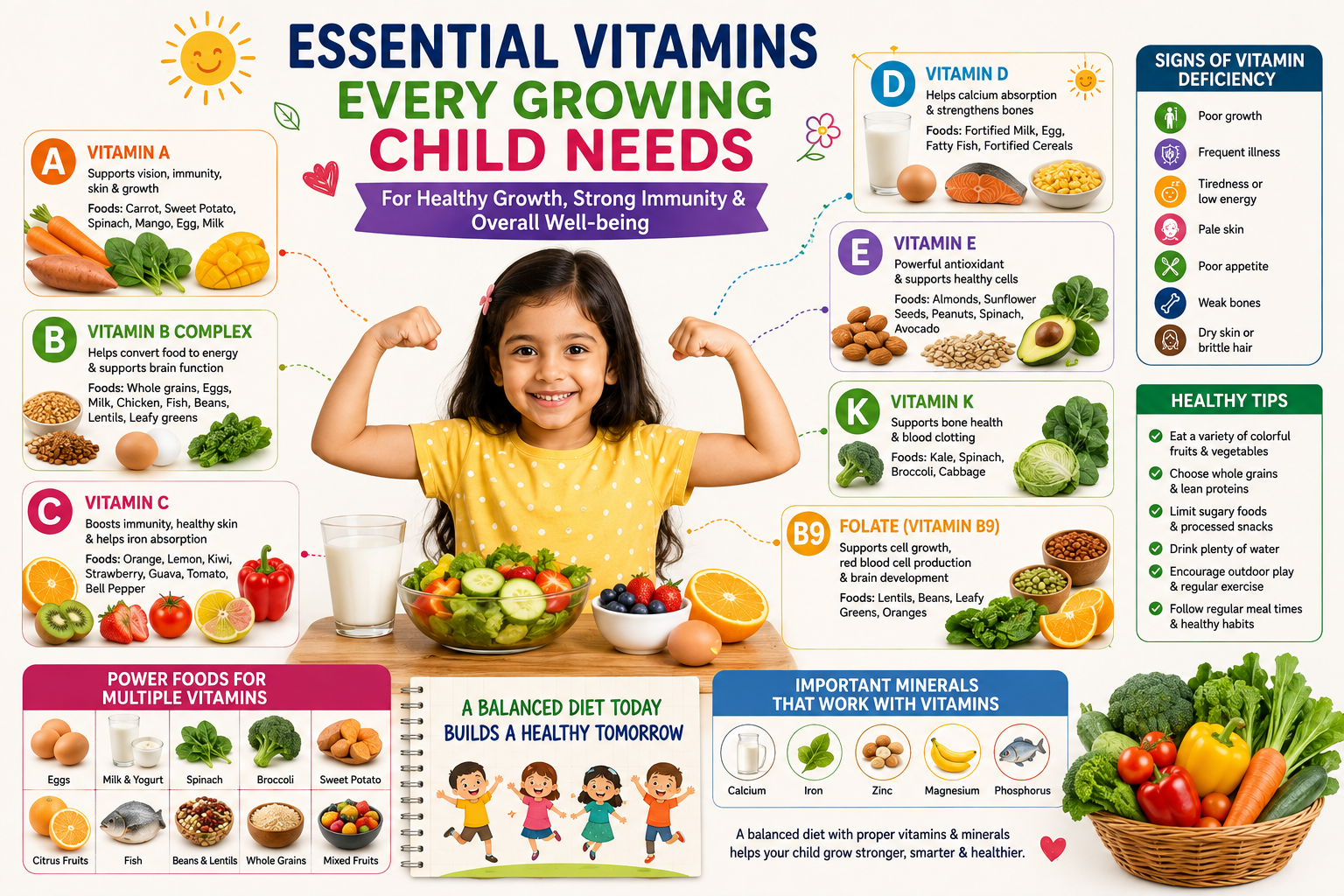
Signs Your Child May Not Be Getting Enough Protein
Possible signs may include:
- Slow growth
- Low energy
- Poor muscle development
- Frequent illness
- Delayed recovery from illness
- Poor appetite
These symptoms can have many different causes. If you are concerned about your child’s nutrition or growth, consult a healthcare professional.
Easy Ways to Add More Protein to Your Child’s Diet
Meeting your child’s protein needs does not have to be complicated. Small changes to everyday meals can help provide enough protein as part of a balanced diet.
Include Protein at Every Meal
Try to include one protein-rich food with breakfast, lunch, dinner, and snacks.
Examples:
- Eggs with whole wheat toast
- Yogurt with fruit
- Paneer sandwich
- Lentil soup
- Grilled chicken with vegetables
Choose Healthy Snacks
Nutritious snack ideas include:
- Plain yogurt
- Cheese cubes
- Boiled eggs
- Roasted chickpeas
- Hummus with vegetable sticks
- Nut butter on whole-grain bread (age-appropriate)
Add Beans and Lentils
Mix beans or lentils into:
- Rice dishes
- Soups
- Curries
- Salads
- Wraps
These foods provide both protein and fiber.
Serve Dairy Foods Daily
Milk, yogurt, and cheese are convenient sources of protein as well as calcium.
Choose unsweetened or low-added-sugar options whenever possible.
Offer a Variety of Protein Sources
Children benefit from eating different types of protein, including:
- Dairy
- Eggs
- Fish
- Chicken
- Lentils
- Beans
- Tofu
- Nuts and seeds (when age-appropriate)
Variety helps provide a broader range of nutrients.
Common Protein Myths
Myth 1: More Protein Is Always Better
Fact: Children need the right amount of protein—not excessive amounts. A balanced diet is more important than eating large quantities of protein.
Myth 2: Only Meat Contains Protein
Fact: Many plant-based foods such as lentils, beans, tofu, peas, nuts, and seeds also provide protein.
Myth 3: Protein Supplements Are Necessary
Fact: Most healthy children can meet their protein needs through a balanced diet. Protein powders or supplements should only be used if recommended by a qualified healthcare professional.
Frequently Asked Questions
How much protein should my child eat daily?
Protein requirements vary by age. Most healthy children can meet their daily needs by eating a balanced diet that includes protein-rich foods at each meal.
Can vegetarian children get enough protein?
Yes. Vegetarian children can obtain protein from foods such as:
- Lentils
- Beans
- Dairy products
- Paneer
- Yogurt
- Tofu
- Nuts and seeds (age-appropriate)
Is milk a good source of protein?
Yes. Milk provides protein, calcium, and other nutrients that support healthy growth and bone development.
Can children eat eggs every day?
For many healthy children, eggs can be included as part of a balanced diet. Individual dietary needs and allergies should always be considered, so consult a healthcare professional if you have concerns.
What happens if children don’t get enough protein?
Long-term inadequate protein intake may affect normal growth and development. If you are concerned about your child’s diet or growth, seek advice from a qualified pediatrician or registered dietitian.
Key Takeaways
- Protein supports healthy growth, muscles, bones, and normal immune function.
- Daily protein needs vary according to age.
- Healthy protein sources include eggs, milk, yogurt, paneer, chicken, fish, lentils, beans, tofu, nuts, and seeds.
- Include protein in every meal and snack as part of a balanced diet.
- Most children do not need protein supplements if they eat a varied, nutritious diet.
Conclusion
Protein is an essential nutrient that helps children grow, stay active, and maintain overall health. By offering a variety of protein-rich foods throughout the day, parents can support healthy growth without relying on supplements or restrictive diets. A balanced eating pattern that includes whole grains, fruits, vegetables, healthy fats, and quality protein sources provides children with the nutrients they need to thrive.
Remember that every child is unique, and protein needs can vary depending on age, activity level, and overall health. If you have concerns about your child’s growth, eating habits, or nutritional intake, consult a qualified pediatrician or registered dietitian for personalized guidance.