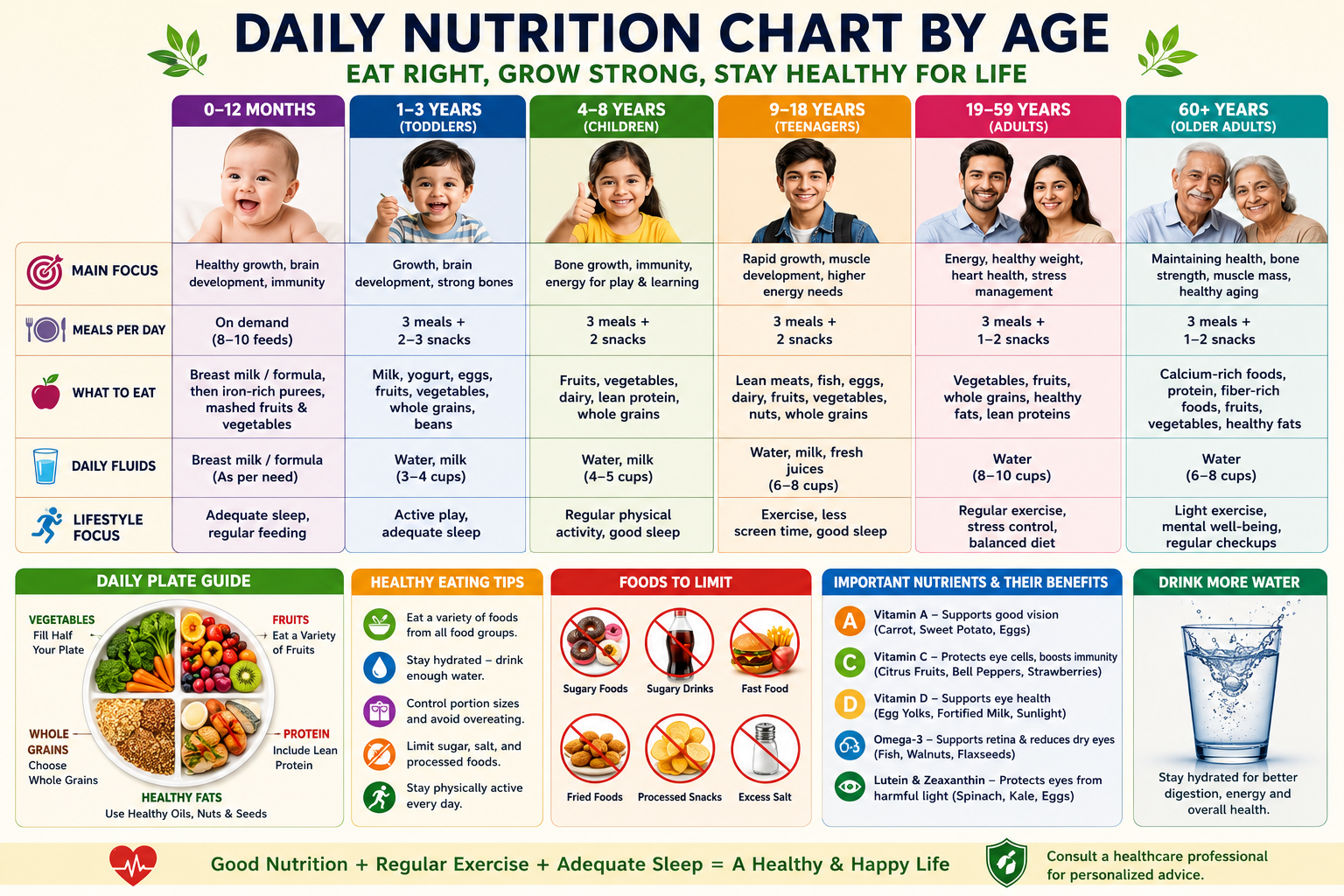
Daily Nutrition Chart by Age
Good nutrition is important at every stage of life. From infancy to older adulthood, the body requires different amounts of calories, protein, vitamins, minerals, and healthy fats to support growth, development, and overall well-being.
While nutritional needs vary depending on factors such as activity level, gender, health conditions, and body size, following age-appropriate healthy eating habits helps maintain long-term health.
Why Nutrition Needs Change with Age
As people grow, their bodies have different nutritional requirements.
Healthy nutrition supports:
- Growth and development
- Brain function
- Strong bones and muscles
- Healthy immune system
- Energy production
- Healthy aging
Daily Nutrition Chart by Age
| Age Group | Main Nutrition Focus | Healthy Foods |
|---|---|---|
| 0–12 months | Breast milk or infant formula (as appropriate), gradual introduction of complementary foods around 6 months | Breast milk, infant formula, iron-rich purees, mashed fruits and vegetables |
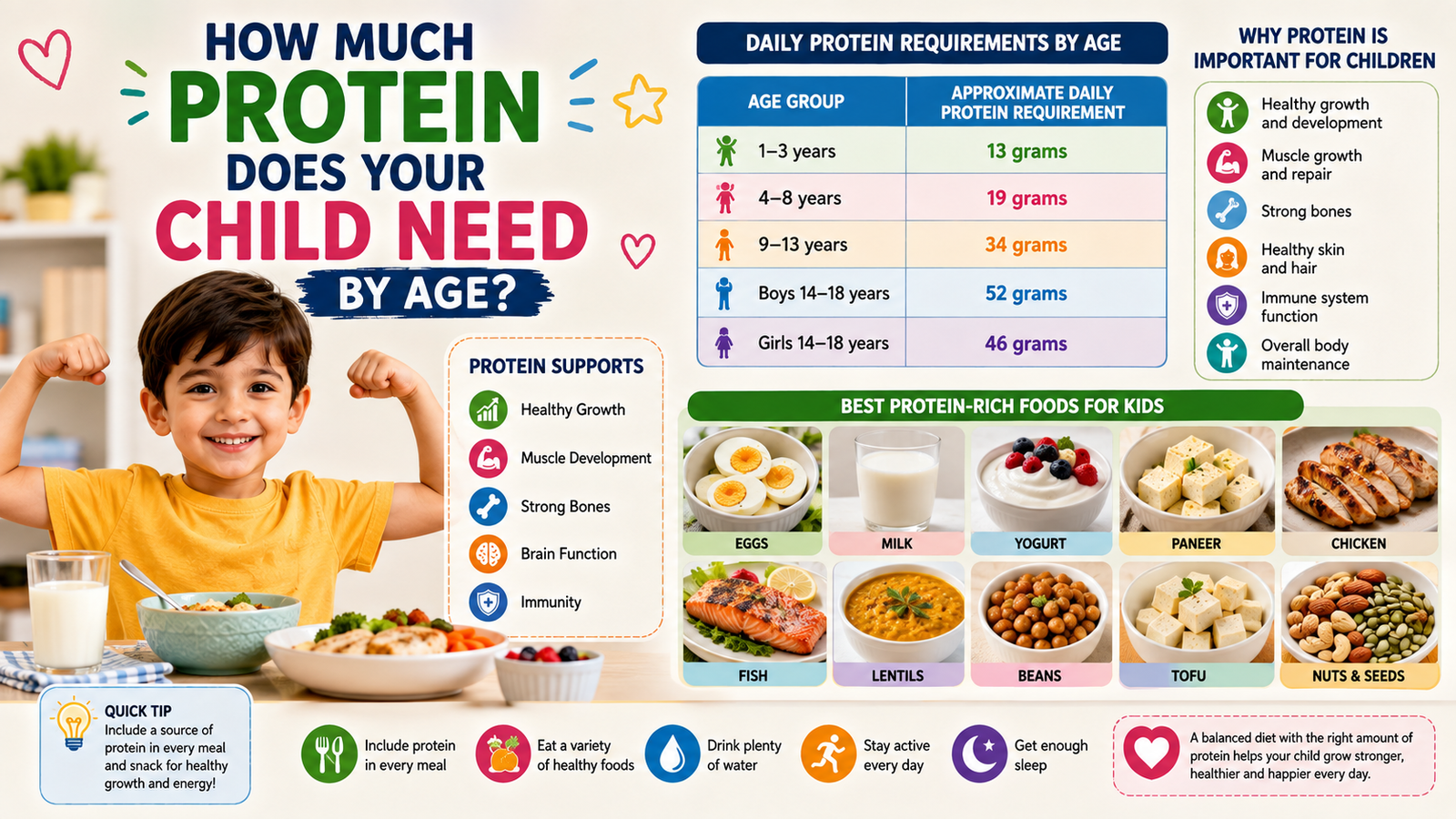
| 1–3 years (Toddlers) | Growth, brain development, strong bones | Milk, yogurt, eggs, fruits, vegetables, whole grains, beans |
| 4–8 years (Children) | Bone growth, immunity, learning | Fruits, vegetables, dairy, lean protein, whole grains |
| 9–18 years (Teenagers) | Rapid growth, muscle development, higher energy needs | Lean meats, fish, eggs, dairy, fruits, vegetables, nuts, whole grains |
| 19–59 years (Adults) | Weight management, heart health, energy | Vegetables, fruits, whole grains, healthy fats, lean proteins |
| 60+ years (Older Adults) | Bone health, muscle maintenance, healthy aging | Calcium-rich foods, protein, fiber-rich foods, fruits, vegetables, healthy fats |
Nutrition Guidelines for Each Age
Infants (0–12 Months)
Healthy nutrition includes:
- Breast milk or infant formula as the primary source of nutrition
- Iron-rich complementary foods from around 6 months (when developmentally ready)
- Pureed vegetables and fruits
- Mashed cereals
- Soft protein foods
Avoid added sugar and salt.
Toddlers (1–3 Years)
Toddlers need:
- Protein
- Calcium
- Healthy fats
- Iron
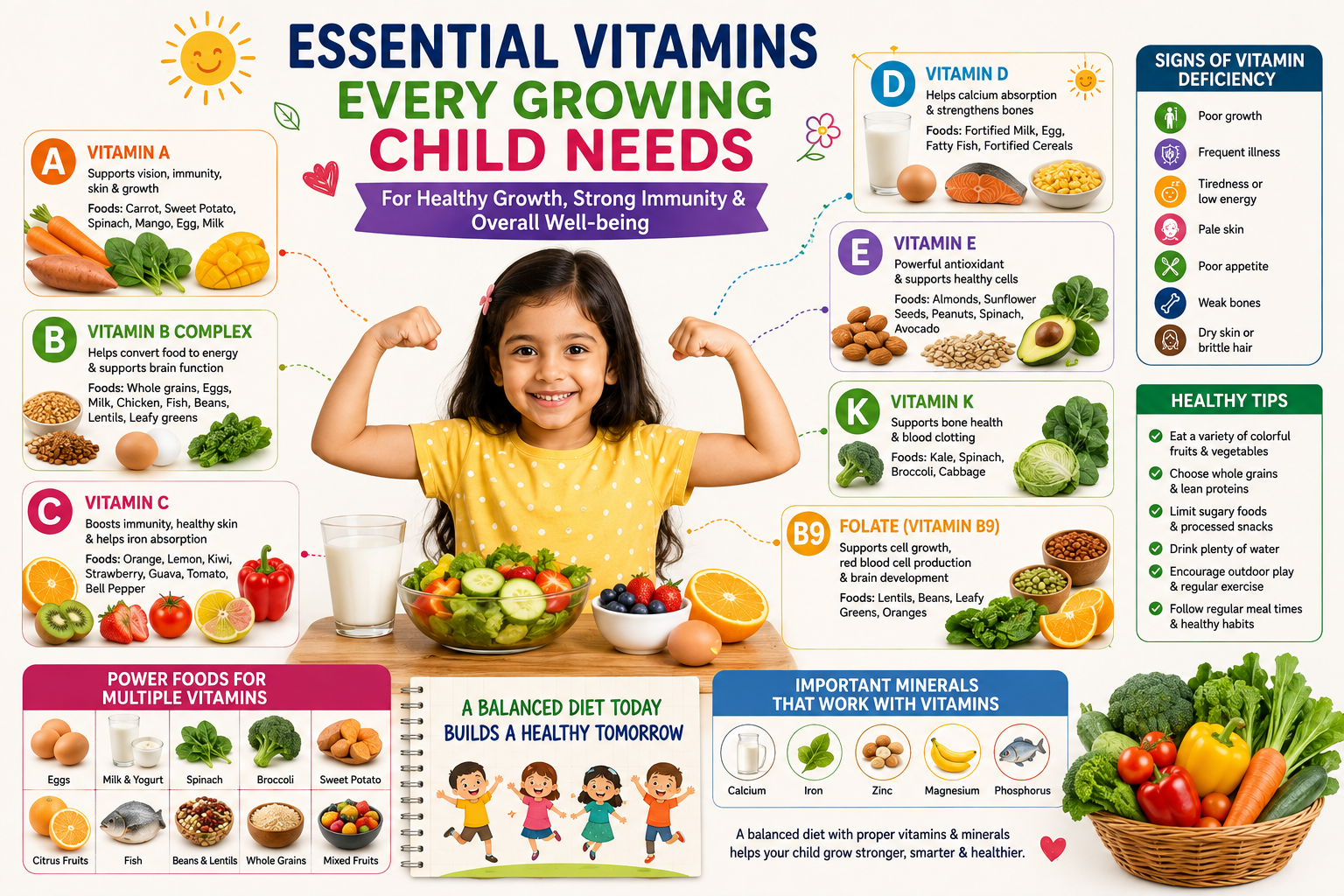
- Vitamin D
Offer:
- Three meals
- Two to three healthy snacks
- Plenty of water
Children (4–8 Years)
Children should eat a variety of foods from all food groups.
Include:
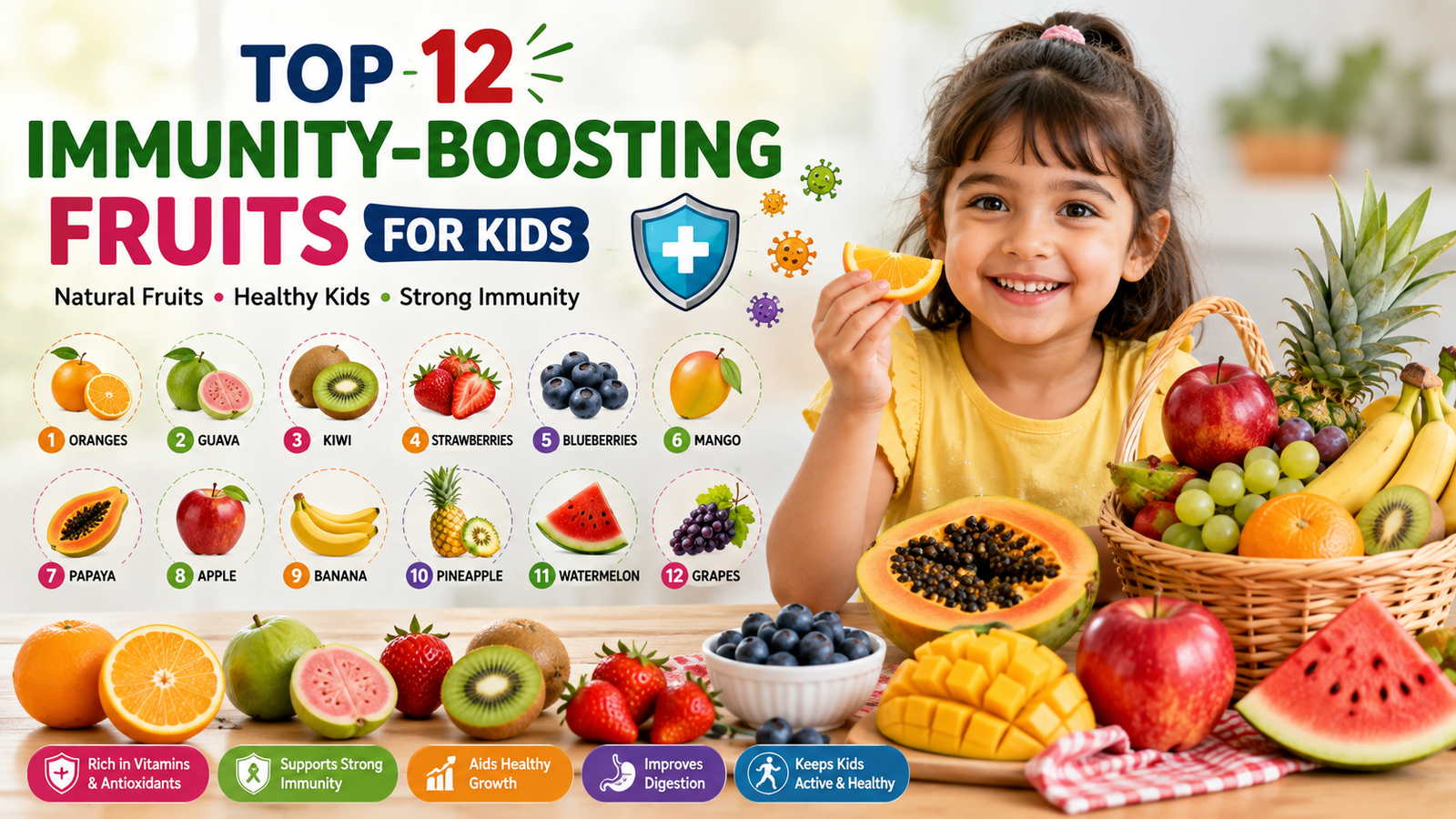
- Fruits
- Vegetables
- Whole grains
- Lean proteins
- Dairy or fortified alternatives
Encourage regular physical activity.
Teenagers (9–18 Years)
Teenagers often require additional nutrients because of rapid growth.
Focus on:
- Protein
- Iron
- Calcium
- Vitamin D
- Whole grains
- Fresh fruits and vegetables
Avoid excessive sugary drinks and fast food.
Adults
Adults benefit from a balanced diet that includes:
- Plenty of vegetables
- Fresh fruit
- Whole grains
- Healthy fats
- Lean protein
- Adequate hydration
Limiting highly processed foods supports long-term health.
Older Adults
Older adults may benefit from foods rich in:
- Protein
- Calcium
- Vitamin D
- Fiber
- Healthy fats
Maintaining hydration and regular physical activity is also important.
Daily Healthy Eating Tips
Healthy eating habits are important at every stage of life. Along with choosing nutritious foods, these simple habits can help support overall health.
Eat a Variety of Foods
Include foods from all major food groups every day:
- Fruits
- Vegetables
- Whole grains
- Lean proteins
- Dairy or fortified alternatives
- Healthy fats
A colorful plate often provides a wider range of nutrients.
Stay Hydrated
Drink enough water throughout the day.
Hydration supports:
- Digestion
- Body temperature regulation
- Energy levels
- Overall health
Water should be the main beverage for most people.
Choose Whole Foods
Whenever possible, choose minimally processed foods such as:
- Fresh fruits
- Fresh vegetables
- Whole grains
- Beans
- Nuts
- Seeds
These foods are naturally rich in vitamins, minerals, and fiber.
Control Portion Sizes
Eating appropriate portion sizes helps maintain a healthy weight and supports balanced nutrition.
Listen to your body’s hunger and fullness signals rather than eating out of habit.
Include Protein with Meals
Protein helps maintain muscles and supports body repair.
Healthy protein sources include:
- Eggs
- Fish
- Chicken
- Beans
- Lentils
- Tofu
- Low-fat dairy
Foods to Limit
A balanced diet also means limiting foods that are high in added sugar, salt, and unhealthy fats.
Sugary Foods
Limit:
- Candy
- Cakes
- Cookies
- Pastries
- Sweet desserts
Sugary Drinks
Reduce consumption of:
- Soft drinks
- Energy drinks
- Sweetened fruit drinks
Choose water or unsweetened beverages instead.
Highly Processed Foods
Limit foods such as:
- Chips
- Instant noodles
- Fast food
- Packaged snacks
These foods often contain excessive sodium, unhealthy fats, and added sugars.
Excess Salt
Too much sodium may increase the risk of high blood pressure in some individuals.
Choose fresh foods and use herbs or spices instead of excessive salt for flavor.
Frequently Asked Questions
Does everyone need the same diet?
No. Nutritional needs vary based on:
- Age
- Gender
- Physical activity
- Health conditions
- Pregnancy or breastfeeding
- Individual medical needs
A healthcare professional can provide personalized guidance.
Should children take vitamin supplements?
Most healthy children can obtain the nutrients they need from a balanced diet. Supplements should only be given if recommended by a qualified healthcare professional.
How many meals should I eat each day?
Most people do well with:
- Three balanced meals
- One to three healthy snacks (depending on age, activity level, and appetite)
There is no single eating schedule that works for everyone.
Why are fruits and vegetables important?
They provide:
- Vitamins
- Minerals
- Fiber
- Antioxidants
Eating a variety of colorful fruits and vegetables supports overall health.
Is drinking water part of good nutrition?
Yes. Water is essential for every age group and supports nearly every function in the body.
Key Takeaways
- Nutritional needs change throughout life, from infancy to older adulthood.
- A balanced diet should include fruits, vegetables, whole grains, lean proteins, dairy or fortified alternatives, and healthy fats.
- Drink enough water every day to stay hydrated.
- Limit sugary foods, sugary drinks, highly processed foods, and excessive salt.
- Healthy eating habits, regular physical activity, and routine health checkups support long-term well-being.
Conclusion
Good nutrition is important at every age and plays a vital role in supporting healthy growth, energy, brain function, strong bones, and overall wellness. While the specific nutritional needs of infants, toddlers, children, teenagers, adults, and older adults differ, the foundation of a healthy diet remains the same: eating a variety of nutrient-rich foods, staying hydrated, and maintaining balanced eating habits.
Remember that every individual has unique nutritional requirements based on age, health, and lifestyle. Following age-appropriate nutrition guidelines and consulting a healthcare professional when needed can help ensure lifelong health and well-being