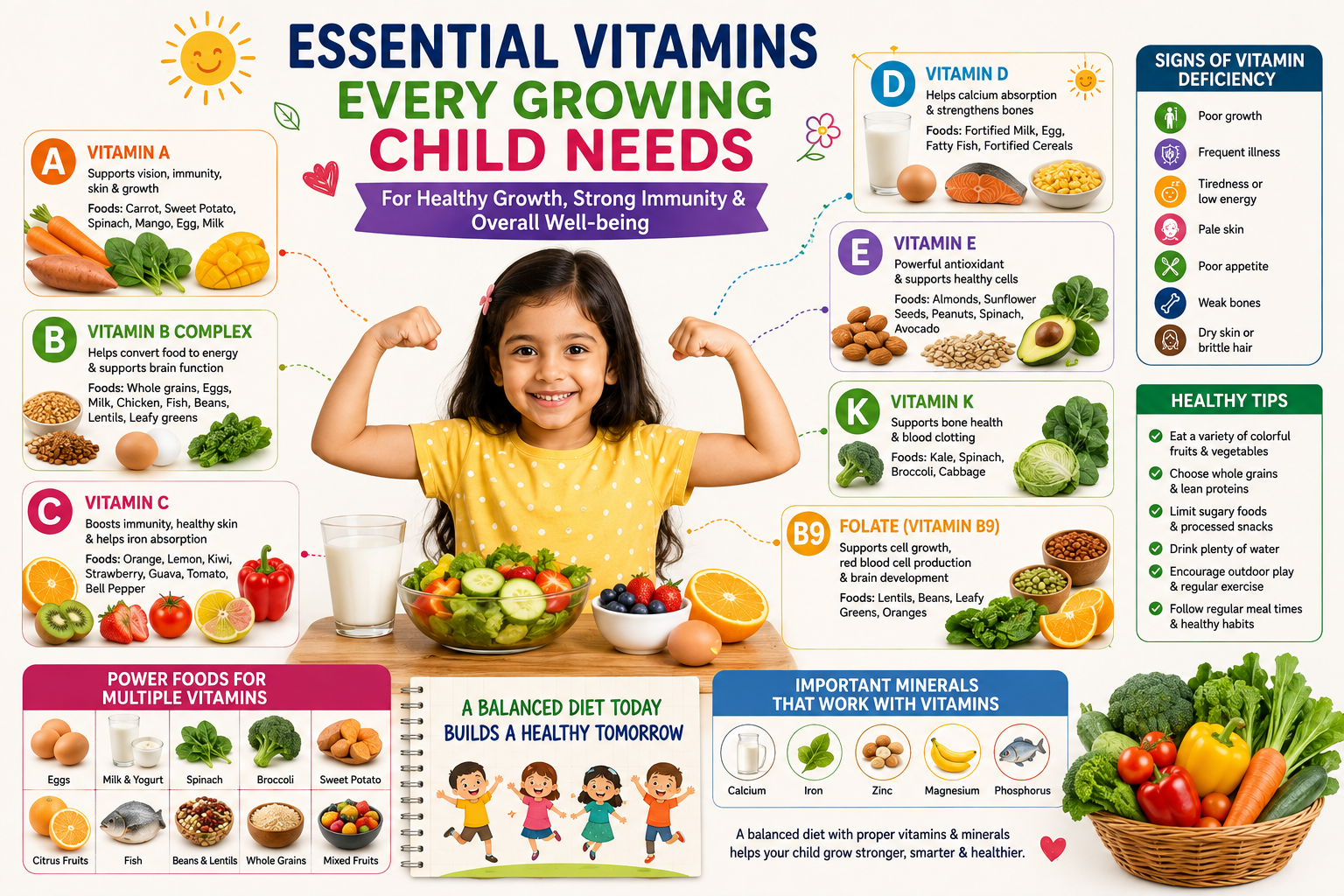
Essential Vitamins Every Growing Child Needs
Children need a balanced diet rich in vitamins and minerals to support healthy growth, brain development, strong bones, and a healthy immune system. Vitamins play an important role in helping the body function properly and ensuring children receive the nutrients needed during their growing years.
While most healthy children can obtain these nutrients from a varied diet, understanding the role of each vitamin helps parents make healthier food choices.
Why Vitamins Are Important for Children
Essential vitamins help support:
- Healthy growth and development
- Strong bones and teeth
- Brain development
- Healthy eyesight
- Immune system function
- Energy production
- Healthy skin and tissues
A balanced diet is the best way to provide these nutrients naturally.
Essential Vitamins Every Growing Child Needs
1. Vitamin A
Vitamin A supports:
- Normal vision
- Healthy skin
- Immune function
- Growth and development
Food Sources
- Carrots
- Sweet potatoes
- Spinach
- Mangoes
- Eggs
- Dairy products
2. Vitamin B Complex
The B vitamins help the body convert food into energy and support brain and nervous system function.
Important B vitamins include:
- B1 (Thiamine)
- B2 (Riboflavin)
- B3 (Niacin)
- B6
- B12
- Folate
Food Sources
- Whole grains
- Eggs
- Dairy
- Chicken
- Fish
- Beans
- Lentils
- Leafy green vegetables
3. Vitamin C
Vitamin C helps:
- Support immune function
- Maintain healthy skin
- Support wound healing
- Improve iron absorption from plant-based foods
Food Sources
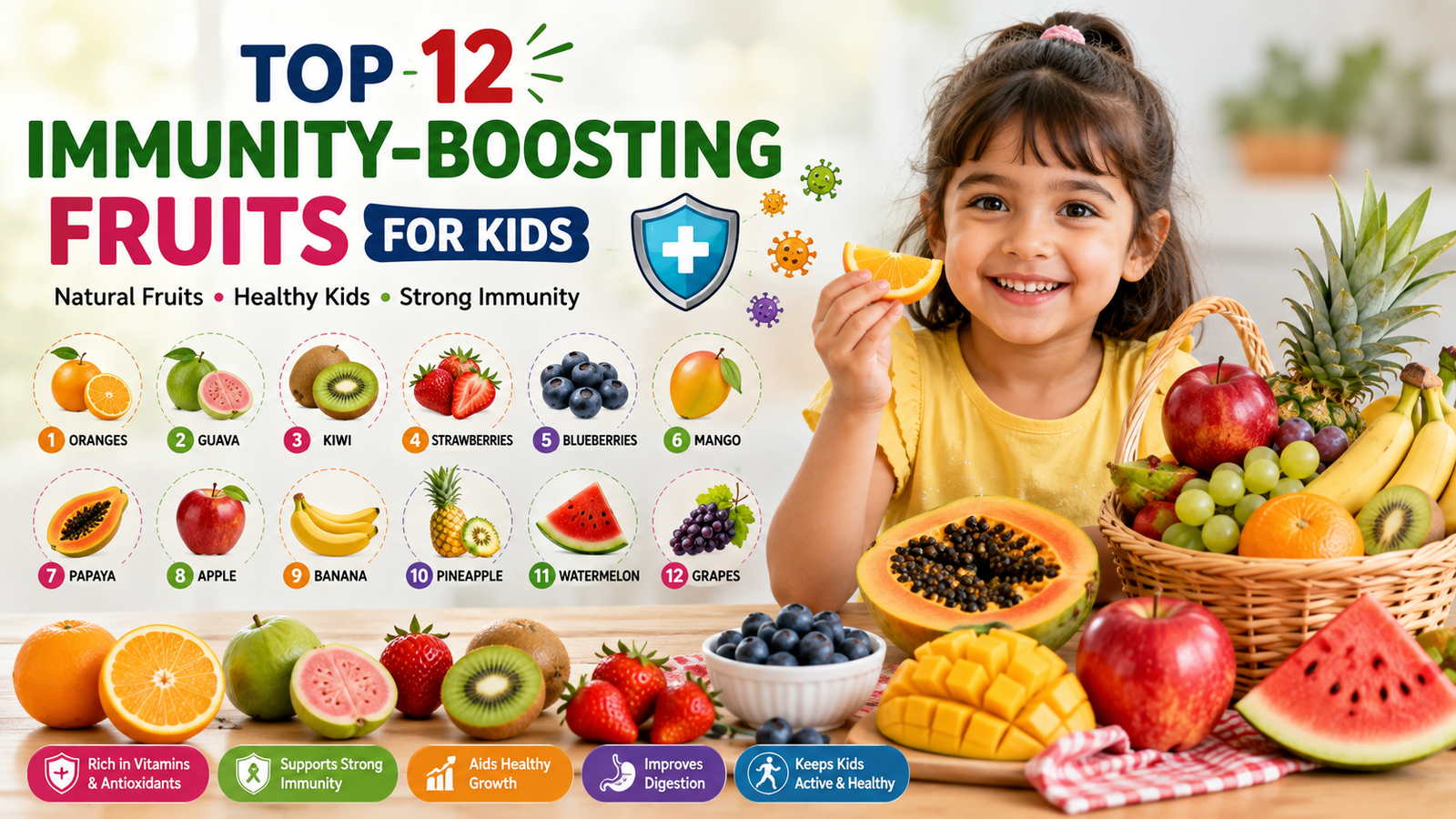
- Oranges
- Lemons
- Kiwi
- Strawberries
- Guava
- Bell peppers
- Tomatoes
4. Vitamin D
Vitamin D helps the body absorb calcium, supporting healthy bones and teeth.
Food Sources
- Fortified milk
- Eggs
- Fatty fish
- Fortified cereals
Safe sunlight exposure also helps the body produce vitamin D.
5. Vitamin E
Vitamin E acts as an antioxidant and supports healthy cells.
Food Sources
- Almonds
- Sunflower seeds
- Peanuts
- Spinach
- Avocados
6. Vitamin K
Vitamin K supports:
- Healthy bones
- Normal blood clotting
Food Sources
- Kale
- Spinach
- Broccoli
- Cabbage
7. Folate (Vitamin B9)
Folate supports:
- Healthy cell growth
- Red blood cell production
- Brain development
Food Sources
- Lentils
- Beans
- Leafy green vegetables
- Oranges
Important Minerals That Work with Vitamins
Growing children also need minerals that work alongside vitamins.
These include:
- Calcium
- Iron
- Zinc
- Magnesium
- Phosphorus
A balanced diet naturally provides many of these nutrients.
Best Foods That Provide Multiple Vitamins
Choose foods that supply several important nutrients at once.
Examples include:
- Eggs
- Milk
- Yogurt
- Spinach
- Broccoli
- Sweet potatoes
- Citrus fruits
- Fish
- Beans
- Whole grains
- Mixed fruits
- Colorful vegetables
Offering a variety of foods helps children receive a wide range of vitamins.
Signs of Vitamin Deficiency in Children
Vitamin deficiencies are uncommon in children who eat a balanced diet, but inadequate intake of certain nutrients may lead to health problems over time.
Possible signs include:
- Poor growth
- Frequent illness
- Tiredness or low energy
- Pale skin
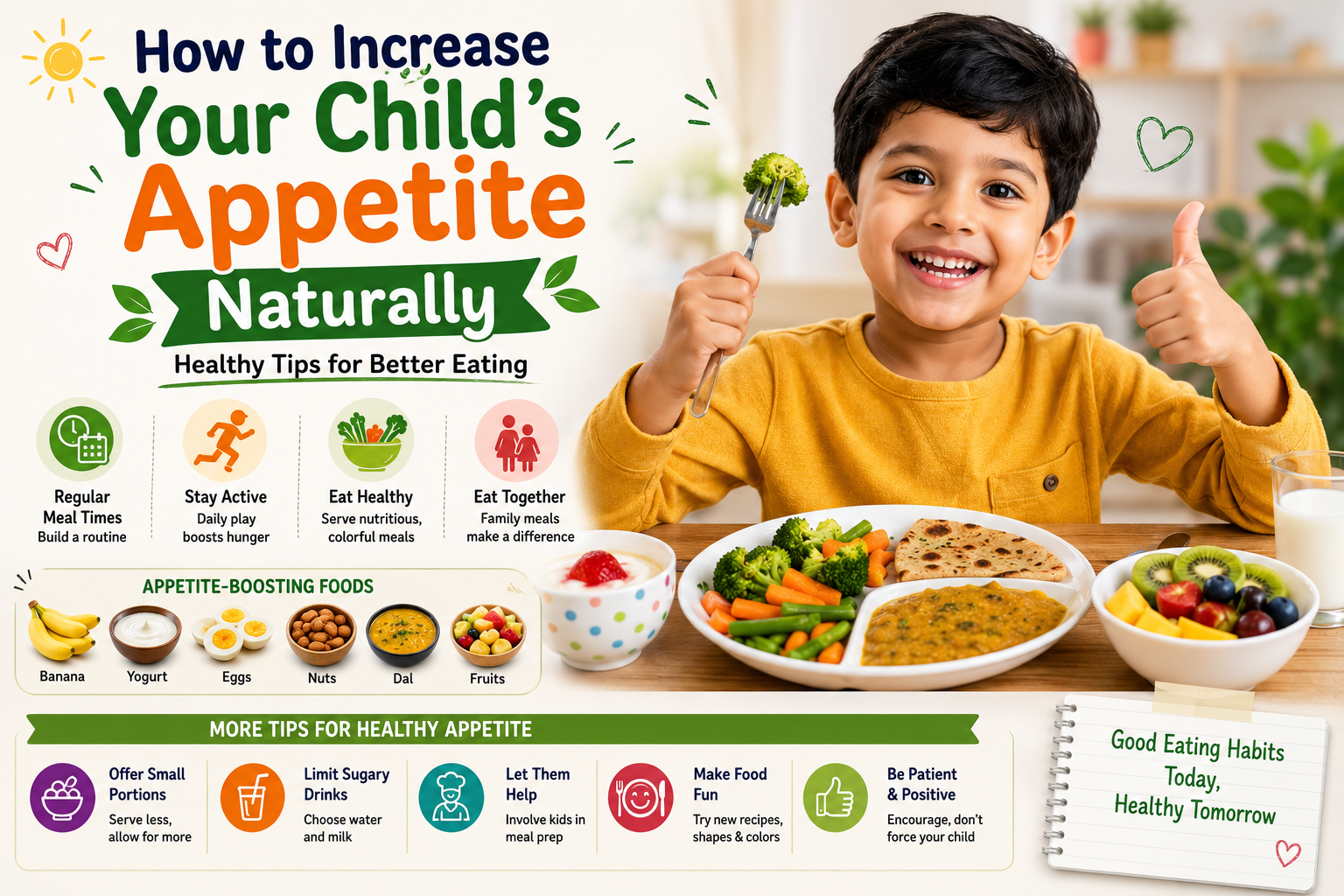
- Poor appetite
- Slow wound healing
- Weak bones or delayed bone growth
- Dry skin or brittle hair
These symptoms can have many causes and do not always indicate a vitamin deficiency. If you are concerned, consult a qualified healthcare professional for proper evaluation.
Healthy Eating Tips for Growing Children
Serve a Variety of Foods
Offer foods from all major food groups every day:
- Fruits
- Vegetables
- Whole grains
- Lean proteins
- Dairy or fortified alternatives
- Healthy fats
A colorful plate often provides a wider range of vitamins and minerals.
Include Fruits and Vegetables Daily
Aim to include different colors such as:
- Orange (carrots, sweet potatoes)
- Green (spinach, broccoli)
- Red (tomatoes, strawberries)
- Purple (blueberries, grapes)
Different colors provide different beneficial nutrients.
Encourage Regular Meal Times
A routine of:
- Breakfast
- Lunch
- Dinner
- Healthy snacks
helps children meet their nutritional needs throughout the day.
Limit Highly Processed Foods
Reduce foods that are high in:
- Added sugar
- Salt
- Unhealthy fats
Examples include:
- Candy
- Chips
- Sugary drinks
- Fast food
Encourage Water Instead of Sugary Drinks
Water supports hydration without added sugar.
Plain milk is also a nutritious beverage for many growing children.
Frequently Asked Questions
Can children get all vitamins from food?
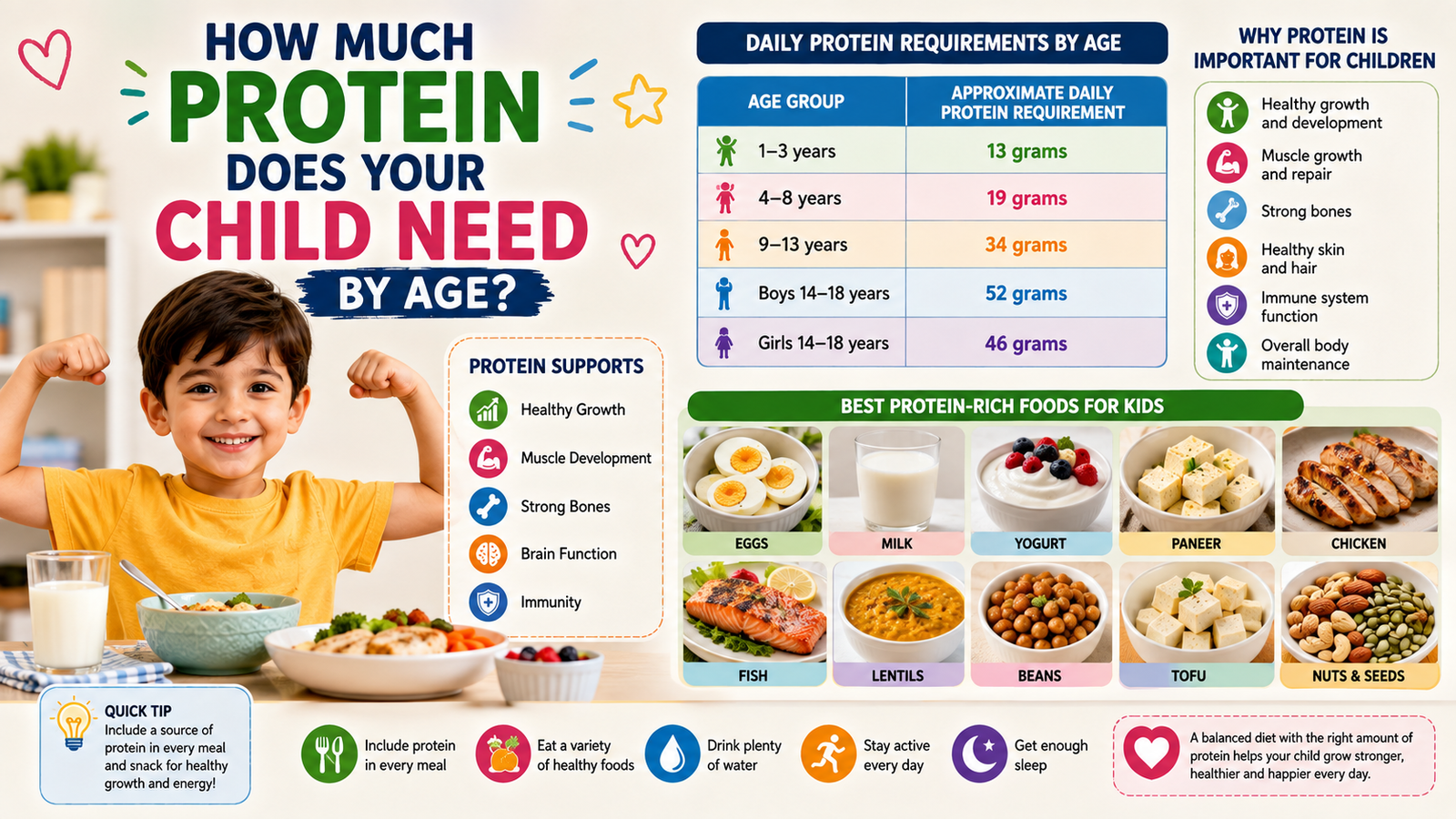
Most healthy children can meet their vitamin needs through a balanced diet that includes a variety of fruits, vegetables, whole grains, lean proteins, and dairy or fortified alternatives.
Should my child take vitamin supplements?
Vitamin supplements should only be used if recommended by a qualified healthcare professional. Supplements are not a replacement for a healthy diet.
Which vitamin is most important for growth?
Healthy growth depends on a combination of nutrients rather than one single vitamin. Vitamins A, C, D, B-complex vitamins, along with calcium, iron, protein, and zinc, all play important roles.
What foods provide the most vitamins?
Nutrient-rich foods include:
- Eggs
- Milk
- Yogurt
- Spinach
- Broccoli
- Citrus fruits
- Fish
- Beans
- Whole grains
- Fresh fruits
Can picky eaters become vitamin deficient?
Some picky eaters may not consume enough variety to meet all nutrient needs. If your child’s diet is very limited or you are concerned about growth, consult a pediatrician or registered dietitian.
Key Takeaways
- Vitamins support healthy growth, immunity, brain development, strong bones, and overall health.
- Important vitamins include A, B-complex, C, D, E, K, and folate.
- A balanced diet with colorful fruits, vegetables, whole grains, lean proteins, and dairy or fortified alternatives provides most essential vitamins.
- Limit sugary foods, sugary drinks, and highly processed snacks.
- Consult a healthcare professional if you suspect a vitamin deficiency or have concerns about your child’s nutrition.
Conclusion
Providing children with a balanced, nutrient-rich diet is one of the best ways to support healthy growth and lifelong well-being. Essential vitamins work together with minerals and protein to strengthen bones, support brain development, boost the immune system, and help children stay active and energetic. Rather than focusing on a single vitamin, aim to offer a wide variety of wholesome foods every day to ensure your child receives a broad range of nutrients.
Every child has unique nutritional needs based on age, growth, activity level, and health. If you have concerns about your child’s diet, growth, or possible nutrient deficiencies, seek guidance from a qualified pediatrician or registered dietitian for personalized advice.