Prevent Urinary Tract Infection (UTI)
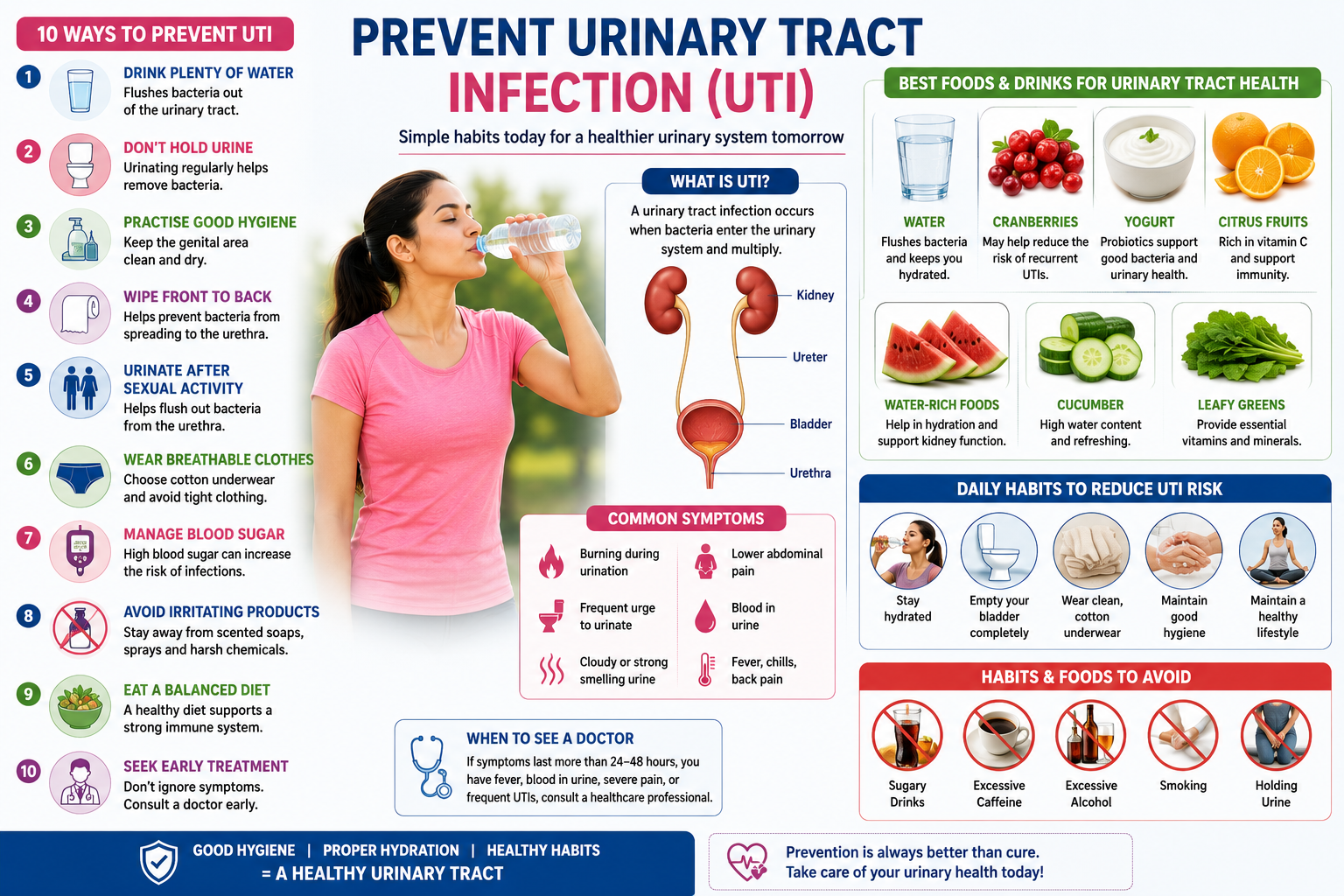
A urinary tract infection (UTI) is one of the most common bacterial infections, affecting millions of people every year. UTIs can occur in any part of the urinary system, including the kidneys, bladder, ureters, and urethra. While UTIs are more common in women due to anatomical differences, men and children can also develop these infections.
Many UTIs can be prevented by practising good personal hygiene, staying well-hydrated, and adopting healthy daily habits. Recognising the early symptoms and seeking timely medical care can also help prevent complications.
What Is a Urinary Tract Infection (UTI)?
A urinary tract infection occurs when bacteria enter the urinary system and multiply, causing inflammation and infection.
Parts of the Urinary System
- Kidneys
- Ureters
- Bladder
- Urethra
Most UTIs affect the bladder and urethra, but untreated infections can spread to the kidneys and become more serious.
Common Symptoms of a UTI
Symptoms can vary depending on which part of the urinary tract is affected.
Common Signs
- Burning sensation while urinating
- Frequent urge to urinate
- Passing only small amounts of urine
- Cloudy urine
- Strong-smelling urine
- Blood in the urine
- Pain or pressure in the lower abdomen or pelvis
Symptoms of a More Serious Kidney Infection
- Fever
- Chills
- Back or side pain
- Nausea
- Vomiting
Seek medical attention promptly if these symptoms occur.
Who Is More Likely to Get a UTI?
Certain people have a higher risk of developing urinary tract infections.
Risk Factors
- Female sex
- Pregnancy
- Diabetes
- Older age
- Kidney stones
- Urinary tract abnormalities
- Use of urinary catheters
- A weakened immune system
Having one or more risk factors does not mean you will definitely develop a UTI, but it may increase your likelihood.
How to Prevent Urinary Tract Infection (UTI)
1. Drink Plenty of Water
Staying hydrated helps flush bacteria out of the urinary tract.
Hydration Tips
- Drink water regularly throughout the day.
- Increase fluid intake during hot weather or physical activity.
- Do not wait until you feel very thirsty.
2. Don’t Hold Your Urine
Urinating regularly helps remove bacteria from the bladder.
Healthy Habit
Go to the toilet when you feel the urge instead of delaying urination for long periods.
3. Practise Good Personal Hygiene
Good hygiene helps reduce the spread of bacteria.
Helpful Tips
- Wash the genital area daily with water.
- Wear clean underwear every day.
- Keep the area dry after bathing.
Avoid harsh soaps or scented products that may irritate sensitive skin.
4. Wipe from Front to Back
For women and girls, wiping from front to back after using the toilet helps reduce the transfer of bacteria from the anal area to the urethra.
This simple habit can help lower the risk of UTIs.
5. Urinate After Sexual Activity
For sexually active individuals, urinating soon after intercourse may help flush bacteria from the urethra.
This is one of several strategies that may reduce the risk of UTIs in some people.
6. Wear Breathable Clothing
Loose-fitting clothing and cotton underwear allow better airflow and help reduce moisture.
Good Choices
- Cotton underwear
- Loose-fitting trousers
- Breathable fabrics
Avoid wearing damp clothing, such as wet swimsuits, for prolonged periods.
7. Manage Blood Sugar Levels
People with diabetes may have a higher risk of UTIs.
Keeping blood sugar within the target range recommended by your healthcare provider supports overall health and may help reduce infection risk.
8. Avoid Unnecessary Use of Irritating Products
Some personal care products may irritate the urinary or genital area.
Products to Avoid if They Cause Irritation
- Scented sprays
- Perfumed soaps
- Bubble baths
- Feminine hygiene sprays
Choose gentle, fragrance-free products when possible.
9. Eat a Healthy, Balanced Diet
A nutritious diet supports overall health and normal immune function.
Include
- Fruits
- Vegetables
- Whole grains
- Lean proteins
- Yogurt with live cultures (if suitable for your diet)
10. Seek Early Treatment for Symptoms
Do not ignore symptoms such as burning during urination, frequent urination, or blood in the urine.
Early diagnosis and appropriate treatment can help prevent complications, including kidney infections.
Best Foods and Drinks for Urinary Tract Health
A balanced diet and adequate hydration support overall urinary tract health. While no single food can prevent UTIs, healthy eating habits may help support normal body function.
Drink Plenty of Water
Water is the best drink for staying hydrated.
Benefits
- Helps flush bacteria from the urinary tract
- Supports healthy kidney function
- Dilutes urine
- Encourages regular urination
Carry a reusable water bottle and sip water throughout the day.
Cranberries and Cranberry Products
Some research suggests that cranberry products may help reduce the risk of recurrent UTIs in certain people, but the evidence is mixed and they are not a treatment for an active infection.
Choose unsweetened cranberry juice or discuss cranberry supplements with a healthcare professional if you experience recurrent UTIs.
Citrus Fruits
Vitamin C-rich fruits support overall health and immune function.
Healthy Choices
- Oranges
- Lemons
- Sweet lime
- Grapefruit
- Kiwi
Enjoy these as part of a balanced diet.
Yogurt
Plain yogurt with live cultures can be part of a healthy diet.
Healthy Options
- Plain yogurt
- Greek yogurt
- Unsweetened probiotic yogurt
Choose products without added sugar whenever possible.
Water-Rich Fruits and Vegetables
These foods help increase fluid intake.
Best Choices
- Watermelon
- Cucumber
- Tomatoes
- Celery
- Lettuce
- Strawberries
Daily Habits to Reduce UTI Risk
Stay Well Hydrated
Drink fluids consistently throughout the day, especially during hot weather or after exercise.
Empty Your Bladder Completely
Take your time when urinating and avoid rushing.
Emptying the bladder fully may help reduce the amount of urine left behind.
Wear Clean, Breathable Underwear
Choose:
- Cotton underwear
- Loose-fitting clothing
- Breathable fabrics
Change out of sweaty clothes or wet swimsuits promptly.
Practise Safe Bathroom Habits
Maintain good hygiene by:
- Washing your hands before and after using the toilet
- Keeping the genital area clean
- Wiping from front to back (for women and girls)
Maintain a Healthy Lifestyle
Support your immune system with:
- Balanced nutrition
- Regular exercise
- Adequate sleep
- Stress management
Good overall health may help reduce the risk of infections.
Foods and Habits to Limit
Certain foods or habits may worsen bladder irritation in some people, although triggers vary between individuals.
Limit Sugary Drinks
Reduce:
- Soft drinks
- Sweetened fruit drinks
- Energy drinks
Choose water more often.
Limit Excessive Caffeine
Some people find that large amounts of caffeine can irritate the bladder.
Examples include:
- Coffee
- Strong tea
- Energy drinks
If caffeine seems to worsen your symptoms, consider reducing your intake.
Avoid Smoking
Smoking is linked to an increased risk of bladder cancer and many other health problems.
Quitting smoking benefits your urinary health and overall well-being.
Avoid Delaying Urination
Holding urine for long periods may increase the risk of urinary problems.
Go to the toilet whenever you feel the urge.
When to See a Doctor
Seek medical advice if you experience:
- Burning during urination
- Blood in the urine
- Fever or chills
- Back or side pain
- Persistent lower abdominal pain
- Frequent UTIs
- Symptoms lasting more than 24–48 hours
- Symptoms during pregnancy
Seek urgent medical care if you develop high fever, severe back pain, vomiting, or signs of a kidney infection.
Frequently Asked Questions
Can drinking more water prevent UTIs?
Drinking enough water helps maintain hydration and may reduce the risk of UTIs by promoting regular urination, which helps flush bacteria from the urinary tract.
Are UTIs contagious?
No. UTIs are generally not considered contagious and cannot usually be passed from one person to another through casual contact.
Can men get urinary tract infections?
Yes. Although UTIs are more common in women, men can also develop them, especially with increasing age, enlarged prostate, urinary tract abnormalities, or catheter use.
Does cranberry juice cure a UTI?
No. Cranberry juice does not cure an active UTI. If you have symptoms of a UTI, consult a healthcare professional, as antibiotics may be needed for bacterial infections.
Can children get UTIs?
Yes. Children can develop UTIs. Symptoms may include fever, pain during urination, frequent urination, abdominal pain, or irritability. Medical evaluation is important if a UTI is suspected.
Key Takeaways
- Drink plenty of water throughout the day.
- Practise good personal hygiene and healthy bathroom habits.
- Avoid holding urine for long periods.
- Wear breathable cotton underwear and keep the genital area clean and dry.
- Seek medical care promptly if you notice symptoms such as burning during urination, blood in the urine, fever, or back pain.
- Healthy lifestyle habits support urinary tract and overall health.
Conclusion
Urinary tract infections are common, but many can be prevented through simple daily habits. Staying well hydrated, practising good hygiene, urinating regularly, and maintaining a healthy lifestyle can help lower the risk of infection. While foods such as water-rich fruits and plain yogurt can support overall health, they should be part of a balanced diet rather than relied upon as treatments.
Recognising the early signs of a UTI and seeking prompt medical care can help prevent complications, including kidney infections. If you experience frequent UTIs or persistent urinary symptoms, speak with a qualified healthcare professional to determine the underlying cause and receive appropriate treatment.