
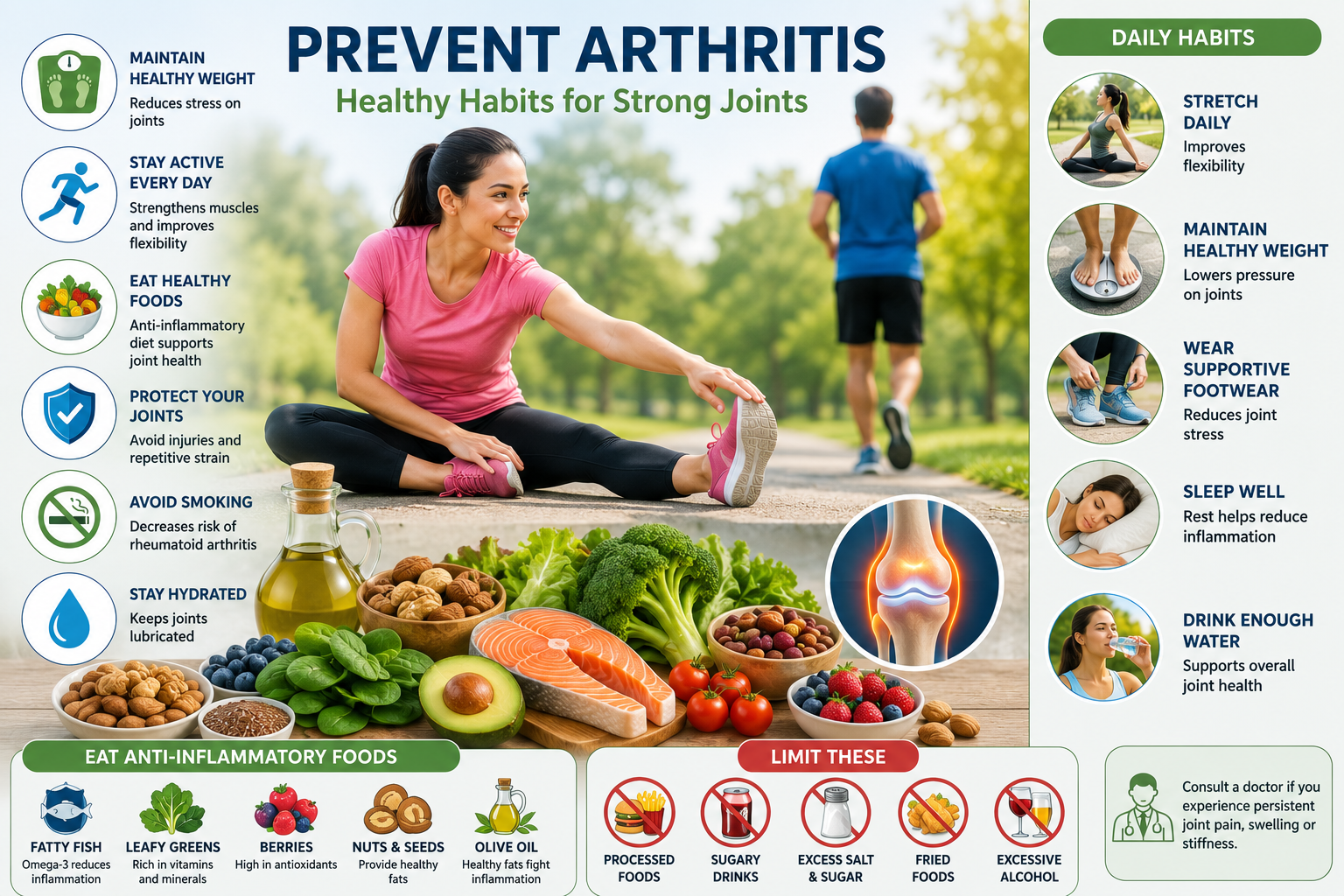
How to Prevent Arthritis
Arthritis is a common condition that affects the joints, causing pain, stiffness, swelling, and reduced mobility. While some forms of arthritis are linked to ageing or autoimmune diseases and cannot always be prevented, many healthy lifestyle habits can help lower the risk of certain types of arthritis, protect joint health, and improve overall quality of life.
Maintaining a healthy body weight, staying physically active, eating a balanced diet, and protecting your joints from injury are some of the most effective ways to support long-term joint health.
What Is Arthritis?
Arthritis is a group of conditions that cause inflammation or damage to one or more joints.
Common Types of Arthritis
- Osteoarthritis
- Rheumatoid arthritis
- Psoriatic arthritis
- Gout
- Juvenile arthritis
Each type has different causes and treatments, but many healthy habits benefit overall joint health.
Why Joint Health Is Important
Healthy joints allow your body to move comfortably and perform daily activities.
Benefits of Healthy Joints
- Better flexibility
- Improved mobility
- Reduced pain and stiffness
- Lower risk of injuries
- Greater independence as you age
Looking after your joints early in life may help reduce future joint problems.
Risk Factors for Arthritis
Some risk factors cannot be changed, while others can be managed.
Non-Modifiable Risk Factors
These Include
- Increasing age
- Family history
- Female sex (for some types of arthritis)
- Previous joint diseases
- Certain autoimmune conditions
Modifiable Risk Factors
Healthy lifestyle changes can help reduce these risks.
Examples
- Excess body weight
- Physical inactivity
- Joint injuries
- Smoking
- Poor diet
- Repetitive joint strain
How to Prevent Arthritis
1. Maintain a Healthy Weight
Extra body weight places additional pressure on weight-bearing joints such as the knees, hips, and ankles.
Benefits
- Reduces stress on joints
- Improves mobility
- Lowers the risk of osteoarthritis
- Supports overall health
Even modest weight loss can reduce pressure on the joints.
2. Exercise Regularly
Regular physical activity strengthens muscles that support the joints and helps maintain flexibility.
Best Exercises
- Walking
- Swimming
- Cycling
- Yoga
- Pilates
- Strength training
- Stretching exercises
Choose activities that are appropriate for your fitness level and health condition.
3. Eat an Anti-Inflammatory Diet
A balanced diet rich in whole foods supports overall health and may help reduce inflammation.
Healthy Foods
- Leafy green vegetables
- Colourful fruits
- Whole grains
- Beans
- Lentils
- Nuts
- Seeds
- Olive oil
- Fatty fish such as salmon and mackerel
These foods provide vitamins, minerals, fibre, and healthy fats.
4. Protect Your Joints
Avoid unnecessary strain on your joints during work, sports, and daily activities.
Joint Protection Tips
- Lift objects correctly
- Use proper posture
- Avoid repetitive movements when possible
- Wear supportive footwear
- Take breaks during repetitive tasks
Protecting joints may reduce wear and tear over time.
5. Strengthen Your Muscles
Strong muscles help support and stabilise the joints.
Helpful Activities
- Resistance training
- Bodyweight exercises
- Light weightlifting
- Elastic resistance bands
Consult a healthcare professional or qualified trainer if you are new to strength training.
6. Stay Flexible
Stretching helps maintain joint movement and muscle flexibility.
Good Choices
- Daily stretching
- Yoga
- Tai Chi
- Mobility exercises
Warm up before exercise and cool down afterwards.
7. Avoid Smoking
Smoking is associated with an increased risk of rheumatoid arthritis and may worsen overall joint health.
Stopping smoking benefits both your joints and general health.
8. Prevent Joint Injuries
Joint injuries can increase the risk of developing osteoarthritis later in life.
Safety Tips
- Wear protective sports equipment
- Warm up before exercise
- Use proper exercise techniques
- Strengthen supporting muscles
- Avoid overtraining
9. Stay Hydrated
Water helps lubricate joints and supports many normal body functions.
Drink enough water throughout the day, especially during exercise and hot weather.
10. Get Regular Health Check-ups
Early assessment of joint pain or stiffness can help identify problems before they become more severe.
Speak with a healthcare professional if you have ongoing joint symptoms or a family history of arthritis.
Best Foods for Healthy Joints
A balanced diet rich in vitamins, minerals, healthy fats, and antioxidants helps support joint health and overall well-being.
Fatty Fish
Fatty fish contain omega-3 fatty acids, which support normal body functions and are part of a healthy diet.
Healthy Choices
- Salmon
- Mackerel
- Sardines
- Tuna
- Trout
Aim to include fish in your diet as recommended by your local dietary guidelines.
Leafy Green Vegetables
Green vegetables provide vitamins, minerals, and antioxidants.
Best Options
- Spinach
- Kale
- Broccoli
- Swiss chard
- Collard greens
These vegetables also support overall bone and muscle health.
Colourful Fruits
Fruits are rich in vitamin C and antioxidants that help support healthy connective tissues.
Healthy Choices
- Oranges
- Berries
- Apples
- Grapes
- Kiwi
- Pineapple
Eat a variety of fruits every day.
Nuts and Seeds
Nuts and seeds provide healthy fats, magnesium, and vitamin E.
Good Choices
- Almonds
- Walnuts
- Chia seeds
- Flaxseeds
- Pumpkin seeds
Enjoy them in moderation as part of a balanced diet.
Olive Oil
Extra virgin olive oil is a healthy source of unsaturated fats.
Use it in salads, vegetables, and home-cooked meals instead of saturated fats when appropriate.
Whole Grains
Whole grains provide fibre and important nutrients.
Healthy Choices
- Oats
- Brown rice
- Whole wheat bread
- Whole wheat pasta
- Quinoa
Choose whole grains more often than refined grains.
Daily Habits to Help Prevent Arthritis
Stay Active Every Day
Regular movement helps keep joints flexible and muscles strong.
Aim for at least 150 minutes of moderate-intensity physical activity each week, such as:
- Brisk walking
- Cycling
- Swimming
- Dancing
Include muscle-strengthening activities on at least two days per week if appropriate for your fitness level.
Stretch Daily
Gentle stretching improves flexibility and helps maintain a healthy range of motion.
Good Options
- Morning stretches
- Yoga
- Pilates
- Mobility exercises
Stretch slowly without forcing painful movements.
Maintain Good Posture
Proper posture reduces unnecessary stress on the joints.
Helpful Tips
- Sit with back support
- Keep shoulders relaxed
- Avoid slouching
- Lift objects using your legs instead of your back
Wear Supportive Footwear
Well-fitting shoes help absorb impact and reduce pressure on the knees, hips, and ankles.
Choose footwear that provides good arch support and cushioning.
Sleep Well
Adequate sleep allows the body to recover and supports overall health.
Most adults should aim for 7–9 hours of quality sleep each night.
Foods and Habits to Limit
Some dietary and lifestyle habits may negatively affect overall health and contribute to excess body weight, which places additional stress on joints.
Limit Highly Processed Foods
Reduce foods high in:
- Added sugar
- Saturated fat
- Excess salt
Examples include:
- Fast food
- Fried foods
- Processed meats
- Sugary desserts
- Packaged snacks
Limit Sugary Drinks
Choose water, milk, or unsweetened beverages instead of:
- Soft drinks
- Energy drinks
- Sugar-sweetened juices
Avoid Smoking
Smoking is associated with poorer overall health and an increased risk of certain types of arthritis, including rheumatoid arthritis.
Quitting smoking benefits your joints and your general health.
Limit Excessive Alcohol
Heavy alcohol consumption may contribute to health problems and, in some people, can increase the risk of gout attacks.
Follow local health recommendations regarding alcohol intake.
When to See a Doctor
Consult a healthcare professional if you experience:
- Joint pain lasting more than a few weeks
- Persistent swelling
- Morning stiffness lasting longer than 30 minutes
- Difficulty moving a joint
- Joint redness or warmth
- Repeated joint injuries
- Symptoms that interfere with daily activities
Early diagnosis and treatment may help slow disease progression and improve quality of life.
Frequently Asked Questions
Can arthritis be prevented?
Not all forms of arthritis can be prevented. However, maintaining a healthy weight, exercising regularly, avoiding smoking, and protecting your joints may reduce the risk of certain types, such as osteoarthritis.
Which exercise is best for arthritis prevention?
Low-impact activities such as walking, swimming, cycling, yoga, and strength training help support joint health while improving flexibility and muscle strength.
Does being overweight increase the risk of arthritis?
Yes. Excess body weight increases pressure on weight-bearing joints, particularly the knees and hips, and is associated with a higher risk of osteoarthritis.
Are omega-3-rich foods good for joint health?
Omega-3-rich foods such as salmon, mackerel, walnuts, and flaxseeds can be part of a healthy, balanced diet that supports overall health.
Can young people develop arthritis?
Yes. Although arthritis is more common with ageing, some forms, such as juvenile idiopathic arthritis and certain autoimmune conditions, can affect children and young adults.
Key Takeaways
- Maintaining a healthy weight reduces stress on your joints.
- Exercise regularly to improve strength, flexibility, and mobility.
- Eat a balanced diet rich in fruits, vegetables, whole grains, healthy fats, and lean proteins.
- Protect your joints by using proper posture and avoiding unnecessary injuries.
- Avoid smoking and limit excessive alcohol consumption.
- Seek medical advice if you have persistent joint pain, swelling, or stiffness.
Conclusion
Healthy joints are essential for maintaining mobility, independence, and an active lifestyle. While some forms of arthritis cannot be completely prevented, many healthy habits can reduce the risk of joint damage and support long-term joint health. Regular physical activity, maintaining a healthy weight, eating a nutrient-rich diet, protecting your joints from injury, and avoiding smoking all contribute to stronger, healthier joints.
The earlier these habits are adopted, the greater the potential benefits over time. If you notice persistent joint pain, swelling, stiffness, or reduced movement, do not ignore the symptoms. Early medical evaluation and appropriate treatment can help manage joint conditions effectively and improve your quality of life.