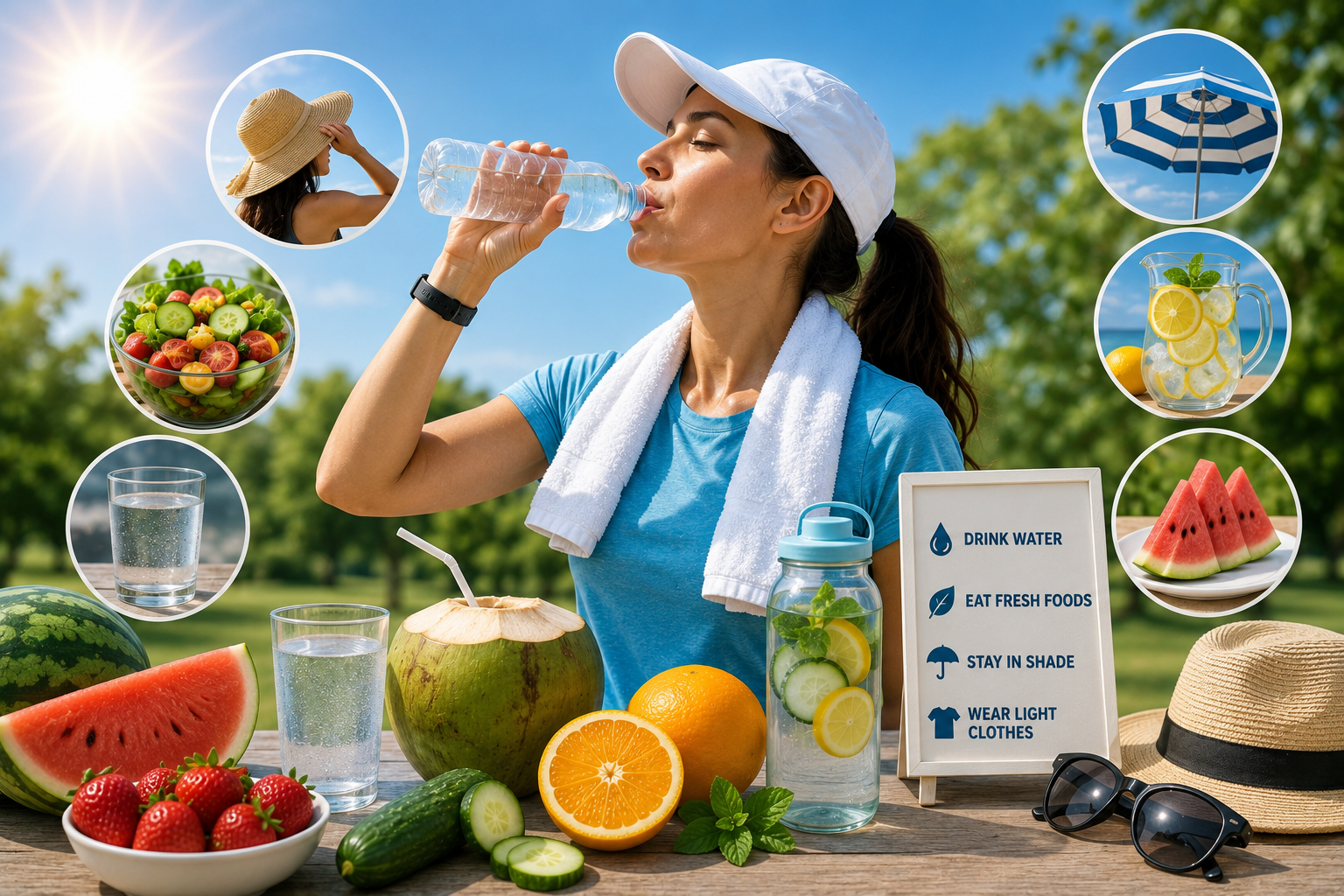
Prevent Dehydration in Summer
Summer brings longer days, outdoor activities, and higher temperatures. While enjoying the sunshine can be fun, excessive heat also increases the risk of dehydration. Dehydration occurs when the body loses more fluids than it takes in, making it difficult to maintain normal body functions. People of all ages can become dehydrated, but young children, older adults, athletes, and individuals working outdoors are at greater risk.
The good news is that dehydration is often preventable with healthy hydration habits, a balanced diet, and proper precautions during hot weather.
What Is Dehydration?
Dehydration happens when your body does not have enough water and electrolytes to function properly.
Water is essential for:
- Regulating body temperature
- Supporting digestion
- Transporting nutrients
- Lubricating joints
- Maintaining healthy blood circulation
- Removing waste through urine and sweat
When fluid loss exceeds fluid intake, dehydration can develop.
Why Does Dehydration Increase During Summer?
Hot weather causes the body to sweat more in order to cool itself. Sweating leads to the loss of water and electrolytes such as sodium and potassium.
Common Causes of Summer Dehydration
- High temperatures
- Excessive sweating
- Outdoor sports and exercise
- Not drinking enough water
- Fever
- Vomiting or diarrhoea
- Spending long hours in direct sunlight
Replacing lost fluids is important, especially during hot weather.
Signs and Symptoms of Dehydration
Recognising dehydration early can help prevent more serious health problems.
Mild to Moderate Symptoms
Common Signs
- Increased thirst
- Dry mouth
- Dry lips
- Headache
- Fatigue
- Dizziness
- Dark yellow urine
- Reduced urination
- Muscle cramps
Severe Symptoms
Severe dehydration requires immediate medical attention.
Warning Signs
- Confusion
- Extreme weakness
- Rapid heartbeat
- Very little or no urine
- Sunken eyes
- Fainting
- Difficulty staying awake
Seek urgent medical care if severe dehydration is suspected.
Who Is Most at Risk?
Certain groups are more likely to become dehydrated during summer.
Young Children
Children lose fluids more quickly and may not recognise when they are thirsty.
Older Adults
Ageing can reduce the sensation of thirst, increasing the risk of dehydration.
Athletes
Sports and exercise increase sweating and fluid loss.
Outdoor Workers
People who work in construction, farming, landscaping, or other outdoor jobs are exposed to heat for long periods.
People with Certain Medical Conditions
Conditions such as diabetes, kidney disease, vomiting, diarrhoea, or fever can increase the risk of dehydration.
How to Prevent Dehydration in Summer
1. Drink Water Regularly
Do not wait until you feel thirsty to drink water.
Healthy Hydration Tips
- Carry a reusable water bottle.
- Sip water throughout the day.
- Increase water intake during hot weather.
- Drink before, during, and after physical activity.
2. Eat Water-Rich Foods
Many fruits and vegetables have a high water content and help support hydration.
Best Hydrating Foods
- Watermelon
- Cucumber
- Oranges
- Strawberries
- Tomatoes
- Lettuce
- Celery
- Pineapple
These foods also provide vitamins and minerals that support overall health.
3. Avoid Excessive Heat Exposure
Try to stay indoors during the hottest part of the day, especially between late morning and mid-afternoon.
Stay Cool By
- Seeking shade outdoors
- Using fans or air conditioning
- Wearing light, breathable clothing
- Taking cool showers when needed
4. Wear Appropriate Clothing
Choose lightweight, loose-fitting, and light-coloured clothing made from breathable fabrics such as cotton to help your body stay cool.
5. Replace Fluids After Exercise
After physical activity, drink enough fluids to replace what has been lost through sweat.
For prolonged or intense exercise, a healthcare professional or sports nutrition expert can advise whether electrolyte-containing drinks are appropriate.
6. Drink Fluids Before You Feel Thirsty
Thirst is often an early sign that your body already needs more fluids.
Healthy Habit
- Drink small amounts of water regularly throughout the day.
- Increase fluid intake before spending time outdoors.
- Encourage children to drink water during playtime.
7. Take Regular Breaks in the Shade
If you are working or exercising outdoors, rest in a cool or shaded area to reduce heat exposure.
Benefits
- Reduces excessive sweating
- Helps lower body temperature
- Decreases the risk of heat exhaustion
8. Use an Umbrella or Hat
Protecting yourself from direct sunlight can help reduce heat stress.
Wear
- Wide-brimmed hats
- Sunglasses
- Breathable cotton clothing
- Light-coloured outfits
9. Keep Your Home Cool
Maintain a comfortable indoor temperature during extremely hot weather.
Helpful Tips
- Close curtains during the hottest hours
- Use fans or air conditioning if available
- Open windows during cooler parts of the day
- Stay in well-ventilated rooms
10. Monitor Children and Older Adults
Young children and older adults may not recognise the early signs of dehydration.
Watch for
- Dry lips
- Less frequent urination
- Fatigue
- Irritability
- Dizziness
- Unusual sleepiness
Encourage them to drink water regularly, especially during hot weather.
Best Drinks for Staying Hydrated
Choosing the right drinks helps replace fluids lost through sweating.
Water
Water is the best choice for staying hydrated.
Drink water regularly throughout the day, even if you are not thirsty.
Milk
Milk provides fluids along with protein, calcium, and other nutrients.
It can be a good hydration option for children and adults.
Coconut Water
Unsweetened coconut water contains natural electrolytes and can help replace fluids after sweating.
Choose varieties without added sugar.
Homemade Lemon Water
Fresh lemon water is refreshing and helps increase fluid intake.
Avoid adding excessive sugar.
Fresh Fruit Smoothies
Smoothies made with fresh fruits, milk, or yogurt provide hydration and important nutrients.
Choose homemade smoothies without added sugar.
Foods and Drinks to Limit
Some foods and beverages may contribute to dehydration or provide little nutritional value.
Limit
- Sugary soft drinks
- Energy drinks
- Excessive caffeinated beverages
- Highly processed salty snacks
- Fried foods
- Alcohol (for adults)
Replacing these with healthier choices supports better hydration and overall health.
Daily Hydration Tips
Start Your Day with Water
Drink a glass of water soon after waking up to begin replenishing fluids.
Carry a Water Bottle
Having water readily available makes it easier to drink throughout the day.
Eat More Fruits and Vegetables
Include water-rich foods such as:
- Watermelon
- Cucumbers
- Tomatoes
- Oranges
- Strawberries
- Lettuce
- Celery
Drink More During Physical Activity
Increase fluid intake before, during, and after exercise or outdoor activities.
Check Your Urine Colour
Light yellow urine usually indicates good hydration, while dark yellow urine may suggest you need more fluids. Urine colour alone is not a diagnosis but can be a useful general guide.
When to See a Doctor
Seek medical attention immediately if dehydration is accompanied by:
- Confusion
- Fainting
- Very little or no urine
- Rapid heartbeat
- Severe dizziness
- Persistent vomiting
- Inability to keep fluids down
- High fever
- Symptoms that do not improve after drinking fluids
Young children, older adults, and people with chronic medical conditions should be evaluated promptly if dehydration is suspected.
Frequently Asked Questions
How much water should I drink during summer?
Fluid needs vary depending on age, body size, activity level, and weather conditions. Drink water regularly throughout the day and increase your intake during hot weather, exercise, or heavy sweating.
Is coconut water good for hydration?
Yes. Unsweetened coconut water can help replace fluids and naturally contains electrolytes. Water should still remain your primary source of hydration.
Which fruits help prevent dehydration?
Water-rich fruits such as watermelon, oranges, strawberries, grapes, and pineapple help increase fluid intake while providing vitamins and minerals.
Can children become dehydrated quickly?
Yes. Children lose fluids faster than adults and may not recognise when they are thirsty. Encourage regular water breaks during outdoor play, especially in hot weather.
What are the first signs of dehydration?
Early signs include thirst, dry mouth, headache, fatigue, dizziness, dark yellow urine, and reduced urination. Drinking fluids promptly may help prevent dehydration from worsening.
Key Takeaways
- Dehydration is common during hot weather but is often preventable.
- Drink water regularly instead of waiting until you feel thirsty.
- Eat water-rich fruits and vegetables every day.
- Wear lightweight clothing and avoid prolonged exposure to extreme heat.
- Replace fluids lost through exercise and outdoor activities.
- Recognise early signs of dehydration and seek medical care for severe symptoms.
Conclusion
Staying hydrated during summer is essential for maintaining energy, supporting normal body functions, and preventing heat-related illnesses. Simple habits such as drinking water regularly, eating water-rich foods, wearing breathable clothing, and avoiding excessive heat exposure can significantly reduce the risk of dehydration.
Children, older adults, athletes, and outdoor workers should take extra precautions because they are more vulnerable to fluid loss. By making hydration a daily priority and recognising the early warning signs of dehydration, you can enjoy the summer season safely while protecting your overall health.