How to Prevent Osteoporosis
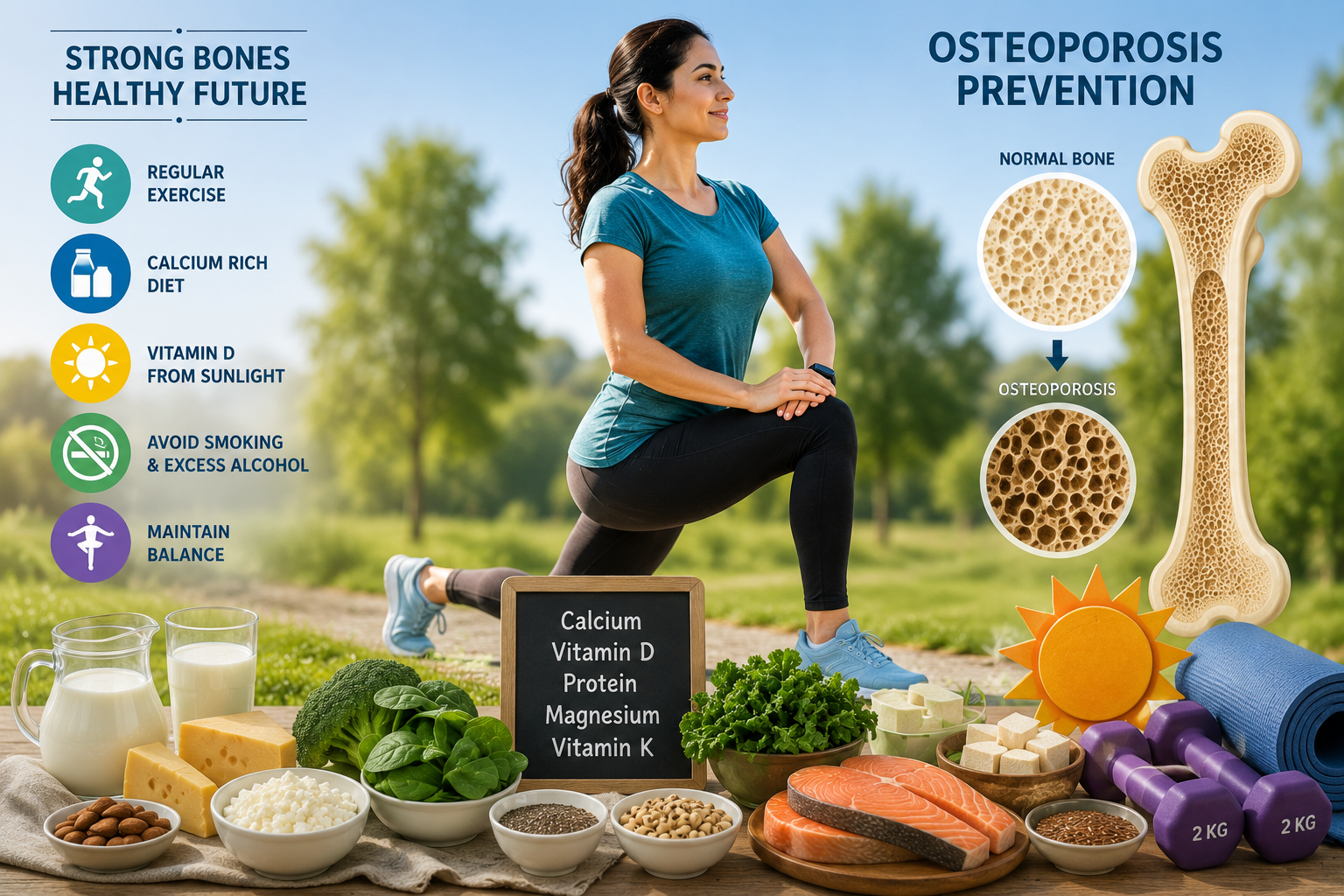
Osteoporosis is a condition that causes bones to become weak, fragile, and more likely to break. It develops gradually over time as bone density decreases, often without noticeable symptoms until a fracture occurs. Although osteoporosis is more common in older adults, especially after menopause, taking preventive steps early in life can help maintain strong bones and reduce the risk of fractures later.
Healthy eating, regular exercise, and good lifestyle habits all play an important role in protecting bone health throughout life.
What Is Osteoporosis?
Osteoporosis is a bone disease in which bones lose density and strength, making them more likely to fracture.
Common Areas Affected
- Hip
- Spine
- Wrist
- Shoulder
- Pelvis
People with osteoporosis may experience fractures even after a minor fall or injury.
Why Bone Health Is Important
Bones provide structure, protect organs, support movement, and store important minerals such as calcium.
Benefits of Strong Bones
- Lower risk of fractures
- Better posture
- Improved mobility
- Greater independence with age
- Support for daily activities
Maintaining bone health throughout life helps reduce the risk of osteoporosis.
Risk Factors for Osteoporosis
Some risk factors cannot be changed, while others can be managed through healthy lifestyle choices.
Non-Modifiable Risk Factors
These Include
- Increasing age
- Female sex
- Family history of osteoporosis
- Early menopause
- Small body frame
Modifiable Risk Factors
These are lifestyle factors that can often be improved.
Examples
- Low calcium intake
- Vitamin D deficiency
- Physical inactivity
- Smoking
- Excessive alcohol consumption
- Poor nutrition
- Long-term use of certain medications (such as corticosteroids, under medical supervision)
How to Prevent Osteoporosis
1. Eat Calcium-Rich Foods
Calcium is one of the most important minerals for building and maintaining strong bones.
Best Calcium Sources
- Milk
- Yogurt
- Cheese
- Tofu
- Broccoli
- Kale
- Almonds
- Fortified plant-based milk
- Sardines with bones
Aim to include calcium-rich foods in your daily diet.
2. Get Enough Vitamin D
Vitamin D helps the body absorb calcium efficiently.
Good Sources of Vitamin D
- Safe sunlight exposure
- Fatty fish
- Egg yolks
- Fortified milk
- Fortified breakfast cereals
If a deficiency is suspected, consult a healthcare professional about testing and appropriate treatment.
3. Exercise Regularly
Regular physical activity helps strengthen bones and muscles.
Bone-Healthy Exercises
- Walking
- Jogging
- Dancing
- Stair climbing
- Resistance training
- Strength training
- Tennis
Weight-bearing and muscle-strengthening exercises are particularly beneficial for bone health.
4. Eat Enough Protein
Protein is essential for maintaining healthy bones and muscles.
Healthy Protein Sources
- Fish
- Chicken
- Eggs
- Beans
- Lentils
- Tofu
- Greek yogurt
A balanced diet should include adequate protein along with calcium and vitamin D.
5. Maintain a Healthy Body Weight
Being significantly underweight may increase the risk of osteoporosis, while maintaining a healthy weight supports bone strength and overall health.
Avoid extreme dieting or rapid weight loss without medical supervision.
6. Avoid Smoking
Smoking is associated with reduced bone density and a higher risk of fractures.
Stopping smoking benefits both bone health and overall health.
7. Limit Alcohol Consumption
Excessive alcohol intake may increase the risk of bone loss and falls.
If you drink alcohol, do so in moderation according to your local health guidelines.
8. Reduce the Risk of Falls
Preventing falls is especially important for older adults.
Ways to Reduce Fall Risk
- Wear supportive footwear
- Keep floors free of clutter
- Install adequate lighting
- Use handrails on stairs
- Exercise to improve balance and strength
Reducing falls helps lower the chance of fractures.
9. Include Magnesium and Vitamin K in Your Diet
These nutrients also contribute to maintaining healthy bones.
Good Food Sources
- Leafy green vegetables
- Nuts
- Seeds
- Whole grains
- Avocados
- Beans
A varied diet naturally provides many nutrients that support bone health.
10. Have Regular Health Check-ups
People at higher risk of osteoporosis should discuss bone health with their healthcare provider.
Bone density testing may be recommended based on age, medical history, risk factors, or previous fractures.
Best Foods for Strong Bones
Eating a balanced diet rich in bone-supporting nutrients helps maintain bone density and reduce the risk of osteoporosis.
Dairy Products
Dairy foods are excellent sources of calcium and protein.
Healthy Choices
- Milk
- Yogurt
- Cheese
Choose low-fat or fat-free options if recommended by your healthcare provider.
Leafy Green Vegetables
Many green vegetables contain calcium, magnesium, and vitamin K.
Best Options
- Spinach
- Kale
- Broccoli
- Bok choy
- Collard greens
Include a variety of vegetables in your weekly meals.
Fatty Fish
Certain fish provide both vitamin D and healthy omega-3 fats.
Healthy Choices
- Salmon
- Sardines
- Mackerel
- Trout
Fish with edible bones, such as sardines, also provide calcium.
Nuts and Seeds
These foods provide healthy fats, magnesium, and other nutrients that support bone health.
Healthy Options
- Almonds
- Walnuts
- Sesame seeds
- Chia seeds
- Pumpkin seeds
Enjoy them in moderation as part of a balanced diet.
Beans and Lentils
Legumes provide protein, magnesium, and other important minerals.
Good Choices
- Lentils
- Kidney beans
- Chickpeas
- Black beans
- Soybeans
They are excellent plant-based protein sources.
Daily Habits to Help Prevent Osteoporosis
Stay Physically Active
Regular exercise helps maintain bone strength and improves balance.
Activities That Support Bone Health
- Walking
- Hiking
- Dancing
- Tennis
- Resistance training
- Bodyweight exercises
Aim for regular physical activity most days of the week.
Spend Time Outdoors
Safe sunlight exposure helps the body produce vitamin D.
Follow local public health recommendations for safe sun exposure and avoid excessive ultraviolet (UV) exposure that can increase the risk of skin damage.
Maintain Good Posture
Good posture helps reduce strain on the spine and supports overall musculoskeletal health.
Helpful Habits
- Sit upright
- Avoid prolonged slouching
- Strengthen core muscles
- Lift heavy objects correctly
Prevent Falls at Home
Reducing fall risks is especially important for older adults.
Home Safety Tips
- Remove loose rugs
- Keep walkways clear
- Install grab bars where needed
- Improve lighting
- Wear supportive, non-slip footwear
Have Regular Health Check-ups
Routine medical visits help identify bone health concerns early.
Your healthcare provider may recommend:
- Bone density testing
- Vitamin D testing
- Calcium assessment
- Fall risk evaluation
Foods and Habits to Limit
Some foods and lifestyle habits may negatively affect bone health when consumed excessively.
Limit Highly Processed Foods
Reduce foods high in:
- Added salt
- Added sugar
- Unhealthy fats
Examples include:
- Fast food
- Chips
- Processed meats
- Sugary desserts
Limit Sugary Soft Drinks
Soft drinks can replace healthier beverages such as milk and water, reducing intake of bone-supporting nutrients.
Choose water or milk more often.
Avoid Smoking
Smoking is linked with reduced bone density and an increased risk of fractures.
Quitting smoking benefits bone health and overall well-being.
Limit Excessive Alcohol
Heavy alcohol consumption may interfere with bone health and increase the risk of falls.
Follow local health recommendations regarding alcohol intake.
When to See a Doctor
Consult a healthcare professional if you:
- Experience repeated bone fractures
- Notice a loss of height
- Develop persistent back pain
- Have a family history of osteoporosis
- Enter menopause and have concerns about bone health
- Take long-term corticosteroid medication
- Have conditions that affect nutrient absorption or bone health
Early assessment can help identify osteoporosis or reduced bone density before fractures occur.
Frequently Asked Questions
Can osteoporosis be prevented?
Although not every case can be prevented, healthy lifestyle habits—including adequate calcium and vitamin D intake, regular exercise, and avoiding smoking—can significantly reduce the risk.
Which exercise is best for preventing osteoporosis?
Weight-bearing and muscle-strengthening exercises such as walking, resistance training, dancing, stair climbing, and tennis help support bone health.
Is calcium alone enough to prevent osteoporosis?
No. Healthy bones require several nutrients, including vitamin D, protein, magnesium, and vitamin K, along with regular physical activity and other healthy lifestyle habits.
Who is most at risk for osteoporosis?
Older adults, postmenopausal women, people with a family history of osteoporosis, individuals with low body weight, smokers, and people taking certain long-term medications may have a higher risk.
At what age should I start protecting my bones?
Bone health should be supported throughout life. Building strong bones during childhood and early adulthood and maintaining healthy habits as you age can help lower the risk of osteoporosis later in life.
Key Takeaways
- Osteoporosis weakens bones and increases the risk of fractures.
- A diet rich in calcium, vitamin D, protein, magnesium, and vitamin K supports healthy bones.
- Regular weight-bearing and strength-training exercises help maintain bone density.
- Avoid smoking and limit excessive alcohol consumption.
- Reduce fall risks by improving balance, strength, and home safety.
- Speak with a healthcare professional if you have risk factors or concerns about bone health.
Conclusion
Preventing osteoporosis starts with healthy daily habits that support strong bones throughout life. Eating a balanced diet rich in calcium, vitamin D, protein, and other essential nutrients, combined with regular weight-bearing exercise, helps maintain bone strength and reduce the risk of fractures. Avoiding smoking, limiting alcohol intake, maintaining a healthy body weight, and preventing falls are also important steps toward lifelong bone health.
Even though ageing and genetics cannot be changed, many lifestyle factors that influence bone health can be improved. Regular medical check-ups and early assessment of risk factors allow timely intervention when needed. By making bone health a priority today, you can help protect your mobility, independence, and overall quality of life in the future.