Omega-3 Benefits for Kids
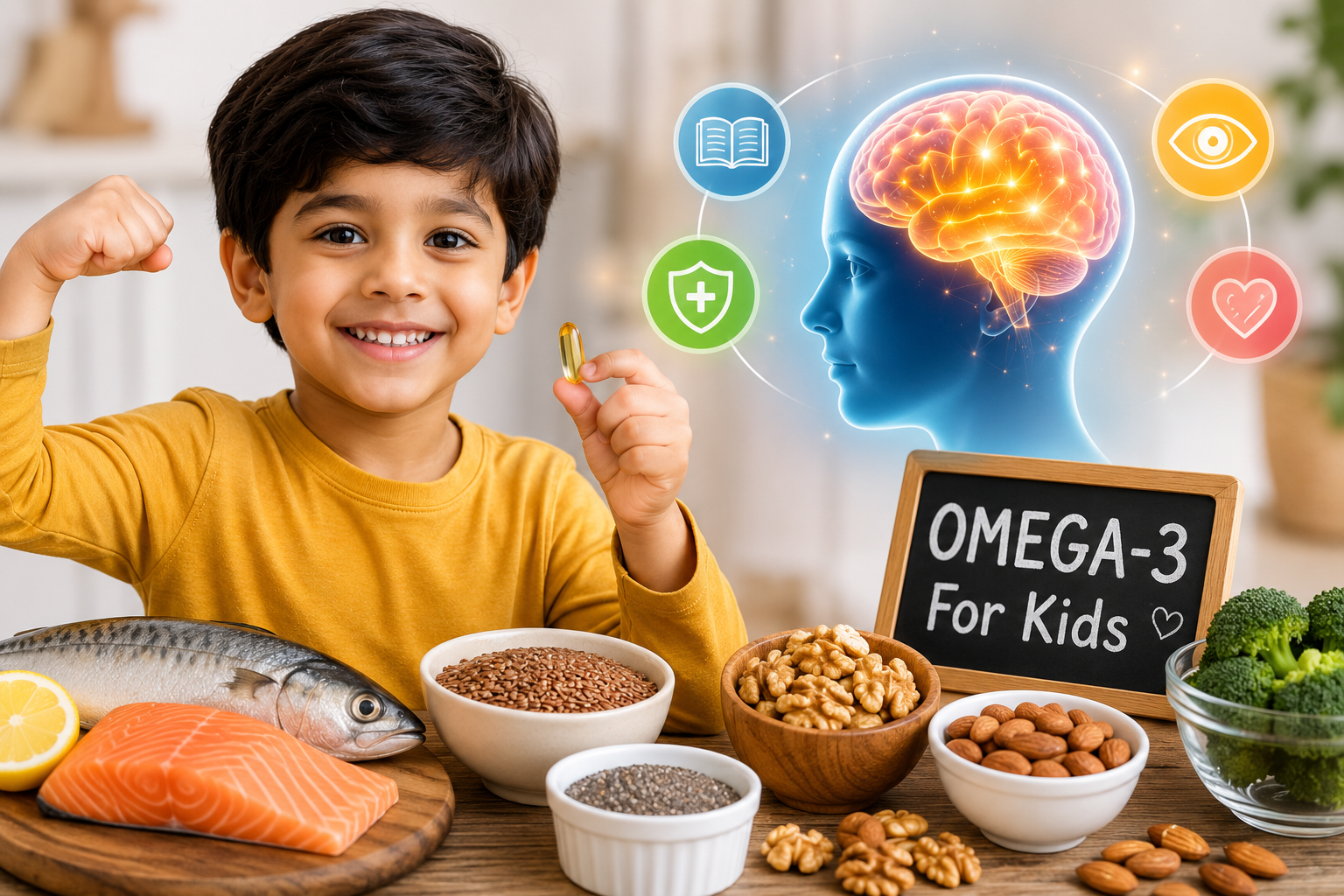
Omega-3 fatty acids are among the most important nutrients for a child’s growth and development. These healthy fats play a vital role in building the brain, supporting vision, strengthening the immune system, and promoting overall physical and mental well-being. Since the body cannot produce enough omega-3 on its own, children must obtain it through a balanced diet or, when recommended by a healthcare professional, appropriate supplements.
From infancy through adolescence, adequate omega-3 intake supports healthy development during every stage of childhood. Understanding its benefits can help parents make informed choices about their child’s daily nutrition.
What Is Omega-3?
Omega-3 is a group of essential fatty acids that the body needs for normal growth and function. Unlike some other nutrients, omega-3 cannot be produced in sufficient amounts by the body, making dietary intake essential.
Main Types of Omega-3
DHA (Docosahexaenoic Acid)
DHA is a major structural component of the brain and retina. It is especially important for brain development, learning, memory, and healthy vision.
EPA (Eicosapentaenoic Acid)
EPA supports heart health, immune function, and helps regulate inflammation throughout the body.
ALA (Alpha-Linolenic Acid)
ALA is found mainly in plant-based foods such as flaxseeds, chia seeds, walnuts, and soybeans. The body converts only a small amount of ALA into DHA and EPA.
Why Omega-3 Is Important During Childhood
A child’s brain develops rapidly throughout infancy and childhood. Omega-3 fatty acids help build healthy brain cells, support communication between nerve cells, and contribute to learning, attention, and emotional well-being.
Adequate omega-3 intake also supports healthy growth, vision, and cardiovascular health as children develop.
Top Omega-3 Benefits for Kids
1. Supports Healthy Brain Development
DHA is one of the primary building blocks of the brain. It helps develop healthy brain tissue and supports cognitive function during childhood.
Children who consume enough omega-3 as part of a balanced diet may benefit from improved learning and healthy brain development.
2. Improves Memory and Concentration
Omega-3 fatty acids help brain cells communicate more efficiently, supporting attention, concentration, and memory.
Combined with good sleep, physical activity, and balanced nutrition, omega-3-rich foods can contribute to better academic performance and learning.
3. Promotes Healthy Vision
The retina contains high levels of DHA, making omega-3 important for maintaining healthy eyesight.
Including omega-3-rich foods in a child’s diet supports normal visual development and long-term eye health.
4. Strengthens the Immune System
Omega-3 fatty acids help regulate the body’s immune response and support overall immune function.
A strong immune system helps children fight infections and recover more effectively from common illnesses.
5. Supports Heart Health
Although heart disease is more common in adults, developing healthy eating habits during childhood helps establish lifelong cardiovascular health.
Omega-3 contributes to healthy blood vessels and supports normal heart function.
6. Supports Healthy Emotional Well-Being
Omega-3 fatty acids contribute to normal brain function and may help support emotional health in growing children. A balanced diet that includes omega-3-rich foods can be part of an overall healthy lifestyle that supports mood and emotional development.
Good nutrition, along with adequate sleep, physical activity, and a supportive environment, plays an important role in a child’s mental well-being.
7. Helps Maintain Healthy Bones and Joints
Omega-3 may support healthy bones and joints by helping regulate the body’s natural inflammatory processes. Active children who participate in sports and outdoor activities benefit from a balanced diet that supports overall musculoskeletal health.
When combined with calcium, vitamin D, and regular exercise, omega-3 contributes to healthy growth.
8. Supports Healthy Skin
Healthy fats help maintain the skin’s natural moisture barrier. Omega-3 may help keep children’s skin hydrated and support overall skin health.
A nutritious diet that includes healthy fats, fruits, vegetables, and adequate water intake contributes to healthier skin.
9. Encourages Healthy Sleep
Proper nutrition supports healthy sleep patterns, and omega-3 is one of several nutrients involved in normal brain function. Good sleep is essential for growth, learning, memory, and overall development.
Establishing a consistent bedtime routine alongside a healthy diet helps children get the quality sleep they need.
10. Supports Overall Growth and Development
From brain development and vision to immunity and heart health, omega-3 plays a role in many important body functions. Including omega-3-rich foods as part of a balanced diet helps children receive nutrients necessary for healthy growth throughout childhood.
Best Sources of Omega-3 for Kids
Parents can include a variety of omega-3-rich foods in their child’s meals to support healthy development.
Fish Rich in Omega-3
Fatty fish are among the best natural sources of DHA and EPA.
Good options include:
- Salmon
- Sardines
- Mackerel
- Trout
- Herring
Choose age-appropriate servings and ensure fish is cooked properly.
Plant-Based Sources
Children following vegetarian diets can obtain ALA from plant foods such as:
- Flaxseeds
- Chia seeds
- Walnuts
- Soybeans
- Edamame
- Canola oil
Although these foods are nutritious, the body converts only a limited amount of ALA into DHA and EPA.
Omega-3 Fortified Foods
Some foods are fortified with omega-3, including:
- Milk
- Yogurt
- Eggs
- Breakfast cereals
Check nutrition labels to identify fortified products.
Tips for Including Omega-3 in Your Child’s Diet
Serve Fish Regularly
Include cooked fatty fish in family meals when appropriate and according to local dietary recommendations.
Add Seeds to Everyday Foods
Sprinkle ground flaxseeds or chia seeds into oatmeal, yogurt, smoothies, or homemade muffins.
Offer Nutritious Snacks
Walnuts mixed with dried fruit or yogurt make healthy snack options for older children who can safely eat nuts.
Make Smoothies More Nutritious
Blend milk or yogurt with fruit and chia seeds for a delicious omega-3-rich smoothie.
Consult a Healthcare Professional Before Using Supplements
Most children can obtain omega-3 through a balanced diet. If supplementation is being considered, consult a pediatrician or registered dietitian for personalized guidance.
Frequently Asked Questions
Why is omega-3 important for children?
Omega-3 supports healthy brain development, vision, heart health, immune function, and overall growth throughout childhood.
Which foods contain the most omega-3?
Fatty fish such as salmon, sardines, and mackerel are the richest natural sources. Plant-based options include flaxseeds, chia seeds, walnuts, and soybeans.
Can vegetarian children get enough omega-3?
Yes. Vegetarian children can consume ALA-rich foods like flaxseeds, chia seeds, walnuts, and soy products. A healthcare professional can advise if additional DHA sources are needed.
Should every child take omega-3 supplements?
Not necessarily. Many children meet their nutritional needs through a balanced diet. Supplements should only be used when recommended by a qualified healthcare professional.
Can omega-3 improve learning and memory?
Omega-3, particularly DHA, supports normal brain development and cognitive function. Combined with healthy eating, regular physical activity, adequate sleep, and good study habits, it contributes to healthy learning and memory.
Key Takeaways
- Omega-3 fatty acids are essential nutrients that support healthy childhood development.
- DHA is particularly important for brain development, learning, memory, and eye health.
- Omega-3 also supports immunity, heart health, skin health, emotional well-being, and overall growth.
- Excellent food sources include fatty fish, flaxseeds, chia seeds, walnuts, soy products, and fortified foods.
- A balanced diet remains the best way for most children to obtain adequate omega-3.
Conclusion
Omega-3 fatty acids are an important part of a healthy diet for growing children. They support brain development, vision, immunity, heart health, and many other essential body functions that contribute to lifelong wellness. Including a variety of omega-3-rich foods in daily meals helps ensure children receive the nutrients they need during their most important years of growth.
Parents can encourage healthy eating habits by serving balanced meals, introducing nutritious foods early, and creating positive mealtime experiences. Combined with regular physical activity, quality sleep, and routine healthcare, adequate omega-3 intake supports healthy development and long-term well-being.