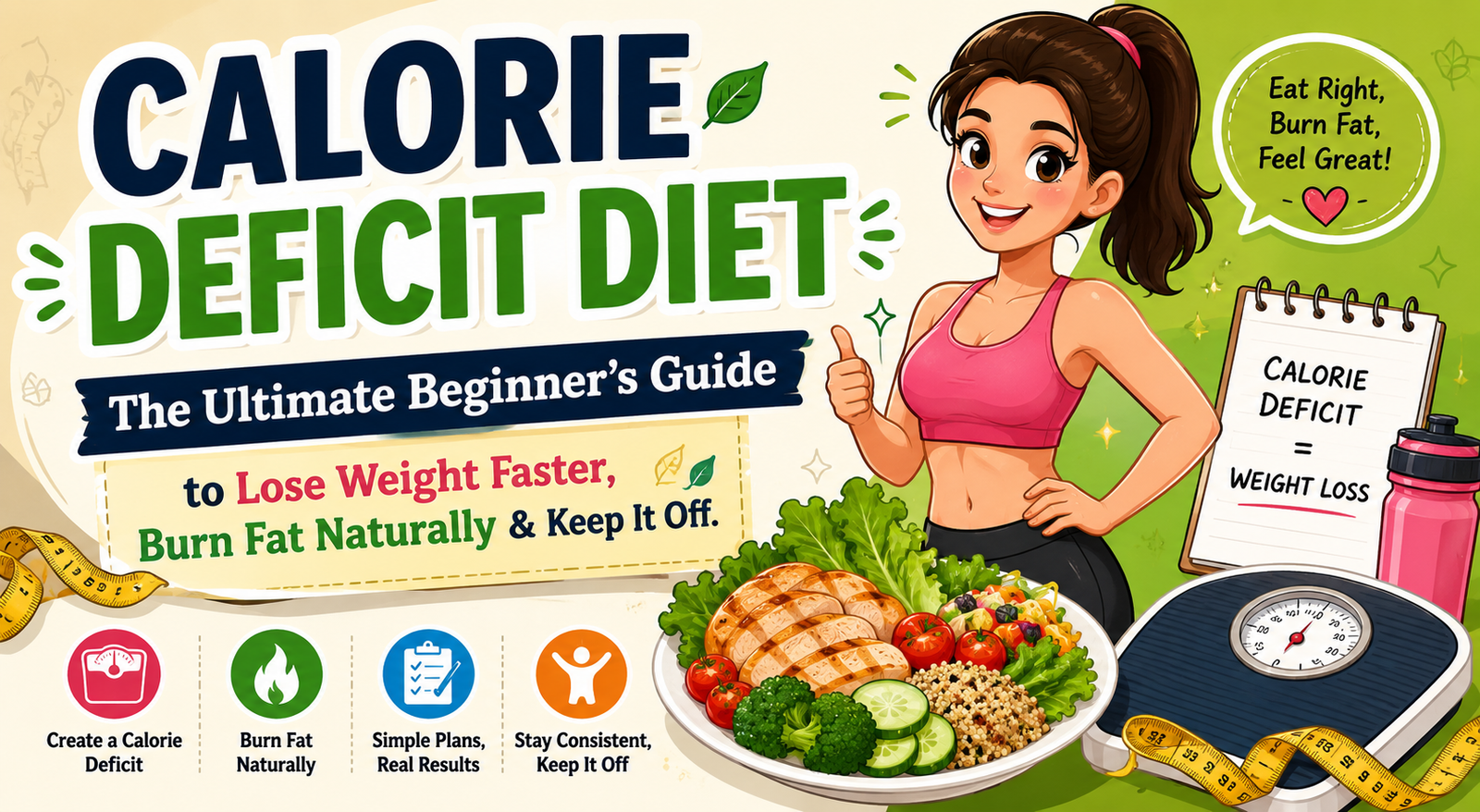
Calorie Deficit Diet: The Ultimate Beginner’s Guide to Lose Weight Faster, Burn Fat Naturally & Keep It Off
Losing weight doesn’t have to involve extreme diets, expensive supplements, or cutting out every food you enjoy. One of the most effective and scientifically supported approaches to sustainable fat loss is following a Calorie Deficit Diet. Whether your goal is to lose a few pounds, improve your overall health, or maintain your ideal weight, understanding how calorie balance works is the foundation of long-term success.
A calorie deficit occurs when you consistently consume fewer calories than your body burns throughout the day. This encourages your body to use stored fat as an energy source, resulting in gradual and healthy weight loss. While the concept sounds simple, many beginners struggle because they either eat too little, underestimate portion sizes, or follow unrealistic diet plans that are difficult to maintain.
In this comprehensive guide by PureWellLife, you’ll learn what a calorie deficit is, why it works, how to calculate your daily calorie needs, and how to create a sustainable eating plan. You’ll also discover common mistakes, practical strategies, healthy food choices, and expert-backed tips to help you burn fat naturally while preserving muscle and maintaining your energy levels. By the end of this guide, you’ll have the confidence to build a calorie deficit that fits your lifestyle rather than fighting against it.
What Is a Calorie Deficit Diet?
A Calorie Deficit Diet is an eating approach where you consume fewer calories than your body burns each day. Your body requires energy for breathing, digestion, movement, exercise, and countless other functions. When calorie intake is lower than calorie expenditure, the body begins using stored body fat for energy, leading to gradual weight loss.
Unlike restrictive fad diets, a calorie deficit does not eliminate entire food groups. Instead, it focuses on balancing energy intake while still providing enough nutrients for good health. This flexibility makes it easier to enjoy favorite foods in moderation while maintaining steady progress.
A sustainable calorie deficit is generally considered more effective than rapid crash diets because it supports healthier habits, reduces muscle loss, and improves long-term weight maintenance.
How Does a Calorie Deficit Work?
The human body constantly burns calories to perform basic functions such as maintaining body temperature, circulating blood, repairing tissues, and supporting physical activity. Together, these processes determine your Total Daily Energy Expenditure (TDEE).
When your daily calorie intake is lower than your TDEE, your body must obtain the missing energy from stored sources, primarily body fat. Over time, this creates gradual fat loss. The process is based on the principle of calories in vs calories out, which remains one of the most well-established concepts in nutrition science.
Weight loss doesn’t happen overnight. Small daily deficits accumulate over weeks and months, making consistency far more important than perfection.
Why Is a Calorie Deficit Important for Weight Loss?
A calorie deficit is the fundamental requirement for reducing body fat. Although different eating patterns—such as Mediterranean, vegetarian, high-protein, or lower-carbohydrate diets—can all support weight loss, they only do so when they help create a calorie deficit.
Some important benefits include:
- Encourages steady fat loss
- Supports better blood sugar control
- May reduce risk factors for chronic disease
- Improves body composition
- Helps establish healthier eating habits
- Makes long-term weight management easier
Rather than focusing on quick fixes, a calorie deficit emphasizes sustainable lifestyle changes that can produce lasting results without unnecessary restrictions.
Calories In vs Calories Out Explained
Understanding Calories In vs Calories Out is one of the most important lessons for anyone beginning a weight-loss journey. “Calories in” refers to the energy you consume from foods and beverages. “Calories out” includes everything your body burns through metabolism, digestion, daily activities, and exercise.
| Calories In | Calories Out |
| Food | Basal Metabolic Rate (BMR) |
| Drinks | Physical Activity |
| Snacks | Exercise |
| Desserts | Digestion (Thermic Effect of Food) |
| Alcohol | Non-Exercise Activity (Walking, Standing, Household Work) |
When calories in equal calories out, body weight generally stays stable. Eating more calories than you burn typically leads to weight gain, while consuming fewer calories than you burn creates the conditions for fat loss.
However, calorie quality also matters. Nutrient-dense foods provide vitamins, minerals, fiber, and protein that improve fullness and support overall health, making it easier to stay within your calorie goals.
How to Calculate Your Daily Calorie Needs
Before creating a calorie deficit, you first need to estimate how many calories your body burns each day. This number varies depending on factors such as age, gender, body size, muscle mass, activity level, and overall health.
The process generally involves three steps:
Step 1: Estimate Your Basal Metabolic Rate (BMR)
Your BMR represents the calories your body burns at complete rest. It accounts for approximately 60–70% of your daily calorie expenditure.
Step 2: Calculate Your Total Daily Energy Expenditure (TDEE)
Multiply your BMR by your activity level to estimate your maintenance calories.
| Activity Level | Multiplier |
| Sedentary | 1.2 |
| Lightly Active | 1.375 |
| Moderately Active | 1.55 |
| Very Active | 1.725 |
| Extremely Active | 1.9 |
Step 3: Create Your Deficit
Subtract approximately 300–500 calories from your maintenance calories for slow and sustainable fat loss.
For example:
- Maintenance Calories: 2,300
- Target Calories: 1,800–2,000
- Estimated Weight Loss: Around 0.25–0.5 kg (0.5–1 lb) per week, depending on individual factors.
This gradual approach is easier to maintain and helps preserve muscle mass while reducing body fat.
How to Create a Calorie Deficit
Creating a calorie deficit doesn’t mean starving yourself. Instead, it involves making smart, manageable adjustments that reduce calorie intake while maintaining proper nutrition. Most people achieve the best results by combining healthier eating habits with regular physical activity rather than relying on one strategy alone.
Here are practical ways to create a calorie deficit:
Eat More High-Protein Foods
Protein helps increase fullness, supports muscle maintenance during weight loss, and has a higher thermic effect than carbohydrates or fats. Good sources include lean poultry, fish, eggs, beans, lentils, Greek yogurt, tofu, and low-fat dairy products.
Prioritize Fiber-Rich Foods
Vegetables, fruits, legumes, and whole grains provide fiber that slows digestion and helps control hunger. Meals rich in fiber often keep you satisfied longer, reducing the temptation to snack unnecessarily.
Reduce Liquid Calories
Sugary beverages, flavored coffees, soft drinks, and alcohol can contribute hundreds of calories without providing much satiety. Replacing these drinks with water, sparkling water, or unsweetened tea can significantly lower daily calorie intake while supporting hydration.
Control Portion Sizes
Even healthy foods can contribute to excess calorie intake when portions become too large. Measuring serving sizes, using smaller plates, and eating slowly can improve portion awareness without making meals feel restrictive.
Frequently Asked Questions (FAQs)
1. What is a calorie deficit diet?
A calorie deficit diet means consuming fewer calories than your body burns each day. This encourages your body to use stored fat as an energy source. A balanced calorie deficit should include nutritious foods, sufficient protein, healthy fats, fiber-rich carbohydrates, and regular physical activity to support sustainable fat loss while maintaining overall health.
2. How much of a calorie deficit should I create?
A moderate calorie deficit of approximately 300–500 calories per day is often suitable for many adults aiming for gradual weight loss. Individual calorie needs vary based on age, sex, body composition, activity level, and health status. Personalized guidance from a healthcare professional can be beneficial.
3. Can I lose weight without exercising?
Yes. Weight loss primarily depends on maintaining a calorie deficit. However, exercise supports muscle preservation, cardiovascular health, strength, mobility, and mental well-being. Combining both healthy eating and physical activity generally provides the best long-term results and overall health benefits.
4. Should I avoid fat while dieting?
No. Healthy fats are essential for hormone production, nutrient absorption, and overall health. Foods such as avocados, olive oil, nuts, seeds, and fatty fish can be included in appropriate portions. The goal is balanced nutrition rather than eliminating entire macronutrients.
5. Is intermittent fasting better than a calorie deficit?
Intermittent fasting is an eating schedule, not a weight-loss mechanism by itself. It can help some people naturally reduce calorie intake, but successful weight loss still depends on maintaining a calorie deficit over time. Choose the approach that best fits your lifestyle and preferences.
Key Takeaways
- A calorie deficit is the foundation of sustainable fat loss.
- Moderate deficits are generally easier to maintain than extreme restrictions.
- Prioritize protein, fiber, and minimally processed foods.
- Resistance training helps preserve muscle during weight loss.
- Portion control is just as important as food quality.
- Sleep and stress management influence hunger and weight management.
- Consistency usually produces better results than short-term perfection.
- Healthy habits support long-term weight maintenance.
- Avoid crash diets and unrealistic expectations.
- Focus on gradual progress and overall health rather than rapid weight loss.
Conclusion
A Calorie Deficit Diet is one of the most reliable and evidence-based strategies for achieving healthy, sustainable weight loss. Rather than relying on restrictive fad diets or quick fixes, it focuses on creating a manageable balance between the calories you consume and the calories your body uses. When paired with nutritious foods, regular exercise, adequate sleep, and consistent habits, a calorie deficit can help reduce body fat while supporting overall health and preserving muscle.
Remember that successful weight management is a long-term journey, not a short-term challenge. Small, consistent improvements often produce the most lasting results. Celebrate progress beyond the scale, such as improved energy, fitness, strength, and confidence.
At PureWellLife, we believe healthy living should be practical, enjoyable, and sustainable. Explore our evidence-based nutrition, fitness, and wellness guides to build habits that support lifelong health. Start today with one small change—your future self will thank you.