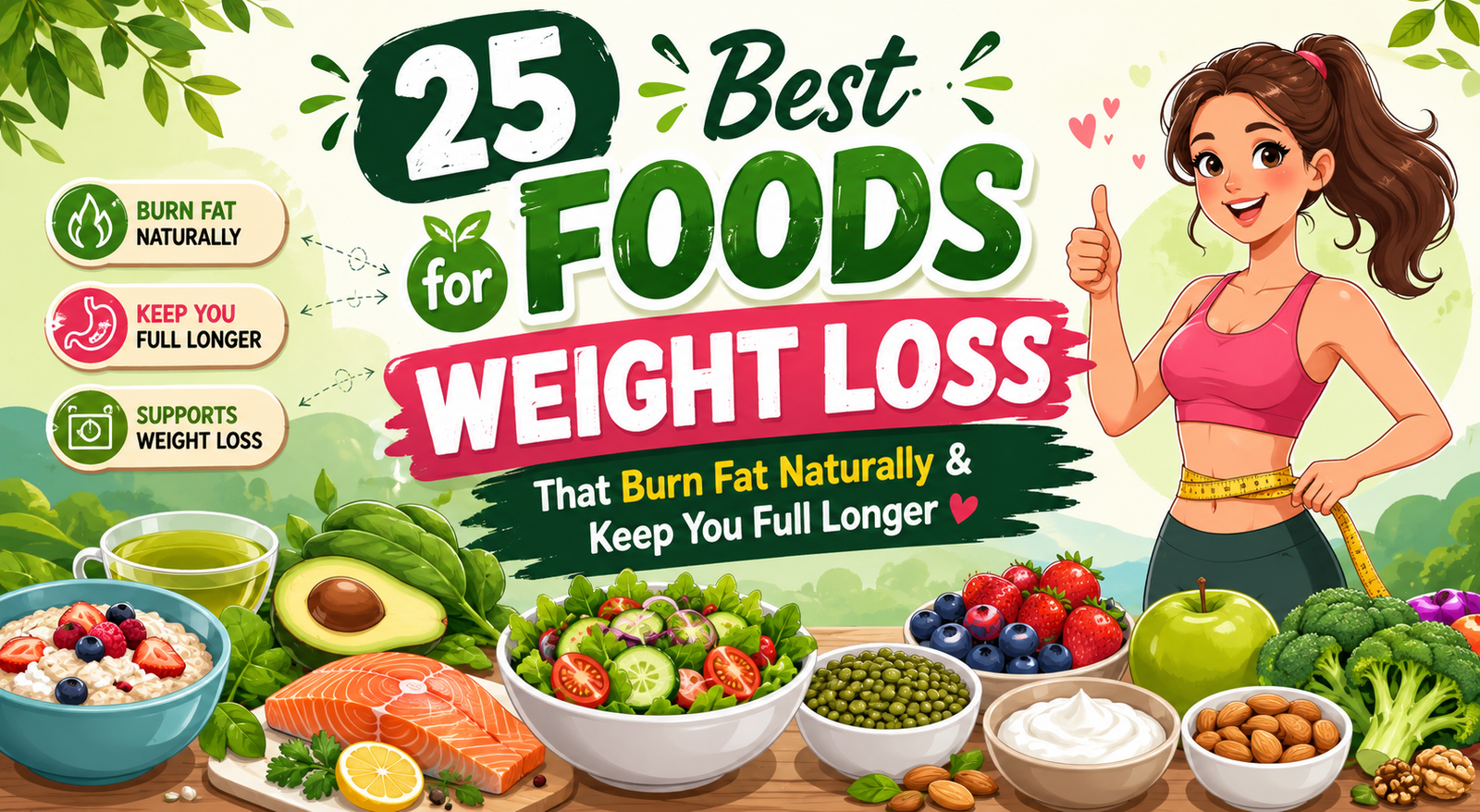
25 Best Foods for Weight Loss That Burn Fat Naturally & Keep You Full Longer
Losing weight doesn’t have to mean starving yourself or following restrictive fad diets. The secret to healthy and sustainable weight loss is choosing nutrient-rich foods that satisfy your hunger while helping your body burn calories more efficiently. The Best Foods for Weight Loss are those that provide essential nutrients, support metabolism, control appetite, and encourage healthy eating habits over the long term.
Many people struggle because they focus only on eating less instead of eating smarter. Highly processed foods often leave you hungry soon after eating, making it difficult to stay within your calorie goals. In contrast, whole foods rich in protein, fiber, and healthy fats promote fullness, stabilize blood sugar, and provide lasting energy throughout the day.
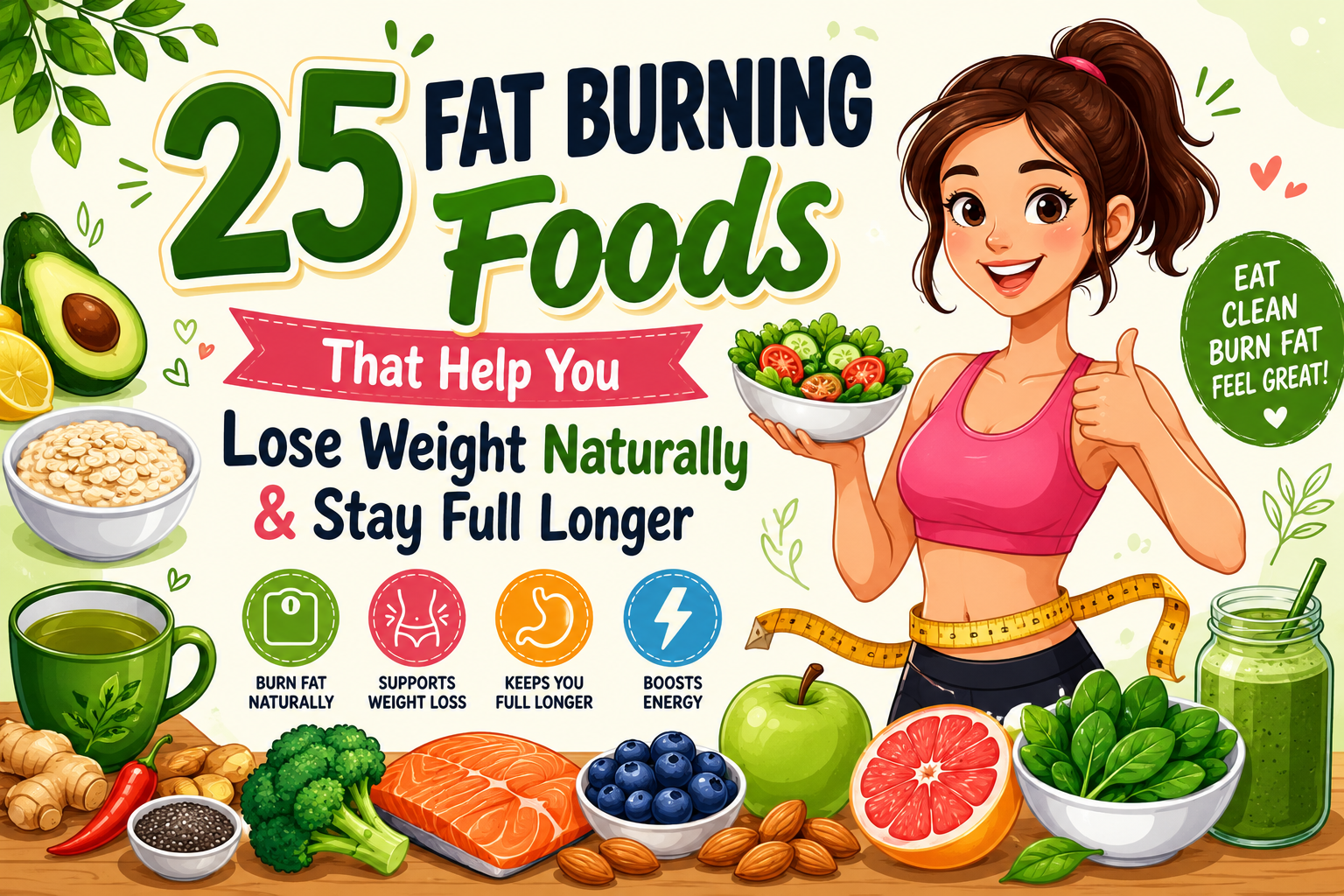
In this comprehensive guide, you’ll discover 25 science-backed foods that burn fat naturally, improve healthy weight management, reduce cravings, and help you build a balanced diet. Whether your goal is to lose a few pounds or maintain a healthy lifestyle, these foods can become valuable additions to your daily meals. You’ll also learn why each food works, the best ways to include it in your diet, and practical tips for maximizing your results.
Why Food Choice Matters for Weight Loss
Weight loss is influenced by many factors, including physical activity, sleep, stress, and genetics. However, food quality remains one of the most important factors because it directly affects calorie intake, hunger hormones, metabolism, and overall health. Choosing nutrient-dense foods instead of processed, high-calorie options makes it easier to maintain a calorie deficit without constantly feeling hungry.
The Best Foods for Weight Loss are generally rich in protein, fiber, vitamins, and minerals while being relatively low in calories. These foods help regulate blood sugar, reduce cravings, preserve muscle mass during weight loss, and improve digestion. Instead of focusing on short-term dieting, building meals around whole foods creates healthier habits that support lasting results.
How Weight Loss Foods Help Burn Fat Naturally
No single food magically melts body fat. Instead, certain foods support natural fat loss by increasing satiety, preserving lean muscle, improving metabolic health, and reducing unnecessary calorie consumption. When combined with regular exercise and healthy lifestyle habits, these foods become powerful tools for long-term success.
The most effective foods that burn fat naturally usually contain one or more of the following:
- High-quality protein
- Soluble and insoluble fiber
- Healthy fats
- Water content
- Essential vitamins and minerals
- Natural antioxidants
These nutrients work together to keep you full longer, improve digestion, stabilize energy levels, and help your body function efficiently while losing weight.
25 Best Foods for Weight Loss
1. Eggs
Eggs consistently rank among the best fat burning foods because they are packed with complete protein, healthy fats, vitamins, and minerals. A protein-rich breakfast containing eggs has been shown to reduce hunger throughout the day, helping people naturally consume fewer calories.
Protein also increases the thermic effect of food, meaning your body burns more calories digesting protein compared to fats or carbohydrates. Eggs are affordable, versatile, and easy to prepare, making them an excellent daily option for healthy weight management.
Best ways to eat eggs:
- Boiled
- Scrambled with vegetables
- Omelets
- Poached
- Egg muffins
2. Oats
Oats are an excellent source of soluble fiber, especially beta-glucan, which slows digestion and promotes long-lasting fullness. Unlike sugary breakfast cereals, oats release energy gradually, helping prevent blood sugar spikes that often trigger cravings.
Because oats digest slowly, they support appetite control and improve digestive health. Pairing oats with berries, nuts, or Greek yogurt creates a balanced breakfast that supports sustainable weight loss.
3. Greek Yogurt
Greek yogurt contains significantly more protein than regular yogurt while being naturally lower in sugar when choosing plain varieties. Protein supports muscle maintenance during weight loss and helps keep hunger under control.
Greek yogurt also contains probiotics that promote gut health, which may positively influence metabolism and overall wellness. Add fresh fruit, seeds, or cinnamon for additional nutrients without excessive calories.
4. Leafy Green Vegetables
Spinach, kale, Swiss chard, romaine lettuce, and other leafy greens are incredibly nutrient-dense while remaining extremely low in calories. Their high fiber and water content help increase meal volume without adding many calories.
Leafy vegetables also provide important nutrients like vitamin K, folate, magnesium, and antioxidants that support overall health. Filling half your plate with leafy greens is one of the easiest strategies for reducing calorie intake naturally.
Popular options include:
- Spinach
- Kale
- Romaine lettuce
- Arugula
- Mustard greens
- Bok choy
5. Salmon
Salmon is rich in high-quality protein and omega-3 fatty acids, making it one of the healthiest healthy foods for weight loss. Protein increases fullness, while omega-3 fats support heart health and may help reduce inflammation associated with obesity.
Eating salmon two or three times per week provides lasting satiety and valuable nutrients like vitamin D, selenium, and B vitamins. Baking or grilling salmon instead of frying keeps calories under control.
6. Chicken Breast
Skinless chicken breast is a lean protein powerhouse that supports fat loss by preserving muscle mass while dieting. Maintaining muscle helps sustain metabolism because muscle tissue burns more calories than fat tissue, even at rest.
Chicken breast can be grilled, baked, shredded, or added to salads, soups, and wraps for satisfying meals that support healthy weight management.
7. Lentils
Lentils provide an impressive combination of plant protein and dietary fiber. This powerful nutrient pairing slows digestion, improves fullness, and helps stabilize blood sugar levels after meals.
They are also budget-friendly and versatile enough for soups, curries, salads, and grain bowls. Regularly eating legumes like lentils has been associated with improved weight control and better overall diet quality.
8. Apples
Apples are naturally high in fiber and water, making them surprisingly filling despite being relatively low in calories. Eating a whole apple before meals may reduce overall calorie intake by increasing satiety.
Unlike fruit juices, whole apples retain their fiber, slowing sugar absorption and providing longer-lasting energy. Pair apples with peanut butter or a handful of nuts for a balanced snack.
9. Berries
Blueberries, strawberries, raspberries, and blackberries contain plenty of fiber, antioxidants, and vitamins while remaining relatively low in calories. Their natural sweetness can also help satisfy dessert cravings without relying on processed sweets.
The high antioxidant content supports overall health, while fiber contributes to digestive wellness and appetite control.
10. Avocados
Although avocados contain more calories than many fruits, they are rich in heart-healthy monounsaturated fats and fiber. These nutrients slow digestion, increase fullness, and reduce the likelihood of overeating later.
Moderation is important because avocados are calorie-dense. Adding a few slices to salads, sandwiches, or grain bowls provides satisfying flavor and nutrition without excessive calories.
11. Chia Seeds
Tiny chia seeds absorb water and expand into a gel-like consistency, helping increase feelings of fullness after meals. They also provide omega-3 fatty acids, fiber, plant protein, calcium, and magnesium.
Sprinkle chia seeds into smoothies, yogurt, overnight oats, or homemade puddings for an easy nutritional boost.
12. Cottage Cheese
Cottage cheese is another high-protein dairy option that supports muscle maintenance and appetite control. Its relatively low calorie content makes it an excellent snack or breakfast choice.
Pair cottage cheese with fresh fruit, vegetables, or nuts to create a balanced meal that promotes sustained energy and fullness.
13. Broccoli
Broccoli is one of the most nutrient-dense vegetables you can add to your diet. It is naturally low in calories but rich in fiber, vitamin C, vitamin K, folate, and plant compounds that support overall health. Because it contains plenty of water and fiber, broccoli helps increase meal volume, making you feel satisfied without consuming excess calories.
This cruciferous vegetable also supports digestion and may help reduce inflammation. While no single food directly burns fat, replacing calorie-dense side dishes with broccoli is a smart strategy for healthy weight management. Steam, roast, or stir-fry broccoli with herbs and spices instead of heavy sauces to maximize its nutritional benefits.
Best ways to enjoy broccoli:
- Steamed with lemon
- Roasted with olive oil
- Added to soups
- Mixed into stir-fries
- Tossed into salads
14. Cauliflower
Cauliflower is another excellent choice among the Best Foods for Weight Loss because it is versatile, filling, and low in calories. It can replace higher-calorie ingredients such as white rice, mashed potatoes, and pizza crust while providing fiber and important vitamins.
Its mild flavor allows it to absorb seasonings well, making it easy to include in various healthy recipes. Choosing cauliflower-based alternatives can significantly reduce calorie intake without sacrificing meal satisfaction.
15. Sweet Potatoes
Sweet potatoes are rich in complex carbohydrates, fiber, potassium, vitamin A, and antioxidants. Unlike refined carbohydrates, they digest slowly, providing sustained energy and reducing sudden hunger between meals.
Their naturally sweet flavor makes them a satisfying alternative to processed snacks and sugary foods. Baking or roasting sweet potatoes instead of frying helps keep meals nutritious while supporting long-term weight loss goals.
16. Quinoa
Quinoa is a whole grain that provides complete plant protein, dietary fiber, magnesium, and iron. Its balanced nutritional profile helps keep you full longer than refined grains while supporting muscle maintenance during weight loss.
Because quinoa contains both protein and fiber, it makes an excellent base for healthy bowls, salads, and side dishes. It is also naturally gluten-free, making it suitable for many dietary preferences.
17. Beans
Beans, including black beans, kidney beans, navy beans, and pinto beans, are among the most affordable healthy foods for weight loss. Their combination of protein and fiber slows digestion and promotes fullness for several hours after eating.
Regular bean consumption has been associated with improved weight control and better heart health. Beans can easily replace processed carbohydrates or high-fat meats in many recipes, making meals both healthier and more filling.
18. Almonds
Almonds provide healthy monounsaturated fats, protein, vitamin E, magnesium, and fiber. Although calorie-dense, eating moderate portions can actually support weight loss because almonds increase satiety and reduce cravings for unhealthy snacks.
Research suggests that people who regularly consume nuts often maintain healthier body weights when portion sizes are controlled. A small handful of almonds makes a convenient snack between meals.
Portion tip: Aim for about 20–25 almonds per serving to balance nutrition with calorie intake.
19. Walnuts
Walnuts are another excellent nut choice because they contain omega-3 fatty acids, protein, antioxidants, and healthy fats. These nutrients promote fullness while supporting heart and brain health.
Adding chopped walnuts to oatmeal, salads, or yogurt increases both flavor and nutritional value. Since walnuts are energy-dense, enjoy them in moderation as part of a balanced eating plan.
20. Green Tea
Green tea is widely recognized for containing catechins and a moderate amount of caffeine, compounds that may provide a small boost to metabolism when combined with a healthy lifestyle. While green tea alone won’t cause dramatic fat loss, replacing sugary beverages with unsweetened green tea can reduce daily calorie intake.
Green tea also contains antioxidants that support overall health. Drinking one to three cups daily can be part of a balanced weight-loss routine alongside nutritious eating and regular exercise.
21. Berries and Citrus Fruits
Citrus fruits such as oranges and grapefruit, along with berries, provide vitamin C, antioxidants, water, and fiber. These fruits help satisfy sweet cravings naturally while keeping calorie intake relatively low.
Eating whole fruits instead of fruit juices preserves fiber, which slows sugar absorption and helps you stay full longer. Including a variety of colorful fruits also increases your intake of protective plant compounds that support long-term health.
22. Mushrooms
Mushrooms are low in calories but rich in nutrients, making them a valuable addition to a weight-loss diet. Their meaty texture allows them to replace higher-calorie meats in many recipes while still providing satisfying flavor.
They also contain fiber, B vitamins, selenium, and antioxidants that support immune health. Grilled or sautéed mushrooms can enhance soups, salads, sandwiches, and pasta dishes without adding excessive calories.
23. Tuna
Tuna is another lean protein source that helps preserve muscle mass during weight loss. Protein-rich meals increase satiety and reduce unnecessary snacking, making calorie control easier.
Choose tuna packed in water rather than oil when possible, and combine it with vegetables, whole grains, or salads for a balanced meal. Its convenience also makes it an excellent option for busy lifestyles.
24. Cucumbers
Cucumbers contain approximately 95% water, making them extremely low in calories while contributing to hydration and fullness. Their crisp texture adds volume to meals without significantly increasing calorie intake.
Add cucumber slices to salads, sandwiches, wraps, or infused water for refreshing flavor. Because hydration also plays an important role in appetite regulation, cucumbers can support overall healthy eating habits.
25. Soup-Based Vegetable Meals
Vegetable-based soups made with broth rather than heavy cream can help reduce calorie intake before the main meal. The combination of water, vegetables, and fiber promotes fullness, encouraging smaller portions during the rest of the meal.
Choose soups rich in vegetables, beans, lean proteins, and herbs while limiting sodium and added cream. Homemade soups allow better control over ingredients and nutritional quality.
How to Add These Foods to Your Daily Diet
Including the Best Foods for Weight Loss doesn’t require a complete diet overhaul. Small, consistent changes often produce better long-term results than extreme restrictions. Focus on gradually replacing processed foods with whole, nutrient-rich alternatives while maintaining balanced portions.
Here are practical ways to include these foods:
- Start your morning with eggs or oatmeal.
- Add leafy greens to lunch and dinner.
- Snack on fruit, Greek yogurt, or nuts.
- Replace refined grains with quinoa or sweet potatoes.
- Include lean protein at every meal.
- Drink water or green tea instead of sugary beverages.
- Fill half your plate with vegetables.
- Prepare healthy meals in advance to avoid unhealthy choices.
These simple habits make healthy eating easier and more sustainable over time.
Comparison Table: Best Foods for Weight Loss
| Food | Main Benefit | Rich In | Keeps You Full |
| Eggs | High protein | Protein | ⭐⭐⭐⭐⭐ |
| Oats | Slow digestion | Fiber | ⭐⭐⭐⭐⭐ |
| Greek Yogurt | Muscle support | Protein | ⭐⭐⭐⭐ |
| Salmon | Healthy fats | Omega-3 | ⭐⭐⭐⭐ |
| Chicken Breast | Lean protein | Protein | ⭐⭐⭐⭐⭐ |
| Lentils | Fiber + protein | Fiber | ⭐⭐⭐⭐⭐ |
| Apples | Low calorie snack | Fiber | ⭐⭐⭐⭐ |
| Berries | Antioxidants | Vitamins | ⭐⭐⭐ |
| Avocado | Healthy fats | Monounsaturated fat | ⭐⭐⭐⭐ |
| Broccoli | High volume | Fiber | ⭐⭐⭐⭐ |
| Sweet Potato | Complex carbs | Fiber | ⭐⭐⭐⭐ |
| Almonds | Healthy snack | Healthy fats | ⭐⭐⭐⭐ |
Best Fat-Burning Foods vs Processed Foods
Choosing whole foods instead of heavily processed products can make a significant difference in your weight-loss journey. Whole foods provide nutrients that support satiety and overall health, while many processed foods are high in added sugars, unhealthy fats, and refined carbohydrates that can increase hunger and calorie intake.
| Whole Foods | Processed Alternatives |
| Fresh fruit | Candy |
| Oatmeal | Sugary cereal |
| Greek yogurt | Flavored desserts |
| Chicken breast | Fried chicken |
| Sweet potato | French fries |
| Quinoa | Instant noodles |
| Water | Sugary soft drinks |
| Nuts | Potato chips |
Replacing processed foods with nutrient-dense options doesn’t mean giving up flavor. It simply means making choices that nourish your body and support your long-term health goals.
Common Mistakes That Slow Weight Loss
Many people eat nutritious foods but still struggle to lose weight because of habits that unintentionally increase calorie intake or reduce consistency. Understanding these common mistakes can help you make better decisions and achieve more sustainable progress.
Some frequent mistakes include:
- Skipping meals and overeating later.
- Drinking sugary beverages regularly.
- Eating oversized portions of healthy foods like nuts and avocado.
- Depending on fad diets instead of balanced nutrition.
- Ignoring protein intake.
- Eating too few vegetables.
- Sleeping poorly.
- Managing stress inadequately.
- Expecting immediate results instead of gradual progress.
- Neglecting regular physical activity.
Avoiding these habits while consistently choosing healthy foods for weight loss can improve both your results and your overall well-being.
Frequently Asked Questions (FAQ)
1. What is the healthiest food for weight loss?
There isn’t one single healthiest food for weight loss. A balanced diet including lean proteins, vegetables, fruits, whole grains, legumes, and healthy fats provides the nutrients your body needs while helping you stay full and maintain a calorie deficit. Variety is more effective than relying on any one “superfood.”
2. Which foods keep you full the longest?
Foods rich in protein and fiber generally provide the greatest satiety. Eggs, Greek yogurt, oats, lentils, beans, chicken breast, salmon, vegetables, and apples are all excellent choices that can help reduce hunger between meals and support healthy eating habits.
3. Are eggs good for weight loss?
Yes. Eggs are high in quality protein and contain essential nutrients that promote fullness. Including eggs as part of a balanced breakfast may help reduce hunger later in the day, making it easier to manage calorie intake.
4. Is oatmeal better than cereal for weight loss?
Plain oatmeal is usually a better option than many sugary breakfast cereals because it contains more fiber and fewer added sugars. Pairing oatmeal with fruit, nuts, or Greek yogurt creates a satisfying meal that supports stable energy levels.
5. Should I eat fruit while trying to lose weight?
Yes. Whole fruits provide vitamins, minerals, antioxidants, water, and fiber. They are generally much more nutritious than sugary snacks or desserts and can be included as part of a healthy weight-loss plan.
Key Takeaways
- Choose whole, minimally processed foods whenever possible.
- Prioritize protein at every meal to increase fullness.
- Eat plenty of fiber-rich vegetables and fruits daily.
- Include healthy fats in moderation for satiety.
- Replace sugary drinks with water or unsweetened green tea.
- Practice portion control, even with healthy foods.
- Stay physically active to support long-term weight management.
- Focus on sustainable habits rather than restrictive diets.
- Plan meals ahead to avoid unhealthy choices.
- Consistency is more important than perfection.
Conclusion
Achieving and maintaining a healthy weight isn’t about finding a miracle food or following the latest diet trend. It’s about building a balanced eating pattern centered around the Best Foods for Weight Loss—foods that nourish your body, keep you satisfied, and support your overall well-being. By including nutrient-rich options such as eggs, leafy greens, lean proteins, whole grains, legumes, fruits, vegetables, and healthy fats, you can reduce cravings, improve energy levels, and create habits that last.
Remember that no single food can magically burn fat. Lasting results come from combining smart food choices with regular physical activity, quality sleep, stress management, and consistency over time. Small daily improvements often lead to meaningful long-term success.
At PureWellLife, we believe that healthy living should be practical, enjoyable, and sustainable. Explore more evidence-based nutrition and wellness guides on PureWellLife to help you make informed choices, achieve your health goals, and enjoy a healthier, happier life.