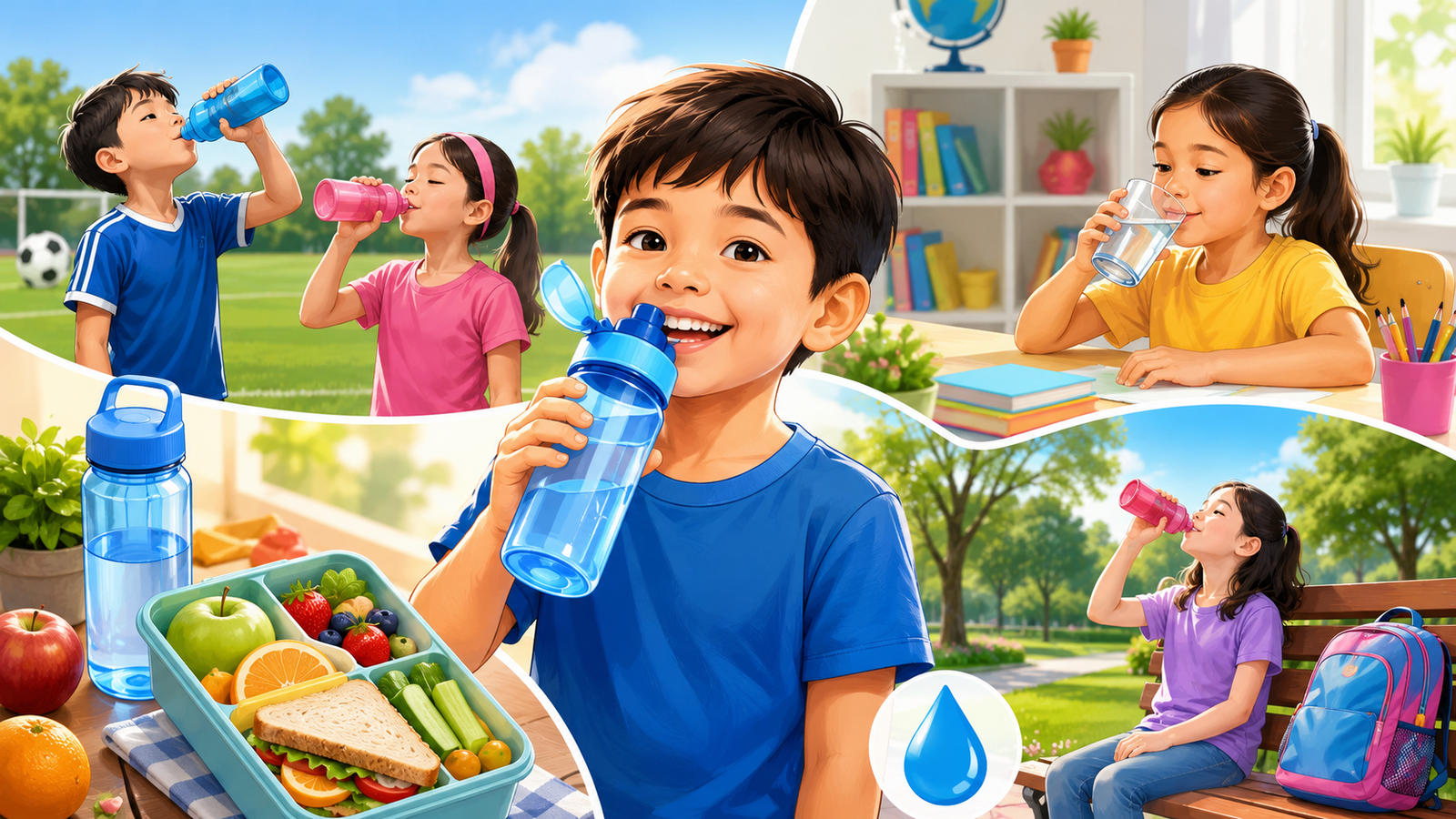
Kids Hydration Tips
Proper hydration is essential for a child’s growth, development, and overall health. Water plays a vital role in regulating body temperature, supporting digestion, transporting nutrients, lubricating joints, and helping the brain function effectively. Since children are often active throughout the day, they lose water through sweating, breathing, and normal body functions, making regular hydration especially important.
Teaching healthy hydration habits from an early age helps children stay energetic, focused in school, and physically active while reducing the risk of dehydration. Making water the first choice for thirst is one of the simplest ways to support lifelong health.
Why Is Hydration Important for Kids?
A child’s body contains a higher percentage of water than an adult’s, making adequate fluid intake essential for normal body functions.
Proper hydration helps:
- Regulate body temperature
- Support brain function and concentration
- Improve digestion
- Transport nutrients throughout the body
- Maintain healthy skin
- Lubricate joints and muscles
- Support kidney function
- Replace fluids lost through sweating and physical activity
Children who stay well hydrated are more likely to feel energetic and perform better during school and sports.
How Much Water Do Kids Need?
Daily fluid needs vary depending on age, activity level, weather, and overall health.
General Daily Water Intake Guidelines
Children 1–3 Years
Approximately 4 cups (about 1 liter) of fluids per day from water, milk, and other healthy beverages.
Children 4–8 Years
Approximately 5 cups (about 1.2 liters) of fluids per day.
Children 9–13 Years
- Girls: About 7 cups (1.6 liters) daily
- Boys: About 8 cups (1.9 liters) daily
Older children who are physically active or spend time outdoors in hot weather may require additional fluids.
Best Drinks for Kids
Choosing healthy beverages helps children stay hydrated without excessive added sugar.
Water
Water should be the primary drink throughout the day.
Milk
Milk provides hydration along with calcium, protein, and vitamin D.
Coconut Water
Unsweetened coconut water can provide fluids and electrolytes after prolonged physical activity.
Homemade Fruit-Infused Water
Add natural flavor using:
- Lemon slices
- Orange slices
- Strawberries
- Cucumber
- Mint leaves
Avoid adding sugar.
Best Hydrating Foods for Kids
Many fruits and vegetables naturally contain high amounts of water and contribute to daily fluid intake.
Fruits
- Watermelon
- Oranges
- Strawberries
- Grapes
- Pineapple
- Apples
- Kiwi
Vegetables
- Cucumber
- Tomatoes
- Lettuce
- Celery
- Bell peppers
- Zucchini
Including these foods in meals and snacks can help children stay hydrated.
Kids Hydration Tips
1. Encourage Regular Water Breaks
Children often become so involved in playing that they forget to drink water.
Make It a Habit
Encourage children to drink water:
- After waking up
- Before school
- During school breaks
- Before and after physical activity
- Before bedtime (in moderation)
Regular water breaks help maintain hydration throughout the day.
2. Send a Reusable Water Bottle
A colorful, reusable water bottle encourages children to drink more water at school.
Tips
- Let your child choose their favorite bottle.
- Refill it during the day.
- Clean it daily to maintain hygiene.
3. Offer Water Instead of Sugary Drinks
Water is the healthiest choice for most children.
Limit beverages such as:
- Soft drinks
- Energy drinks
- Sugary fruit drinks
- Sweetened iced tea
- Flavored drinks with added sugar
Replacing sugary beverages with water helps support healthy hydration and overall health.
4. Make Water Fun
Children are more likely to drink water when it’s enjoyable and easily accessible.
Simple Ways to Make Water More Appealing
- Use colorful reusable water bottles.
- Add fruit slices like lemon, orange, or strawberries.
- Serve water with fun reusable straws.
- Offer chilled water during hot weather.
- Create a daily hydration chart with stickers or rewards.
These small changes can encourage children to develop healthy hydration habits.
5. Encourage Hydration Before, During, and After Exercise
Active children lose fluids through sweating and need to replace them regularly.
Before Physical Activity
Encourage your child to drink water about 30 minutes before exercise or outdoor play.
During Physical Activity
Offer small amounts of water every 15–20 minutes during extended play, sports, or exercise.
After Physical Activity
Encourage children to drink water after finishing activities to replace lost fluids.
6. Increase Fluid Intake During Hot Weather
Children are at greater risk of dehydration during the summer or in hot climates.
Keep Kids Hydrated By
- Offering water frequently.
- Taking breaks in shaded areas.
- Wearing lightweight clothing.
- Avoiding prolonged outdoor activity during the hottest part of the day.
7. Include Hydrating Foods in Every Meal
Many fruits and vegetables contain high amounts of water and help contribute to daily hydration.
Healthy Choices
- Watermelon
- Cucumber
- Oranges
- Strawberries
- Tomatoes
- Celery
- Pineapple
- Lettuce
Adding these foods to meals and snacks supports healthy fluid intake.
8. Be a Good Role Model
Children often copy the habits of parents and caregivers.
Encourage Healthy Habits By
- Drinking water together as a family.
- Keeping water bottles visible at home.
- Choosing water instead of sugary beverages during meals.
- Reminding children to drink water throughout the day.
Signs of Dehydration in Children
Recognizing dehydration early can help prevent more serious health problems.
Mild to Moderate Signs
- Dry mouth or lips
- Feeling thirsty
- Dark yellow urine
- Urinating less often
- Headache
- Fatigue
- Dizziness
- Irritability
Severe Signs
Seek immediate medical attention if your child experiences:
- Very little or no urine output
- Sunken eyes
- Extreme sleepiness or confusion
- Rapid heartbeat
- Rapid breathing
- Cool or clammy skin
- Difficulty waking up
Severe dehydration is a medical emergency and requires prompt treatment.
Drinks and Foods to Limit
Some beverages may contribute excess sugar without providing meaningful nutritional benefits.
Limit
- Soft drinks
- Energy drinks
- Sugary fruit drinks
- Sweetened iced tea
- Flavored milk with added sugar
- Highly sweetened sports drinks (unless recommended during prolonged intense activity)
Water and plain milk are generally the healthiest choices for everyday hydration.
Hydration Tips for School and Travel
Keeping children hydrated away from home requires a little planning.
School
- Pack a reusable water bottle.
- Encourage water during lunch and recess.
- Remind children to refill their bottle if possible.
Travel
- Carry extra bottles of clean drinking water.
- Offer water during long car rides.
- Pack hydrating snacks such as fresh fruit.
Outdoor Activities
- Schedule regular water breaks.
- Take shade breaks during hot weather.
- Encourage children to drink before they feel thirsty.
Frequently Asked Questions
How much water should my child drink each day?
Water needs vary based on age, activity level, weather, and overall health. Most children benefit from drinking water regularly throughout the day, along with fluids from milk and water-rich foods.
What are the first signs of dehydration?
Early signs include thirst, dry mouth, dark yellow urine, reduced urination, tiredness, headache, and irritability.
Are fruit juices a good way to keep children hydrated?
Whole fruits and water are generally better choices. If juice is offered, it should be 100% fruit juice and consumed in moderation according to your pediatrician’s recommendations.
Should children drink sports drinks?
Most children do not need sports drinks for routine physical activity. Water is usually sufficient unless they are participating in prolonged, vigorous exercise or have specific medical advice from a healthcare professional.
How can I encourage my child to drink more water?
Offer water regularly, provide a fun reusable bottle, include water-rich fruits and vegetables in meals, and set a positive example by drinking water yourself.
Key Takeaways
- Proper hydration supports children’s growth, brain function, digestion, and physical activity.
- Water should be the primary beverage for most children.
- Encourage regular water breaks throughout the day.
- Include hydrating fruits and vegetables in daily meals.
- Limit sugary drinks and energy drinks.
- Watch for early signs of dehydration, especially during hot weather and physical activity.
- Carry a reusable water bottle to school, sports, and travel.
Conclusion
Staying properly hydrated is one of the easiest and most effective ways to support your child’s overall health and development. Water helps regulate body temperature, improve concentration, support digestion, and keep children active throughout the day. By encouraging regular water intake, offering hydrating foods, and limiting sugary beverages, parents can build healthy habits that last a lifetime.
Simple routines—such as carrying a reusable water bottle, drinking water before and after physical activity, and choosing water-rich fruits and vegetables—can make a significant difference in preventing dehydration and promoting long-term wellness.