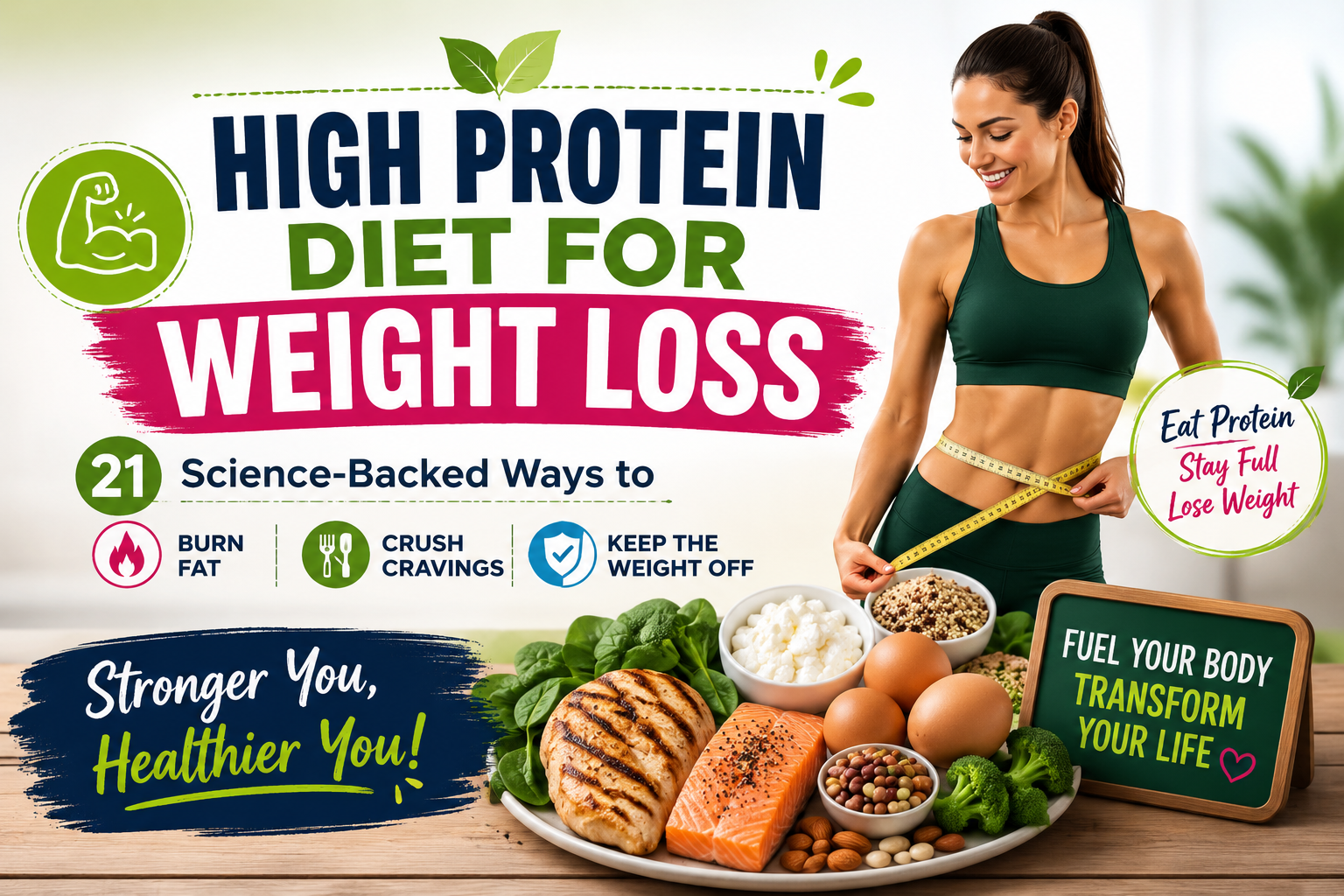
21 Science-Backed Ways to Burn Fat, Crush Cravings & Keep the Weight Off
Losing weight isn’t simply about eating less—it’s about eating smarter. One of the most effective and well-researched nutrition strategies is following a High Protein Diet for Weight Loss. Protein helps preserve lean muscle, supports metabolism, improves satiety, and reduces unnecessary snacking, making it easier to stay in a calorie deficit without constantly feeling hungry.
Many people struggle with weight loss because they rely on highly processed foods that are low in protein but high in refined carbohydrates and unhealthy fats. These foods often lead to blood sugar spikes, energy crashes, and frequent cravings. A well-planned protein-rich diet can help stabilize appetite while providing the nutrients your body needs to function at its best.
In this comprehensive guide by PureWellLife, you’ll discover 21 science-backed ways to use protein for healthier weight loss. You’ll also learn how much protein to lose weight, the best high protein diet practices, common mistakes to avoid, and practical meal ideas that fit almost any lifestyle.
Whether your goal is losing belly fat, maintaining muscle during weight loss, or simply feeling fuller between meals, this guide will help you create sustainable habits that support long-term success.
What Is a High Protein Diet?
A High Protein Diet for Weight Loss is an eating pattern that increases protein intake above the average daily recommendation while maintaining balanced amounts of healthy carbohydrates and fats. Protein becomes the primary nutrient at most meals, helping your body maintain muscle tissue while encouraging fat loss instead of muscle loss.
Unlike restrictive fad diets, a balanced high-protein approach focuses on whole foods such as lean meat, fish, eggs, dairy, beans, lentils, tofu, nuts, and seeds. These foods provide essential amino acids that support muscle repair, hormone production, immune function, and overall health.
Research consistently shows that increasing dietary protein can naturally reduce hunger, improve fullness, preserve lean body mass during weight loss, and slightly increase calorie burning through digestion. These combined effects make protein one of the most valuable nutrients for sustainable fat loss.
Why Protein Matters for Weight Loss
Protein is often called the most satisfying macronutrient because it keeps you feeling full longer than carbohydrates or fats. When you consume enough protein throughout the day, your body releases hormones that promote satiety while reducing hunger hormones, making it easier to control calorie intake naturally.
Another major benefit is the thermic effect of food (TEF). Digesting protein requires significantly more energy than digesting carbohydrates or fats. While the increase is modest, it contributes to overall calorie expenditure over time.
Protein also protects lean muscle during calorie restriction. Since muscle tissue burns more calories than fat tissue at rest, preserving muscle helps maintain metabolic rate while losing weight. This is why nutrition experts often recommend a protein-rich diet alongside regular resistance training.
Additional benefits include:
- Better appetite control
- Reduced late-night snacking
- Improved recovery after exercise
- More stable blood sugar levels
- Greater long-term weight maintenance
- Improved body composition
How Much Protein to Lose Weight?
One of the most common questions is how much protein to lose weight effectively. The answer depends on factors such as age, activity level, body weight, health status, and fitness goals. There is no single amount that works for everyone, but research provides practical ranges that suit most healthy adults.
For people trying to lose weight, many nutrition professionals recommend consuming approximately 1.2–1.6 grams of protein per kilogram of body weight per day. Individuals who perform regular strength training or who want to preserve more muscle while dieting may benefit from intakes toward the higher end of this range.Rather than eating all your protein at dinner, aim to distribute it evenly across breakfast, lunch, dinner, and snacks. Consistent protein intake supports muscle protein synthesis and helps maintain fullness throughout the day.
21 Science-Backed Ways to Burn Fat, Crush Cravings & Keep the Weight Off
1. Eat Protein at Every Meal
Instead of saving most of your protein for dinner, include quality protein in every meal. Starting your morning with Greek yogurt, eggs, cottage cheese, tofu, or a protein smoothie can reduce hunger later in the day. Balanced protein intake helps maintain stable energy levels while reducing unnecessary snacking between meals.
2. Prioritize Whole Food Protein Sources
Whole foods provide protein alongside vitamins, minerals, fiber, and healthy fats. Lean chicken, turkey, fish, beans, lentils, eggs, dairy products, tofu, and edamame are excellent choices. Whole foods also tend to be more filling than heavily processed protein products.
3. Increase Protein Gradually
A sudden increase in dietary protein may cause digestive discomfort for some individuals. Instead, gradually replace low-protein processed foods with healthier protein-rich alternatives. This allows your digestive system to adapt while helping you build sustainable eating habits.
4. Start Your Day with a High-Protein Breakfast
Skipping breakfast or eating sugary cereals often leads to increased hunger later in the day. A breakfast containing 25–35 grams of protein can improve satiety, reduce cravings, and help control calorie intake throughout the day.
Examples include:
- Vegetable omelet
- Greek yogurt with berries
- Cottage cheese with fruit
- Protein oatmeal
- Tofu scramble
5. Replace Refined Snacks with High-Protein Options
Many snacks are loaded with refined carbohydrates that provide little lasting satisfaction. Replacing chips, cookies, and candy with protein-rich snacks helps prevent blood sugar crashes while supporting weight management.
Healthy snack ideas include:
- Boiled eggs
- Roasted chickpeas
- Cottage cheese
- String cheese
- Edamame
- Mixed nuts (portion-controlled)
- Protein smoothies
- Greek yogurt
6. Combine Protein with Fiber
Protein works even better when paired with fiber-rich foods. Vegetables, fruits, legumes, oats, and whole grains slow digestion, promote fullness, and improve digestive health. Combining lean protein with fiber creates meals that are both nutritious and highly satisfying.
Examples include grilled chicken with vegetables, salmon with quinoa and broccoli, or lentil soup served with a side salad.
7. Choose Lean Protein Most Often
Not all protein sources contain the same amount of fat or calories. Choosing lean options allows you to increase protein intake without significantly increasing total calorie consumption. Skinless poultry, fish, egg whites, low-fat dairy, legumes, tofu, and lean cuts of beef are excellent choices for a High Protein Diet for Weight Loss.
These foods help you stay within your calorie goals while supplying essential amino acids needed for muscle maintenance and recovery.
8. Include Protein After Exercise
Exercise creates small amounts of stress in your muscles, especially after strength training. Consuming a protein-rich meal or snack within a couple of hours after your workout provides the amino acids needed for muscle repair and growth. Preserving lean muscle is one of the keys to maintaining a healthy metabolism while losing fat.
Good post-workout options include grilled chicken with rice and vegetables, Greek yogurt with berries, cottage cheese and fruit, tofu with quinoa, or a protein smoothie made with milk and fruit. Pairing protein with carbohydrates can also help replenish energy stores after intense exercise.
9. Stay Hydrated While Increasing Protein
As you increase protein intake, drinking enough water becomes even more important. Proper hydration supports digestion, kidney function in healthy individuals, and overall metabolism. It can also help prevent constipation if your protein intake rises without enough fluids.
Aim to drink water consistently throughout the day rather than waiting until you feel thirsty. If your diet includes more fiber-rich high protein foods for weight loss such as beans, lentils, and whole grains, adequate hydration becomes even more beneficial for digestive comfort.
10. Focus on Lean Muscle, Not Just Weight
Successful weight loss isn’t only about seeing a smaller number on the scale. The goal should be improving body composition by reducing fat while maintaining or building lean muscle.
Protein plays a central role in this process because it provides the building blocks your muscles need. Combined with resistance training, a protein-rich diet helps ensure that most of the weight you lose comes from body fat rather than muscle tissue.
11. Plan Meals Ahead of Time
Meal planning reduces impulsive food choices and makes it easier to meet your daily protein goals. Preparing meals in advance also saves time during busy weekdays and helps you avoid relying on fast food or highly processed convenience meals.
A simple weekly plan might include grilled chicken, baked salmon, boiled eggs, cooked lentils, chopped vegetables, Greek yogurt, and fresh fruit. Having these foods readily available makes healthy eating much more convenient.
12. Read Nutrition Labels Carefully
Many packaged foods advertise themselves as “high protein,” but they may also contain significant amounts of added sugar, sodium, or saturated fat. Reading nutrition labels helps you compare products and choose options with higher-quality ingredients.
When shopping, pay attention to:
- Protein per serving
- Added sugars
- Sodium content
- Ingredient list
- Serving size
- Calories
Choosing minimally processed protein sources is usually the healthiest long-term strategy.
13. Don’t Fear Healthy Fats
A best high protein diet doesn’t eliminate healthy fats. Foods like avocados, olive oil, nuts, seeds, and fatty fish provide essential fatty acids that support hormone production, heart health, and nutrient absorption.
The key is balance. Combining lean protein with moderate amounts of healthy fats creates satisfying meals that help reduce cravings without excessive calorie intake.
14. Avoid Liquid Calories
Sugary drinks, sweetened coffee beverages, sodas, and fruit juices can add hundreds of calories without providing lasting fullness. Replacing these beverages with water, sparkling water, unsweetened tea, or black coffee can significantly improve your calorie balance.
If you enjoy protein shakes, choose those with minimal added sugar and use them as supplements rather than replacements for whole-food meals whenever possible.
15. Increase Protein from Plant Sources
Plant proteins offer additional benefits because they naturally contain fiber, antioxidants, vitamins, and minerals. Including a variety of plant-based proteins supports both weight management and overall health.
Excellent plant protein sources include:
- Lentils
- Chickpeas
- Black beans
- Kidney beans
- Edamame
- Tofu
- Tempeh
- Quinoa
- Hemp seeds
- Pumpkin seeds
Mixing plant and animal proteins can provide nutritional variety while improving overall diet quality.
16. Eat Slowly and Mindfully
Eating quickly often leads to consuming more calories before your brain recognizes that you’re full. Slowing down allows hunger and fullness hormones to communicate more effectively.
Try chewing thoroughly, putting your utensils down between bites, and avoiding distractions such as television or smartphones during meals. Mindful eating complements a High Protein Diet for Weight Loss by making it easier to recognize natural satiety.
17. Strength Train Regularly
Protein alone isn’t enough to maximize fat loss. Strength training signals your body to preserve muscle while dieting, improving body composition and long-term metabolic health.
Aim for two to four resistance training sessions each week that target all major muscle groups. Exercises such as squats, push-ups, rows, lunges, and deadlifts can be adjusted for beginners and advanced exercisers alike.
18. Get Enough Sleep
Poor sleep increases hunger hormones while decreasing hormones responsible for fullness. This combination often leads to stronger cravings, larger portions, and reduced motivation for physical activity.
Most adults benefit from seven to nine hours of quality sleep each night. Consistent sleep schedules, reduced evening screen time, and limiting caffeine late in the day can all improve sleep quality.
19. Manage Stress Effectively
Chronic stress raises cortisol levels, which may increase appetite and encourage emotional eating in some people. Even the best high protein diet becomes harder to follow if stress consistently triggers unhealthy eating habits.
Helpful stress-management strategies include:
- Walking outdoors
- Meditation
- Deep breathing
- Yoga
- Journaling
- Talking with supportive friends
- Regular exercise
Managing stress supports healthier eating behaviors over the long term.
20. Monitor Progress Beyond the Scale
Body weight naturally fluctuates due to water balance, hormones, and other factors. Instead of focusing only on the scale, monitor several indicators of progress.
Useful measurements include:
- Waist circumference
- Body fat percentage (if available)
- Progress photos
- Strength improvements
- Energy levels
- Clothing fit
- Daily habits
These indicators often provide a more accurate picture of long-term success.
21. Build Habits You Can Maintain
The most effective diet is one you can follow consistently. Sustainable weight loss comes from long-term habits rather than temporary restrictions.
Choose protein sources you genuinely enjoy, prepare meals that fit your schedule, and allow flexibility for social occasions. Building realistic habits makes it far more likely that you’ll maintain your results after reaching your goal weight.
Best High Protein Foods for Weight Loss
Choosing nutrient-dense protein sources is one of the easiest ways to improve diet quality while supporting fat loss. Whole foods generally provide better nutrition than heavily processed alternatives because they contain additional vitamins, minerals, healthy fats, and fiber.
Below is a comparison of some of the best high protein foods for weight loss and their key benefits.
| Food | Approx. Protein | Why It’s Great |
| Chicken Breast | 31 g/100 g | Lean, versatile, filling |
| Turkey Breast | 29 g/100 g | Low fat, high protein |
| Salmon | 22 g/100 g | Protein plus omega-3 fats |
| Tuna | 25 g/100 g | High protein, low calories |
| Eggs | 6 g each | Affordable and nutrient-dense |
| Greek Yogurt | 17–20 g/cup | High protein and probiotics |
| Cottage Cheese | 25 g/cup | Slow-digesting casein protein |
| Lentils | 18 g/cup cooked | Protein plus fiber |
| Chickpeas | 15 g/cup cooked | Great for plant-based diets |
| Tofu | 10–15 g/100 g | Complete plant protein |
| Edamame | 18 g/cup | Fiber and complete protein |
| Quinoa | 8 g/cup cooked | Whole grain with protein |
Sample One-Day High Protein Meal Plan
A structured meal plan helps you distribute protein evenly throughout the day while supporting steady energy levels and appetite control. This example is suitable for many adults, though individual calorie and protein needs vary.
| Meal | Example |
| Breakfast | Greek yogurt, berries, chia seeds |
| Morning Snack | Boiled eggs and an apple |
| Lunch | Grilled chicken, quinoa, mixed vegetables |
| Afternoon Snack | Cottage cheese with cucumber |
| Dinner | Baked salmon, broccoli, sweet potato |
| Evening Snack | Handful of almonds or edamame |
Common Mistakes to Avoid on a High Protein Diet
Even a well-intentioned High Protein Diet for Weight Loss can become less effective if common mistakes are overlooked. Understanding these pitfalls helps you achieve better long-term results while maintaining overall health.
1. Ignoring Vegetables
Protein is important, but vegetables provide fiber, vitamins, minerals, and antioxidants that support digestion, immunity, and overall wellness. Aim to fill at least half your plate with colorful vegetables at lunch and dinner.
2. Eating Too Little Fiber
A diet centered only on meat can lead to inadequate fiber intake. Include beans, lentils, fruits, vegetables, oats, quinoa, and seeds to support gut health and improve satiety.
3. Consuming Excess Processed Protein Foods
Protein bars, flavored shakes, and processed snacks can be convenient, but many contain added sugars, sodium, and artificial ingredients. Prioritize whole-food protein sources whenever possible.
4. Forgetting Portion Control
Even healthy foods contain calories. Large portions of cheese, nuts, nut butters, or fatty meats can slow weight loss if calorie intake consistently exceeds your needs.
5. Skipping Strength Training
Without resistance exercise, your body is more likely to lose muscle during weight loss. Pairing adequate protein with regular strength training provides the best results for preserving lean body mass.
6. Expecting Overnight Results
Healthy weight loss is gradual. Consistency with nutrition, exercise, sleep, and stress management produces more sustainable results than extreme dieting or quick fixes.
Frequently Asked Questions (FAQs)
1. What is a High Protein Diet for Weight Loss?
A High Protein Diet for Weight Loss is a balanced eating plan that increases protein intake while including healthy carbohydrates and fats. Protein helps reduce hunger, preserve muscle during weight loss, and improve fullness after meals. Combined with regular exercise and a calorie-controlled diet, it can support sustainable fat loss without relying on restrictive dieting.
2. How much protein should I eat daily to lose weight?
Many experts recommend consuming around 1.2–1.6 grams of protein per kilogram of body weight per day for healthy weight loss. Active individuals may need slightly more depending on their training level. Your ideal intake depends on age, body composition, health status, and activity level.
3. What foods are highest in protein?
Excellent protein sources include lean poultry, fish, eggs, Greek yogurt, cottage cheese, tofu, tempeh, lentils, beans, chickpeas, edamame, and quinoa. Choosing mostly whole-food protein sources provides additional vitamins, minerals, and fiber that benefit overall health.
4. Can protein reduce cravings?
Yes. Protein promotes the release of hormones that increase fullness while reducing hunger signals. This helps many people naturally eat fewer calories without constantly feeling deprived, making long-term weight management easier.
5. Can I follow a high protein diet without eating meat?
Absolutely. Vegetarian and vegan diets can provide plenty of protein through beans, lentils, soy foods, peas, nuts, seeds, quinoa, and dairy or eggs if included. Eating a variety of plant proteins helps meet nutritional needs.
Key Takeaways
- A High Protein Diet for Weight Loss can help reduce hunger and improve satiety.
- Protein helps preserve lean muscle during fat loss.
- Aim for approximately 1.2–1.6 g/kg body weight if your goal is weight loss.
- Choose whole-food protein sources whenever possible.
- Pair protein with fiber-rich foods for greater fullness.
- Strength training enhances the benefits of higher protein intake.
- Adequate sleep and stress management support successful weight loss.
- Meal planning improves consistency and reduces unhealthy food choices.
- Sustainable habits are more effective than restrictive diets.
- Long-term success comes from combining nutrition, exercise, and healthy lifestyle practices.
Conclusion
A High Protein Diet for Weight Loss is one of the most practical and evidence-based strategies for achieving sustainable fat loss. By increasing protein intake through nutrient-dense foods, you can stay fuller for longer, better preserve lean muscle, and make it easier to maintain a healthy calorie deficit without feeling constantly hungry. When combined with regular physical activity, strength training, quality sleep, stress management, and mindful eating, a protein-rich diet becomes an effective foundation for long-term health rather than a temporary solution.
Remember that no single food or nutrient can replace consistent healthy habits. Focus on building balanced meals, choosing whole-food protein sources, staying active, and making gradual lifestyle changes that you can maintain for years—not just weeks.
At PureWellLife, our goal is to provide science-backed, practical nutrition advice that helps you make informed decisions for a healthier future. If you found this guide helpful, explore our other evidence-based articles on healthy eating, weight management, and overall wellness at purewelllife.com, and share this resource with friends or family who are beginning their own weight-loss journey.