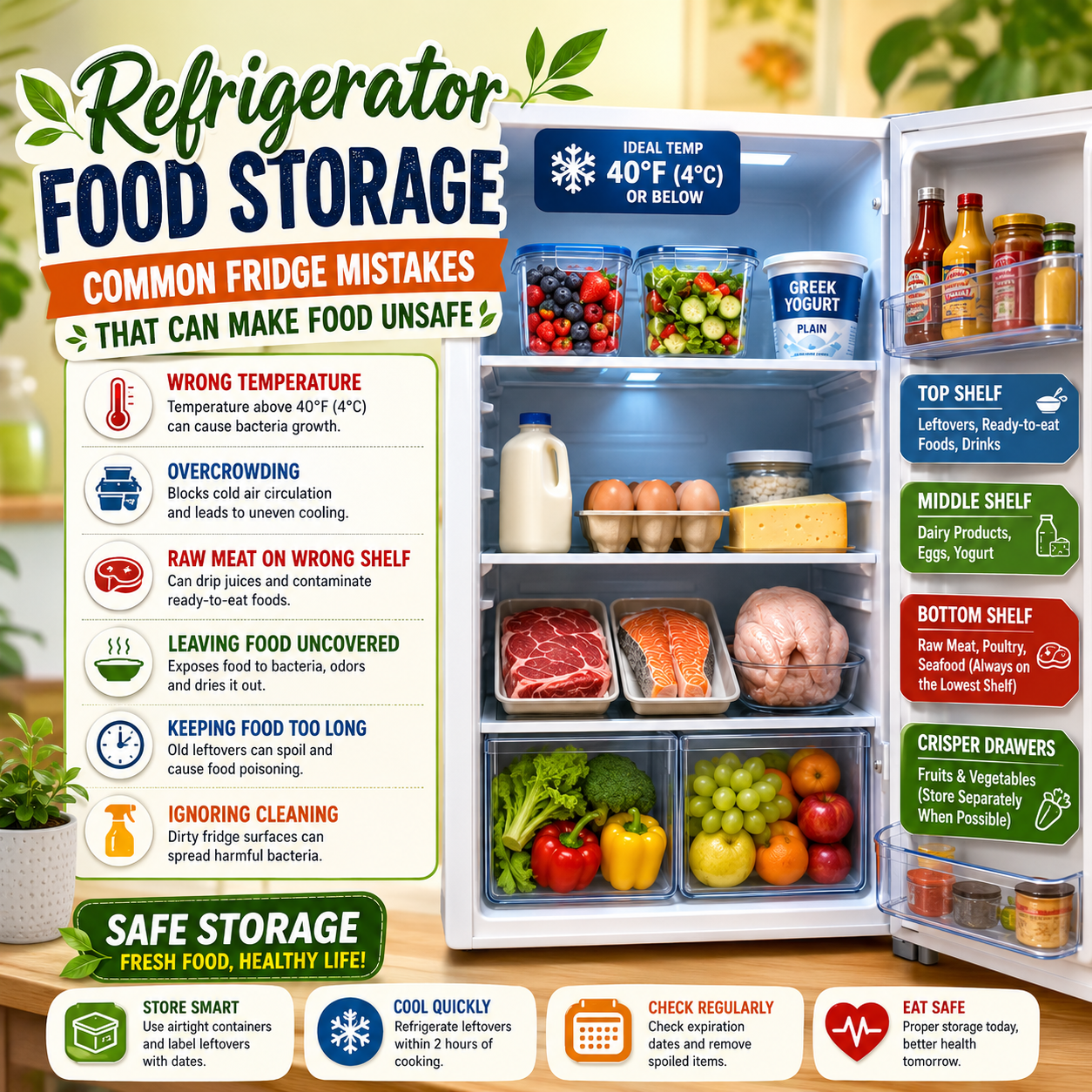
Your refrigerator is one of the most important appliances in your kitchen, but simply placing food inside does not guarantee that it will stay fresh or safe. Improper Refrigerator food storage is one of the leading causes of food spoilage, bacterial growth, unpleasant odors, and even foodborne illnesses. Many people unknowingly make common fridge mistakes, such as storing food at the wrong temperature, overcrowding shelves, or placing raw meat above ready-to-eat foods. These seemingly small habits can increase the risk of contamination and reduce the shelf life of your groceries.
Understanding proper refrigerator food storage helps protect your family’s health while reducing unnecessary food waste and saving money. Organizing your refrigerator correctly, maintaining the ideal temperature, and storing different food groups in their appropriate locations are simple yet effective ways to improve food safety.
This comprehensive guide explains the most common refrigerator food storage mistakes, why they are dangerous, and how to organize your fridge like a food safety expert. Whether you’re storing fresh produce, dairy products, leftovers, or raw meat, you’ll discover practical tips that keep your food fresher, safer, and more nutritious for longer.
What Is Refrigerator Food Storage?
Refrigerator food storage is the practice of storing food at safe temperatures while arranging items in a way that minimizes bacterial growth, preserves freshness, and prevents cross-contamination. A refrigerator slows the growth of harmful microorganisms by maintaining a consistently cold environment, but it cannot completely stop bacterial activity. This means that proper storage techniques remain essential even when food is refrigerated.
Effective refrigerator food storage involves more than simply finding space for groceries. It requires understanding which foods belong on specific shelves, using airtight containers, labeling leftovers with storage dates, and maintaining a refrigerator temperature of 40°F (4°C) or below. Following these practices helps extend food quality, reduce waste, and lower the risk of foodborne illness.
Why Proper Refrigerator Food Storage Matters
Proper refrigerator food storage plays a critical role in protecting both food quality and human health. Harmful bacteria such as Salmonella, E. coli, and Listeria can multiply rapidly when foods are stored incorrectly or exposed to unsafe temperatures. While refrigeration significantly slows bacterial growth, it does not eliminate pathogens that may already be present. Safe storage practices help reduce these risks by keeping foods at appropriate temperatures and preventing raw foods from contaminating ready-to-eat items.
Beyond safety, organized refrigerator storage helps maintain flavor, texture, and nutritional value. Fruits and vegetables stay crisp longer, dairy products retain freshness, and leftovers remain safe to consume within recommended time frames. Proper organization also reduces food waste because you can easily see what you have before it expires. For households looking to save money, adopting correct refrigerator food storage habits is one of the simplest ways to extend the life of groceries and avoid unnecessary replacements.
How Your Refrigerator Keeps Food Safe
A refrigerator is designed to slow microbial growth by maintaining a cold environment that inhibits the reproduction of many bacteria responsible for food spoilage and foodborne illness. The recommended refrigerator temperature is 40°F (4°C) or lower, which helps preserve perishable foods such as meat, poultry, seafood, dairy products, and prepared meals. Cold air circulation throughout the appliance is equally important because uneven temperatures can create warm spots where bacteria multiply more quickly.
However, refrigeration is only effective when combined with proper food handling. Leaving the refrigerator door open for long periods, overfilling shelves, or placing hot food directly inside can disrupt internal temperatures and reduce cooling efficiency. Regular maintenance, including cleaning spills promptly and checking door seals, ensures that the refrigerator performs as intended. Understanding how refrigeration works allows you to make informed decisions that improve food safety, maintain freshness, and reduce the likelihood of spoilage.
The Ideal Refrigerator Temperature
Maintaining the correct refrigerator temperature is one of the most important aspects of food safety. Food safety experts recommend keeping your refrigerator at or below 40°F (4°C), while the freezer should remain at 0°F (-18°C). Temperatures above this range allow harmful bacteria to multiply much faster, increasing the risk of foodborne illness and reducing the shelf life of perishable foods.
Using a refrigerator thermometer is the most reliable way to monitor internal temperatures because built-in settings may not always reflect the actual conditions inside the appliance. Avoid placing the thermometer near the door, where temperatures fluctuate most frequently. Additionally, minimize the amount of time the refrigerator door remains open, as repeated temperature changes can affect food quality. By consistently maintaining the correct temperature, you create a safer storage environment that helps preserve freshness, prevent spoilage, and protect your family’s health.
Common Fridge Mistakes That Make Food Unsafe
Many cases of food spoilage and foodborne illness begin with simple refrigerator habits that most people overlook. Even if your refrigerator is clean and cold, improper storage techniques can allow bacteria to spread between foods, shorten shelf life, and increase waste. Understanding these common mistakes helps you build safer food storage habits while keeping groceries fresh for longer.
Below are the most common refrigerator food storage mistakes and how to avoid them.
1. Storing Food at the Wrong Temperature
One of the biggest refrigerator food storage mistakes is failing to maintain the proper temperature. If the refrigerator is warmer than 40°F (4°C), bacteria such as Salmonella, E. coli, and Listeria can multiply quickly. Many people rely on factory settings without verifying the actual temperature inside the appliance.
Use a refrigerator thermometer to monitor temperatures regularly. Keep the freezer at 0°F (-18°C) and avoid frequent door openings that allow warm air inside. Consistent temperatures are essential for preserving food quality and reducing the risk of foodborne illness.
2. Overcrowding the Refrigerator
Packing too many groceries into the refrigerator blocks the circulation of cold air. Without proper airflow, certain areas become warmer than others, causing uneven cooling and faster spoilage.
To prevent overcrowding:
- Leave small gaps between food containers.
- Avoid stacking food excessively.
- Organize shelves so cold air can circulate freely.
- Remove expired items regularly.
A well-organized refrigerator cools food more efficiently and keeps perishables fresher for longer.
3. Placing Raw Meat Above Ready-to-Eat Foods
Raw meat, poultry, and seafood naturally contain bacteria that can contaminate other foods if juices drip onto them. This is one of the leading causes of cross-contamination in home kitchens.
Always store raw meat:
- On the bottom shelf.
- Inside sealed, leak-proof containers.
- Away from fruits, vegetables, cooked meals, and dairy products.
Keeping raw meat isolated greatly reduces the chance of harmful bacteria spreading throughout your refrigerator.
4. Leaving Food Uncovered
Leaving leftovers or prepared foods uncovered exposes them to moisture loss, odors, and bacteria. Uncovered foods can also absorb smells from other items, affecting both taste and quality.
Instead:
- Store food in airtight containers.
- Use food-safe lids or reusable wraps.
- Label containers with the storage date.
Covered food stays fresher longer while preventing odor transfer and contamination.
5. Keeping Food Too Long
Many households forget about leftovers hidden behind newer groceries. Even refrigerated food has a limited safe storage period.
General guidelines include:
| Food | Recommended Storage Time |
| Cooked leftovers | 3–4 days |
| Fresh poultry | 1–2 days |
| Fresh beef | 3–5 days |
| Cooked meat | 3–4 days |
| Eggs | 3–5 weeks |
| Milk | Check expiration date |
| Deli meat | 3–5 days after opening |
Discard food that develops unusual odors, mold, discoloration, or slime.
6. Ignoring Refrigerator Cleaning
Small spills may seem harmless, but they create ideal conditions for bacterial growth. Sticky shelves and food residue can contaminate fresh groceries.
Good cleaning habits include:
- Wiping spills immediately.
- Cleaning shelves weekly.
- Washing drawers monthly.
- Sanitizing door handles.
- Checking expiration dates regularly.
A clean refrigerator helps maintain food safety and prevents unpleasant odors.
7. Putting Hot Food Directly into the Refrigerator
Many people are unsure whether hot food should go directly into the refrigerator. Large, steaming dishes can temporarily raise the internal temperature, affecting nearby foods.
Allow hot meals to cool for about 30–60 minutes before refrigerating. Divide large portions into shallow containers so they cool more quickly and evenly. Avoid leaving food at room temperature for more than two hours.
How to Store Raw Meat Safely
Raw meat requires extra attention because it can contain harmful bacteria before cooking. Safe refrigerator food storage begins with preventing raw meat juices from contaminating ready-to-eat foods.
Best practices include:
- Store meat on the lowest shelf.
- Keep products in original packaging or sealed containers.
- Place a tray underneath to catch leaks.
- Refrigerate immediately after shopping.
- Cook or freeze within recommended storage times.
Different meats have different shelf lives, so always follow food safety recommendations and expiration dates.
Safe Storage for Dairy Products
Milk, yogurt, butter, cheese, and cream should be stored in the coldest stable part of the refrigerator rather than the door. Although refrigerator doors often include dairy compartments, temperatures there fluctuate whenever the door opens.
For maximum freshness:
- Store milk toward the back of the refrigerator.
- Keep cheese wrapped properly.
- Reseal yogurt containers tightly.
- Avoid prolonged exposure to room temperature.
- Check expiration dates frequently.
Proper dairy storage preserves flavor and reduces spoilage.
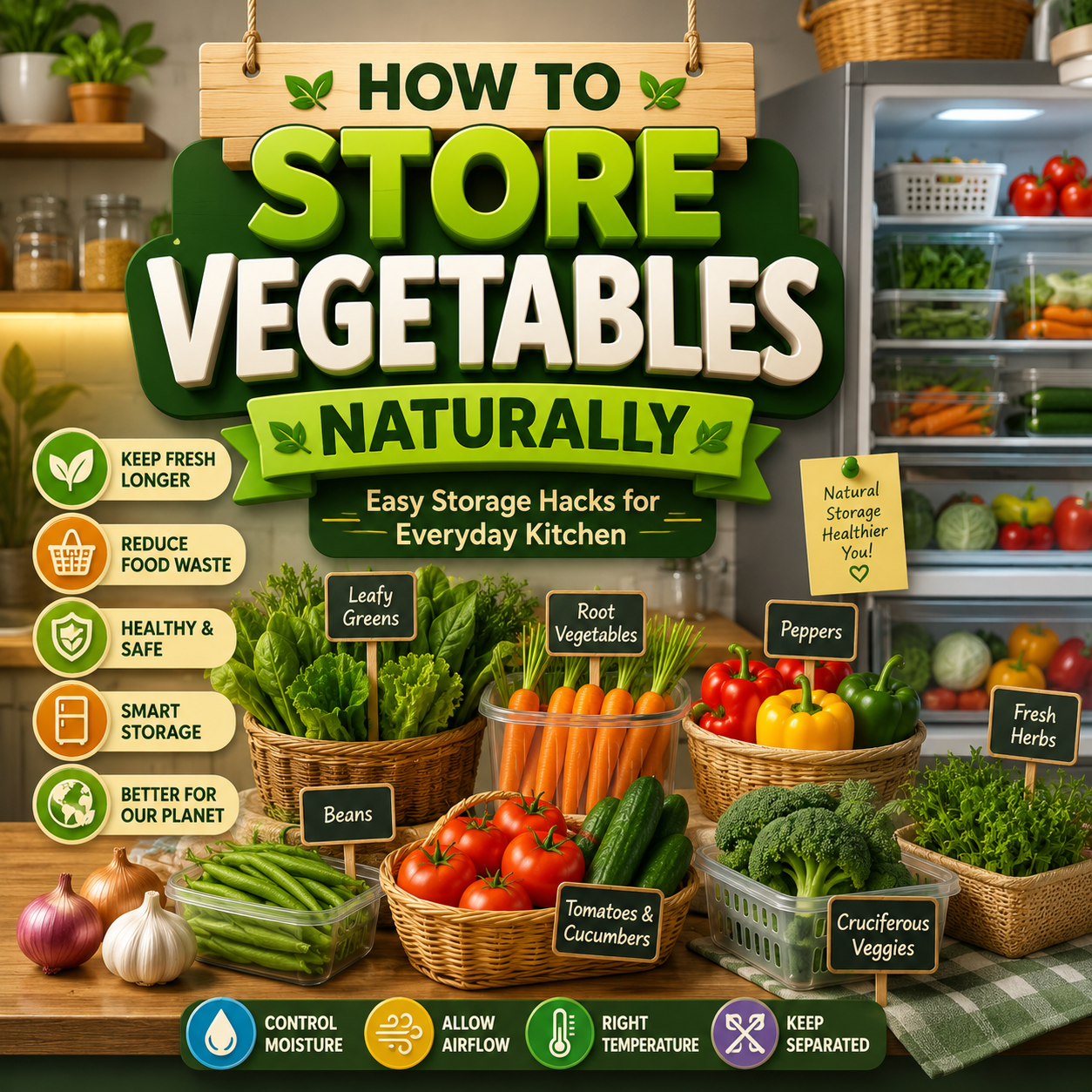
Best Ways to Store Fruits and Vegetables
Fresh produce requires different storage methods depending on the type of fruit or vegetable. Some produce releases ethylene gas, which speeds up ripening in nearby foods.
Helpful storage tips include:
Leafy Greens
- Store in high-humidity drawers.
- Wrap loosely in paper towels.
- Remove damaged leaves.
Apples
- Refrigerate separately.
- Keep away from leafy vegetables.
Berries
- Wash only before eating.
- Store dry in breathable containers.
Tomatoes
- Store at room temperature until ripe.
- Refrigerate only if necessary.
Herbs
- Keep stems in water or wrap with damp paper towels.
Understanding produce-specific storage methods helps preserve freshness while minimizing waste.
Leftover Food Storage Guidelines
Properly stored leftovers provide convenient meals while reducing food waste. However, leftovers become unsafe if stored incorrectly or forgotten for too long.
Follow these recommendations:
- Refrigerate within two hours of cooking.
- Use shallow containers.
- Label containers with dates.
- Eat within 3–4 days.
- Reheat thoroughly before serving.
- Freeze leftovers if they won’t be eaten soon.
Never taste food to determine whether it is still safe. When in doubt, throw it out.
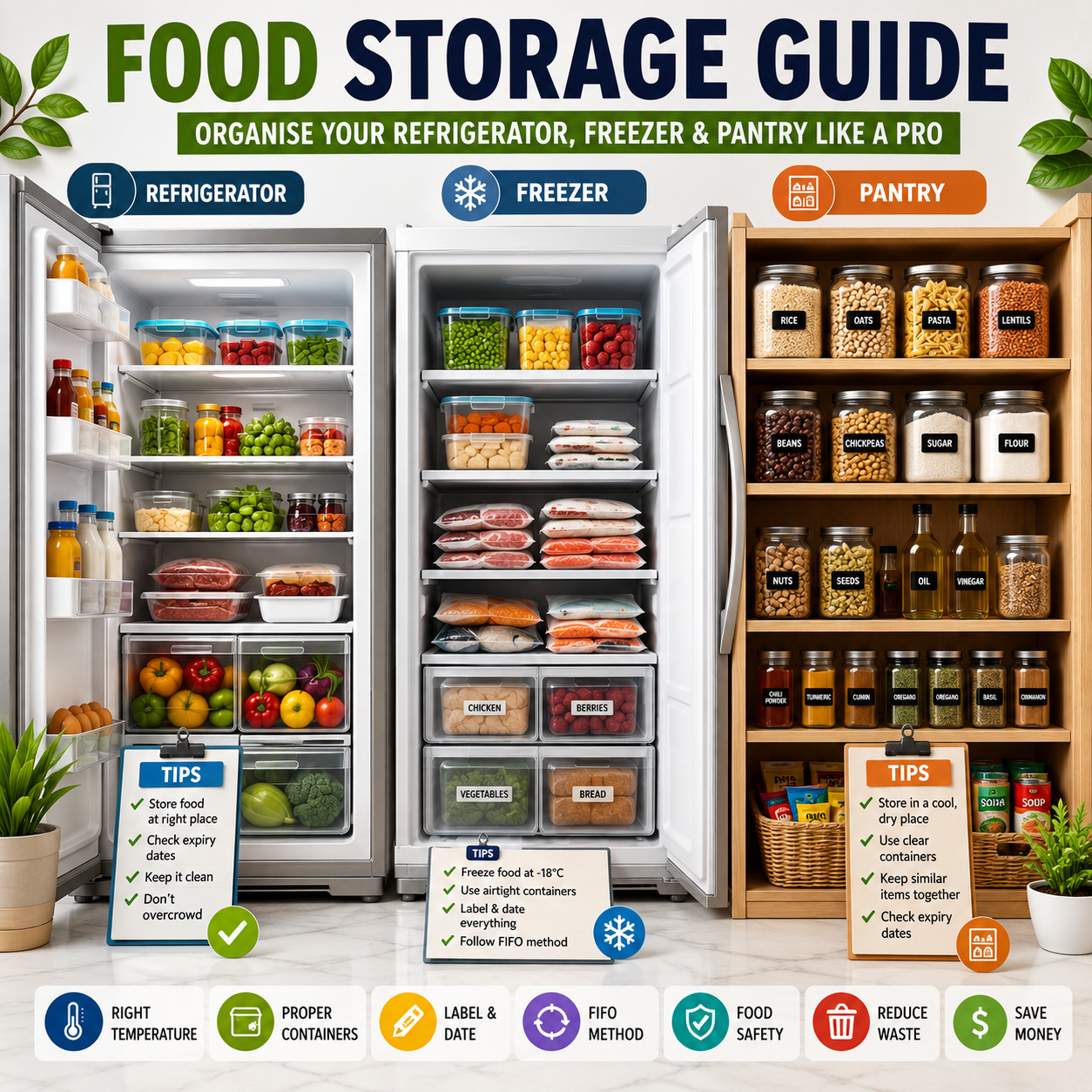
Refrigerator Organization Tips for Maximum Food Safety
A well-organized refrigerator does more than make your kitchen look tidy—it plays a vital role in preventing foodborne illness, reducing food waste, and extending the shelf life of groceries. Different shelves maintain slightly different temperatures, so placing foods in their appropriate locations helps keep them fresh and safe. Regularly organizing your refrigerator also makes it easier to monitor expiration dates and use older items before they spoil.
Recommended Refrigerator Shelf Layout
| Refrigerator Area | Best Foods to Store | Why It Matters |
| Top Shelf | Leftovers, ready-to-eat foods, drinks | Most consistent temperature; keeps cooked foods away from raw foods. |
| Middle Shelf | Dairy products, eggs (in original carton), yogurt | Stable cooling helps preserve freshness. |
| Bottom Shelf | Raw meat, poultry, seafood (sealed containers) | Prevents juices from dripping onto other foods. |
| Crisper Drawers | Fruits and vegetables (stored separately when possible) | Maintains proper humidity to keep produce fresh. |
| Door Shelves | Condiments, sauces, jams, bottled drinks | Warmest part of the refrigerator; not suitable for highly perishable foods. |
Additional Organization Tips
- Label leftovers with the preparation date.
- Practice the First In, First Out (FIFO) method by placing older items at the front.
- Avoid blocking air vents inside the refrigerator.
- Store foods in clear, airtight containers for easy visibility.
- Keep similar food items grouped together to simplify meal planning and reduce waste.
Foods That Should Never Be Stored in the Refrigerator
Although refrigeration is essential for many foods, some items lose flavor, texture, or quality when stored in cold temperatures. Knowing which foods belong outside the refrigerator helps preserve their taste and extends their usability.
Foods Better Stored at Room Temperature
- Whole tomatoes
- Potatoes
- Onions
- Garlic
- Bread (unless freezing)
- Bananas
- Whole melons before cutting
- Honey
- Coffee beans
- Cooking oils (unless specified by the manufacturer)
Once fruits such as melons are cut, they should be refrigerated promptly in sealed containers to reduce bacterial growth. Likewise, opened products that require refrigeration should always follow the storage instructions on their packaging.
Signs Your Refrigerator May Not Be Keeping Food Safe
Even a modern refrigerator can develop problems over time. A malfunctioning appliance may not cool evenly, increasing the risk of food spoilage and bacterial growth. Recognizing warning signs early can prevent costly food loss and protect your family’s health.
Common Warning Signs
- Food spoils before its expiration date.
- Milk sours unusually quickly.
- Ice cream becomes soft in the freezer.
- Excess condensation forms inside the refrigerator.
- Frost builds up unexpectedly.
- Unpleasant odors persist despite cleaning.
- The refrigerator runs constantly or cycles irregularly.
- The interior temperature fluctuates noticeably.
If you notice these issues, check the temperature with a refrigerator thermometer, inspect the door seals for leaks, and clean the condenser coils. If problems continue, consider having the appliance serviced or replaced.
Refrigerator Cleaning and Maintenance Tips
Routine cleaning is an essential part of refrigerator food storage. Food spills, crumbs, and leaking containers create an environment where bacteria and mold can grow. A clean refrigerator not only improves hygiene but also helps maintain cooling efficiency and prevents unpleasant odors.
Weekly Cleaning Checklist
- Discard expired or spoiled food.
- Wipe shelves and drawers with warm, soapy water.
- Clean spills immediately to prevent bacteria from spreading.
- Check containers for leaks.
- Wash reusable storage containers thoroughly.
Monthly Maintenance Checklist
- Remove all food and clean the interior completely.
- Sanitize shelves and drawers using a food-safe disinfectant.
- Vacuum or dust the condenser coils if accessible.
- Inspect and clean door gaskets to ensure a proper seal.
- Verify the refrigerator temperature remains at or below 40°F (4°C).
Regular maintenance extends the life of your refrigerator while supporting consistent food safety.
Expert Tips to Keep Food Safe in Your Refrigerator
Food safety experts recommend adopting simple daily habits that significantly reduce the risk of contamination and spoilage. These best practices help ensure that your refrigerator remains a safe environment for storing perishable foods.
Best Practices
- Keep the refrigerator temperature at or below 40°F (4°C).
- Freeze foods you will not use within their recommended storage time.
- Store raw meat separately from ready-to-eat foods.
- Use airtight containers for leftovers and prepared meals.
- Label foods with purchase or preparation dates.
- Avoid overloading shelves to allow proper airflow.
- Clean the refrigerator regularly.
- Wash fresh produce before eating, not before storing.
- Close the refrigerator door promptly after use.
- Follow expiration dates and safe storage guidelines.
Developing these habits helps reduce food waste, improve organization, and protect your household from foodborne illness.
Comparison Table: Safe vs. Unsafe Refrigerator Storage Practices
| Safe Practice | Unsafe Practice |
| Keep refrigerator at 40°F (4°C) or below | Store food in a warm refrigerator |
| Store raw meat on the bottom shelf | Place raw meat above cooked foods |
| Use airtight containers | Leave food uncovered |
| Label leftovers with dates | Forget when food was prepared |
| Maintain airflow between items | Overcrowd the refrigerator |
| Clean spills immediately | Ignore leaks and food residue |
| Store dairy in the main compartment | Keep milk in the refrigerator door |
| Refrigerate leftovers within two hours | Leave cooked food out too long |
Frequently Asked Questions (FAQs)
1. How long can food safely stay in the refrigerator?
The storage time depends on the type of food. Most cooked leftovers remain safe for 3–4 days, while raw poultry should be cooked or frozen within 1–2 days. Fresh beef, pork, and lamb generally last 3–5 days. Always check expiration dates, follow storage guidelines, and discard food that develops unusual odors, mold, or discoloration.
2. Is it safe to put hot food directly into the refrigerator?
Yes, but with precautions. Instead of leaving food at room temperature for long periods, allow large dishes to cool slightly (about 30–60 minutes) and divide them into shallow containers before refrigerating. This allows food to cool quickly without significantly raising the refrigerator’s internal temperature.
3. Why shouldn’t milk be stored in the refrigerator door?
The refrigerator door experiences the greatest temperature fluctuations because it is opened frequently. These changing temperatures can shorten the shelf life of milk and other dairy products. Store milk toward the back of the middle shelf, where temperatures remain colder and more consistent.
4. What foods should always be refrigerated?
Highly perishable foods such as raw meat, poultry, seafood, dairy products, eggs (according to local food safety recommendations), cooked leftovers, deli meats, and prepared meals should always be refrigerated. Keeping these foods at 40°F (4°C) or below helps reduce bacterial growth and maintain food quality.
5. Can I store fruits and vegetables together?
Some fruits, including apples, bananas, avocados, and pears, release ethylene gas, which speeds up the ripening and spoilage of nearby vegetables. Whenever possible, store fruits and vegetables in separate crisper drawers to maximize freshness and reduce food waste.
6. How can I tell if my refrigerator is too warm?
Signs include food spoiling before its expiration date, milk souring quickly, excessive condensation, soft freezer items, and inconsistent cooling. The best way to confirm the temperature is by using a refrigerator thermometer. If it reads above 40°F (4°C), adjust the settings or have the appliance inspected.
7. How often should I clean my refrigerator?
A quick cleaning should be done every week by removing expired foods and wiping spills immediately. Perform a thorough cleaning at least once a month by removing all food, washing shelves and drawers with warm, soapy water, sanitizing surfaces, and checking the door seals to ensure proper cooling.
8. What is cross-contamination in a refrigerator?
Cross-contamination occurs when harmful bacteria spread from one food to another, often through leaking raw meat juices, dirty containers, or contaminated surfaces. Prevent cross-contamination by storing raw meat on the bottom shelf in leak-proof containers, washing reusable containers regularly, and keeping ready-to-eat foods separate.
9. Should leftovers be stored in airtight containers?
Yes. Airtight containers help keep moisture in, reduce exposure to bacteria, prevent odors from spreading, and maintain food quality. Label each container with the preparation date and consume leftovers within 3–4 days for the best combination of safety and freshness.
10. What is the easiest way to reduce food waste in the refrigerator?
Organize your refrigerator using the First In, First Out (FIFO) method, placing older items at the front so they are used first. Label leftovers, check expiration dates weekly, avoid buying more than you need, and freeze foods that will not be eaten before their recommended storage period ends.
Key Takeaways
- Maintain your refrigerator at 40°F (4°C) or below.
- Store raw meat on the bottom shelf in sealed containers.
- Keep ready-to-eat foods away from raw foods.
- Avoid overcrowding to ensure proper cold-air circulation.
- Store leftovers in airtight containers and label them with dates.
- Clean your refrigerator regularly to prevent bacteria and odors.
- Separate fruits and vegetables that produce ethylene gas.
- Check expiration dates and discard spoiled food promptly.
- Use a refrigerator thermometer to verify safe temperatures.
- Organize your refrigerator to improve food safety and reduce waste.
Conclusion
Proper refrigerator food storage is one of the simplest and most effective ways to protect your family’s health, preserve food quality, and minimize unnecessary waste. Small mistakes—such as storing raw meat above ready-to-eat foods, overcrowding shelves, or ignoring refrigerator temperature—can significantly increase the risk of food spoilage and foodborne illness. Fortunately, these problems are easy to prevent by following proven food safety practices.
Maintaining the correct refrigerator temperature, organizing foods by shelf, using airtight containers, and cleaning your refrigerator regularly all contribute to a safer kitchen environment. Paying attention to expiration dates and storing leftovers correctly also helps save money by reducing avoidable food waste.
By applying the practical tips in this guide, you can improve food freshness, extend the shelf life of your groceries, and create healthier daily habits for everyone in your household.
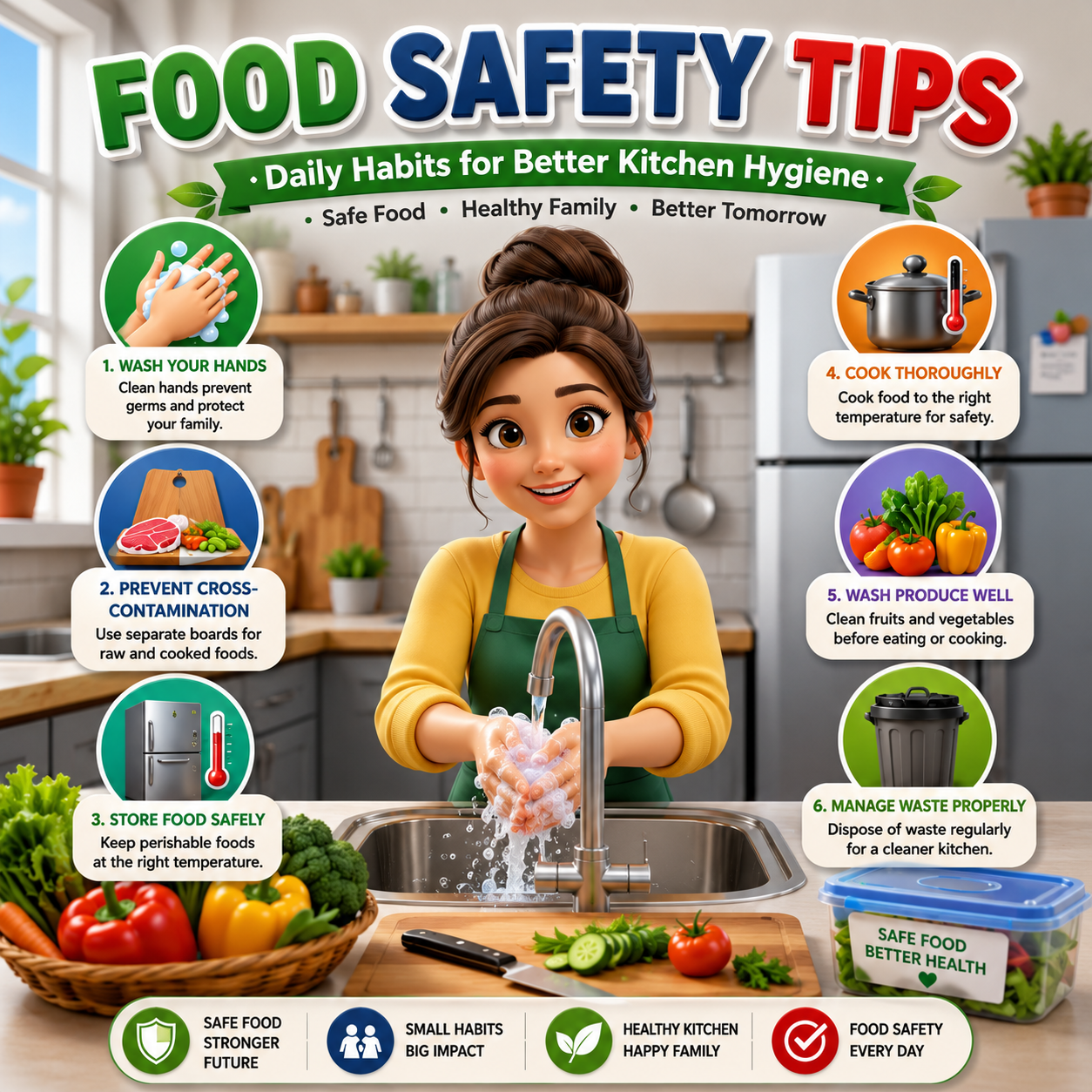
Read Our Latest Blog:Food Safety Tips: Daily Habits for Better Kitchen Hygiene and Food Safety