Introduction
Reaching the age of 50 is an important milestone that often brings changes to your body’s nutritional needs. As metabolism naturally slows down, muscle mass gradually decreases, bones become more vulnerable, and the risk of conditions such as heart disease, high blood pressure, type 2 diabetes, and high cholesterol increases. While aging is a natural process, your daily food choices play a significant role in determining how well you age.
Many people focus on adding healthy foods to their diet but overlook another equally important step—reducing foods that may negatively impact long-term health. Certain everyday foods can contribute to weight gain, inflammation, poor heart health, weak bones, unstable blood sugar levels, and digestive issues when consumed regularly, especially after the age of 50.
This doesn’t mean you can never enjoy your favorite meals again. Instead, it’s about making informed choices, controlling portion sizes, and replacing less nutritious options with healthier alternatives. A balanced, nutrient-rich eating pattern can improve energy levels, protect your heart, strengthen bones, support muscle health, and help maintain independence as you grow older.
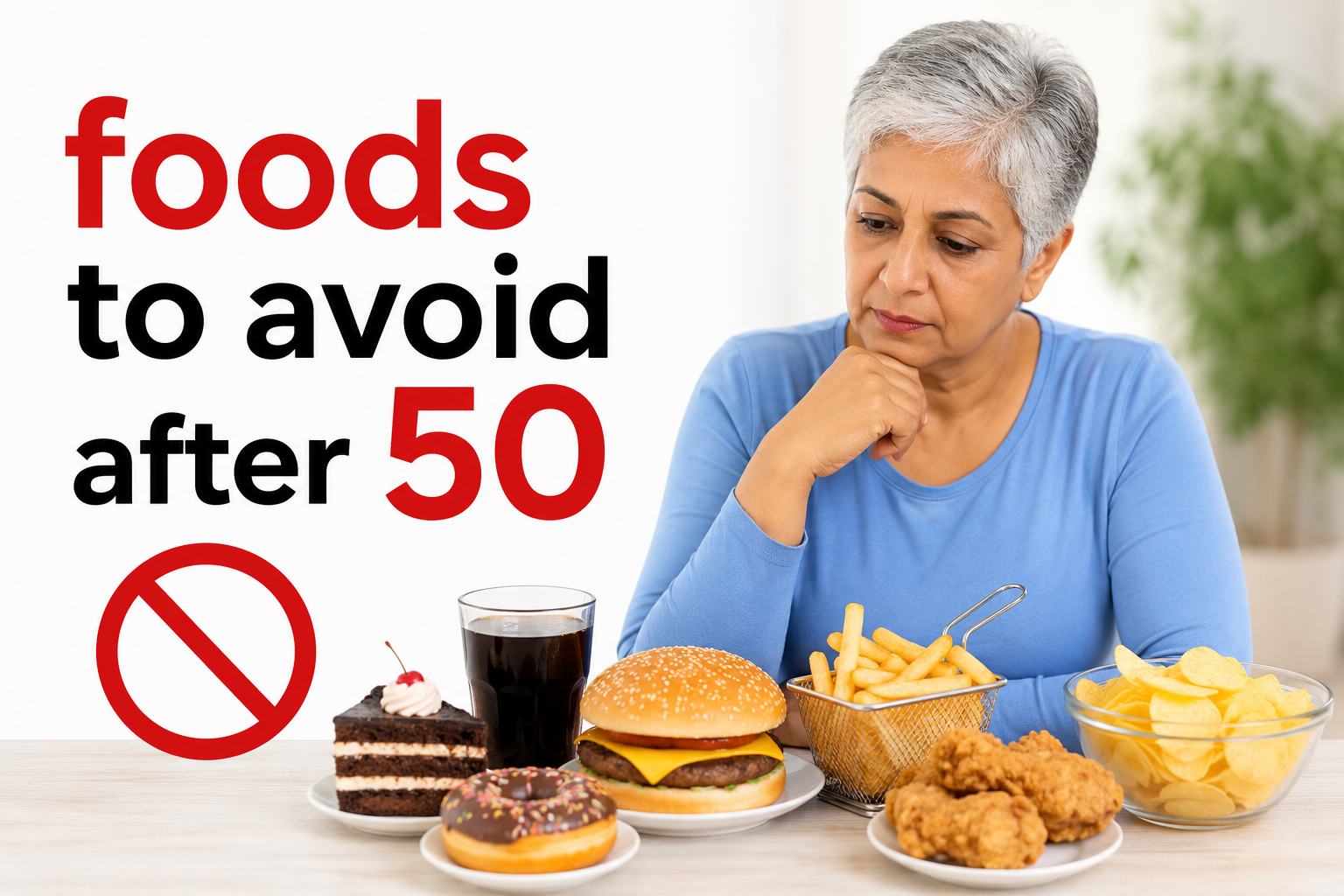
In this comprehensive guide, you’ll discover the foods to avoid after 50, understand why they can become more problematic with age, and learn healthier substitutes that support healthy eating after 50. Whether you’re planning your own healthy aging diet or helping a loved one make better food choices, these practical recommendations will help you build a sustainable and healthier lifestyle.
Why Nutrition Changes After 50
As we age, the body’s nutritional requirements evolve due to natural physiological changes. After the age of 50, metabolism typically slows, making it easier to gain weight even when eating the same portions consumed during younger years. Muscle mass gradually declines, bones lose density, and hormonal changes can affect how the body processes carbohydrates, fats, and proteins. These changes make nutrition after 50 more important than ever.
In addition, chronic health conditions such as hypertension, type 2 diabetes, osteoporosis, and cardiovascular disease become more common with age. Choosing nutrient-dense foods while limiting unhealthy options can reduce the risk of these conditions and improve quality of life.
A well-balanced diet after 50 should focus on:
- High-quality protein for muscle maintenance
- Fiber-rich foods for digestive health
- Calcium-rich foods for bone strength
- Vitamin D to support calcium absorption
- Healthy fats for heart and brain health
- Whole grains for sustained energy
- Fruits and vegetables for vitamins, minerals, and antioxidants
- Adequate hydration throughout the day
Making these dietary adjustments doesn’t require an extreme diet. Small, consistent improvements often lead to meaningful long-term health benefits.
Why Certain Foods Become Less Healthy With Age
Not every food affects the body in the same way throughout life. Foods that were easier to tolerate in your twenties or thirties may have a greater impact after 50 because the body becomes less efficient at regulating blood sugar, metabolizing fat, and maintaining muscle and bone health. Highly processed foods, excess sodium, added sugars, and unhealthy fats can increase inflammation and raise the risk of chronic diseases.
For example, consuming too much sodium may contribute to elevated blood pressure, while diets high in added sugar can increase the risk of obesity and type 2 diabetes. Similarly, excessive saturated fat may affect cholesterol levels, increasing the likelihood of heart disease.
Understanding these changes helps explain why many healthcare professionals recommend a healthy aging diet that prioritizes whole, minimally processed foods. Rather than eliminating favorite foods completely, moderation and healthier substitutions are key strategies for supporting long-term wellness.
1. Sugary Drinks
Sugary beverages such as soft drinks, sweetened fruit juices, energy drinks, and flavored beverages are among the first foods to limit after 50. Although they may provide a quick burst of energy, they are often packed with added sugar and calories while offering little nutritional value. Regular consumption can contribute to weight gain, unstable blood sugar levels, and an increased risk of type 2 diabetes and heart disease.
As metabolism slows with age, excess sugar is more likely to be stored as body fat. Frequent intake of sugary drinks has also been linked to poor dental health and increased inflammation, both of which can affect overall well-being.
Healthier Alternatives
Replace sugary drinks with:
- Plain water
- Infused water with lemon, cucumber, or mint
- Unsweetened herbal tea
- Coconut water (without added sugar)
- Buttermilk
- Fresh homemade vegetable juice
- Green tea
These options help maintain hydration while supporting a healthy lifestyle after 50.
2. Processed Meats
Processed meats, including sausages, bacon, salami, ham, and packaged deli meats, often contain high amounts of sodium, preservatives, and saturated fat. Frequent consumption has been associated with increased risks of cardiovascular disease, high blood pressure, and certain cancers.
For adults over 50, limiting processed meat intake is especially important because heart health becomes a greater concern with age. High sodium levels can also contribute to fluid retention and elevated blood pressure, placing additional strain on the cardiovascular system.
Why They Should Be Limited
- High in sodium
- Rich in saturated fat
- Often contain preservatives such as nitrates
- May increase cardiovascular risk
- Can contribute to weight gain
Better Protein Choices
Choose lean protein sources instead:
- Skinless chicken
- Fish
- Eggs
- Lentils
- Chickpeas
- Kidney beans
- Tofu
- Low-fat dairy products
These alternatives provide high-quality protein for older adults while supporting muscle maintenance and overall health.
3. Fried Foods
Fried foods such as French fries, fried chicken, pakoras, samosas, and deep-fried snacks are often high in unhealthy fats and calories. Regular consumption may contribute to obesity, high cholesterol, insulin resistance, and increased inflammation. As digestive efficiency decreases with age, fried foods may also cause bloating or discomfort in some individuals.
Many commercially fried foods are prepared using oils that are repeatedly heated, which can produce harmful compounds. Limiting fried foods supports cholesterol management, heart health, and healthy weight maintenance.
Healthier Alternatives
Instead of deep frying, try:
- Baking
- Grilling
- Steaming
- Air frying
- Roasting with minimal oil
These cooking methods preserve flavor while significantly reducing unhealthy fat intake.
4. Refined Carbohydrates
Refined carbohydrates include white bread, white rice, pastries, cakes, cookies, sugary breakfast cereals, and many packaged baked goods. During processing, much of the fiber and nutrients are removed, leaving foods that are digested quickly and can cause rapid spikes in blood sugar.
For adults over 50, frequent consumption of refined carbohydrates may increase the risk of type 2 diabetes, weight gain, and reduced energy stability. Replacing refined grains with whole-grain options provides more fiber, vitamins, minerals, and longer-lasting satiety.
Better Choices
Consider replacing refined carbohydrates with:
- Brown rice
- Whole wheat bread
- Oats
- Quinoa
- Millets
- Barley
- Whole-grain pasta
These foods support digestive health, improve blood sugar control, and fit well within a balanced Mediterranean diet or other healthy eating patterns.
5. High-Sodium Foods
High-sodium foods are among the most important foods to avoid after 50, especially for people managing high blood pressure, heart disease, or kidney problems. As we age, our bodies become more sensitive to sodium, making it easier for excess salt to raise blood pressure and cause fluid retention. Many packaged and restaurant foods contain hidden sodium, even if they don’t taste particularly salty.
Common sources of excess sodium include:
- Instant noodles
- Canned soups
- Pickles
- Packaged sauces
- Frozen meals
- Processed cheese
- Salted chips
- Fast food
- Ready-to-eat snacks
Consuming too much sodium over time may increase the risk of:
- High blood pressure
- Stroke
- Heart disease
- Kidney damage
- Fluid retention
- Bone calcium loss
Healthier Alternatives
Instead of relying on salty processed foods, flavor meals naturally with:
- Fresh herbs
- Garlic
- Ginger
- Lemon juice
- Black pepper
- Cumin
- Coriander
- Turmeric
Preparing meals at home also gives you better control over sodium intake and supports a healthier lifestyle.
6. Packaged Snacks
Packaged snacks are convenient, but many are loaded with refined carbohydrates, unhealthy fats, added sugars, artificial flavors, and excess sodium. While they may satisfy cravings temporarily, they rarely provide the nutrients your body needs after 50.
Frequent consumption of packaged snacks can contribute to:
- Weight gain
- Increased cholesterol
- Poor blood sugar control
- Digestive problems
- Reduced nutrient intake
Examples include:
- Potato chips
- Cheese puffs
- Crackers made with refined flour
- Instant snack mixes
- Packaged cookies
- Sweet biscuits
Better Snack Options
Choose nutrient-rich snacks instead, such as:
- Fresh fruit
- Unsalted nuts
- Roasted chickpeas
- Homemade popcorn
- Greek yogurt
- Fresh vegetable sticks with hummus
- Seeds like pumpkin or sunflower seeds
These alternatives provide fiber, protein, and healthy fats that keep you fuller for longer and support healthy eating after 50.
7. Foods High in Added Sugar
Added sugar is found in many everyday foods, even those that don’t taste particularly sweet. Flavored yogurt, breakfast cereals, packaged sauces, desserts, candies, and bakery products often contain significant amounts of added sugar.
Excess sugar intake after 50 may increase the risk of:
- Type 2 diabetes
- Obesity
- Fatty liver disease
- Heart disease
- Tooth decay
- Chronic inflammation
Unlike naturally occurring sugars found in fruits and milk, added sugars provide calories without essential nutrients.
How to Reduce Added Sugar
Simple ways to lower sugar intake include:
- Read food labels carefully.
- Choose unsweetened dairy products.
- Replace desserts with fresh fruit.
- Avoid sugary breakfast cereals.
- Limit sweets to occasional treats.
- Prepare homemade snacks whenever possible.
Making these small adjustments supports better blood sugar control and long-term health.
8. Excess Alcohol
Moderate alcohol consumption may fit into some lifestyles, but excessive drinking becomes increasingly harmful with age. The body processes alcohol more slowly after 50, making its effects stronger and longer-lasting.
Excess alcohol can contribute to:
- High blood pressure
- Liver disease
- Poor sleep quality
- Bone loss
- Increased fall risk
- Memory problems
- Weight gain
Alcohol may also interact with medications commonly prescribed for older adults, making it especially important to consult a healthcare provider about safe consumption.
Healthier Beverage Choices
Instead of alcoholic beverages, consider:
- Sparkling water with lemon
- Herbal tea
- Fresh coconut water
- Unsweetened iced tea
- Fruit-infused water
These beverages help maintain hydration without the health risks associated with excessive alcohol consumption.
9. Foods High in Saturated Fat
While healthy fats are essential for overall wellness, diets high in saturated fat may contribute to elevated LDL (“bad”) cholesterol levels and increase the risk of cardiovascular disease. Adults over 50 should pay particular attention to the types of fat they consume.
Foods high in saturated fat include:
- Fatty cuts of red meat
- Butter
- Cream
- Full-fat cheese
- Processed baked goods
- Palm oil
- Coconut oil (in large quantities)
- Deep-fried foods
Replacing saturated fats with healthier unsaturated fats may improve heart health and support healthy aging.
Better Fat Sources
Choose foods rich in healthy fats, including:
- Olive oil
- Avocados
- Almonds
- Walnuts
- Pistachios
- Flaxseeds
- Chia seeds
- Fatty fish such as salmon and sardines
These foods support heart health, brain function, and overall nutrition.
10. Ultra-Processed Fast Foods
Ultra-processed fast foods are often high in calories, sodium, unhealthy fats, refined carbohydrates, and artificial additives. Although convenient, regular consumption may increase the risk of obesity, diabetes, heart disease, and digestive issues.
Examples include:
- Burgers
- Pizza
- Fried chicken
- French fries
- Processed sandwiches
- Instant frozen meals
- Sugary desserts
- Fast-food breakfast items
These foods are typically low in fiber and essential nutrients while being high in ingredients that promote inflammation and poor metabolic health.
Why They Should Be Limited
Frequent fast-food consumption may lead to:
- Weight gain
- Poor blood sugar control
- Increased cholesterol
- Elevated blood pressure
- Reduced digestive health
- Lower energy levels
Preparing meals at home using fresh ingredients is one of the most effective ways to improve nutrition after 50.
Also read: Is Fiber Good for Constipation? Myths vs Facts
Healthy Food Swaps for Better Aging
Limiting unhealthy foods becomes much easier when you have practical alternatives. Healthy swaps allow you to enjoy satisfying meals while supporting your body’s changing nutritional needs.
| Instead of… | Choose… |
| Sugary soft drinks | Water, herbal tea, infused water |
| White bread | Whole wheat bread |
| White rice | Brown rice or quinoa |
| Potato chips | Roasted chickpeas or unsalted nuts |
| Fried chicken | Grilled or baked chicken |
| Ice cream | Greek yogurt with berries |
| Candy | Fresh fruit |
| Butter | Olive oil |
| Bacon | Grilled fish or lean chicken |
| Fast food burgers | Homemade whole-grain sandwiches |
These substitutions reduce added sugar, sodium, and unhealthy fats while increasing fiber, vitamins, minerals, and healthy fats.
What Should You Eat Instead After 50?
Focusing only on foods to avoid can feel restrictive. Instead, build your meals around nutrient-dense foods that support healthy aging and reduce the risk of chronic disease.
Aim to include:
Lean Protein
Protein supports muscle maintenance, recovery, and strength.
Examples include:
- Fish
- Chicken
- Eggs
- Lentils
- Beans
- Tofu
- Low-fat dairy
Fiber-Rich Foods
Fiber promotes digestive health, supports healthy cholesterol levels, and improves blood sugar control.
Choose:
- Oats
- Fruits
- Vegetables
- Whole grains
- Legumes
- Chia seeds
- Flaxseeds
Calcium-Rich Foods
Strong bones become increasingly important after 50.
Good choices include:
- Low-fat milk
- Yogurt
- Paneer (in moderation)
- Fortified plant-based milk
- Leafy green vegetables
Healthy Fats
Healthy fats support heart and brain health.
Include:
- Olive oil
- Avocados
- Nuts
- Seeds
- Fatty fish
Colorful Fruits and Vegetables
Eating a variety of colorful produce provides antioxidants that help protect cells from age-related damage.
Try to include vegetables and fruits of different colors every day, such as:
- Spinach
- Broccoli
- Tomatoes
- Carrots
- Blueberries
- Oranges
- Papaya
- Apples
Expert Tips for Healthy Eating After 50
Adopting healthier eating habits doesn’t require a complete lifestyle overhaul. Small, consistent changes often lead to the greatest long-term benefits.
Here are some expert recommendations:
- Fill half your plate with vegetables.
- Include protein in every meal.
- Choose whole grains instead of refined grains.
- Drink plenty of water throughout the day.
- Read nutrition labels before buying packaged foods.
- Reduce added sugar and excess salt.
- Cook more meals at home.
- Stay physically active.
- Practice portion control.
- Schedule regular health check-ups to monitor blood pressure, cholesterol, and blood sugar levels.
Following these habits supports healthy aging, better energy levels, and improved overall quality of life.
Comparison Table: Foods to Limit vs. Healthier Alternatives
| Foods to Limit After 50 | Better Alternative | Key Benefit |
| Sugary drinks | Water or herbal tea | Better hydration |
| Processed meats | Fish or legumes | Heart health |
| Fried foods | Baked or grilled foods | Lower unhealthy fat intake |
| Refined grains | Whole grains | Improved digestion |
| Salty snacks | Unsalted nuts | Better blood pressure control |
| Sugary desserts | Fresh fruit | Natural sweetness and fiber |
| Butter | Olive oil | Healthier fats |
| Fast food | Homemade balanced meals | Better nutrition |
Choosing healthier alternatives consistently can significantly improve heart health, digestive function, weight management, and overall well-being after the age of 50.
Building the Best Diet After 50
A healthy diet after 50 is not about strict food restrictions or following the latest nutrition trends. Instead, it focuses on giving your body the nutrients it needs to maintain muscle strength, protect your heart, preserve bone density, and support healthy aging. While limiting unhealthy foods is important, what you choose to eat every day matters even more.
A balanced eating pattern should include a variety of whole foods that provide protein, fiber, healthy fats, vitamins, and minerals. These nutrients work together to improve energy levels, strengthen the immune system, and lower the risk of chronic diseases.
Key Components of the Best Diet After 50
To build a sustainable healthy aging diet, include these food groups regularly:
1. High-Quality Protein
After the age of 50, muscle loss naturally accelerates. Eating enough protein helps preserve muscle mass, improves recovery, and supports mobility.
Excellent protein sources include:
- Fish
- Skinless chicken
- Eggs
- Lentils
- Chickpeas
- Kidney beans
- Tofu
- Greek yogurt
- Cottage cheese
Aim to include a protein source with every main meal.
2. Whole Grains
Whole grains contain fiber, B vitamins, and minerals that refined grains often lack. They help regulate blood sugar, improve digestive health, and keep you feeling full for longer.
Healthy whole-grain options include:
- Oats
- Brown rice
- Quinoa
- Barley
- Millets
- Whole wheat bread
- Whole grain pasta
Replacing refined carbohydrates with whole grains is one of the simplest ways to improve overall nutrition.
3. Plenty of Fruits and Vegetables
Colorful fruits and vegetables provide antioxidants that help protect cells from oxidative stress associated with aging. They are also rich in vitamins, minerals, fiber, and water.
Try to fill at least half of your plate with vegetables during lunch and dinner.
Great choices include:
- Spinach
- Broccoli
- Carrots
- Bell peppers
- Tomatoes
- Apples
- Berries
- Oranges
- Papaya
- Guava
Eating a variety of colors ensures a broader range of nutrients.
4. Healthy Fats
Not all fats are unhealthy. Unsaturated fats support heart health, reduce inflammation, and contribute to brain function.
Choose:
- Olive oil
- Avocados
- Almonds
- Walnuts
- Pistachios
- Chia seeds
- Flaxseeds
- Fatty fish
Limit foods rich in trans fats and excessive saturated fats whenever possible.
5. Calcium and Vitamin D
Bone density naturally decreases with age, increasing the risk of fractures and osteoporosis. Calcium and vitamin D work together to support strong bones.
Good dietary sources include:
- Milk
- Yogurt
- Fortified plant-based milk
- Paneer (in moderation)
- Leafy greens
- Fortified cereals
Safe sunlight exposure and medical guidance may also help maintain healthy vitamin D levels.
Lifestyle Habits That Support Healthy Aging
Diet alone cannot guarantee healthy aging. Combining nutritious eating with positive lifestyle habits offers the greatest protection against age-related diseases.
Developing healthy daily routines can improve physical health, mental well-being, and overall quality of life.
Stay Physically Active
Exercise supports:
- Muscle strength
- Heart health
- Bone density
- Blood sugar control
- Weight management
- Joint mobility
Aim for a combination of:
- Walking
- Strength training
- Yoga
- Cycling
- Swimming
- Stretching exercises
Even 30 minutes of moderate activity most days of the week provides significant health benefits.
Stay Hydrated
Hydration becomes increasingly important with age because the body’s thirst response may weaken.
Signs of inadequate hydration include:
- Fatigue
- Dry mouth
- Headaches
- Constipation
- Dark urine
Drink water consistently throughout the day instead of waiting until you feel thirsty.
Prioritize Good Sleep
Quality sleep supports:
- Brain function
- Memory
- Immune health
- Hormone regulation
- Appetite control
Adults generally benefit from 7–9 hours of sleep each night.
Improving sleep habits can also reduce stress and support healthier food choices.
Manage Stress Effectively
Long-term stress can affect digestion, appetite, blood pressure, and overall health.
Healthy stress-management techniques include:
- Meditation
- Deep breathing
- Reading
- Gardening
- Spending time outdoors
- Socializing with family and friends
Managing stress contributes to both mental and physical well-being.
Schedule Regular Health Check-Ups
Routine medical screenings become increasingly important after 50.
Regular monitoring helps detect health issues early, including:
- High blood pressure
- Diabetes
- High cholesterol
- Bone density changes
- Vision problems
- Hearing loss
Early detection often leads to more effective treatment and better long-term outcomes.
Common Nutrition Mistakes People Make After 50
Even health-conscious adults sometimes develop habits that reduce the quality of their diet. Recognizing these common mistakes can help you make smarter food choices.
Skipping Protein
Many people consume too little protein, leading to muscle loss and reduced strength over time.
Drinking Too Little Water
Mild dehydration can affect digestion, energy levels, and kidney function.
Relying on Packaged Convenience Foods
Highly processed foods often contain excessive sodium, unhealthy fats, and added sugar while providing limited nutrition.
Eating Large Portion Sizes
Metabolism slows with age, so portion control becomes increasingly important for maintaining a healthy weight.
Ignoring Food Labels
Reading nutrition labels helps identify hidden sugar, sodium, and unhealthy fats before purchasing packaged foods.
Sample One-Day Healthy Meal Plan After 50
The following meal plan demonstrates how nutrient-rich foods can fit into a balanced daily routine.
| Meal | Healthy Choice |
| Breakfast | Oatmeal with berries, flaxseeds, and low-fat milk |
| Mid-Morning Snack | Apple with a handful of almonds |
| Lunch | Grilled chicken, brown rice, mixed vegetables, and salad |
| Evening Snack | Greek yogurt with fresh fruit |
| Dinner | Grilled fish, steamed broccoli, quinoa, and sautéed spinach |
| Before Bed (Optional) | Warm low-fat milk or herbal tea |
This meal plan provides protein, fiber, healthy fats, vitamins, and minerals while limiting added sugar, refined carbohydrates, and unhealthy fats.
Frequently Asked Questions (FAQ)
1. Why should adults over 50 avoid certain foods?
As people age, metabolism slows, muscle mass naturally decreases, and the risk of chronic conditions such as diabetes, heart disease, and hypertension increases. Foods that are high in added sugar, sodium, unhealthy fats, and refined carbohydrates may worsen these risks. Choosing nutrient-rich alternatives helps maintain energy, supports healthy aging, and improves overall well-being.
2. Can I still enjoy my favorite foods after turning 50?
Yes. Healthy eating after 50 does not mean giving up your favorite foods completely. The goal is moderation rather than restriction. Enjoying occasional treats while focusing on a balanced diet rich in vegetables, fruits, whole grains, lean proteins, and healthy fats is a practical and sustainable approach to long-term health.
3. Which food is the worst for people over 50?
There is no single “worst” food for everyone. However, foods that combine high amounts of added sugar, sodium, unhealthy fats, and refined carbohydrates—such as sugary drinks, processed meats, and ultra-processed fast foods—are generally recommended to be limited because they may increase the risk of several chronic health conditions.
4. Is it necessary to eat more protein after 50?
Yes. Protein becomes increasingly important with age because it helps preserve muscle mass, supports recovery after physical activity, and contributes to bone health. Including protein-rich foods such as fish, eggs, beans, lentils, dairy products, tofu, and lean poultry in daily meals can help meet nutritional needs.
5. How can I reduce sodium without sacrificing flavor?
Reducing sodium doesn’t mean meals have to taste bland. Fresh herbs, garlic, ginger, lemon juice, black pepper, cumin, coriander, turmeric, and other spices can add flavor naturally. Cooking at home and limiting packaged foods also makes it easier to control sodium intake while enjoying delicious meals.
Key Takeaways
- After age 50, nutritional needs change due to slower metabolism and increased risk of chronic diseases.
- Limiting sugary drinks, processed meats, fried foods, and ultra-processed foods supports better overall health.
- Whole foods rich in protein, fiber, healthy fats, vitamins, and minerals are essential for healthy aging.
- Adequate calcium and vitamin D intake help maintain strong bones.
- Reducing sodium can improve blood pressure management and heart health.
- Replacing refined carbohydrates with whole grains supports better blood sugar control and digestive health.
- Regular physical activity and proper hydration are just as important as healthy eating.
- Small, consistent dietary changes are more sustainable than extreme diets.
- Reading nutrition labels helps identify hidden sugars, unhealthy fats, and excess sodium.
- A balanced lifestyle combining healthy eating, exercise, sleep, and stress management promotes long-term well-being.
Conclusion
Healthy aging is not about following restrictive diets or eliminating every favorite food. Instead, it’s about making informed choices that support your body’s changing nutritional needs after the age of 50. By limiting foods high in added sugar, sodium, unhealthy fats, and refined carbohydrates, you can reduce the risk of many age-related health conditions while improving energy, mobility, and overall quality of life.
Equally important is focusing on what to include in your diet. Lean proteins, whole grains, colorful fruits and vegetables, healthy fats, calcium-rich foods, and adequate hydration provide the nutrients your body needs to stay strong and active. When combined with regular exercise, quality sleep, stress management, and routine medical check-ups, these habits create a solid foundation for long-term health.
Remember, healthy eating is a journey rather than a destination. Start with one positive change today—whether it’s swapping a sugary drink for water, choosing whole grains instead of refined grains, or adding more vegetables to your plate. Over time, these small steps can lead to significant improvements in your health and well-being.