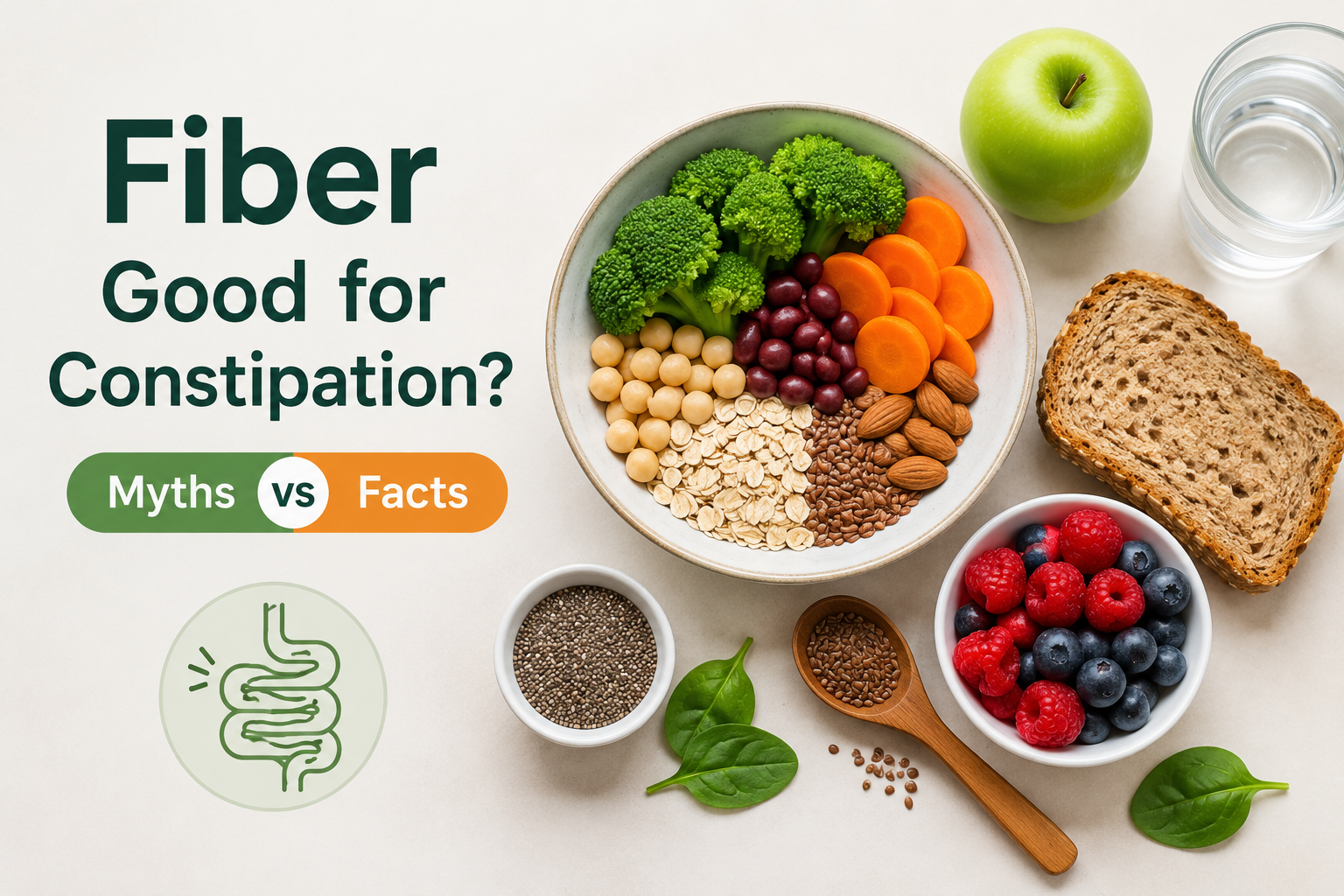
Introduction
Constipation is one of the most common digestive complaints worldwide, affecting millions of people across all age groups. Many people immediately assume that eating more fiber is the ultimate solution whenever bowel movements become difficult or irregular. While dietary fiber plays an essential role in digestive health, the truth is more complicated than the common advice suggests.
If you’ve ever increased your fiber intake but still experienced bloating, hard stools, or difficulty passing stool, you’re not alone. In some situations, adding more fiber without addressing hydration, physical activity, or underlying digestive conditions may actually make constipation feel worse.
So, is fiber good for constipation? The answer depends on several factors, including the type of constipation, the type of fiber consumed, your daily water intake, and your overall gut health.
This article separates myths from facts using evidence-based information. You’ll learn how fiber and constipation are connected, when fiber is helpful, when it may not be the right solution, and what other strategies can support healthy bowel movements. Whether you experience occasional constipation or struggle with chronic symptoms, this guide will help you make informed decisions about your digestive health.
What Is Constipation?
Constipation is a digestive condition in which bowel movements become less frequent, difficult, or uncomfortable. While many people believe constipation simply means not having a bowel movement every day, healthcare professionals define it more broadly. A person may be constipated if they have fewer than three bowel movements per week, pass hard or dry stools, strain excessively during bowel movements, or feel that the bowel has not emptied completely.
Constipation can occur occasionally due to temporary lifestyle changes, travel, dehydration, or dietary habits. However, when symptoms persist for several weeks or recur frequently, it may be classified as chronic constipation. Understanding the root cause is essential because effective treatment depends on identifying why constipation is occurring rather than assuming fiber alone will solve the problem.
Common constipation symptoms include:
- Hard, dry stools
- Pain during bowel movements
- Infrequent bowel movements
- Excessive straining
- Feeling of incomplete evacuation
- Abdominal bloating
- Stomach discomfort
- Reduced appetite in severe cases
Ignoring persistent constipation may lead to complications such as hemorrhoids, anal fissures, or fecal impaction. Early management through lifestyle adjustments and appropriate medical advice can help prevent these issues.
Is Fiber Good for Constipation?
The short answer is yes—but not always.
Dietary fiber is well known for promoting regular bowel movements because it adds bulk to stool and helps it move through the digestive tract. For many people with mild or occasional constipation, increasing fiber intake alongside adequate hydration can improve stool consistency and make bowel movements easier.
However, fiber is not a universal remedy. Some individuals with slow-transit constipation, pelvic floor dysfunction, irritable bowel syndrome (IBS), or inadequate water intake may notice little improvement—or even worsening symptoms—after significantly increasing fiber consumption.
The effectiveness of fiber depends on several factors:
| Situation | Does Fiber Usually Help? |
| Low-fiber diet | Yes |
| Mild constipation | Often |
| Dehydration | Not unless hydration improves |
| IBS (varies by type) | Sometimes |
| Slow-transit constipation | Often limited |
| Pelvic floor dysfunction | Usually not sufficient alone |
Instead of asking only, “Does fiber help constipation?”, a better question is “What is causing the constipation?” Once the underlying cause is identified, treatment can be tailored more effectively.
Understanding Dietary Fiber
Dietary fiber refers to the parts of plant-based foods that the human digestive system cannot fully digest or absorb. Unlike carbohydrates that are broken down into sugars, fiber passes through the digestive tract largely intact, providing several important health benefits along the way.
Fiber contributes to:
- Improved digestive health
- Better stool consistency
- Healthier bowel movements
- Support for beneficial gut bacteria
- Blood sugar regulation
- Cholesterol management
- Increased feelings of fullness after meals
Most adults do not consume the recommended daily amount of fiber. According to general dietary recommendations, adults should aim for approximately 25–38 grams of dietary fiber per day, depending on age and sex. Gradually increasing fiber intake rather than making sudden changes can help reduce bloating and gas while allowing the digestive system to adapt.
Excellent sources of dietary fiber include:
- Whole grains
- Oats
- Fruits
- Vegetables
- Beans
- Lentils
- Chickpeas
- Nuts
- Seeds
- Psyllium husk
Choosing a variety of fiber-rich foods provides a balance of nutrients and supports overall digestive health more effectively than relying on a single source.
How Fiber Affects the Digestive System
Fiber plays several important roles throughout the digestive system. As food moves through the stomach and intestines, fiber helps regulate digestion by influencing stool formation, water retention, and the activity of beneficial gut bacteria.
One of fiber’s primary functions is increasing stool bulk. Bulkier stools stimulate the intestines to contract more effectively, helping move waste toward the rectum. Certain types of fiber also absorb water, making stools softer and easier to pass.
Beyond bowel movements, fiber supports the gut microbiome. Beneficial bacteria ferment some forms of fiber, producing short-chain fatty acids that nourish the cells lining the colon and contribute to overall colon health.
The digestive benefits of fiber include:
- Softer stool consistency
- Increased stool bulk
- Improved bowel regularity
- Support for healthy gut bacteria
- Reduced risk of certain digestive disorders
- Better long-term digestive health
However, these benefits depend on consuming enough fluids. Increasing fiber without drinking enough water may lead to harder stools, abdominal discomfort, bloating, and increased difficulty passing stool. For this reason, hydration is just as important as fiber intake when managing constipation.
Common Myths About Fiber and Constipation
Fiber has earned a reputation as the “go-to” solution for constipation, but many beliefs surrounding it are oversimplified or misleading. While fiber is an important part of a healthy diet, its effectiveness depends on the individual’s digestive health, hydration levels, lifestyle, and the underlying cause of constipation. Believing these myths can delay proper treatment and even worsen symptoms in some cases. Let’s separate the most common misconceptions from the evidence-based facts.
Myth 1: More Fiber Always Cures Constipation
This is one of the biggest misconceptions about fiber and constipation. Increasing fiber intake may improve bowel movements for people who consume very little fiber. However, for individuals with slow-transit constipation, pelvic floor dysfunction, or certain gastrointestinal disorders, adding more fiber alone may not provide relief.
Fact: Fiber is helpful when constipation is linked to a low-fiber diet, but it is not a universal cure. Identifying the root cause of constipation is essential before making dietary changes.
Myth 2: All Types of Fiber Work the Same Way
Many people assume that every fiber-rich food has the same effect on digestion. In reality, different types of fiber behave differently inside the digestive system.
Fact: Soluble fiber absorbs water and forms a gel-like substance that softens stool, while insoluble fiber adds bulk and helps food move through the intestines. Choosing the right type of fiber is often more important than simply increasing total fiber intake.
Myth 3: Fiber Supplements Are Better Than Whole Foods
Fiber supplements can be useful in certain situations, but they should not replace a balanced diet.
Fact: Whole foods provide vitamins, minerals, antioxidants, healthy fats, and plant compounds that supplements cannot fully replicate. A balanced diet rich in fruits, vegetables, legumes, and whole grains offers broader health benefits than relying solely on supplements.
Myth 4: If Fiber Doesn’t Work Immediately, It Isn’t Effective
Many people expect overnight results after increasing fiber intake.
Fact: The digestive system usually needs several days or even weeks to adjust to a higher-fiber diet. Increasing fiber gradually while maintaining proper hydration gives the body time to adapt and reduces bloating or gas.
Myth 5: Drinking Water Doesn’t Matter If You Eat Enough Fiber
Some people focus only on fiber intake and overlook hydration.
Fact: Fiber needs water to work effectively. Without adequate fluids, fiber may absorb the limited water available in the intestines, making stool harder instead of softer. This is why drinking enough water is one of the most important aspects of natural constipation relief.
Evidence-Based Facts About Fiber and Constipation
Scientific research consistently shows that fiber can improve bowel regularity, but only when used appropriately. Understanding these facts can help you make better decisions about your digestive health instead of relying on common misconceptions.
Fact 1: Fiber Works Best for Mild or Occasional Constipation
People who consume a low-fiber diet often experience noticeable improvements after gradually increasing their fiber intake. Whole grains, fruits, vegetables, beans, and legumes naturally increase stool bulk and support healthy bowel movements.
However, individuals who already consume adequate fiber may not experience additional benefits from eating even more.
Fact 2: Hydration Is Just as Important as Fiber
Increasing fiber intake without increasing water intake often leads to bloating, abdominal discomfort, and harder stools.
Aim to:
- Drink water consistently throughout the day.
- Increase fluid intake when adding more fiber.
- Limit excessive sugary beverages.
- Stay hydrated during hot weather and physical activity.
Proper hydration allows fiber to soften stool and move waste efficiently through the digestive system.
Fact 3: Physical Activity Supports Healthy Digestion
Many people overlook the connection between exercise and bowel function.
Regular physical activity helps stimulate intestinal muscle contractions, making bowel movements more regular. Even a 20–30 minute walk each day can positively affect digestive health.
Healthy digestion depends on multiple lifestyle factors working together—not just dietary fiber.
Fact 4: Gut Health Influences Constipation
Your digestive system contains trillions of beneficial bacteria that help digest food and maintain colon health.
Supporting gut health through:
- Fiber-rich foods
- Fermented foods
- Adequate hydration
- Regular exercise
- Stress management
may improve bowel regularity over time.
When Fiber Can Make Constipation Worse
Although fiber benefits many people, there are situations where increasing fiber may worsen symptoms rather than relieve them. Recognizing these situations can help prevent unnecessary discomfort and encourage timely medical evaluation.
1. Inadequate Water Intake
Fiber absorbs water inside the digestive tract. Without enough fluids, stool may become even drier and more difficult to pass.
Signs include:
- Hard stools
- Increased bloating
- More straining
- Abdominal discomfort
The solution is often to increase water intake gradually alongside fiber rather than increasing fiber alone.
2. Slow-Transit Constipation
Slow-transit constipation occurs when waste moves unusually slowly through the colon.
Adding large amounts of fiber in these cases may:
- Increase bloating
- Cause abdominal pressure
- Make the feeling of fullness worse
Medical evaluation is often needed to determine the most appropriate treatment.
3. Pelvic Floor Dysfunction
Some people have difficulty coordinating the muscles needed for bowel movements.
In these situations, increasing dietary fiber alone rarely solves the problem because the issue involves muscle function rather than stool consistency.
Treatment may include pelvic floor therapy or biofeedback under medical supervision.
4. Irritable Bowel Syndrome (IBS)
People with IBS respond differently to various types of fiber.
Some tolerate soluble fiber well but experience increased gas or discomfort from certain insoluble fiber sources.
Personalized dietary guidance is often more effective than generalized recommendations.
5. Sudden Increase in Fiber Intake
Increasing fiber too quickly can overwhelm the digestive system.
Common temporary side effects include:
- Gas
- Bloating
- Stomach cramps
- Feeling overly full
Gradually increasing fiber over several weeks usually produces better results and improves tolerance.
Soluble Fiber vs. Insoluble Fiber
Not all fiber behaves the same way inside the digestive system. Understanding the difference helps you choose foods that match your digestive needs.
| Feature | Soluble Fiber | Insoluble Fiber |
| Dissolves in Water | Yes | No |
| Forms Gel | Yes | No |
| Softens Stool | Yes | Slightly |
| Adds Stool Bulk | Moderate | High |
| Supports Gut Bacteria | Yes | Limited |
| Helps Lower Cholesterol | Yes | No |
| Often Better for Sensitive Digestion | Yes | Depends on the individual |
Best Sources of Soluble Fiber
Soluble fiber absorbs water, creating a soft gel that helps improve stool consistency and supports beneficial gut bacteria.
Examples include:
- Oats
- Barley
- Apples
- Pears
- Oranges
- Carrots
- Sweet potatoes
- Beans
- Lentils
- Psyllium husk
- Flaxseed
- Chia seeds
These foods are often recommended for people looking to improve digestive health while minimizing irritation.
Best Sources of Insoluble Fiber
Insoluble fiber increases stool bulk and helps food move through the digestive tract more efficiently.
Examples include:
- Whole wheat
- Brown rice
- Wheat bran
- Cauliflower
- Green beans
- Cabbage
- Broccoli
- Leafy greens
- Nuts
- Seeds
People with sensitive digestive systems may need to introduce these foods gradually to avoid excessive bloating.
Best Foods for Constipation
A balanced diet containing naturally fiber-rich foods is usually more beneficial than relying on supplements alone. Combining different sources of soluble and insoluble fiber supports healthy bowel movements while providing essential nutrients.
| Food | Fiber Type | Digestive Benefit |
| Oats | Soluble | Softens stool |
| Apples | Soluble | Supports gut bacteria |
| Pears | Soluble | Improves stool consistency |
| Lentils | Mixed | Increases stool bulk |
| Chickpeas | Mixed | Supports regular bowel movements |
| Beans | Mixed | Promotes digestive health |
| Spinach | Insoluble | Adds bulk to stool |
| Broccoli | Insoluble | Encourages bowel movement |
| Chia Seeds | Soluble | Holds water and softens stool |
| Psyllium Husk | Soluble | Often effective for mild constipation |
Including a variety of these foods as part of a high fiber diet can support long-term digestive health while reducing the likelihood of nutrient deficiencies.
Expert Tips for Using Fiber Effectively
Increasing fiber is most successful when combined with healthy lifestyle habits. Rather than making dramatic dietary changes overnight, small and consistent improvements often lead to better long-term results.
Best practices include:
- Increase fiber gradually over two to three weeks.
- Drink enough water every day.
- Eat a mix of soluble and insoluble fiber.
- Stay physically active.
- Respond promptly to the urge to have a bowel movement.
- Include fruits and vegetables with every meal.
- Choose whole grains instead of refined grains.
- Seek medical advice if constipation lasts longer than three weeks or is accompanied by severe pain, blood in the stool, or unexplained weight loss.
Following these practical strategies can help improve bowel regularity while supporting overall digestive and colon health.
Other Effective Treatments Beyond Fiber
While fiber is an important part of maintaining digestive health, it should not be viewed as the only solution for constipation. The best treatment for constipation depends on its underlying cause. For some people, increasing fiber intake may solve the problem, while others may need changes in hydration, physical activity, medications, or medical evaluation. A comprehensive approach often provides the most reliable and long-lasting relief.
If constipation persists despite eating enough dietary fiber, consider these additional strategies.
1. Stay Well Hydrated
Water plays a vital role in keeping stools soft and easy to pass. Without enough fluids, even a high-fiber diet may contribute to harder stools. Adults should aim to drink enough water throughout the day, especially during hot weather, exercise, or when increasing fiber intake.
Signs of dehydration that may affect bowel movements include:
- Dry mouth
- Dark-colored urine
- Fatigue
- Hard, dry stools
- Infrequent urination
Hydration supports both digestive health and healthy bowel movements.
2. Exercise Regularly
Physical activity stimulates the muscles of the digestive tract, helping move waste through the intestines more efficiently. Even moderate exercise can significantly improve bowel regularity.
Recommended activities include:
- Brisk walking
- Cycling
- Swimming
- Yoga
- Light stretching
- Jogging
Experts generally recommend at least 150 minutes of moderate exercise per week for overall health, including better digestive function.
3. Establish a Regular Toilet Routine
Many people ignore the body’s natural urge to have a bowel movement because of work schedules or busy lifestyles. Repeatedly delaying bowel movements can make constipation worse over time.
Healthy habits include:
- Visiting the bathroom at the same time each day
- Allowing enough time without rushing
- Responding promptly to the urge to pass stool
- Maintaining a relaxed posture during bowel movements
Consistency helps train the digestive system to develop regular patterns.
4. Consider Probiotic-Rich Foods
A healthy gut microbiome supports efficient digestion. Some studies suggest that probiotics may improve bowel frequency in certain individuals, although results vary.
Natural probiotic sources include:
- Yogurt with live cultures
- Kefir
- Fermented vegetables
- Traditional fermented foods
Including these foods as part of a balanced diet may contribute to improved gut health.
5. Use Medications Only When Appropriate
If lifestyle changes do not improve constipation, healthcare professionals may recommend medications based on the specific cause.
These may include:
- Osmotic laxatives
- Stool softeners
- Stimulant laxatives (short-term use)
- Prescription medications for chronic constipation
Self-medicating with laxatives for prolonged periods should be avoided without medical advice, as overuse can sometimes worsen bowel function.
Natural Constipation Relief Strategies
Many people prefer natural approaches before considering medication. Fortunately, several evidence-based lifestyle changes can support healthy digestion and reduce occasional constipation.
Increase Fiber Gradually
Rather than dramatically changing your diet overnight, slowly increase your intake of fruits, vegetables, legumes, and whole grains. This gives your digestive system time to adapt and reduces the risk of bloating.
Drink Water Consistently
Water works together with dietary fiber to improve stool consistency. Carrying a reusable water bottle and drinking small amounts regularly throughout the day can help maintain hydration.
Eat More Fruits and Vegetables
Many fruits and vegetables naturally contain fiber, water, vitamins, and beneficial plant compounds.
Examples include:
- Papaya
- Kiwi
- Pears
- Apples
- Oranges
- Spinach
- Broccoli
- Carrots
These foods contribute to healthy bowel movements while supporting overall nutrition.
Choose Whole Grains
Replacing refined grains with whole-grain alternatives increases daily fiber intake naturally.
Examples include:
- Brown rice
- Whole wheat bread
- Oats
- Quinoa
- Barley
Whole grains also provide additional vitamins and minerals that support long-term health.
Manage Stress
The digestive system and brain communicate through the gut-brain axis. Chronic stress can influence bowel habits and digestive function.
Helpful stress-management techniques include:
- Meditation
- Deep breathing
- Walking outdoors
- Adequate sleep
- Mindfulness exercises
Reducing stress may improve digestive comfort for some individuals.
When Should You See a Doctor?
Although occasional constipation is common, persistent or severe symptoms should never be ignored. Seeking medical evaluation helps identify underlying conditions that require specific treatment.
Consult a healthcare professional if you experience:
- Constipation lasting longer than three weeks
- Blood in the stool
- Severe abdominal pain
- Unexplained weight loss
- Persistent vomiting
- Pencil-thin stools
- Sudden constipation after age 50
- A family history of colorectal cancer
- Constipation alternating with diarrhea
These symptoms may indicate conditions beyond simple dietary issues and deserve prompt medical attention.
Comparison Table: Fiber Alone vs. Comprehensive Constipation Management
| Factor | Fiber Alone | Comprehensive Approach |
| Improves Stool Bulk | ✅ | ✅ |
| Addresses Dehydration | ❌ | ✅ |
| Encourages Physical Activity | ❌ | ✅ |
| Supports Gut Health | Partial | ✅ |
| Identifies Medical Causes | ❌ | ✅ |
| Long-Term Effectiveness | Moderate | High |
| Personalized Treatment | Limited | Excellent |
This comparison highlights why the best treatment for constipation often combines multiple strategies instead of relying solely on dietary fiber.
1. Is fiber always good for constipation?
Fiber is beneficial for many people because it adds bulk to stool and supports regular bowel movements. However, it is not effective for everyone. Individuals with slow-transit constipation, pelvic floor dysfunction, or certain digestive disorders may not experience improvement. The best approach is to identify the underlying cause of constipation before increasing fiber intake. Adequate hydration and a balanced lifestyle are also essential for effective relief.
2. Can too much fiber make constipation worse?
Yes. Increasing fiber too quickly or consuming large amounts without drinking enough water may make constipation worse. Fiber absorbs water, and if your body is dehydrated, stools can become harder and more difficult to pass. Gradually increasing dietary fiber while maintaining good hydration helps reduce the risk of bloating, gas, and worsening constipation.
3. What type of fiber is best for constipation?
Both soluble and insoluble fiber support digestive health, but they work differently. Soluble fiber absorbs water and softens stool, while insoluble fiber increases stool bulk and speeds intestinal movement. Many healthcare professionals recommend a balanced intake of both types. Foods such as oats, apples, legumes, vegetables, and whole grains provide an effective combination for most people.
4. How much fiber should adults consume daily?
Most adults should consume approximately 25 to 38 grams of dietary fiber per day, depending on age, sex, and individual nutritional needs. Unfortunately, many people consume much less than the recommended amount. Increasing fiber gradually through fruits, vegetables, legumes, and whole grains is generally more beneficial than relying solely on supplements.
5. Is drinking water important when increasing fiber intake?
Absolutely. Water and fiber work together to maintain healthy bowel movements. Without enough fluids, fiber may contribute to harder stools instead of softer ones. Drinking adequate water throughout the day improves stool consistency and helps fiber move waste through the digestive tract more effectively, reducing discomfort and supporting overall digestive health.
6. Are fiber supplements as effective as natural foods?
Fiber supplements can help individuals who struggle to meet daily fiber requirements, but they should not replace a healthy diet. Whole foods provide vitamins, minerals, antioxidants, and other beneficial nutrients that supplements cannot fully replicate. Whenever possible, prioritize fiber-rich foods and use supplements only under the guidance of a healthcare professional.
7. Can constipation be caused by something other than diet?
Yes. Although diet is an important factor, constipation can also result from dehydration, lack of physical activity, certain medications, hormonal disorders, neurological conditions, stress, and structural problems within the digestive system. Persistent constipation should be evaluated by a healthcare provider to identify the exact cause and determine the most appropriate treatment.
8. Which foods naturally help relieve constipation?
Foods rich in fiber and water are generally helpful for promoting healthy bowel movements. Good choices include oats, apples, pears, kiwi, papaya, beans, lentils, broccoli, spinach, chia seeds, flaxseeds, and whole grains. Combining these foods with sufficient water intake and regular exercise provides the best chance of improving digestive health naturally.
9. When should constipation become a medical concern?
Occasional constipation is common, but medical advice is recommended if symptoms last longer than three weeks, are accompanied by blood in the stool, severe abdominal pain, unexplained weight loss, persistent vomiting, or sudden changes in bowel habits. Early evaluation helps rule out more serious digestive conditions and ensures timely treatment.
10. What is the best long-term treatment for constipation?
The most effective long-term strategy depends on the underlying cause. For many people, a combination of a balanced high-fiber diet, adequate hydration, regular physical activity, healthy toilet habits, and stress management provides lasting relief. If symptoms persist despite lifestyle changes, medical evaluation is essential to identify and treat any underlying condition.
Also Read: Foods to Avoid After 50 for Better Health Guide
Key Takeaways
- Fiber is beneficial for many people, but it is not a universal cure for constipation.
- Soluble and insoluble fiber support digestion in different ways.
- Drinking enough water is essential for fiber to work effectively.
- Gradually increasing fiber helps reduce bloating and digestive discomfort.
- Exercise and healthy bathroom habits play a significant role in bowel regularity.
- Whole foods are generally a better source of fiber than supplements alone.
- Persistent constipation may indicate an underlying medical condition.
- A comprehensive approach often provides better long-term results than relying solely on fiber.
- Understanding the cause of constipation is the first step toward effective treatment.
- Seek medical advice if constipation is severe, persistent, or accompanied by warning signs such as blood in the stool or unexplained weight loss.
Conclusion
Fiber has long been promoted as the primary solution for constipation, but the reality is more nuanced. While increasing dietary fiber can improve bowel regularity for many individuals, it is not the answer in every situation. The effectiveness of fiber depends on factors such as hydration, the type of fiber consumed, physical activity, overall diet, and the underlying cause of constipation.
Rather than simply adding more fiber whenever constipation occurs, it is important to take a broader view of digestive health. Staying well hydrated, eating a balanced diet rich in whole foods, exercising regularly, responding promptly to the urge to have a bowel movement, and managing stress all contribute to healthy digestion.
If constipation continues despite these lifestyle changes or is accompanied by concerning symptoms, seeking medical advice is the safest course of action. Early evaluation can help identify underlying conditions and ensure appropriate treatment.
By understanding the myths and facts surrounding fiber, you can make informed decisions that support long-term digestive wellness instead of relying on one-size-fits-all advice.