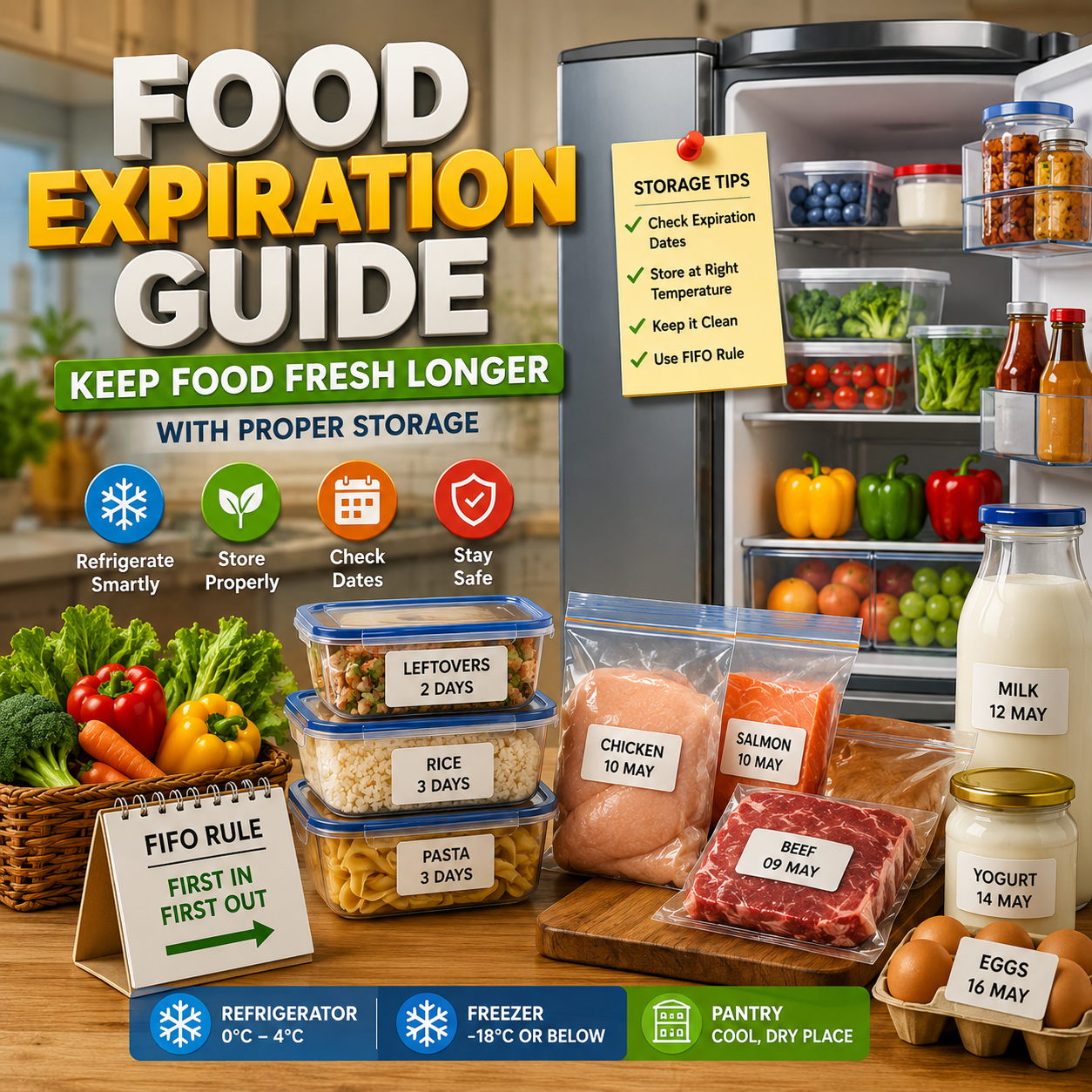
Food waste is a growing problem worldwide, yet a significant portion of it happens inside our own kitchens. Every day, perfectly edible food is thrown away because many people misunderstand expiration labels or store food incorrectly. Learning how to store food properly not only helps reduce waste but also protects your family’s health and saves money.
This comprehensive Food Expiration Guide explains how long different foods typically last, what expiration dates actually mean, and the best storage methods for keeping groceries fresh. Whether you’re stocking your pantry, organizing your refrigerator, or freezing leftovers, understanding proper food storage makes a noticeable difference.
By the end of this guide, you’ll know exactly how to maximize freshness, identify spoiled foods safely, and create better food storage habits.
Why Food Storage Matters
Proper food storage is one of the easiest ways to protect your health while reducing unnecessary food waste.
Correct storage helps:
- Prevent harmful bacteria from multiplying
- Preserve nutrients
- Maintain taste and texture
- Extend shelf life
- Save money
- Reduce environmental waste
Improper storage can cause bacteria such as Salmonella, E. coli, and Listeria to grow rapidly, increasing the risk of food poisoning.
Good storage habits begin immediately after grocery shopping.
Understanding Foods Labels
One of the biggest misconceptions is believing every date printed on food packaging means the food becomes unsafe after that day.
In reality, most labels indicate quality rather than safety.
Let’s understand each type.
Best Before
This indicates when food will have its best flavor, texture, and quality.
Foods are often safe to eat after this date if stored properly.
Examples include:
- Pasta
- Rice
- Cereals
- Crackers
- Frozen vegetables
Use By
This is the most important date from a safety perspective.
Foods marked “Use By” should generally not be consumed after the indicated date.
Common examples include:
- Fresh meat
- Ready-to-eat salads
- Fresh dairy products
- Fresh fish
Sell By
This date is mainly for retailers.
Consumers can usually use the food for several days after the Sell By date if it has been stored correctly.
Examples include:
- Milk
- Yogurt
- Bread
- Cheese
Freeze By
This tells you when food should ideally be frozen to maintain maximum quality.
Freezing before this date helps preserve texture and nutrients.
Shelf Life vs Expiration Date
These two terms are often confused.
Shelf Life
Shelf life refers to how long food maintains acceptable quality when stored properly.
This depends on:
- Moisture
- Packaging
- Storage temperature
- Light exposure
- Oxygen
Expiration Date
Expiration dates are primarily safety guidelines for highly perishable foods.
Shelf-stable foods often remain edible beyond printed dates if packaging remains intact.
Factors That Affect Food Freshness
Several environmental factors influence how quickly food spoils.
Temperature
Heat encourages bacterial growth.
Cold temperatures slow bacterial multiplication significantly.
Moisture
High humidity promotes:
- Mold
- Yeast
- Bacteria
Dry storage conditions are ideal for pantry foods.
Air Exposure
Oxygen speeds up:
- Oxidation
- Rancidity
- Nutrient loss
Use airtight containers whenever possible.
Light
Direct sunlight degrades:
- Vitamins
- Oils
- Colors
- Flavor
Store foods in cool, dark places.
Cross Contamination
Raw meat juices can contaminate ready-to-eat foods.
Always separate raw foods from cooked foods.
Temperature Danger Zone Explained
Food safety experts identify 40°F–140°F (4°C–60°C) as the temperature danger zone.
Within this range, bacteria multiply rapidly.
Food should never remain in this range for more than two hours.
If outdoor temperatures exceed 90°F (32°C), reduce this limit to one hour.
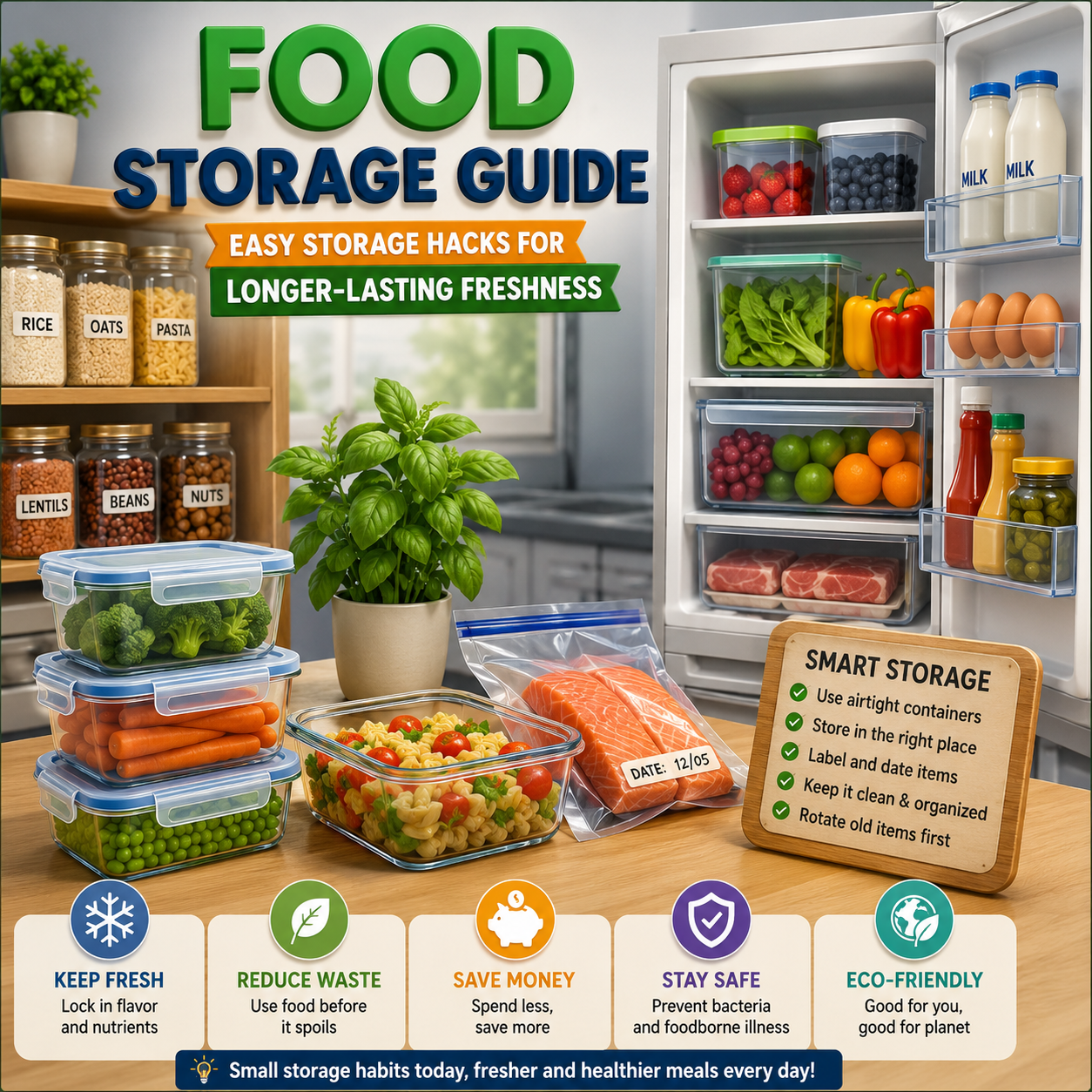
Proper Refrigerator Storage
Your refrigerator should remain at or below:
40°F (4°C)
The freezer should remain at:
0°F (-18°C)
Use a refrigerator thermometer to verify temperatures.
Top Shelf
Store:
- Leftovers
- Ready-to-eat meals
- Yogurt
- Drinks
These foods require minimal handling.
Middle Shelf
Ideal for:
- Dairy products
- Cheese
- Eggs (if recommended by your region)
- Packaged foods
Maintain consistent temperatures here.
Bottom Shelf
Store:
- Raw meat
- Poultry
- Seafood
Always place these in leak-proof containers to prevent juices from dripping onto other foods.
Crisper Drawers
Designed specifically for produce.
Separate:
- Fruits
- Vegetables
Some fruits release ethylene gas that accelerates vegetable spoilage.
Refrigerator Door
The warmest area.
Best for:
- Condiments
- Pickles
- Sauces
- Juice
Avoid storing milk or eggs here because temperatures fluctuate frequently.
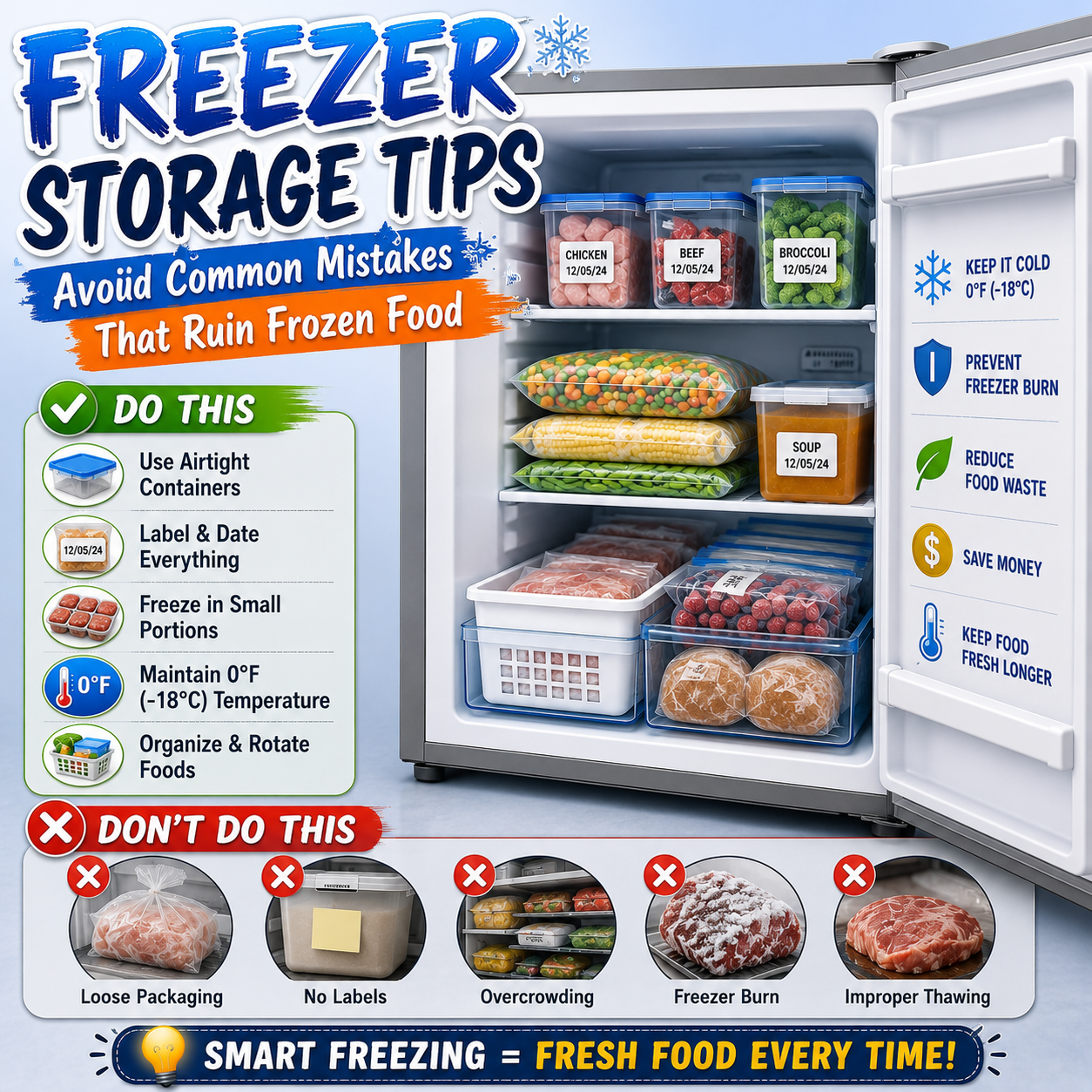
Freezer Storage Best Practices
Freezing doesn’t kill bacteria.
Instead, it pauses bacterial growth.
Proper packaging prevents freezer burn.
Use:
- Freezer bags
- Vacuum-sealed bags
- Airtight containers
- Heavy-duty freezer wrap
Always label:
- Food name
- Storage date
Rotate older foods to the front.
Pantry Storage Tips
Keep pantry foods in:
- Cool locations
- Dry conditions
- Dark cupboards
- Airtight containers
Avoid storing food near:
- Oven
- Dishwasher
- Stove
- Windows
Heat dramatically shortens shelf life.
Food Storage by Category
Every food group has different storage requirements.
Understanding these differences greatly extends freshness.
Fruits Storage Guide
Apples
Store in the refrigerator.
Shelf life:
- Counter: 5–7 days
- Refrigerator: 4–6 weeks
Bananas
Store at room temperature.
Do not refrigerate until fully ripe.
Once ripe, refrigeration slows further ripening.
Berries
Store unwashed in the refrigerator.
Wash only before eating.
Typical shelf life:
- 3–7 days
Citrus Fruits
Includes:
- Oranges
- Lemons
- Limes
- Grapefruit
Can be stored:
Room temperature:
- 1 week
Refrigerator:
- 3–4 weeks
Grapes
Keep refrigerated.
Store in ventilated packaging.
Wash immediately before serving.
Shelf life:
- 1–2 weeks
Avocados
Unripe:
Store on the counter.
Ripe:
Refrigerate for several days.
Vegetables Storage Guide
Leafy Greens
Store in the refrigerator.
Wrap in paper towels to absorb excess moisture.
Shelf life:
- 5–7 days
Carrots
Remove leafy tops.
Store in the refrigerator.
Shelf life:
- 3–4 weeks
Potatoes
Store in:
- Cool
- Dark
- Dry place
Never refrigerate raw potatoes because cold temperatures convert starch into sugar.
Onions
Store in a ventilated basket.
Keep away from potatoes.
Shelf life:
- Several weeks
Tomatoes
Store at room temperature until ripe.
Refrigerate only if necessary after ripening.
Refrigeration may reduce flavor.
Cucumbers
Store in the refrigerator.
Avoid extremely cold temperatures.
Best used within:
- One week
Dairy Storage Guide
Dairy products are highly perishable because they contain moisture and nutrients that encourage bacterial growth. Always refrigerate dairy products promptly after purchase and return them to the refrigerator immediately after use.
Milk
Store milk on the middle or back shelf of the refrigerator where temperatures remain the most consistent. Avoid storing it in the refrigerator door.
Shelf Life
- Unopened: 5–7 days after the “Sell By” date
- Opened: 5–7 days
Storage Tips
- Keep tightly sealed.
- Avoid repeated temperature changes.
- Never leave milk at room temperature for more than 2 hours.
Cheese
Different cheeses have different storage requirements.
Hard Cheese
Examples:
- Cheddar
- Parmesan
- Swiss
Shelf Life
- Refrigerator: 3–6 weeks after opening
Soft Cheese
Examples:
- Brie
- Ricotta
- Cottage cheese
- Cream cheese
Shelf Life
- Refrigerator: 1–2 weeks after opening
Storage Tips
- Wrap in wax paper followed by loose plastic wrap.
- Store in airtight containers after opening.
Yogurt
Store yogurt below 40°F (4°C).
Shelf Life
- Unopened: 1–2 weeks
- Opened: 5–7 days
Do not eat yogurt showing:
- Mold
- Swollen containers
- Sour smell
Butter
Butter stores well in both the refrigerator and freezer.
Shelf Life
- Refrigerator: 1–3 months
- Freezer: Up to 1 year
Keep wrapped to prevent absorbing odors.
Meat and Poultry Storage Guide
Fresh meat spoils quickly and requires careful handling to prevent foodborne illness.
Always place raw meat on the lowest refrigerator shelf in leak-proof containers.
Fresh Beef
Refrigerator
- 3–5 days
Freezer
- 6–12 months
Fresh Chicken
Refrigerator
- 1–2 days
Freezer
- Up to 9 months (pieces)
- Up to 1 year (whole chicken)
Ground Meat
Ground meat has more surface area, allowing bacteria to spread more quickly.
Shelf Life
- Refrigerator: 1–2 days
- Freezer: 3–4 months
Pork
Refrigerator
- 3–5 days
Freezer
- 4–6 months
Bacon
Unopened
- About 1 week
Opened
- 5–7 days
Freeze for longer storage.
Seafood Storage Guide
Seafood is among the most perishable foods and should be cooked or frozen as soon as possible.
Fresh Fish
Refrigerator
- 1–2 days
Freezer
- 3–8 months (depending on type)
Store on crushed ice if possible.
Shrimp
Refrigerator
- 1–2 days
Freezer
- Up to 6 months
Shellfish
Examples:
- Mussels
- Clams
- Oysters
Consume within 1–2 days of purchase.
Discard shellfish that remain open after tapping.
Eggs Storage Guide
Eggs remain freshest when stored in their original carton.
Avoid storing eggs in the refrigerator door because temperature fluctuates each time the door opens.
Shelf Life
- Refrigerator: 3–5 weeks
- Hard-boiled eggs: Up to 1 week
How to Test Egg Freshness
Fill a bowl with water.
- Sinks and lies flat = Very fresh
- Stands upright = Older but usually safe
- Floats = Discard immediately
Bread and Bakery Products
Bread
Store at room temperature in a bread box or sealed bag.
Shelf Life
- Counter: 3–7 days
- Freezer: Up to 3 months
Avoid refrigerating bread unless necessary, as it speeds up staling.
Cakes
Plain cakes last longer than cream-filled cakes.
Plain Cake
- Counter: 2–3 days
Cream Cake
- Refrigerator: 2–3 days
Cookies
Store in airtight containers.
Shelf Life
- Homemade: About 1 week
- Commercial: Several weeks
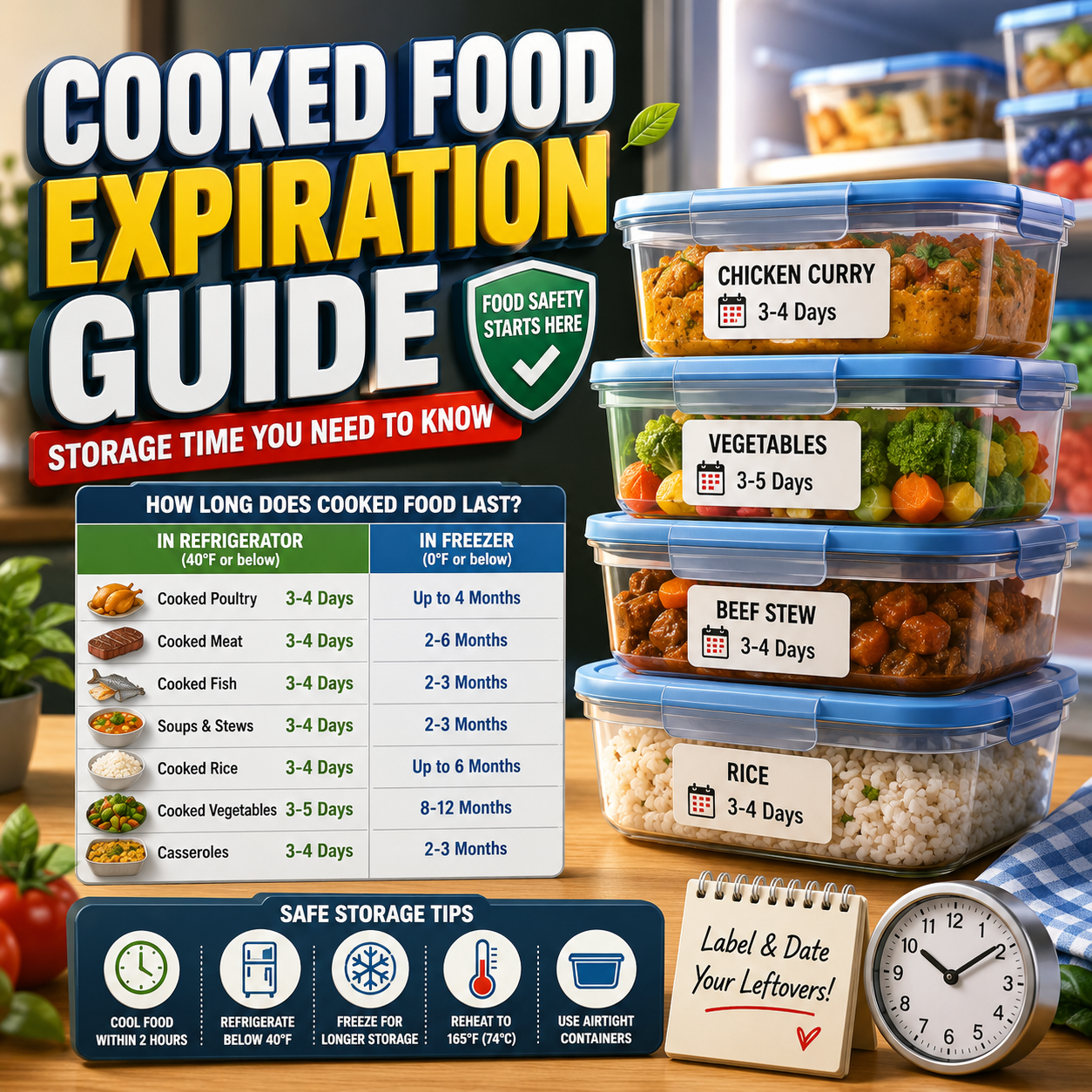
Cooked Food Storage
Cooked foods should be refrigerated within 2 hours of cooking (or within 1 hour if the surrounding temperature is above 90°F / 32°C).
Rice
Cooked rice is often linked to food poisoning if left out too long.
Shelf Life
- Refrigerator: 3–4 days
- Freezer: Up to 6 months
Cool quickly before refrigerating.
Pasta
Shelf Life
- Refrigerator: 3–5 days
- Freezer: 2 months
Store sauces separately when possible.
Soup
Homemade soups stay fresh for:
- Refrigerator: 3–4 days
- Freezer: 2–3 months
Cool before freezing.
Pizza
Leftover pizza remains safe for:
- Refrigerator: 3–4 days
- Freezer: 1–2 months
Reheat until steaming hot throughout.
Cooked Vegetables
Most cooked vegetables last:
- Refrigerator: 3–4 days
Freeze extras to extend shelf life.
Leftover Storage Tips
Leftovers are convenient, but only if handled safely.
Follow the Two-Hour Rule
Refrigerate leftovers within two hours of cooking.
Divide Large Portions
Large containers cool slowly.
Instead:
- Use shallow containers.
- Divide food into smaller portions.
- Refrigerate immediately.
Label Everything
Write:
- Food name
- Date prepared
This helps you use older food first and reduces waste.
Reheat Safely
Heat leftovers to an internal temperature of 165°F (74°C).
Stir soups and sauces during reheating for even heating.
Freeze Extras
If you won’t eat leftovers within 3–4 days, freeze them promptly.
Pantry Food Shelf Life Guide
Below are typical storage times for common pantry staples when kept in a cool, dry place.
| Food | Approximate Shelf Life |
| White Rice | 2–5 years |
| Brown Rice | 6–12 months |
| Pasta | 1–2 years |
| Flour | 6–12 months |
| Sugar | Indefinite (if kept dry) |
| Salt | Indefinite |
| Honey | Indefinite |
| Peanut Butter | 6–9 months after opening |
| Cooking Oil | 6–12 months |
| Canned Beans | 2–5 years |
| Canned Vegetables | 2–5 years |
| Dry Beans | 2–3 years |
| Oats | 1–2 years |
| Breakfast Cereal | 6–12 months |
Common Food Storage Mistakes
Many cases of premature spoilage are caused by everyday storage habits.
1. Overfilling the Refrigerator
Cold air needs to circulate. An overpacked refrigerator creates warm spots that can shorten food life.
2. Leaving Food Out Too Long
Cooked food left at room temperature for extended periods allows bacteria to multiply rapidly.
3. Storing Raw Meat Above Ready-to-Eat Foods
Always keep raw meat on the bottom shelf to prevent juices from dripping onto foods that won’t be cooked again.
4. Washing Produce Before Storage
Excess moisture encourages mold growth.
Wash fruits and vegetables only just before eating or cooking.
5. Ignoring Refrigerator Temperature
Your refrigerator should stay at or below 40°F (4°C) and your freezer at 0°F (-18°C).
Use an appliance thermometer to check temperatures regularly.
6. Using Damaged Containers
Cracked or poorly sealed containers allow air and moisture in, speeding spoilage and increasing the risk of contamination.
7. Forgetting Older Foods
Practice the FIFO (First In, First Out) method:
- Place newer groceries behind older ones.
- Use older items before newer purchases.
8. Refreezing Thawed Foods Incorrectly
Foods thawed in the refrigerator can generally be refrozen safely, although quality may decline. Never refreeze foods that have been left at room temperature for more than two hours.
Signs Food Has Gone Bad
Knowing when food is no longer safe to eat is just as important as understanding expiration dates. While printed dates provide guidance, your senses can also help identify spoilage. However, never taste food to determine if it is safe.
1. Unpleasant Odor
A sour, rotten, or unusual smell is one of the clearest signs that food has spoiled.
Common examples:
- Sour milk
- Rotten eggs
- Fishy or ammonia-like odor from seafood
- Rancid smell from oils or nuts
If food smells abnormal, throw it away.
2. Mold Growth
Visible mold is a strong indicator of spoilage.
Discard:
- Bread
- Soft fruits
- Yogurt
- Soft cheeses
- Leftovers
For hard cheeses, some food safety authorities allow cutting away mold with a generous margin, but when in doubt, discard the product.
3. Texture Changes
Spoiled food often changes texture.
Examples include:
- Slimy meat
- Sticky poultry
- Mushy vegetables
- Excessively soft fruit
- Thick or lumpy milk
4. Color Changes
Some color changes are natural, but unusual discoloration may indicate spoilage.
Watch for:
- Green or gray meat
- Black spots on produce
- Darkened dairy products
- Pink mold on leftovers
5. Swollen or Damaged Packaging
Discard canned or packaged foods that have:
- Bulging lids
- Leaking seals
- Deep dents near seams
- Rust
- Broken vacuum seals
These may indicate bacterial contamination.
6. Excess Gas or Bubbling
Unexpected bubbling or excessive gas production in foods that should not ferment naturally may signal spoilage.
Food Waste Reduction Tips
Reducing food waste saves money and helps the environment.
Plan Weekly Meals
Only buy what you need for the week.
Store Food Correctly
Proper storage extends freshness and reduces spoilage.
Freeze Extra Portions
Freeze soups, cooked grains, meats, vegetables, and leftovers before they spoil.
Organize Your Refrigerator
Use the First In, First Out (FIFO) method:
- Place older foods at the front.
- Store newly purchased items behind them.
Understand Date Labels
Remember:
- Best Before = quality
- Use By = safety
- Sell By = retailer guidance
Knowing the difference prevents unnecessary waste.
Frequently Asked Questions (FAQs)
1. Is food safe after the “Best Before” date?
Often, yes. A “Best Before” date generally refers to quality rather than safety. If the packaging is intact and the food shows no signs of spoilage, many shelf-stable products remain safe beyond this date.
2. Can I freeze food before its expiration date?
Yes. Freezing before the expiration or “Freeze By” date helps preserve quality and extend storage life.
3. How long can leftovers stay in the refrigerator?
Most cooked leftovers remain safe for 3–4 days when refrigerated promptly in airtight containers.
4. Is it safe to refreeze thawed food?
Foods thawed in the refrigerator can usually be refrozen safely, although quality may decline. Do not refreeze foods left at room temperature for more than two hours.
5. Why shouldn’t milk be stored in the refrigerator door?
The refrigerator door experiences the greatest temperature fluctuations, which can shorten milk’s shelf life.
6. Should fruits and vegetables be washed before storage?
Generally, no. Washing before storage adds moisture that can encourage mold growth. Wash produce just before use.
7. How can I prevent freezer burn?
Use airtight, freezer-safe packaging, remove excess air, and label foods with the freezing date.
8. What is the temperature danger zone?
The temperature danger zone is 40°F–140°F (4°C–60°C), where bacteria multiply rapidly. Keep foods out of this range whenever possible.
9. How long can frozen food stay safe?
Frozen food remains safe indefinitely if kept continuously at 0°F (-18°C). However, quality gradually declines over time, so follow recommended storage durations for the best taste and texture.
10. What should I do if I’m unsure whether food is safe?
When in doubt, throw it out. It’s better to discard questionable food than risk foodborne illness.
Key Takeaways
- Understand the difference between Best Before, Use By, Sell By, and Freeze By dates.
- Keep refrigerators at 40°F (4°C) or below and freezers at 0°F (-18°C).
- Store raw meat on the bottom shelf to prevent cross-contamination.
- Use airtight containers to reduce exposure to air and moisture.
- Refrigerate leftovers within two hours of cooking.
- Follow the FIFO (First In, First Out) method to use older food first.
- Freeze foods before they spoil to extend shelf life.
- Regularly check food for signs of spoilage, including odor, mold, texture, and damaged packaging.
- Proper food storage helps reduce waste, save money, and protect your health.
Conclusion
Proper food storage is one of the simplest and most effective ways to protect your family’s health, reduce grocery expenses, and minimize food waste. By understanding food expiration labels, maintaining safe storage temperatures, and following recommended shelf-life guidelines, you can confidently keep your pantry, refrigerator, and freezer organized and safe.
Remember that expiration dates are only one part of food safety. Always combine date labels with proper storage practices and visual inspections. Simple habits—such as labeling leftovers, rotating older foods to the front, and using airtight containers—can significantly extend freshness while lowering the risk of foodborne illness.
With the tips in this Food Expiration Guide, you’ll be better equipped to make informed decisions about the food you buy, store, and serve, helping your household enjoy fresher meals and waste less every day.
Read Our Latest Blog:Affordable Healthy Recipes: Healthy Cooking Without Breaking the Budget