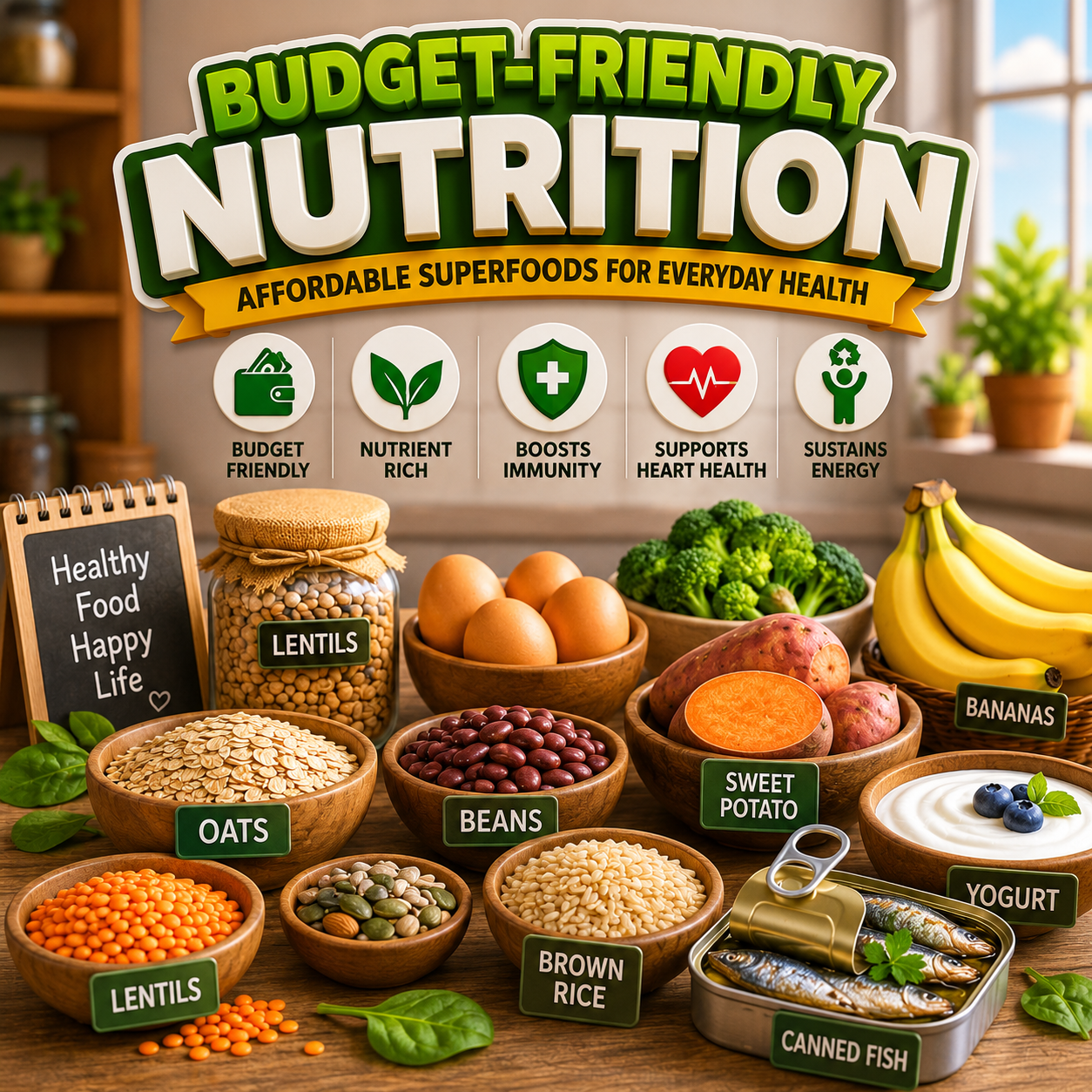
Eating healthy doesn’t have to mean spending a fortune. Many people believe that nutritious foods are always expensive, but the truth is that countless affordable superfoods provide exceptional health benefits without stretching your grocery budget. With the right shopping habits and meal Budget-friendly nutrition , anyone can enjoy balanced, nutrient-rich meals while saving money.
Budget-friendly nutrition is about choosing foods that deliver the highest nutritional value for the lowest cost. Instead of relying on costly specialty products or trendy health foods, you can build a healthy diet around everyday staples such as oats, beans, eggs, lentils, sweet potatoes, frozen vegetables, and seasonal fruits. These foods are rich in essential vitamins, minerals, protein, fiber, and antioxidants that support long-term health.
In this guide, you’ll discover what budget-friendly nutrition really means, why affordable superfoods deserve a place in your kitchen, and how to create healthy meals without overspending. You’ll also learn practical shopping tips, meal-planning strategies, and expert advice to help you maximize nutrition while minimizing costs.
Budget-Friendly Nutrition: Affordable Superfoods for Everyday Health
What Is Budget-Friendly Nutrition?
Budget-friendly nutrition is the practice of choosing affordable foods that provide excellent nutritional value while helping you stay within your grocery budget. Rather than focusing on expensive health products or premium organic items, this approach emphasizes nutrient-dense, everyday foods that support overall wellness.
The goal is to maximize every dollar spent by selecting foods rich in vitamins, minerals, fiber, protein, and healthy fats. Foods such as beans, oats, eggs, brown rice, frozen vegetables, yogurt, and seasonal fruits are perfect examples. These options are widely available, easy to prepare, and versatile enough to fit into countless healthy recipes.
Budget-friendly nutrition also encourages mindful shopping, meal planning, reducing food waste, and preparing meals at home. These habits not only lower food expenses but also promote healthier eating patterns and better long-term health outcomes.
Why Affordable Superfoods Matter
Affordable superfoods are nutrient-rich foods that offer significant health benefits without carrying a high price tag. Unlike many expensive “superfood” products marketed through trendy advertising, affordable superfoods are often common grocery staples that have been part of healthy diets for generations.
These foods support immune function, heart health, digestion, energy production, and weight management. They are packed with essential nutrients that help reduce the risk of chronic diseases while keeping meals satisfying and balanced.
Choosing affordable superfoods also makes healthy eating sustainable. When nutritious foods fit comfortably into your budget, you’re more likely to maintain healthy habits over time rather than relying on restrictive diets or expensive meal plans that are difficult to sustain.
Top Affordable Superfoods for Everyday Health
1. Oats
Oats are one of the most affordable and nutritious breakfast foods available. Rich in soluble fiber, especially beta-glucan, they help lower cholesterol, improve heart health, stabilize blood sugar levels, and keep you feeling full for longer periods.
Oats are also incredibly versatile. They can be used for oatmeal, overnight oats, smoothies, homemade granola, healthy baking, and even savory dishes. Buying oats in bulk often reduces the cost further, making them an excellent pantry staple for budget-conscious households.
Nutritional Benefits
- High in fiber
- Rich in manganese
- Good source of magnesium
- Contains iron
- Supports digestive health
- Promotes heart health
2. Lentils
Lentils are among the most economical sources of plant-based protein. They cook quickly, require no soaking, and are packed with protein, dietary fiber, iron, folate, and potassium. Their versatility makes them suitable for soups, curries, salads, and stews.
Regularly eating lentils can support heart health, improve digestive function, and help maintain healthy blood sugar levels. Because dried lentils have a long shelf life, they are ideal for stocking your pantry and creating nutritious meals on a budget.
Why Lentils Are a Superfood
- High in plant protein
- Rich in fiber
- Excellent source of iron
- Supports gut health
- Budget-friendly and filling
- Low in fat
3. Beans
Beans such as black beans, kidney beans, chickpeas, navy beans, and pinto beans provide exceptional nutrition at a very low cost. They are rich in protein, fiber, antioxidants, vitamins, and minerals that contribute to overall health.
Beans can replace more expensive meat in many recipes while still providing satisfying meals. They work well in chili, tacos, salads, soups, wraps, and grain bowls. Buying dried beans in bulk offers even greater savings compared to canned varieties.
Key Benefits
- Excellent protein source
- High fiber content
- Supports heart health
- Improves digestive health
- Helps control appetite
- Affordable for families
4. Eggs
Eggs remain one of the most cost-effective sources of high-quality protein. They contain all nine essential amino acids, making them a complete protein source. In addition, eggs provide vitamin D, vitamin B12, choline, selenium, and healthy fats.
Whether boiled, scrambled, poached, or added to salads and sandwiches, eggs are quick to prepare and fit into meals throughout the day. Their versatility and nutritional profile make them an excellent choice for budget-friendly nutrition.
Nutritional Highlights
- Complete protein
- Rich in vitamin B12
- Good source of vitamin D
- Supports brain health
- Helps maintain muscle mass
- Highly satisfying
5. Brown Rice
Brown rice is an affordable whole grain that supplies complex carbohydrates, fiber, magnesium, phosphorus, and B vitamins. Unlike refined grains, brown rice retains its nutrient-rich bran and germ layers, providing more vitamins and minerals.
It pairs well with vegetables, beans, lean proteins, and stir-fries, making it a reliable base for balanced meals. Buying larger bags of brown rice can significantly reduce the cost per serving while ensuring you always have a healthy staple available.
Health Benefits
- Sustained energy release
- Supports digestion
- Rich in fiber
- Helps maintain healthy weight
- Easy to store
- Budget-friendly staple
6. Sweet Potatoes
Sweet potatoes are among the most nutritious vegetables you can buy for a low price. They are packed with beta-carotene, vitamin C, potassium, fiber, and antioxidants that support immune function, eye health, and heart health.
They are naturally sweet, highly filling, and can be baked, roasted, mashed, or added to soups and casseroles. Their long shelf life also makes them an economical choice, reducing the likelihood of food waste.
Why Choose Sweet Potatoes?
- Rich in vitamin A
- High in antioxidants
- Supports immune health
- Excellent source of fiber
- Naturally gluten-free
- Affordable year-round
- More affordable superfoods (frozen vegetables, bananas, yogurt, canned fish, nuts, seeds, and more)
- Whole grains and healthy fats
- Smart grocery shopping tips
- Budget meal planning strategies
- Comparison tables
- Common mistakes and expert tips.
7. Frozen Vegetables
Frozen vegetables are one of the smartest choices for budget-friendly nutrition because they are picked at peak ripeness and frozen quickly to preserve their nutrients. They are often just as nutritious as fresh vegetables and sometimes contain even more vitamins because they spend less time in storage and transportation.
Another major advantage is that frozen vegetables reduce food waste. You can use only the amount you need and store the rest for later. Whether you’re preparing soups, stir-fries, casseroles, pasta dishes, or side dishes, frozen vegetables provide convenience, affordability, and year-round availability.
Nutritional Benefits
- Rich in vitamins A and C
- High in dietary fiber
- Excellent source of antioxidants
- Long freezer shelf life
- Less food waste
- Often cheaper than fresh produce
8. Bananas
Bananas are among the most affordable fruits available worldwide. They provide natural carbohydrates for energy along with potassium, vitamin B6, vitamin C, and dietary fiber. Because they are inexpensive and widely available, bananas make an excellent snack for families, students, and active individuals.
Bananas are also incredibly versatile. They can be eaten fresh, blended into smoothies, sliced over oatmeal, mixed into yogurt, or used in healthy baking recipes. Overripe bananas can even be frozen for later use, preventing unnecessary waste.
Why Bananas Are a Budget Superfood
- Excellent source of potassium
- Natural energy booster
- Supports heart health
- Improves digestion
- Budget-friendly snack
- Perfect for meal prep
9. Plain Yogurt
Plain yogurt is an affordable dairy product packed with protein, calcium, vitamin B12, and beneficial probiotics that support digestive health. Choosing plain yogurt instead of flavored varieties helps reduce added sugar while allowing you to customize flavors with fresh fruit, oats, or nuts.
Yogurt works well for breakfast, snacks, smoothies, salad dressings, and healthy desserts. Buying larger containers instead of individual servings usually provides better value for money.
Health Benefits
- Rich in probiotics
- High-quality protein
- Supports bone health
- Improves gut health
- Versatile ingredient
- Affordable family food
10. Canned Fish
Canned tuna, sardines, and salmon are inexpensive protein sources that offer impressive nutritional benefits. They are rich in omega-3 fatty acids, vitamin D, calcium (especially sardines with bones), and high-quality protein.
Because canned fish has a long shelf life, it is perfect for keeping nutritious ingredients on hand without worrying about spoilage. It can be added to sandwiches, salads, pasta dishes, rice bowls, and wraps for quick, healthy meals.
Why Include Canned Fish?
- Excellent protein source
- High in omega-3 fats
- Supports brain health
- Promotes heart health
- Long shelf life
- Budget-friendly pantry staple
11. Peanut Butter
Natural peanut butter is an affordable source of healthy fats, plant protein, vitamin E, magnesium, and niacin. When consumed in moderation, it helps promote satiety and provides long-lasting energy throughout the day.
Spread it on whole-grain toast, blend it into smoothies, pair it with apple slices, or use it in homemade sauces. Choosing products with minimal ingredients and no added sugar or hydrogenated oils provides the greatest nutritional value.
Benefits
- Healthy unsaturated fats
- Rich in protein
- Provides lasting energy
- Affordable pantry item
- Versatile ingredient
- Supports muscle recovery
12. Seasonal Fruits
Buying fruits that are in season is one of the easiest ways to eat healthier while spending less. Seasonal produce is generally fresher, more flavorful, and significantly less expensive than imported or out-of-season varieties.
Apples, oranges, pears, berries, melons, and grapes each provide unique vitamins, antioxidants, and fiber that contribute to overall health. Rotating seasonal fruits throughout the year also adds variety to your diet.
Advantages
- Lower grocery costs
- Better taste
- Higher freshness
- Rich in antioxidants
- Supports local farmers
- Encourages dietary variety
Whole Grains That Deliver Great Nutrition
Whole grains provide complex carbohydrates, dietary fiber, B vitamins, and important minerals that support sustained energy and digestive health. Compared with refined grains, whole grains retain their natural nutrients and help keep you feeling fuller for longer.
Affordable whole grains such as oats, brown rice, barley, whole-wheat pasta, popcorn, and whole-grain bread are excellent additions to balanced meals. Purchasing these foods in bulk often reduces costs while ensuring you always have nutritious staples available.
Popular Budget-Friendly Whole Grains
| Whole Grain | Key Nutrients | Budget Benefit |
| Oats | Fiber, Magnesium | Very inexpensive |
| Brown Rice | Fiber, B Vitamins | Long shelf life |
| Barley | Fiber, Selenium | Affordable bulk grain |
| Whole-Wheat Pasta | Complex Carbohydrates | Family-friendly |
| Popcorn | Fiber | Low-cost healthy snack |
| Whole Grain Bread | Fiber, Iron | Convenient daily staple |
Budget-Friendly Protein Sources
Protein is essential for building muscle, supporting immunity, repairing tissues, and maintaining overall health. Fortunately, you do not need expensive protein powders or premium meats to meet your daily needs.
Many affordable protein sources provide excellent nutrition while keeping grocery bills manageable.
Best Affordable Protein Foods
- Eggs
- Lentils
- Beans
- Chickpeas
- Greek yogurt
- Cottage cheese
- Peanut butter
- Tofu
- Canned tuna
- Sardines
- Milk
- Dry peas
Combining plant-based proteins with whole grains creates balanced meals that provide essential amino acids while reducing overall food costs.
Healthy Fats That Fit Every Budget
Healthy fats play an important role in brain function, hormone production, nutrient absorption, and heart health. Contrary to popular belief, nutritious fat sources do not have to be expensive.
Affordable options such as peanuts, sunflower seeds, flaxseeds, peanut butter, olive oil (used sparingly), and canned fish provide healthy unsaturated fats that support long-term wellness. Including small portions of these foods in your meals improves both flavor and nutrition.
Budget-Friendly Healthy Fat Sources
| Food | Main Benefit |
| Peanut Butter | Protein + Healthy Fats |
| Peanuts | Budget-friendly snack |
| Flaxseeds | Omega-3 fatty acids |
| Sunflower Seeds | Vitamin E |
| Olive Oil | Heart-healthy fat |
| Sardines | Omega-3 + Calcium |
Smart Grocery Shopping Tips for Budget-Friendly Nutrition
Shopping strategically can dramatically reduce your grocery expenses while improving the nutritional quality of your meals. Developing consistent shopping habits allows you to avoid impulse purchases and focus on foods that deliver the greatest value.
Some practical strategies include:
- Plan meals before shopping.
- Create a detailed grocery list.
- Compare unit prices instead of package prices.
- Buy whole foods whenever possible.
- Purchase store brands for pantry staples.
- Buy grains and legumes in bulk.
- Choose frozen fruits and vegetables when appropriate.
- Shop seasonal produce.
- Avoid shopping while hungry.
- Freeze leftovers before they spoil.
These habits not only save money but also help reduce food waste and encourage healthier eating.
Budget Meal Planning Strategies
Meal planning is one of the most effective ways to maintain budget-friendly nutrition. Planning meals in advance helps you purchase only what you need, use ingredients efficiently, and avoid expensive last-minute takeout.
Start by creating a weekly menu based on sales, seasonal produce, and pantry staples. Cook larger batches of soups, stews, rice, beans, and casseroles that can be portioned into future meals. Repurposing leftovers into lunches or new dinners also stretches your grocery budget.
Weekly Budget Meal Planning Checklist
- Review pantry inventory.
- Check grocery store sales.
- Build meals around affordable proteins.
- Include seasonal vegetables.
- Add whole grains.
- Prepare healthy snacks in advance.
- Cook in batches.
- Freeze extra portions.
- Reduce food waste.
- Track grocery spending.
Common Mistakes That Increase Food Costs
Many households unknowingly spend more on groceries because of small purchasing habits. Recognizing these common mistakes can help you save money while improving nutrition.
Mistakes to Avoid
- Buying groceries without a list.
- Purchasing expensive convenience foods.
- Ignoring frozen produce.
- Throwing away leftovers.
- Buying oversized portions that spoil.
- Shopping daily instead of weekly.
- Falling for marketing claims on “superfoods.”
- Purchasing sugary beverages instead of water.
- Choosing processed snacks over whole foods.
- Not comparing prices between brands.
Avoiding these habits allows you to stretch your food budget while maintaining a balanced and nutritious diet.
Expert Tips for Eating Healthy on a Budget
Nutrition experts agree that healthy eating is more about consistent habits than expensive ingredients. Small changes in shopping and meal preparation can have a significant impact on both your health and finances.
Practical Expert Tips
- Build meals around vegetables and whole grains.
- Include affordable protein in every meal.
- Drink more water instead of sugary drinks.
- Cook at home more frequently.
- Keep healthy pantry staples stocked.
- Use leftovers creatively.
- Read nutrition labels carefully.
- Buy generic brands when quality is comparable.
- Practice portion control.
- Focus on long-term healthy habits instead of trendy diets.
Affordable Superfoods Comparison Table
| Superfood | Key Nutrients | Best Benefit | Budget Rating |
| Oats | Fiber, Magnesium | Heart Health | ⭐⭐⭐⭐⭐ |
| Lentils | Protein, Iron | Muscle & Energy | ⭐⭐⭐⭐⭐ |
| Beans | Protein, Fiber | Digestive Health | ⭐⭐⭐⭐⭐ |
| Eggs | Complete Protein | Muscle Growth | ⭐⭐⭐⭐☆ |
| Brown Rice | Fiber, B Vitamins | Sustained Energy | ⭐⭐⭐⭐⭐ |
| Sweet Potatoes | Vitamin A | Immune Support | ⭐⭐⭐⭐☆ |
| Frozen Vegetables | Vitamins A & C | Convenience | ⭐⭐⭐⭐⭐ |
| Bananas | Potassium | Energy | ⭐⭐⭐⭐⭐ |
| Yogurt | Calcium, Probiotics | Gut Health | ⭐⭐⭐⭐☆ |
| Canned Sardines | Omega-3, Calcium | Heart Health | ⭐⭐⭐⭐☆ |
Frequently Asked Questions (FAQs)
1. What is budget-friendly nutrition?
Budget-friendly nutrition focuses on choosing foods that provide the most nutritional value for the lowest cost. It emphasizes whole grains, legumes, fruits, vegetables, lean proteins, and healthy fats while reducing reliance on expensive processed foods. This approach supports good health and helps families stay within their grocery budget.
2. Which affordable superfoods should I buy first?
Start with oats, lentils, beans, eggs, brown rice, bananas, sweet potatoes, frozen vegetables, plain yogurt, and canned fish. These foods are nutrient-dense, versatile, and suitable for a variety of healthy meals, making them excellent choices for building a balanced pantry.
3. How can I reduce my grocery bill without sacrificing nutrition?
Plan meals weekly, create a shopping list, compare unit prices, buy seasonal produce, choose store brands, purchase pantry staples in bulk, cook at home, and freeze leftovers. These simple habits reduce waste and help you eat nutritious meals while spending less.
4. Are plant-based proteins cheaper than meat?
In most cases, yes. Foods such as lentils, beans, chickpeas, and peas are usually less expensive than meat while providing plenty of protein, fiber, and essential nutrients. Combining plant proteins with whole grains creates balanced, satisfying meals.
5. How often should I meal prep?
Meal prepping once or twice a week works well for most households. Preparing meals in batches saves time, reduces stress, prevents food waste, and makes it easier to stick to healthy eating habits throughout the week.
6. Why is buying seasonal produce important?
Seasonal fruits and vegetables are generally fresher, more flavorful, and more affordable because they are abundant during their natural growing season. They also support local agriculture and add variety to your meals throughout the year.
7. Can frozen foods be part of a healthy diet?
Absolutely. Frozen vegetables and fruits retain most of their nutrients and are often more affordable than fresh produce. Choosing products without added sauces, sugar, or excessive sodium makes them a healthy and convenient option.
8. Are expensive superfoods better than affordable ones?
Not necessarily. Everyday foods such as oats, beans, lentils, eggs, and sweet potatoes offer outstanding nutritional benefits at a fraction of the cost of many trendy superfoods. A balanced diet built around affordable staples can be just as healthy.
9. How can I avoid food waste?
Store food properly, plan meals, freeze leftovers, use older ingredients first, and buy only what you need. Reducing food waste saves money and ensures that more of your groceries are used effectively.
10. What are the long-term benefits of budget-friendly nutrition?
Following a budget-friendly nutrition plan can improve heart health, digestive health, energy levels, weight management, and overall well-being. It also promotes sustainable eating habits, reduces grocery expenses, and makes healthy living more accessible for the entire family.
Key Takeaways
- Budget-friendly nutrition makes healthy eating affordable and sustainable.
- Everyday superfoods often provide excellent nutrition at a low cost.
- Oats, lentils, beans, eggs, and brown rice are top budget-friendly staples.
- Seasonal and frozen produce offer great value and nutrition.
- Meal planning helps reduce food waste and grocery expenses.
- Buying in bulk can lower the cost of pantry essentials.
- Cooking at home is healthier and more economical than eating out.
- Affordable proteins support muscle health and overall wellness.
- Smart shopping habits maximize nutrition while minimizing costs.
- Small, consistent changes lead to lasting health and financial benefits.
Conclusion
Eating well doesn’t require expensive ingredients or specialty health foods. By embracing budget-friendly nutrition, you can nourish your body with affordable superfoods that provide essential vitamins, minerals, protein, fiber, and healthy fats. Simple staples such as oats, lentils, beans, eggs, brown rice, frozen vegetables, seasonal fruits, and yogurt prove that healthy eating can fit almost any budget.
Success comes from making informed choices, planning meals in advance, shopping strategically, and reducing food waste. Over time, these habits not only improve your physical health but also help you save money and create a more sustainable lifestyle.
Whether you’re feeding a family, managing a busy schedule, or simply looking to stretch your grocery budget, affordable superfoods offer a practical path to better nutrition. Start by adding a few of these foods to your weekly shopping list and gradually build healthier eating habits.
Read Our Latest Blog:Low-Cost Healthy Foods for Families: Affordable Nutrition Made Easy