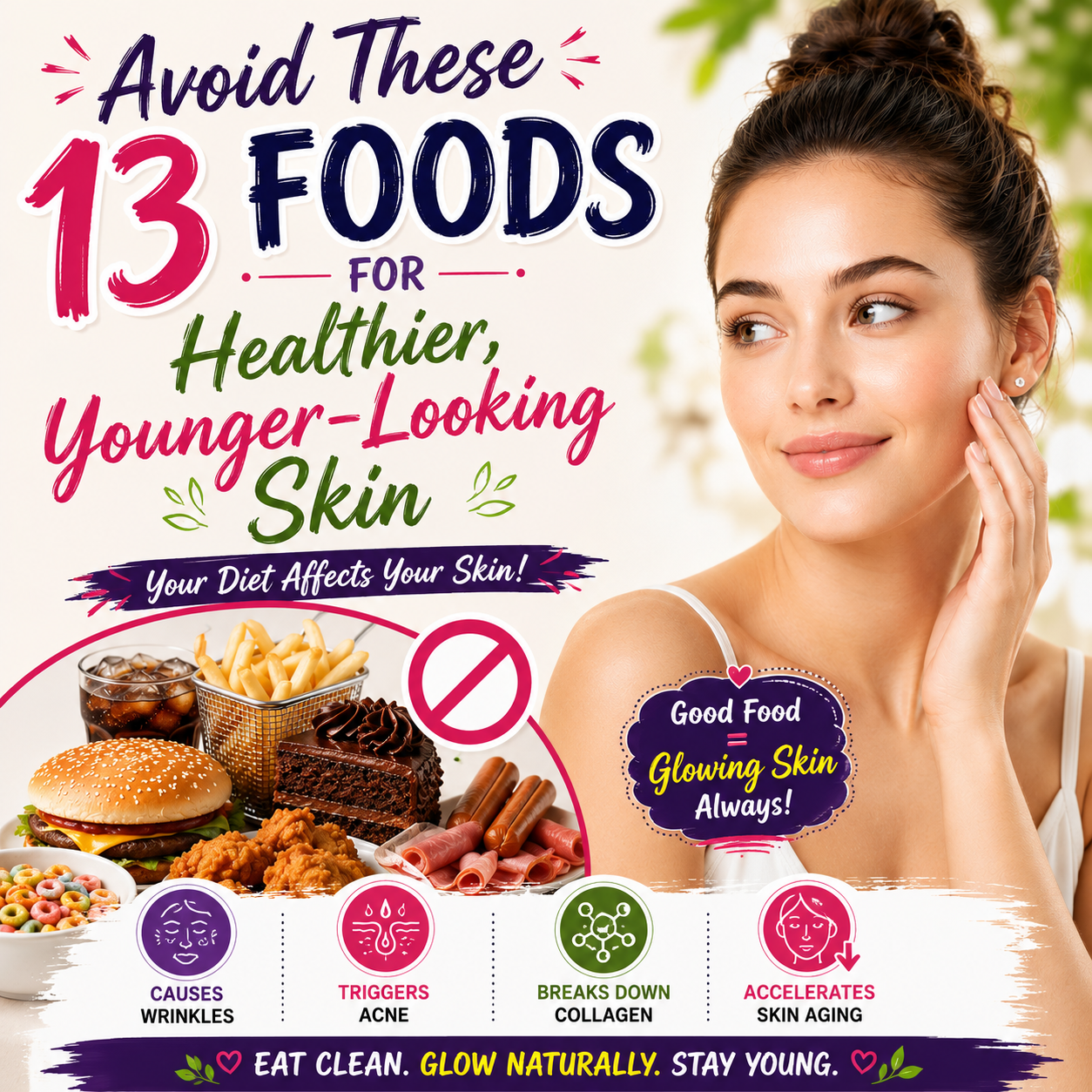
Everyone wants healthy, radiant, and youthful skin. While skincare products can help improve your complexion, what you eat plays an equally important role in determining how your skin looks and ages. Certain foods can trigger inflammation, accelerate collagen breakdown, increase oxidative stress, and contribute to problems like acne, dryness, wrinkles, and premature aging.
The connection between diet and skin health is stronger than many people realize. Nutrients from food directly influence skin cell regeneration, hydration levels, elasticity, and the body’s ability to repair damage caused by pollution and ultraviolet rays. Unfortunately, some popular foods can quietly sabotage your skincare efforts.
Understanding Avoid These 13 Foods for Healthier, Younger-Looking Skin which foods may negatively affect your skin can help you make better dietary choices and support long-term skin health naturally. Foods That Age Your Skin and replacing them with nutrient-rich alternatives, you can improve your complexion and maintain younger-looking skin for years.
In this guide, you’ll and learn practical ways to make skin-friendly dietary changes.
Why Diet Matters for Skin Health
Your skin is the largest organ in your body, and its health is heavily influenced by the nutrients you consume daily. The skin continuously regenerates itself and requires vitamins, minerals, healthy fats, antioxidants, and adequate hydration to remain strong and youthful.
Foods rich in nutrients help maintain collagen production, protect against free radical damage, and reduce inflammation. On the other hand, poor dietary choices can increase oxidative stress and inflammation, which may lead to wrinkles, uneven skin tone, acne, and loss of elasticity.
The appearance of your skin often reflects your internal health. Consistently eating foods that promote inflammation can gradually affect the skin’s natural repair mechanisms and accelerate visible signs of aging.
How Certain Foods Accelerate Skin Aging
Certain foods can trigger biological processes that speed up skin aging. One of the most significant mechanisms is glycation, a process in which excess sugar molecules attach to proteins such as collagen and elastin. This weakens the skin’s structural support and contributes to wrinkles and sagging.
Highly processed foods can also promote inflammation and increase oxidative stress. Inflammatory compounds and free radicals damage skin cells, making it harder for the body to maintain a youthful appearance.
Additionally, foods high in unhealthy fats, sodium, and refined carbohydrates can negatively affect hydration levels, circulation, and nutrient delivery to skin tissues, ultimately impacting overall complexion and skin health.
Avoid These 13 Foods for Healthier, Younger-Looking Skin
1. Sugary Drinks
Sugary beverages, including sodas, sweetened coffees, energy drinks, and packaged fruit drinks, are among the biggest contributors to premature skin aging. These drinks rapidly increase blood sugar levels and promote glycation, which damages collagen and elastin fibers responsible for firm and youthful skin.
Regular consumption of sugary drinks may also increase inflammation and contribute to acne breakouts. Since these beverages provide little nutritional value, they can displace healthier hydration options that support skin health.
Better Alternatives
- Water
- Coconut water
- Unsweetened herbal tea
- Fresh fruit-infused water
2. Refined Sugar and Sweets
Candy, pastries, desserts, and processed sweets contain high amounts of refined sugar that can negatively affect skin appearance over time. Excessive sugar intake promotes inflammation and accelerates collagen degradation, leading to fine lines and reduced skin elasticity.
High sugar consumption may also increase oil production and worsen acne in susceptible individuals. Frequent sugar spikes can make the skin appear dull and contribute to uneven texture.
Better Alternatives
- Fresh berries
- Apples
- Dark chocolate in moderation
- Naturally sweet fruits
3. Deep-Fried Foods
French fries, fried chicken, chips, and other fried foods are often rich in unhealthy fats and advanced glycation end products (AGEs). These compounds increase oxidative stress and damage skin cells.
Frequent consumption of fried foods may contribute to inflammation, clogged pores, and reduced skin elasticity. Over time, these effects can make the skin look tired and aged.
Better Alternatives
- Air-fried vegetables
- Baked potatoes
- Roasted chickpeas
- Oven-baked snacks
4. Processed Meats
Processed meats such as sausages, bacon, hot dogs, and deli meats often contain preservatives, high sodium levels, and saturated fats. These ingredients can contribute to inflammation and dehydration.
High sodium intake may cause water retention and puffiness around the face and eyes. Long-term consumption of processed meats may also increase oxidative stress, potentially accelerating visible aging.
Better Alternatives
- Grilled chicken
- Fish
- Lentils
- Beans
- Tofu
5. White Bread and Refined Carbohydrates
White bread, white rice, and many refined grain products have a high glycemic index, meaning they rapidly raise blood sugar levels. Frequent spikes in blood sugar can promote inflammation and contribute to collagen damage.
Refined carbohydrates may also worsen acne and encourage excess oil production in some individuals. Their low fiber content provides little support for long-term skin health.
Better Alternatives
- Whole-grain bread
- Oats
- Brown rice
- Quinoa
- Sweet potatoes
6. Excessive Alcohol
Alcohol can significantly affect hydration levels and may leave the skin looking dry and fatigued. It can also interfere with sleep quality and nutrient absorption, both of which are important for healthy skin repair.
Over time, excessive alcohol consumption may contribute to redness, puffiness, and premature aging signs such as fine lines and dullness.
Better Alternatives
- Sparkling water
- Herbal tea
- Lemon water
- Unsweetened fruit beverages
7. Salty Processed Foods
Packaged snacks, instant noodles, processed meals, and heavily salted foods contain large amounts of sodium. Excess sodium can lead to fluid retention, causing facial puffiness and making the skin look tired.
High sodium intake may also affect skin hydration balance, resulting in dryness and a less vibrant complexion.
Better Alternatives
- Homemade popcorn
- Fresh vegetables
- Nuts without added salt
- Freshly prepared meals
8. Highly Processed Fast Food
Fast foods are often high in refined carbohydrates, unhealthy fats, sodium, and added sugars. This combination can promote chronic inflammation and oxidative stress, both of which contribute to premature skin aging.
Frequent consumption of fast food may also reduce overall nutrient intake because it often replaces healthier foods rich in vitamins and antioxidants.
Better Alternatives
- Homemade sandwiches
- Grilled chicken wraps
- Vegetable bowls
- Whole-food meals
9. Margarine and Trans Fats
Trans fats found in some processed foods and certain margarines can increase inflammation and may negatively affect circulation. Reduced circulation can impair nutrient delivery to skin cells.
Inflammation caused by trans fats may accelerate skin aging and contribute to dryness and reduced elasticity.
Better Alternatives
- Olive oil
- Avocado
- Nuts
- Seeds
10. Artificially Sweetened Foods
Although artificial sweeteners contain little or no sugar, heavily processed products containing them may still contribute to unhealthy eating patterns. Some people report skin sensitivity and breakouts associated with highly processed diet foods.
Choosing minimally processed foods usually provides more nutritional benefits and better supports overall skin health.
Better Alternatives
- Fresh fruits
- Yogurt with berries
- Naturally flavored water
11. Energy Drinks
Energy drinks frequently contain high amounts of sugar and caffeine. Excessive consumption may contribute to dehydration and increase oxidative stress.
Poor hydration and sleep disturbances associated with frequent energy drink intake can make the skin appear dull and fatigued.
Better Alternatives
- Green tea
- Water
- Fruit-infused water
- Unsweetened tea
12. Excess Dairy Products
The relationship between dairy and skin health varies among individuals. Some people may experience increased acne or skin irritation after consuming large amounts of milk and certain dairy products.
Paying attention to personal triggers can help determine whether reducing dairy improves your skin condition.
Better Alternatives
- Almond milk
- Oat milk
- Soy milk
- Calcium-rich plant foods
13. Charred and Burnt Foods
Overcooked and charred foods can contain compounds that increase oxidative stress and inflammation. Frequent exposure to these compounds may contribute to cellular damage and potentially accelerate skin aging.
Preparing foods using gentler cooking methods can help preserve nutrients and reduce the formation of harmful compounds.
Better Alternatives
- Steamed vegetables
- Grilled foods without charring
- Baked dishes
- Lightly sautéed meals
Foods to Eat for Healthier, Younger-Looking Skin
| Food | Skin Benefits |
| Berries | Rich in antioxidants |
| Avocados | Provide healthy fats |
| Salmon | Contains omega-3 fatty acids |
| Leafy greens | High in vitamins and minerals |
| Nuts and seeds | Support collagen production |
| Tomatoes | Rich in protective antioxidants |
| Citrus fruits | Promote collagen synthesis |
Frequently Asked Questions
Which foods are worst for skin health?
Sugary drinks, refined sugar, fried foods, processed meats, excessive alcohol, and highly processed fast foods are among the foods most commonly associated with premature skin aging.
How long does it take to see improvements in the skin after dietary changes?
Many people notice improvements in hydration, brightness, and overall complexion within several weeks of adopting healthier eating habits, although long-term benefits typically develop over several months.
Is sugar the main cause of premature aging?
Sugar is a significant contributor because it promotes glycation and inflammation, but other dietary factors such as unhealthy fats, excessive sodium, and nutrient deficiencies also play important roles.
Key Takeaways
- Diet significantly influences skin health and aging.
- Excess sugar can damage collagen and elastin.
- Processed foods often increase inflammation and oxidative stress.
- High sodium intake can contribute to puffiness and dehydration.
- Nutrient-rich whole foods support healthier, younger-looking skin.
- Consistent dietary improvements can enhance complexion over time.
Conclusion
Healthy, youthful skin starts from within. Although skincare products can improve your appearance, your daily food choices have a powerful impact on your skin’s long-term health. Sugary drinks, refined carbohydrates, fried foods, processed meats, and other highly processed foods can accelerate inflammation and collagen damage, contributing to premature aging.
Avoiding these 13 foods and replacing them with nutrient-dense alternatives can support hydration, protect against oxidative stress, and promote a brighter, healthier complexion. Small, consistent changes in your eating habits can make a meaningful difference in how your skin looks and feels over time.