Losing weight is not only about eating less. The quality of your food choices matters just as much as the number of calories you consume. Many people exercise regularly and try different diets but still struggle to lose body fat because they unknowingly eat foods that slow down their progress.
Certain foods are highly processed, loaded with added sugars, unhealthy fats, and empty calories. These foods can increase cravings, trigger overeating, spike blood sugar levels, and make it difficult for your body to burn stored fat efficiently. Even foods marketed as “healthy” can sometimes sabotage your weight-loss efforts.
The good news is that you do not have to follow extreme diets or eliminate entire food groups. Simply identifying and reducing foods that contribute to weight gain can make a significant difference. By replacing these foods with nutrient-dense alternatives, you can improve metabolism, control hunger, and achieve sustainable weight loss naturally.
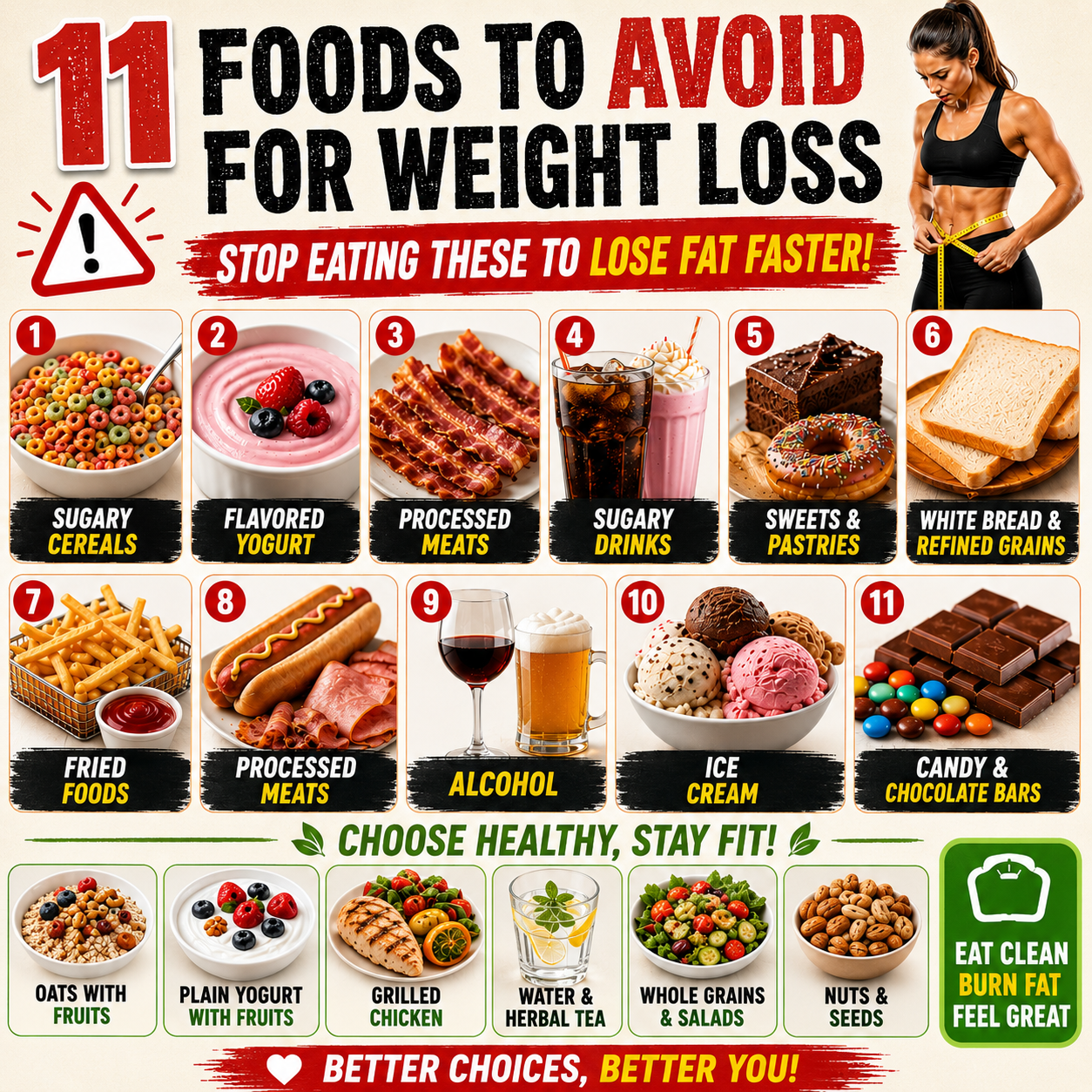
This guide explains the 11 foods to avoid for weight loss and provides healthier alternatives that support your fat-loss journey.
Why Food Choices Matter for Weight Loss
Weight loss occurs when your body burns more calories than it consumes. However, not all calories affect the body in the same way. Foods rich in sugar, refined carbohydrates, and unhealthy fats can lead to rapid spikes in blood sugar and insulin levels. These changes increase hunger and encourage Foods to Avoid for Weight Loss.
Nutrient-dense foods such as vegetables, fruits, lean proteins, and whole grains help keep you full longer while providing essential vitamins and minerals. Choosing foods wisely can improve appetite control, support metabolism, and make weight loss easier and more sustainable.
11 Foods to Avoid for Weight Loss
1. Sugary Soft Drinks
Sugary beverages are among the biggest contributors to weight gain. Soda, flavored drinks, and sweetened juices contain large amounts of sugar but offer little nutritional value. Because liquid calories do not create the same feeling of fullness as solid foods, people often consume excessive calories without realizing it.
Regular intake of sugary drinks has been associated with increased body fat, insulin resistance, and a higher risk of obesity.
Better Choices:
- Water
- Sparkling water
- Unsweetened herbal tea
- Lemon water
2. Packaged Fruit Juices
Many packaged fruit juices appear healthy because they contain fruit ingredients. However, most commercial juices are high in sugar and low in fiber. Without fiber, sugar enters the bloodstream quickly, causing blood sugar spikes and increased hunger.
Even 100% fruit juice can contain as much sugar as soft drinks.
Better Choices:
- Whole fruits
- Homemade smoothies
- Infused water
3. White Bread
White bread is made from refined flour that has been stripped of fiber and nutrients. Refined carbohydrates digest quickly and can cause rapid increases in blood sugar levels.
These fluctuations often lead to hunger shortly after eating and may contribute to overeating throughout the day.
Better Choices:
- Whole-grain bread
- Multigrain bread
- Oats
- Whole wheat roti
4. Fried Foods
French fries, fried chicken, and other deep-fried foods are usually high in calories and unhealthy fats. Deep frying significantly increases calorie density while reducing nutritional quality.
Frequent consumption of fried foods has been linked to weight gain and increased abdominal fat.
Better Choices:
- Air-fried vegetables
- Baked potatoes
- Grilled chicken
- Roasted snacks
5. Pastries and Doughnuts
Pastries, doughnuts, and sweet baked goods contain a combination of refined flour, sugar, and unhealthy fats. This combination makes them highly palatable and easy to overeat.
These foods provide many calories but very few nutrients and can interfere with healthy eating habits.
Better Choices:
- Fresh fruit
- Greek yogurt with berries
- Homemade oatmeal muffins
6. Candy and Chocolates with Added Sugar
Sugary candies and many commercial chocolates are concentrated sources of sugar and calories. They digest quickly and often increase cravings for additional sweet foods.
Regular consumption can contribute to excess calorie intake and make maintaining a calorie deficit difficult.
Better Choices:
- Dark chocolate in moderation
- Nuts
- Fresh fruits
7. Potato Chips and Packaged Snacks
Potato chips and processed snacks are engineered to be highly enjoyable, encouraging people to eat more than intended. They are usually high in refined carbohydrates, unhealthy fats, sodium, and calories.
Because they provide little satiety, these snacks can significantly increase daily calorie consumption.
Better Choices:
- Air-popped popcorn
- Roasted chickpeas
- Nuts and seeds
- Vegetable sticks
8. Ice Cream
Ice cream often contains high amounts of sugar, cream, and calories. Frequent consumption can quickly increase calorie intake and slow weight-loss progress.
Although enjoying ice cream occasionally is acceptable, eating it regularly may contribute to weight gain.
Better Choices:
- Frozen yogurt
- Banana ice cream
- Fruit-based desserts
9. Fast Food Burgers and Pizza
Fast foods are generally high in calories, saturated fats, refined carbohydrates, and sodium. Their large portion sizes can easily exceed daily calorie requirements.
Because fast foods are convenient and highly satisfying, they can encourage frequent overeating and make weight management more challenging.
Better Choices:
- Homemade burgers
- Whole wheat pizza with vegetables
- Grilled protein bowls
10. Sweetened Breakfast Cereals
Many breakfast cereals marketed as healthy contain surprisingly high amounts of added sugar. These cereals digest quickly and may leave you feeling hungry soon after eating.
Starting your day with a sugary breakfast can lead to cravings and increased calorie intake throughout the day.
Better Choices:
- Oatmeal
- Eggs
- Greek yogurt
- Fruit with nuts
11. Alcohol
Alcoholic beverages can significantly contribute to weight gain because they are calorie-dense and may lower inhibitions around food choices. Drinking alcohol can increase appetite and lead to overeating.
Certain cocktails and mixed drinks also contain substantial amounts of added sugar.
Better Choices:
- Sparkling water with lime
- Unsweetened beverages
- Limiting alcohol intake
Foods That Help You Lose Fat Faster
Replacing unhealthy foods with nutrient-rich alternatives can improve satiety and support healthy weight management.
Recommended Foods:
- Lean proteins such as chicken, fish, eggs, and beans
- Vegetables and leafy greens
- Whole grains
- Fruits
- Nuts and seeds
- Greek yogurt
- Legumes
- Healthy fats like avocado and olive oil
These foods provide essential nutrients while helping control hunger and maintain energy levels.
Tips for Sustainable Weight Loss
Successful weight loss involves developing habits that can be maintained over the long term.
Practical Strategies:
- Prioritize whole foods.
- Increase protein intake.
- Eat more fiber-rich foods.
- Drink enough water.
- Practice portion control.
- Sleep for seven to nine hours.
- Exercise regularly.
- Avoid emotional eating.
- Plan meals in advance.
- Focus on consistency instead of perfection.
Frequently Asked Questions
What foods should I completely avoid to lose weight?
There is no need to completely eliminate any food. However, reducing sugary drinks, fried foods, processed snacks, and foods high in added sugar can significantly support weight loss.
Can I still eat my favorite foods while trying to lose weight?
Yes. Moderation is important. Enjoying your favorite foods occasionally can make your weight-loss plan more sustainable.
Are carbohydrates bad for weight loss?
No. Whole-food carbohydrates such as fruits, vegetables, oats, and whole grains can be part of a healthy weight-loss diet. Refined carbohydrates are generally the bigger concern.
How quickly can I lose weight naturally?
A gradual weight loss of approximately 0.5 to 1 kilogram per week is generally considered safe and sustainable.
Key Takeaways
- Certain foods can slow weight loss by increasing calorie intake and hunger.
- Sugary beverages and highly processed foods are major contributors to weight gain.
- Refined carbohydrates often provide low satiety.
- Replacing unhealthy foods with nutrient-dense alternatives supports fat loss.
- Sustainable habits lead to long-term weight management success.
Conclusion
Choosing the right foods is one of the most effective ways to lose weight naturally. The 11 foods to avoid for weight lossdiscussed above are common dietary pitfalls that can make fat loss more difficult by increasing cravings, promoting overeating, and adding unnecessary calories.
The goal is not perfection but making smarter, healthier choices consistently. By limiting processed foods and prioritizing whole, nutrient-rich options, you can improve your metabolism, control appetite, and move closer to your weight-loss goals in a healthy and sustainable way.
Read Our Latest Blog :How Much Protein Do You Need Every Day? Expert Guide