
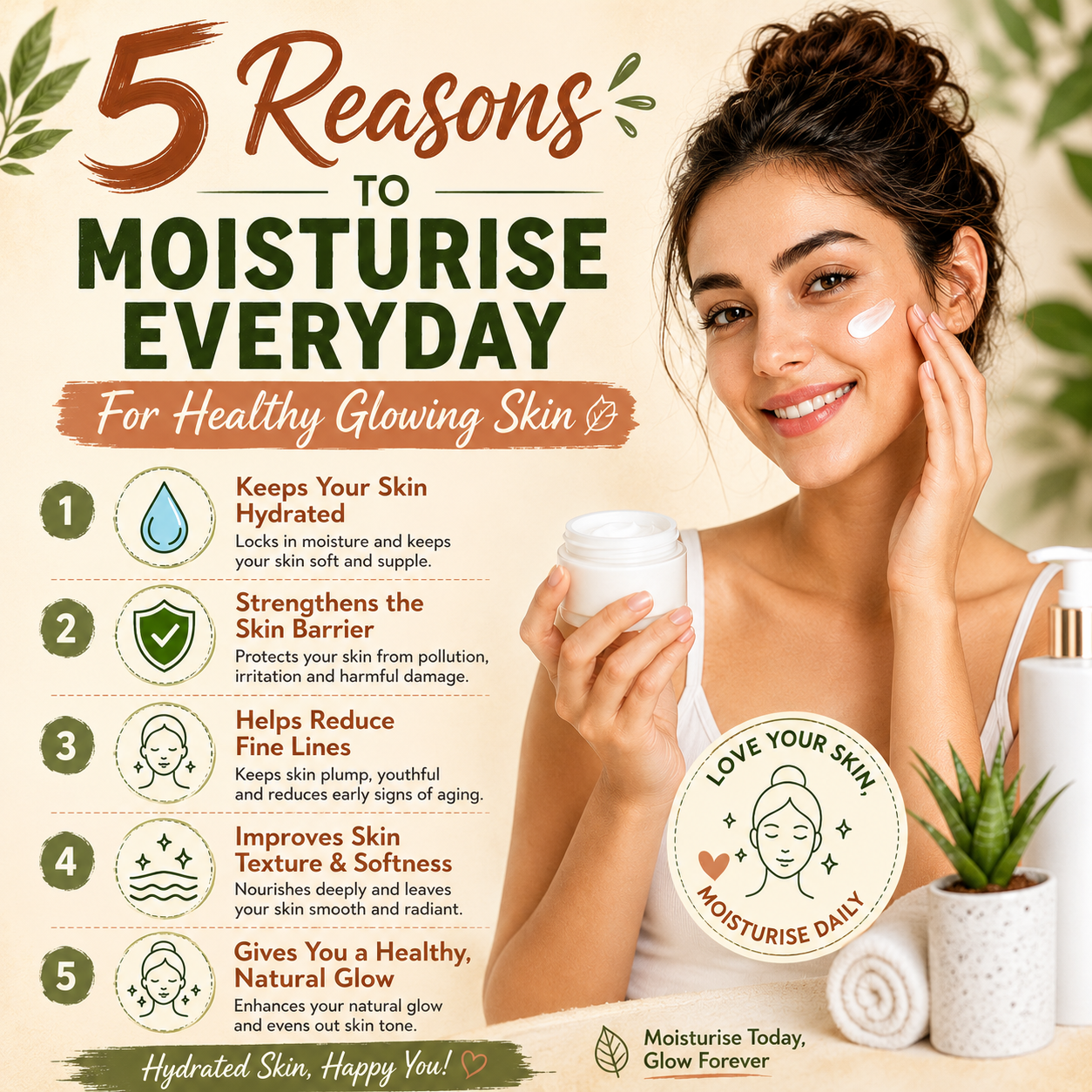
Healthy, glowing skin isn’t achieved overnight—it is the result of consistent skincare habits. Among all skincare steps, Benefits of Moisturising Daily is one of the simplest yet most effective ways to maintain soft, hydrated, and youthful-looking skin. Whether your skin is dry, oily, combination, or sensitive, using the right moisturizer helps strengthen your skin barrier, lock in hydration, and protect against environmental damage.
Many people mistakenly believe that moisturizers are only necessary during winter or for dry skin. In reality, every skin type needs hydration. Without adequate moisture, the skin can become dull, irritated, rough, and more prone to premature aging. Daily moisturising supports your skin’s natural repair process and helps maintain a healthy complexion throughout the year.
In this comprehensive guide, you’ll discover 5 scientifically backed reasons to moisturise every day for healthy glowing skin, understand how moisturizers work, learn how to choose the right product for your skin type, and uncover expert skincare tips that can transform your daily routine.
What Does Moisturising Your Skin Mean?
Moisturising is the process of applying products that help the skin retain water, strengthen its protective barrier, and prevent moisture loss. A good moisturizer contains ingredients that either attract water into the skin, seal moisture inside, or repair the skin’s natural barrier.
Healthy skin naturally contains oils and water that work together to maintain softness and elasticity. However, factors such as pollution, UV exposure, aging, harsh cleansers, air conditioning, and changing weather conditions gradually reduce this moisture. Daily moisturising replenishes lost hydration and protects the skin from external stressors.
Modern moisturizers often contain beneficial ingredients such as:
- Hyaluronic Acid
- Ceramides
- Glycerin
- Shea Butter
- Squalane
- Aloe Vera
- Niacinamide
- Vitamin E
Each ingredient supports skin hydration in different ways, helping your skin stay smooth, supple, and radiant.
Why Is Daily Moisturising Important?
Daily moisturising is not simply about making your skin feel soft. It is a critical part of maintaining long-term skin health. Your skin serves as the body’s first line of defense against bacteria, pollution, allergens, and environmental damage. When it becomes dehydrated, this protective barrier weakens, increasing the risk of irritation, redness, infections, and premature aging.
Applying moisturizer consistently helps reinforce this barrier while maintaining the skin’s natural balance. Proper hydration also allows skin cells to function more efficiently, promoting faster healing, better elasticity, and an overall healthier appearance.
People with oily skin often skip moisturizer because they fear it will make their skin greasier. However, dehydrated oily skin may actually produce even more oil to compensate for moisture loss. Choosing a lightweight, oil-free moisturizer can help regulate oil production while keeping the skin hydrated.
5 Reasons to Moisturise Everyday for Healthy Glowing Skin
1. Moisturizers Keep Your Skin Properly Hydrated
Hydration is the foundation of healthy skin. Throughout the day, your skin continuously loses water through a natural process called transepidermal water loss (TEWL). Environmental factors such as sun exposure, wind, pollution, hot showers, and indoor heating accelerate this moisture loss.
Daily moisturising helps replace lost hydration while creating a protective barrier that locks water into the skin. Properly hydrated skin appears smoother, softer, and naturally radiant.
Benefits of well-hydrated skin include:
- Softer texture
- Improved elasticity
- Less flaking
- Reduced tightness
- More youthful appearance
- Better makeup application
- Increased skin comfort
Hydrated skin also reflects light more evenly, giving it the healthy glow that many people seek.
2. Daily Moisturising Strengthens the Skin Barrier
The skin barrier acts like a protective shield that keeps harmful substances out while preventing moisture from escaping. A damaged skin barrier can lead to dryness, irritation, sensitivity, redness, and inflammation.
Daily moisturising strengthens this protective barrier by replenishing essential lipids and restoring hydration. Ingredients such as ceramides and fatty acids play a significant role in repairing damaged skin while supporting its natural defense system.
A stronger skin barrier provides several long-term benefits:
- Better resistance against pollution
- Reduced skin sensitivity
- Faster recovery from irritation
- Improved healing process
- Lower risk of dryness
- Enhanced protection against environmental stress
Maintaining a healthy barrier is particularly important for individuals with eczema, rosacea, or sensitive skin.
3. Moisturising Helps Reduce the Appearance of Fine Lines
One of the earliest signs of skin aging is dehydration. When skin lacks moisture, fine lines become more visible because dehydrated skin loses its natural plumpness.
Although moisturizers cannot permanently erase wrinkles, they can significantly improve the appearance of fine lines by restoring hydration and improving skin elasticity. Many anti-aging moisturizers also contain ingredients like hyaluronic acid, peptides, niacinamide, and antioxidants that support collagen production and protect against free radical damage.
Consistent moisturising helps your skin look:
- Firmer
- Smoother
- More elastic
- Brighter
- Youthful
- Healthier
This makes moisturising one of the easiest and most affordable anti-aging habits you can adopt.
4. Moisturizers Improve Skin Texture and Softness
Rough, flaky skin often results from inadequate hydration. When dead skin cells accumulate on the surface, the skin feels uneven and appears dull. Moisturizing softens the outer layer of the skin while improving overall texture.
Regular hydration helps smooth rough patches on common problem areas such as the face, elbows, knees, hands, and feet. Over time, skin becomes noticeably softer and more comfortable.
In addition, many moisturizers contain gentle exfoliating ingredients that encourage healthy skin cell turnover without causing irritation. This process contributes to a naturally brighter complexion and enhances the skin’s smooth appearance.
- How Moisturizers Actually Work
- Choosing the Right Moisturizer for Every Skin Type
- Common Moisturising Mistakes to Avoid
- Expert Daily Skincare Tips
5. Daily Moisturising Gives Your Skin a Healthy, Natural Glow
One of the most noticeable benefits of using a moisturizer every day is the healthy glow it gives your skin. Skin that is properly hydrated reflects light more evenly, making it appear brighter, smoother, and more radiant. In contrast, dehydrated skin often looks dull, tired, rough, and lifeless because dry skin cells create an uneven surface that scatters light instead of reflecting it.
Daily moisturising improves your complexion by restoring hydration, supporting healthy skin cell turnover, and reducing roughness. Many modern moisturizers also contain brightening ingredients such as niacinamide, vitamin C, licorice extract, and antioxidants that help fade uneven skin tone while protecting the skin from environmental damage.
A glowing complexion isn’t about looking shiny or oily—it’s about having skin that appears healthy, balanced, and well cared for. Combined with sunscreen, a nutritious diet, adequate sleep, and proper hydration, daily moisturising becomes one of the easiest habits for maintaining naturally radiant skin throughout the year.
Benefits of glowing, moisturised skin include:
- Brighter complexion
- Even skin tone
- Smooth texture
- Reduced dullness
- Better makeup finish
- Increased confidence
- Healthier overall appearance
How Do Moisturizers Actually Work?
Understanding how moisturizers work helps you choose products that truly benefit your skin. Most moisturizers contain a combination of ingredients that hydrate, protect, and repair the skin. These ingredients work together to maintain your skin’s moisture balance and improve its overall health.
There are three primary categories of moisturizing ingredients:
| Ingredient Type | Function | Common Ingredients |
| Humectants | Draw water into the skin | Hyaluronic Acid, Glycerin, Aloe Vera |
| Emollients | Smooth and soften the skin | Squalane, Shea Butter, Jojoba Oil |
| Occlusives | Lock moisture into the skin | Petrolatum, Beeswax, Dimethicone |
A well-formulated moisturizer often combines all three types of ingredients to deliver maximum hydration. Humectants attract water, emollients repair rough skin, and occlusives prevent moisture from evaporating.
Applying moisturizer immediately after cleansing or showering is especially effective because slightly damp skin absorbs hydrating ingredients more efficiently.
How to Choose the Right Moisturizer for Your Skin Type
Not every moisturizer is suitable for every skin type. Selecting a product tailored to your skin’s unique needs can significantly improve results while preventing issues such as breakouts or irritation.
Moisturizer for Dry Skin
Dry skin lacks both water and natural oils, making it prone to flaking, roughness, and tightness. Rich, nourishing creams with ingredients like ceramides, shea butter, glycerin, and hyaluronic acid help replenish lost moisture and strengthen the skin barrier.
Look for:
- Ceramides
- Shea Butter
- Hyaluronic Acid
- Glycerin
- Squalane
Avoid products with high alcohol content or strong fragrances, as these can worsen dryness.
Moisturizer for Oily Skin
Many people with oily skin avoid moisturizers because they think they will increase oiliness. In reality, dehydrated skin may produce even more oil to compensate for moisture loss. Lightweight, oil-free, and non-comedogenic moisturizers help hydrate the skin without clogging pores.
Best ingredients include:
- Hyaluronic Acid
- Niacinamide
- Aloe Vera
- Glycerin
- Green Tea Extract
Gel-based moisturizers are often an excellent option for oily skin because they absorb quickly and leave a fresh, non-greasy finish.
Moisturizer for Combination Skin
Combination skin features both oily and dry areas, typically with an oily T-zone and drier cheeks. A lightweight lotion that balances hydration without feeling heavy is often the best choice.
Products containing niacinamide and hyaluronic acid can hydrate dry areas while helping regulate excess oil production.
Moisturizer for Sensitive Skin
Sensitive skin requires extra care because it reacts more easily to fragrances, harsh preservatives, and certain active ingredients. A gentle, fragrance-free moisturizer with soothing ingredients can help calm irritation while strengthening the skin barrier.
Look for ingredients such as:
- Colloidal Oatmeal
- Ceramides
- Panthenol
- Aloe Vera
- Centella Asiatica
Always patch-test new skincare products before applying them to your entire face.
When Should You Apply Moisturizer?
Timing plays an important role in maximizing the effectiveness of your moisturizer. Applying it at the right time helps lock in hydration and supports the skin’s natural repair processes.
Morning Routine
A morning moisturizer protects your skin from environmental stressors such as pollution, wind, and dry indoor air. It also creates a smooth base for sunscreen and makeup while keeping your skin comfortable throughout the day.
A typical morning routine includes:
- Cleanse your face with a gentle cleanser.
- Apply toner or hydrating essence (optional).
- Use any treatment serums, such as vitamin C or niacinamide.
- Apply moisturizer while your skin is slightly damp.
- Finish with a broad-spectrum sunscreen of SPF 30 or higher.
Night Routine
Nighttime is when your skin naturally repairs itself. Applying a moisturizer before bed helps replenish lost moisture and supports overnight regeneration.
For dry or mature skin, a richer night cream may provide additional nourishment. If you’re using retinol or exfoliating acids, a moisturizer can also help reduce dryness and irritation.
Common Moisturising Mistakes to Avoid
Even with the best moisturizer, certain habits can reduce its effectiveness. Avoiding these common mistakes ensures you get the most benefit from your daily skincare routine.
1. Skipping Moisturizer Because You Have Oily Skin
Oily skin still needs hydration. Skipping moisturizer can lead to dehydration, causing your skin to produce even more oil.
2. Applying Moisturizer on Completely Dry Skin
Moisturizers work best when applied to slightly damp skin. This helps seal in moisture and improves hydration.
3. Using Too Much Product
Applying excessive moisturizer doesn’t necessarily improve results. A pea-sized amount is generally enough for the face, while larger areas of the body may require more.
4. Ignoring Your Neck and Hands
Your neck and hands are among the first areas to show signs of aging. Extending your moisturizer to these areas helps maintain a more youthful appearance.
5. Not Changing Products When Seasons Change
Your skin’s needs can vary throughout the year. Lightweight gels are often ideal during hot, humid weather, while richer creams provide extra protection in colder, drier months.
6. Forgetting Sunscreen
Moisturizer alone cannot protect your skin from harmful UV rays. Always follow your morning moisturizer with sunscreen to prevent premature aging and sun damage.
Expert Tips for Naturally Healthy and Glowing Skin
Moisturizing is only one part of a healthy skincare routine. These expert tips can further improve your skin’s appearance and long-term health:
- Drink plenty of water throughout the day.
- Eat a balanced diet rich in fruits, vegetables, healthy fats, and antioxidants.
- Get 7–9 hours of quality sleep each night.
- Avoid smoking and limit alcohol consumption.
- Cleanse your face gently without over-washing.
- Wear sunscreen every day, even when it’s cloudy.
- Exfoliate 1–2 times per week to remove dead skin cells.
- Avoid touching your face frequently to reduce the transfer of bacteria.
- Manage stress through exercise, meditation, or other relaxation techniques.
- Be consistent with your skincare routine—healthy skin takes time and regular care.
Frequently Asked Questions (FAQs)
1. Why should you moisturise your skin every day?
Daily moisturising helps maintain your skin’s natural moisture barrier, preventing dryness, irritation, and premature aging. A good moisturizer locks in hydration, improves skin elasticity, and protects against environmental damage caused by pollution, harsh weather, and UV exposure. Consistent use also keeps your skin soft, smooth, and naturally radiant. Regardless of whether you have dry, oily, combination, or sensitive skin, applying moisturizer every day is an essential step in maintaining healthy skin.
2. Can oily skin skip moisturizer?
No. Oily skin still requires hydration. Many people mistakenly believe that moisturizer makes oily skin greasier, but the opposite is often true. When your skin becomes dehydrated, it may produce even more oil to compensate for the lack of moisture. Choosing a lightweight, oil-free, and non-comedogenic moisturizer helps maintain hydration while controlling excess oil production and reducing the likelihood of clogged pores and breakouts.
3. How often should I moisturise my face?
For most people, moisturizing twice daily—once in the morning and once before bedtime—is ideal. You should also apply moisturizer after washing your face or showering while your skin is still slightly damp. This helps seal in moisture more effectively. If you have very dry skin, you may need to reapply throughout the day, especially in cold or dry environments.
4. Should I apply moisturizer before or after sunscreen?
Moisturizer should always be applied before sunscreen. After cleansing and applying any treatment serums, use your moisturizer first to hydrate the skin. Once it has absorbed, apply a broad-spectrum sunscreen with SPF 30 or higher. Sunscreen acts as the final protective layer in your morning skincare routine and shields your skin from harmful UV rays that contribute to premature aging and skin damage.
5. Can moisturizer help reduce wrinkles?
Moisturizers cannot permanently eliminate wrinkles, but they can make fine lines and wrinkles appear less noticeable by improving hydration and skin elasticity. Ingredients such as hyaluronic acid, peptides, ceramides, retinol, and niacinamide help plump the skin, support collagen production, and maintain a smoother, firmer appearance over time. Consistent moisturizing combined with sun protection is one of the best strategies for slowing visible signs of aging.
6. What ingredients should I look for in a moisturizer?
The best ingredients depend on your skin type, but some universally beneficial options include:
- Hyaluronic Acid for deep hydration.
- Ceramides to strengthen the skin barrier.
- Glycerin to attract and retain moisture.
- Niacinamide to improve skin tone and reduce redness.
- Squalane for lightweight hydration.
- Shea Butter for nourishing dry skin.
- Aloe Vera to soothe irritation.
- Vitamin E to provide antioxidant protection.
Reading ingredient labels and choosing products designed for your specific skin type will deliver the best results.
7. Is moisturizing necessary during summer?
Yes. Many people stop using moisturizer during hot weather because their skin feels oilier. However, exposure to sunlight, air conditioning, swimming pools, and frequent face washing can still cause dehydration. Switching to a lightweight gel or water-based moisturizer during summer helps maintain hydration without making your skin feel heavy or greasy.
8. Can men benefit from daily moisturising?
Absolutely. Men’s skin also loses moisture and experiences environmental damage, shaving irritation, and signs of aging. Daily moisturising helps soothe the skin after shaving, prevent dryness, improve texture, and maintain a healthier complexion. The principles of proper hydration apply equally to both men and women.
Key Takeaways
Maintaining healthy, glowing skin doesn’t require an overly complicated skincare routine. Consistency with the basics, especially daily moisturizing, delivers long-term benefits that improve both the appearance and health of your skin.
Here are the key points to remember:
- Moisturize your skin every morning and evening.
- Choose a moisturizer that matches your skin type.
- Apply moisturizer to slightly damp skin for better absorption.
- Strengthen your skin barrier to prevent moisture loss.
- Hydrated skin appears smoother, brighter, and more youthful.
- Daily moisturising can reduce the appearance of fine lines and rough texture.
- Never skip sunscreen during the day.
- Healthy habits like drinking water, eating nutritious foods, sleeping well, and managing stress work together with your skincare routine to promote naturally glowing skin.
- Consistency is more important than using expensive products.
Conclusion
Healthy, glowing skin begins with one simple habit: moisturising every day. While skincare trends and new beauty products come and go, the importance of maintaining proper skin hydration remains constant. A quality moisturizer helps protect your skin barrier, prevent moisture loss, improve texture, reduce the appearance of fine lines, and support a naturally radiant complexion.
Whether your skin is dry, oily, combination, or sensitive, there is a moisturizer designed to meet your needs. The key is selecting the right formula and using it consistently as part of your daily skincare routine. When combined with cleansing, sunscreen, balanced nutrition, sufficient sleep, and adequate hydration, daily moisturising creates the foundation for healthier skin that looks and feels its best.
Remember that skincare is a long-term investment rather than a quick fix. Small daily habits often produce the most noticeable improvements over time. By making moisturizing a non-negotiable part of your routine, you’re giving your skin the care and protection it needs to stay healthy, resilient, and glowing for years to come.
Read Our Latest Blog Avoid These 13 Foods for Healthier, Younger-Looking Skin