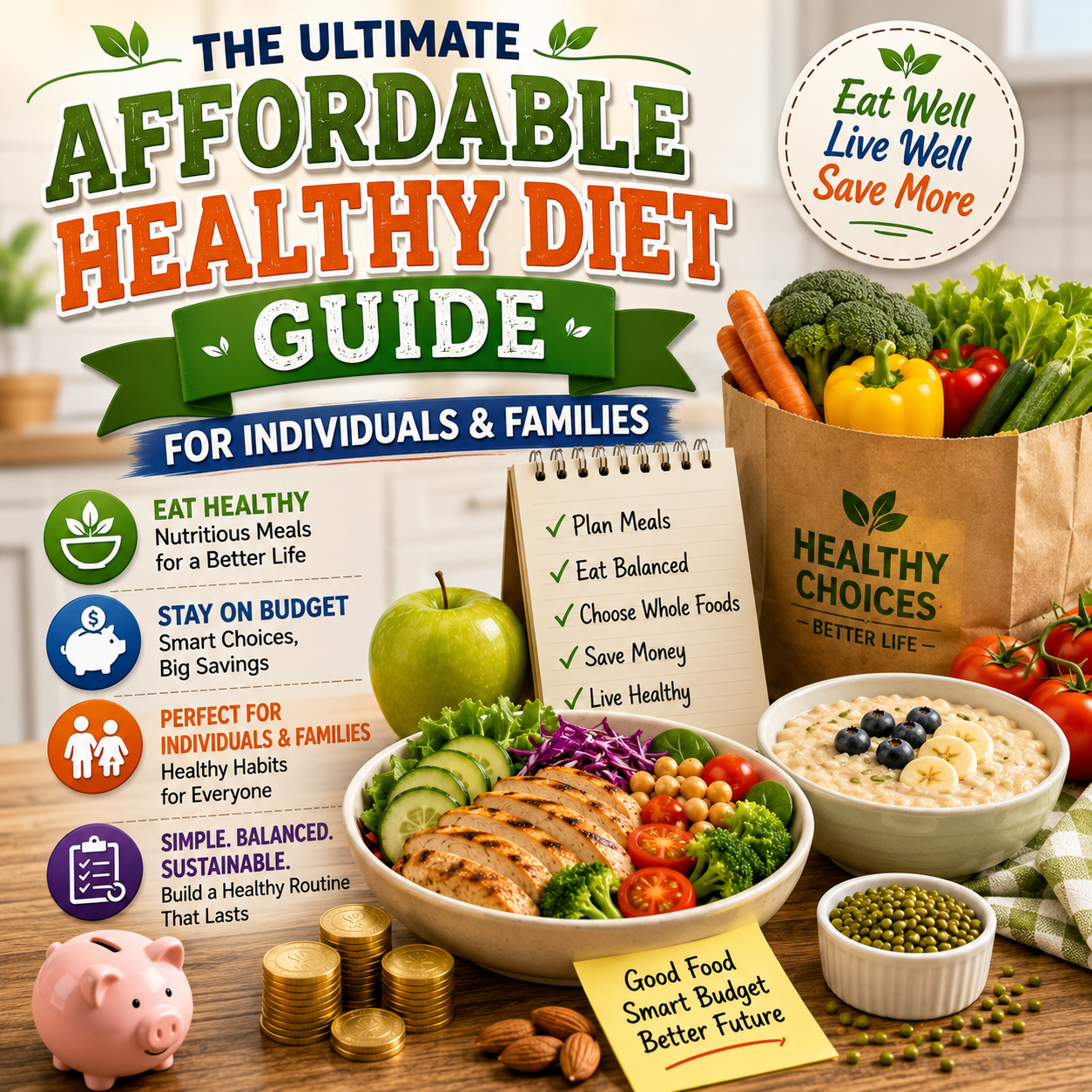
Eating a nutritious diet is often perceived as expensive, but the reality is quite different. Many of the healthiest foods available—such as oats, beans, lentils, eggs, brown rice, frozen vegetables, and seasonal fruits—are also among the most affordable. The secret to maintaining an Affordable Healthy Diet is not purchasing expensive “superfoods,” but making smart grocery choices, planning balanced meals, and preparing food at home.
Whether you’re shopping for yourself or feeding an entire family, developing healthy eating habits doesn’t require a large grocery budget. With proper planning, simple recipes, and cost-effective ingredients, you can enjoy delicious meals that support heart health, maintain energy levels, strengthen immunity, and help manage weight.
This comprehensive guide explains how individuals and families can build an affordable healthy diet, choose nutritious foods, create balanced meal plans, save money while grocery shopping, and establish sustainable eating habits for long-term wellness.
What Is an Affordable Healthy Diet?
An affordable healthy diet is a way of eating that provides all the essential nutrients your body needs while keeping grocery costs manageable. Instead of relying on expensive specialty products or highly processed convenience foods, it focuses on nutrient-dense whole foods such as vegetables, fruits, whole grains, legumes, lean proteins, dairy or fortified alternatives, and healthy fats.
A healthy diet isn’t defined by price—it is defined by balance, variety, and consistency. Choosing economical ingredients that are rich in vitamins, minerals, fiber, and protein allows individuals and families to meet their nutritional needs without overspending.
Why Healthy Eating Doesn’t Have to Be Expensive
Many people assume healthy food always costs more because premium organic products and trendy health foods receive a great deal of attention. However, staples like oats, brown rice, lentils, beans, potatoes, eggs, frozen vegetables, bananas, and seasonal produce are affordable and highly nutritious.
Preparing meals at home also reduces spending on restaurant meals, fast food, and processed snacks. Planning meals ahead of time, shopping with a list, and minimizing food waste can dramatically lower monthly grocery expenses while improving dietary quality.
When combined, these practical habits make healthy eating achievable for households of every size and budget.
Benefits of Following an Affordable Healthy Diet
Choosing nutritious foods while managing food costs offers benefits beyond simply saving money.
Better Overall Health
Whole foods provide essential vitamins, minerals, antioxidants, healthy fats, and dietary fiber that support heart health, digestive health, immune function, and healthy aging. Consistently eating balanced meals may also reduce the risk of chronic diseases associated with poor dietary patterns.
Financial Savings
Home-cooked meals generally cost much less than restaurant dining or frequent takeout. Buying staple ingredients in bulk, preparing meals in advance, and using leftovers efficiently help reduce grocery bills while maximizing value.
Increased Energy
Balanced meals containing complex carbohydrates, lean protein, and healthy fats provide steady energy throughout the day. Unlike highly processed foods that may cause energy crashes, whole foods support sustained physical and mental performance.
Healthy Weight Management
Affordable healthy foods are often naturally rich in fiber and protein, helping you feel full longer. This can reduce unnecessary snacking and support healthy weight management without requiring expensive diet products.
Improved Family Eating Habits
Preparing meals together encourages healthier food choices and teaches children valuable cooking and nutrition skills. Families who regularly eat homemade meals often consume more vegetables, fruits, and whole grains while reducing intake of sugary drinks and processed foods.
Essential Nutrient-Dense Foods for an Affordable Healthy Diet
Choosing versatile, nutrient-rich foods helps maximize nutrition while minimizing grocery costs. These ingredients can be used in a wide variety of recipes throughout the week.
Whole Grains
Whole grains provide complex carbohydrates, fiber, B vitamins, and minerals that support digestive health and sustained energy.
Affordable choices include:
- Oats
- Brown rice
- Whole wheat pasta
- Whole grain bread
- Barley
- Popcorn
- Quinoa (when purchased in bulk or on sale)
Lean Protein Sources
Protein supports muscle maintenance, immune function, and satiety. Fortunately, many excellent protein sources are inexpensive.
Affordable options include:
- Eggs
- Lentils
- Black beans
- Chickpeas
- Kidney beans
- Canned tuna
- Sardines
- Chicken thighs
- Plain Greek yogurt
- Cottage cheese
- Tofu
Fruits
Fruits supply vitamins, minerals, antioxidants, and natural sweetness without added sugars.
Budget-friendly fruit choices include:
- Bananas
- Apples
- Oranges
- Seasonal berries
- Frozen berries
- Pears
- Watermelon (seasonal)
Frozen fruit is particularly useful because it has a long shelf life and works well in smoothies, oatmeal, and yogurt bowls.
Vegetables
Vegetables should make up a significant portion of every healthy diet because they provide fiber, vitamins, minerals, and antioxidants while remaining relatively low in calories.
Affordable vegetables include:
- Carrots
- Cabbage
- Onions
- Potatoes
- Sweet potatoes
- Spinach
- Broccoli
- Frozen mixed vegetables
- Green beans
- Bell peppers (seasonal)
Healthy Fats
Healthy fats support brain function, heart health, and nutrient absorption.
Economical sources include:
- Peanut butter
- Olive oil
- Sunflower seeds
- Pumpkin seeds
- Flaxseeds
- Chia seeds
- Avocados (when on sale)
Grocery Shopping Tips for Individuals and Families
Shopping strategically is one of the easiest ways to reduce food expenses while maintaining a healthy diet.
Plan Meals Before Shopping
Creating a weekly meal plan allows you to purchase only the ingredients you need. Planning reduces impulse purchases, prevents duplicate buying, and minimizes food waste.
Shop with a Grocery List
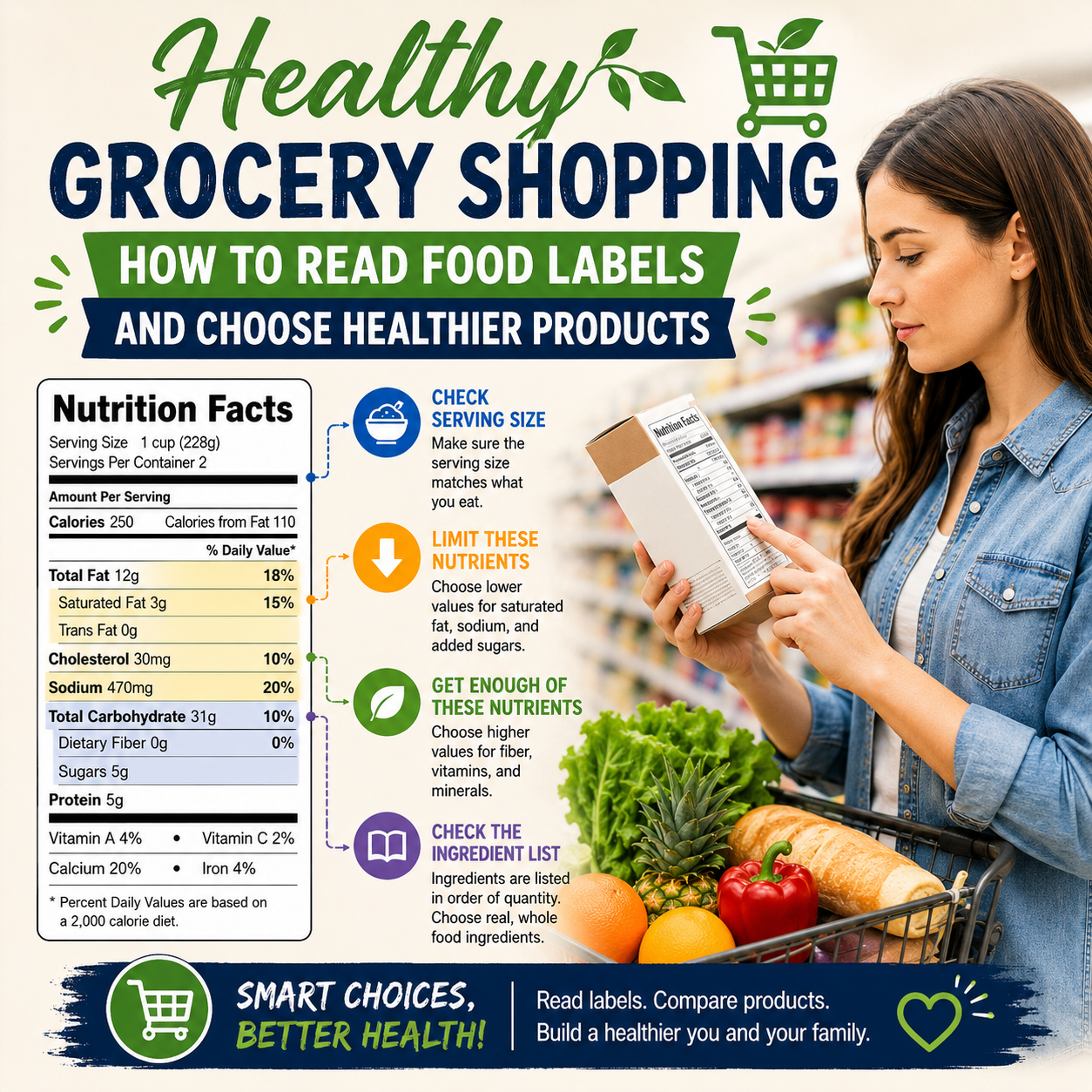
A detailed grocery list keeps you focused while shopping and helps you stay within your budget. Organizing your list by grocery store sections can also save time.
Compare Unit Prices
Instead of comparing package prices, compare the cost per ounce, pound, or kilogram. Larger packages often provide better value, especially for pantry staples with long shelf lives.
Buy Seasonal Produce
Seasonal fruits and vegetables are generally fresher, more flavorful, and less expensive because they are harvested locally and are more abundant.
Choose Frozen Produce
Frozen vegetables and fruits retain most of their nutrients, reduce spoilage, and provide convenient access to healthy ingredients throughout the year.
Select Store Brands
Many store-brand products contain the same ingredients and nutritional quality as national brands but are available at significantly lower prices.
Building a Balanced Healthy Plate
A balanced plate helps ensure every meal provides the nutrients your body needs while keeping portions appropriate.
A simple guideline is:
- ½ plate: Vegetables and fruits
- ¼ plate: Whole grains
- ¼ plate: Lean protein
- Small portion: Healthy fats or dairy (as appropriate)
This approach supports balanced nutrition without requiring complicated meal plans or expensive ingredients.
Budget-Friendly Meal Planning Basics
Meal planning is one of the most effective ways to maintain an affordable healthy diet. It reduces food waste, simplifies grocery shopping, and ensures nutritious meals are always available.
Healthy Breakfast Ideas for an Affordable Healthy Diet
Breakfast provides the energy and nutrients needed to start your day, but it doesn’t have to be expensive. Choosing simple, whole-food ingredients helps you build filling meals that are rich in protein, fiber, and healthy fats while staying within your grocery budget. Preparing breakfast at home also reduces spending on convenience foods and supports healthier eating habits.
1. Banana Peanut Butter Oatmeal
Ingredients
- ½ cup rolled oats
- 1 banana
- 1 tablespoon natural peanut butter
- Milk or water
- Cinnamon
Benefits
Oats provide soluble fiber that supports heart health, bananas offer potassium and natural sweetness, and peanut butter supplies healthy fats and protein. This inexpensive breakfast keeps you full for hours.
2. Vegetable Egg Scramble
Ingredients
- 2 eggs
- Frozen mixed vegetables
- Onion
- Black pepper
- Whole-grain toast
Benefits
Eggs are an affordable source of complete protein. Combined with vegetables and whole grains, this breakfast delivers balanced nutrition and long-lasting energy.
3. Greek Yogurt Fruit Bowl
Ingredients
- Plain Greek yogurt
- Seasonal fruit
- Oats or granola
- Chia seeds (optional)
Benefits
Greek yogurt provides protein and calcium, while fruit adds vitamins, antioxidants, and natural sweetness without excessive added sugar.
4. Overnight Oats
Ingredients
- Rolled oats
- Low-fat milk
- Frozen berries
- Chia seeds
- Honey (optional)
Benefits
Prepared the night before, overnight oats save time during busy mornings and are easy to customize with affordable seasonal ingredients.
5. Whole-Grain Toast with Cottage Cheese
Whole-grain toast topped with cottage cheese and sliced tomatoes creates a high-protein, fiber-rich breakfast that’s quick to prepare and budget-friendly.
Affordable Healthy Lunch Ideas
Homemade lunches help reduce food expenses while ensuring you eat balanced meals during the day. Using leftovers, pantry staples, and fresh vegetables makes lunch both nutritious and economical.
1. Brown Rice and Black Bean Bowl
Ingredients
- Brown rice
- Black beans
- Corn
- Salsa
- Avocado (optional)
- Cilantro
Benefits
This meal combines plant protein, complex carbohydrates, and fiber to provide sustained energy throughout the afternoon.
2. Chickpea Salad
Ingredients
- Chickpeas
- Cucumber
- Tomatoes
- Red onion
- Lemon juice
- Olive oil
Benefits
Chickpeas are inexpensive, filling, and rich in protein, fiber, and essential minerals. This salad is refreshing and ideal for meal prep.
3. Lentil Soup
Ingredients
- Lentils
- Carrots
- Celery
- Onion
- Garlic
- Vegetable broth
Benefits
Lentil soup is one of the most affordable healthy meals available. It freezes well and provides protein, iron, and fiber.
4. Tuna Whole-Grain Sandwich
Ingredients
- Whole-grain bread
- Canned tuna
- Plain Greek yogurt
- Lettuce
- Tomato
Benefits
Tuna provides lean protein and omega-3 fatty acids, making this sandwich both nutritious and affordable.
5. Vegetable Wrap
Filled with hummus, spinach, shredded carrots, cucumbers, and peppers, this whole-wheat wrap offers plenty of vitamins, fiber, and healthy fats while remaining inexpensive.
Budget-Friendly Dinner Ideas
Dinner is often the largest meal of the day, making it important to choose recipes that are nutritious, filling, and affordable. These meals use simple ingredients that can feed the whole family without exceeding your grocery budget.
1. Chicken and Vegetable Stir-Fry
Ingredients
- Chicken breast or thighs
- Frozen mixed vegetables
- Brown rice
- Garlic
- Low-sodium soy sauce
Benefits
This colorful stir-fry delivers lean protein, whole grains, and vegetables in one quick, balanced meal.
2. Black Bean Chili
Ingredients
- Black beans
- Kidney beans
- Tomatoes
- Onion
- Garlic
- Chili powder
Benefits
Rich in protein and fiber, black bean chili is inexpensive, satisfying, and perfect for freezing.
3. Whole Wheat Pasta Primavera
Ingredients
- Whole wheat pasta
- Broccoli
- Bell peppers
- Carrots
- Garlic
- Olive oil
Benefits
Whole wheat pasta provides extra fiber, while vegetables increase vitamins and minerals without adding significant cost.
4. Baked Sweet Potato with Beans
Sweet potatoes topped with black beans, salsa, and plain yogurt create a delicious dinner packed with vitamin A, fiber, and protein.
5. Vegetable Fried Rice
Using leftover rice, frozen vegetables, eggs, and low-sodium soy sauce transforms simple ingredients into a flavorful, budget-friendly dinner while reducing food waste.
Healthy Snacks That Fit Every Budget
Nutritious snacks help maintain energy between meals and reduce cravings for processed foods. Affordable snack choices often require little preparation and use ingredients already found in many kitchens.
Affordable Snack Ideas
- Apple slices with peanut butter
- Plain popcorn
- Hard-boiled eggs
- Banana with almonds
- Cottage cheese and fruit
- Plain yogurt
- Homemade trail mix
- Roasted chickpeas
- Carrot sticks with hummus
- Whole-grain crackers and cheese
These snacks combine protein, fiber, and healthy fats to keep you satisfied.
Meal Prep Strategies for Busy Families
Meal preparation saves both time and money while making healthy eating easier throughout the week. Spending a few hours preparing ingredients or complete meals reduces reliance on takeout and convenience foods.
Weekly Meal Prep Tips
- Plan meals before shopping.
- Cook grains in large batches.
- Prepare proteins ahead of time.
- Wash and chop vegetables.
- Portion meals into containers.
- Freeze extra servings.
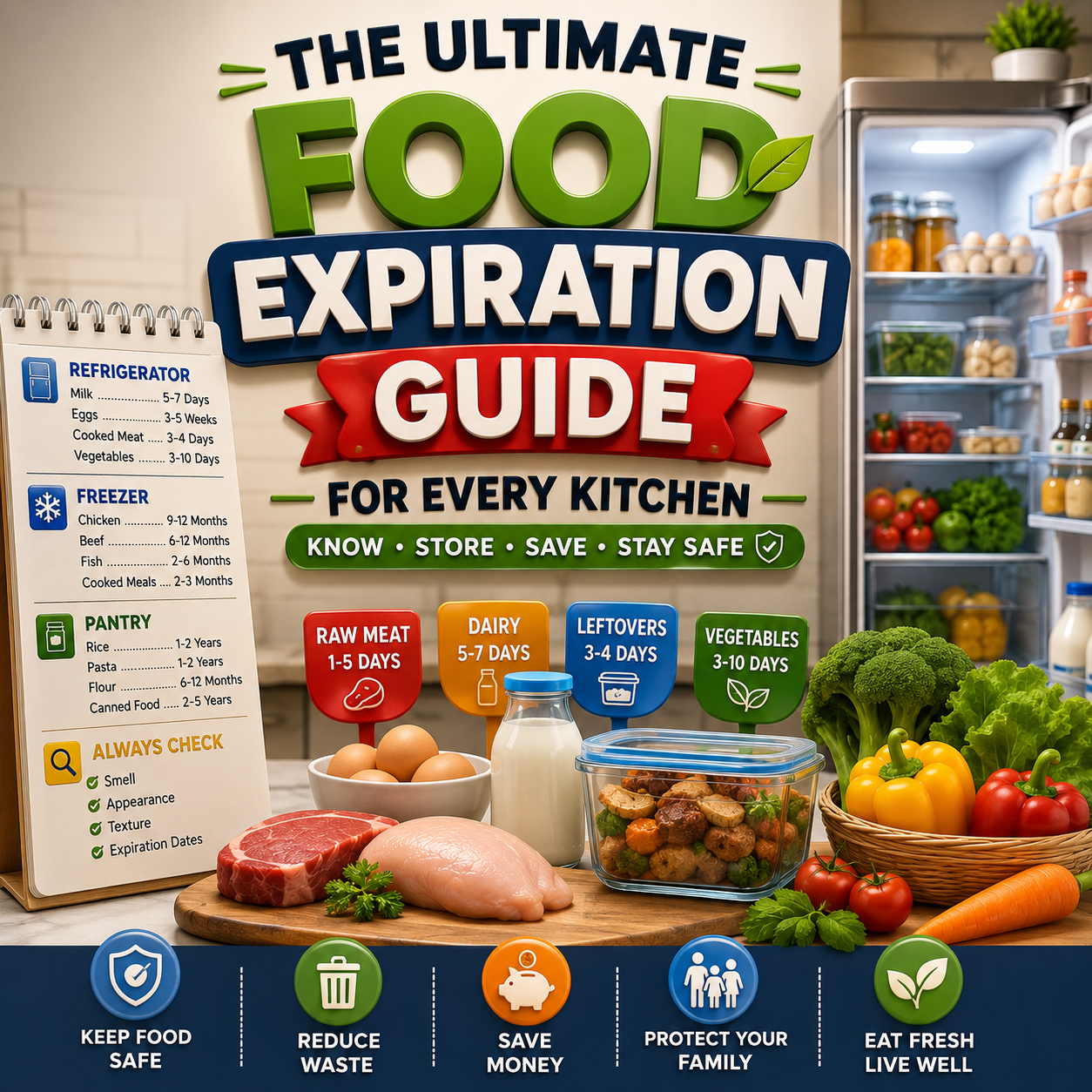
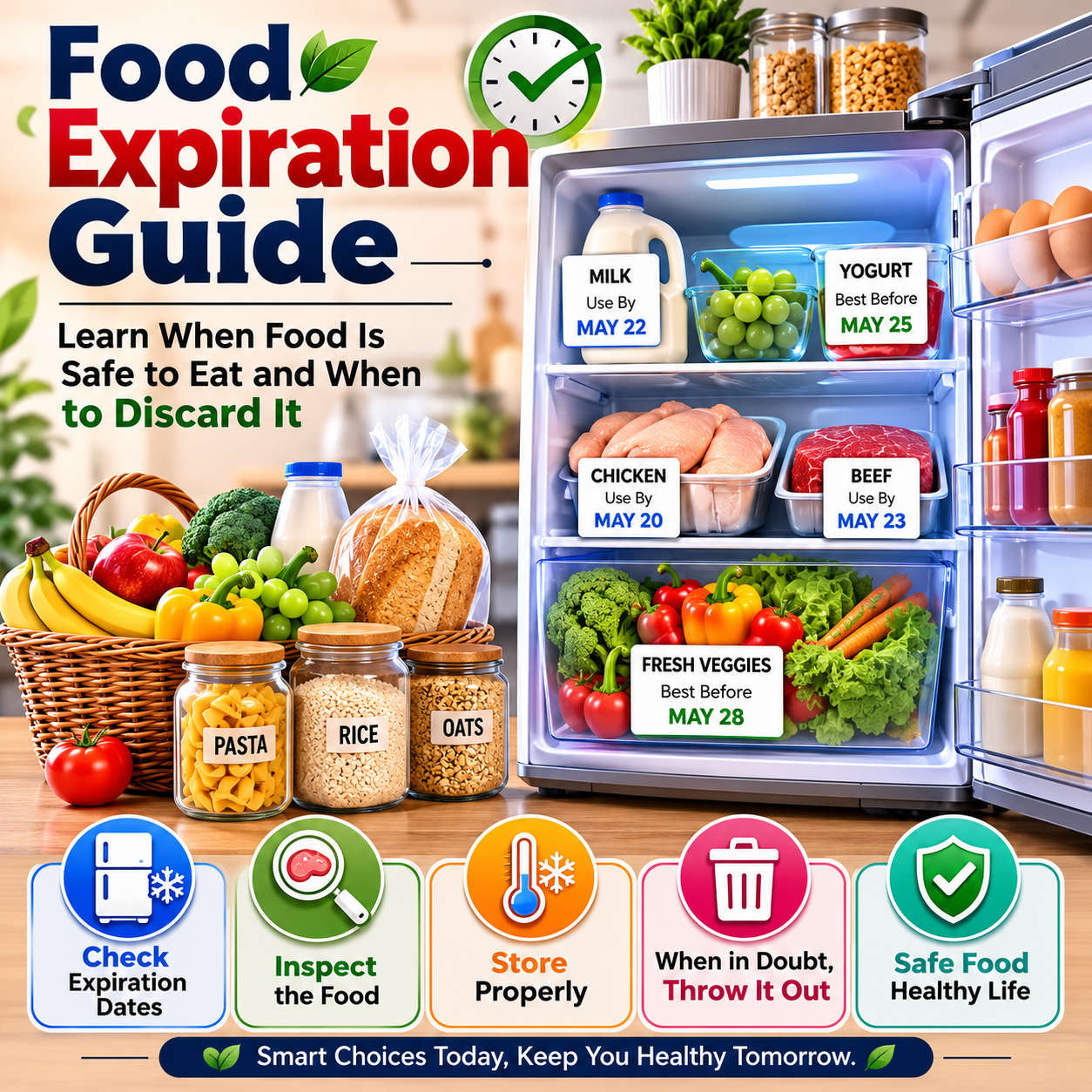
- Label containers with preparation dates.
- Rotate older meals to the front of the refrigerator or freezer.
Meal prepping also reduces stress during busy weekdays and encourages consistent healthy eating.
Sample Weekly Affordable Healthy Meal Plan
| Day | Breakfast | Lunch | Dinner |
| Monday | Oatmeal with banana | Lentil soup | Chicken stir-fry |
| Tuesday | Greek yogurt bowl | Tuna sandwich | Vegetable chili |
| Wednesday | Egg scramble | Chickpea salad | Whole wheat pasta |
| Thursday | Overnight oats | Rice and beans | Sweet potato with beans |
| Friday | Whole-grain toast | Vegetable wrap | Chicken and brown rice |
| Saturday | Smoothie | Leftovers | Vegetable soup |
| Sunday | Oatmeal | Bean salad | Homemade casserole |
This meal plan reuses ingredients across multiple meals, helping reduce waste and lower grocery costs.
Fresh vs. Frozen Produce Comparison
| Feature | Fresh Produce | Frozen Produce |
| Cost | Lower when in season | Affordable year-round |
| Shelf Life | Short | Several months |
| Nutrition | Excellent | Excellent when plain |
| Convenience | Requires quicker use | Ready to cook |
| Food Waste | Higher | Very low |
Using a combination of fresh seasonal produce and frozen vegetables provides flexibility, convenience, and excellent nutritional value.
Expert Tips for Maintaining an Affordable Healthy Diet
Building healthy eating habits doesn’t require expensive meal plans or specialty foods. Small, consistent changes often lead to the best long-term results.
Practical Expert Tips
- Prioritize whole foods over processed snacks.
- Include vegetables in every meal.
- Buy pantry staples in bulk when possible.
- Choose store brands to reduce costs.
- Drink water instead of sugary beverages.
- Prepare meals at home more often.
- Use herbs and spices for flavor instead of high-sodium sauces.
- Include meatless meals one or two times each week.
- Freeze leftovers before they spoil.
- Review weekly grocery sales before shopping.
These habits improve both nutrition and financial savings over time.
Common Mistakes to Avoid
Even with good intentions, certain habits can increase grocery costs or reduce nutritional quality.
Common Mistakes
- Shopping without a grocery list.
- Buying too much fresh produce that spoils.
- Choosing heavily processed convenience foods.
- Ignoring unit prices.
- Throwing away leftovers.
- Skipping meal planning.
- Purchasing expensive “health” foods unnecessarily.
- Drinking sugary beverages instead of water.
- Not using frozen fruits and vegetables.
- Overbuying perishable foods.
Avoiding these mistakes helps maximize your food budget while maintaining a balanced, nutritious diet.
Frequently Asked Questions (FAQs)
1. What is an affordable healthy diet?
An affordable healthy diet is a balanced eating pattern that emphasizes whole, nutrient-dense foods while keeping grocery expenses manageable. It includes vegetables, fruits, whole grains, lean proteins, healthy fats, and dairy or fortified alternatives. Planning meals and cooking at home make this approach practical and sustainable.
2. What foods should always be included in a healthy budget diet?
Include oats, brown rice, beans, lentils, eggs, frozen vegetables, seasonal fruits, potatoes, sweet potatoes, plain yogurt, canned fish, whole-grain bread, peanut butter, and healthy cooking oils. These foods provide essential nutrients at a relatively low cost.
3. Is healthy eating expensive?
No. While some specialty health foods can be expensive, many nutritious staples are affordable. Smart shopping, buying in bulk, choosing seasonal produce, and preparing meals at home significantly reduce food costs.
4. How can I save money on groceries?
Plan meals before shopping, compare unit prices, buy store-brand products, purchase pantry staples in bulk, choose frozen produce when appropriate, and avoid impulse purchases. Using leftovers creatively also helps reduce food waste.
5. Are homemade meals healthier?
Yes. Homemade meals usually contain less sodium, added sugar, and unhealthy fats than restaurant or processed foods. They also allow better portion control and ingredient quality.
6. What is the best breakfast for a healthy budget?
Affordable breakfasts include oatmeal with fruit, overnight oats, vegetable egg scrambles, Greek yogurt with berries, and whole-grain toast with peanut butter. These options provide fiber, protein, and long-lasting energy.
7. How often should I meal prep?
Preparing meals once or twice each week is enough for many households. Batch cooking grains, proteins, and vegetables makes weekday meals quicker and reduces dependence on takeout.
8. Are canned foods healthy?
Many canned foods, including beans, tomatoes, tuna, and salmon, are nutritious. Select low-sodium or no-salt-added varieties when available and rinse canned beans before use to reduce sodium.
9. Can children follow an affordable healthy diet?
Absolutely. Children benefit from balanced meals that include fruits, vegetables, whole grains, dairy, lean proteins, and healthy fats. Simple homemade meals are often healthier and more economical than processed alternatives.
10. What is the easiest first step toward healthy eating?
Start by replacing one processed meal each day with a homemade meal made from whole ingredients. Pair this habit with meal planning and a grocery list to make healthy eating easier and more affordable.
Key Takeaways
- An affordable healthy diet is possible for every household.
- Whole foods often provide the best nutrition at the lowest cost.
- Meal planning reduces grocery bills and food waste.
- Cooking at home supports healthier eating habits.
- Seasonal and frozen produce offer excellent nutritional value.
- Beans, lentils, eggs, and yogurt are affordable protein sources.
- Smart grocery shopping helps maximize every food budget.
- Meal prep saves both time and money.
- Small, consistent dietary improvements lead to lasting health benefits.
- Healthy eating is about smart choices, not expensive products.
Conclusion
Following an affordable healthy diet doesn’t require expensive ingredients or complicated meal plans. By focusing on nutrient-rich whole foods, planning meals in advance, shopping wisely, and preparing more meals at home, both individuals and families can enjoy nutritious, satisfying food while staying within their budget.
Simple choices—such as buying seasonal produce, using frozen vegetables, selecting affordable proteins like beans and eggs, and reducing food waste—can make a significant difference in both your health and your monthly grocery expenses. Over time, these habits become sustainable routines that support long-term wellness, improve energy levels, and encourage healthier eating for the entire family.
Remember that healthy eating is not about perfection. It’s about making practical, informed decisions that fit your lifestyle and financial situation. Every nutritious meal you prepare is an investment in your future health.
Read Our Latest Blog:How to Prevent Stroke: Natural Ways to Lower Your Risk and Protect Brain Health