Signs of Nutrient Deficiency in Children
Children need a balanced diet rich in vitamins, minerals, proteins, healthy fats, and carbohydrates to support healthy growth and development. When the body does not receive enough essential nutrients over time, it may lead to nutrient deficiencies that can affect physical growth, brain development, immunity, and overall well-being.
Recognizing the early signs of nutrient deficiency allows parents and caregivers to seek appropriate medical advice and make necessary dietary changes before more serious health problems develop.
What Is Nutrient Deficiency?
Nutrient deficiency occurs when the body does not receive enough essential vitamins, minerals, or other nutrients needed for normal growth and body functions.
Children are more vulnerable to nutrient deficiencies because their nutritional needs increase rapidly during periods of growth.
Why Are Nutrients Important for Children?
Essential nutrients help support nearly every function of a child’s body.
They are important for:
- Healthy growth and development
- Strong bones and teeth
- Brain development
- Muscle growth
- Healthy vision
- Immune system function
- Energy production
- Healthy skin and hair
A balanced diet helps provide these nutrients naturally.
Common Causes of Nutrient Deficiency
Several factors can contribute to nutrient deficiencies in children.
Poor Eating Habits
Children who eat limited varieties of food or frequently consume highly processed foods may not receive adequate nutrients.
Picky Eating
Selective eating habits can reduce the intake of important food groups such as fruits, vegetables, dairy products, and protein-rich foods.
Digestive Disorders
Certain medical conditions affecting digestion or nutrient absorption may increase the risk of deficiencies.
Increased Nutritional Needs
Rapid growth, illness, or recovery from infection can temporarily increase a child’s need for certain nutrients.
Restricted Diets
Children following restricted diets due to allergies or personal preferences may require careful meal planning to meet their nutritional needs.
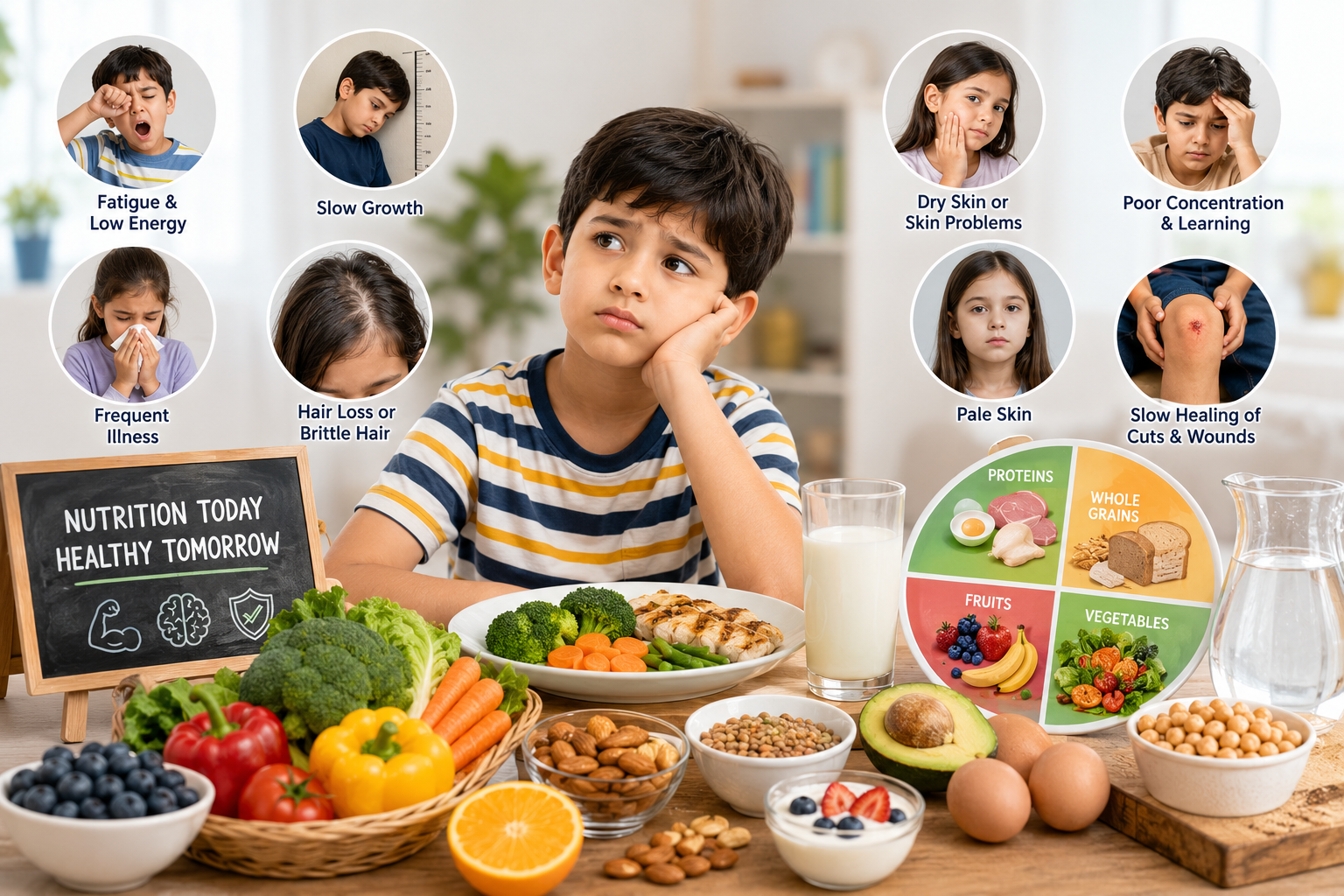
Common Signs of Nutrient Deficiency in Children
1. Frequent Fatigue or Low Energy
Persistent tiredness may sometimes be associated with inadequate intake of nutrients such as iron, vitamin B12, or other essential nutrients.
Possible Symptoms
- Feeling tired easily
- Low energy during play
- Difficulty concentrating
- Reduced physical activity
Persistent fatigue should always be evaluated by a healthcare professional.
2. Slow Growth
Children require adequate nutrition for normal height and weight gain.
Possible Signs
- Poor weight gain
- Slower-than-expected growth
- Delayed physical development
Growth should be monitored during regular pediatric checkups.
3. Frequent Illness
Poor nutrition may affect normal immune function.
Possible Signs
- Frequent colds
- Recurrent infections
- Longer recovery times
A nutritious diet supports a healthy immune system.
4. Hair Loss or Brittle Hair
Healthy hair growth depends on adequate nutrition.
Nutrients Often Associated
- Protein
- Iron
- Zinc
- Biotin
Hair loss can have many causes and should be assessed by a healthcare provider if persistent.
5. Dry Skin or Skin Problems
The skin often reflects overall nutritional health.
Possible Symptoms
- Dry skin
- Rough skin
- Cracked lips
- Slow wound healing
Several vitamin and mineral deficiencies may contribute to skin changes.
6. Weak Bones or Frequent Bone Pain
Bones require adequate amounts of calcium, vitamin D, phosphorus, and other nutrients for proper growth and strength.
Possible Signs
- Bone or joint pain
- Delayed growth
- Frequent fractures after minor injuries
- Difficulty participating in physical activities
Children experiencing persistent bone pain or repeated fractures should be evaluated by a healthcare professional.
7. Poor Concentration and Learning Difficulties
The brain depends on a steady supply of essential nutrients to support learning, memory, and concentration.
Possible Symptoms
- Difficulty focusing in school
- Poor memory
- Reduced attention span
- Trouble completing tasks
Many factors can affect concentration, so professional evaluation may be needed to determine the underlying cause.
8. Pale Skin
Pale skin may sometimes be associated with iron deficiency or other medical conditions.
Additional Symptoms
- Fatigue
- Weakness
- Shortness of breath during activity
- Cold hands and feet
Persistent paleness should be assessed by a healthcare provider.
9. Poor Appetite
Some nutrient deficiencies or underlying health conditions may affect a child’s appetite.
Possible Signs
- Eating very small amounts
- Refusing meals regularly
- Weight loss
- Poor weight gain
Parents should consult a pediatrician if poor appetite continues for an extended period.
10. Slow Healing of Cuts and Wounds
Certain nutrients help support normal wound healing and tissue repair.
Nutrients That Support Healing
- Vitamin C
- Protein
- Zinc
- Vitamin A
Slow healing should be evaluated, particularly if accompanied by frequent infections or other symptoms.
Essential Nutrients for Growing Children
Iron
Iron helps transport oxygen throughout the body and supports normal growth and brain development.
Food Sources
- Lean meat
- Chicken
- Fish
- Lentils
- Beans
- Spinach
- Iron-fortified cereals
Calcium
Calcium supports healthy bones and teeth.
Food Sources
- Milk
- Yogurt
- Cheese
- Paneer
- Fortified plant-based milk
- Broccoli
Vitamin D
Vitamin D helps the body absorb calcium and supports healthy bone development.
Sources
- Safe sunlight exposure
- Fatty fish
- Egg yolks
- Fortified dairy products
Vitamin C
Vitamin C supports immune function and helps the body absorb iron from plant-based foods.
Food Sources
- Oranges
- Guava
- Kiwi
- Strawberries
- Bell peppers
- Tomatoes
Protein
Protein supports muscle growth, tissue repair, and overall development.
Healthy Sources
- Eggs
- Chicken
- Fish
- Lentils
- Beans
- Paneer
- Tofu
- Yogurt
Foods That Help Prevent Nutrient Deficiencies
Include a Variety of Foods Every Day
A balanced diet should include foods from all major food groups.
Whole Grains
- Brown rice
- Oats
- Whole wheat bread
- Quinoa
Fruits
- Apples
- Bananas
- Berries
- Oranges
- Papaya
Vegetables
- Spinach
- Broccoli
- Carrots
- Sweet potatoes
- Bell peppers
Healthy Fats
- Avocados
- Walnuts
- Almonds
- Chia seeds
- Flaxseeds
Dairy Foods
- Milk
- Yogurt
- Cheese
Eating a colorful variety of foods helps children receive a wide range of essential nutrients.
When Should You See a Doctor?
Consult a healthcare professional if your child experiences:
- Persistent fatigue
- Poor growth or weight loss
- Frequent infections
- Ongoing poor appetite
- Hair loss
- Bone pain
- Delayed development
- Pale skin
- Slow wound healing
- Any symptoms that interfere with normal daily activities
A doctor may recommend a physical examination and, if necessary, laboratory tests to identify nutritional deficiencies or other underlying conditions.
Frequently Asked Questions
What is the most common nutrient deficiency in children?
Iron deficiency is one of the most common nutrient deficiencies worldwide. Vitamin D, calcium, and certain B vitamins may also be low in some children, depending on diet, lifestyle, and health conditions.
Can picky eating cause nutrient deficiencies?
Yes. Children who consistently avoid major food groups may not receive enough essential vitamins and minerals, increasing the risk of nutrient deficiencies.
Should children take vitamin supplements?
Most healthy children can obtain the nutrients they need from a balanced diet. Supplements should only be given if recommended by a qualified healthcare professional.
How can parents help prevent nutrient deficiencies?
Provide balanced meals that include fruits, vegetables, whole grains, lean proteins, dairy or calcium-rich alternatives, and healthy fats. Encourage regular meals and healthy snacks while limiting highly processed foods.
Can nutrient deficiencies affect school performance?
Yes. Inadequate intake of certain nutrients may affect energy levels, concentration, memory, and overall learning. However, many factors can influence academic performance, so professional evaluation may be appropriate if concerns persist.
Key Takeaways
- Nutrient deficiencies can affect a child’s growth, brain development, immunity, and overall health.
- Common warning signs include fatigue, slow growth, frequent illness, poor concentration, pale skin, and delayed wound healing.
- A balanced diet containing fruits, vegetables, whole grains, lean proteins, dairy products, and healthy fats helps prevent deficiencies.
- Persistent symptoms should be evaluated by a healthcare professional rather than self-diagnosed.
- Early recognition and appropriate nutrition can support healthy growth and long-term well-being.
Conclusion
Proper nutrition is essential for every stage of a child’s growth and development. Recognizing early signs of nutrient deficiency—such as persistent fatigue, poor growth, frequent illness, or difficulty concentrating—can help parents seek timely medical advice and make informed dietary improvements.
Providing a balanced diet rich in essential vitamins, minerals, proteins, healthy fats, and whole grains is the best way to support healthy development. Regular health checkups, healthy eating habits, and guidance from a pediatrician when needed can help ensure children receive the nutrients they need to thrive.