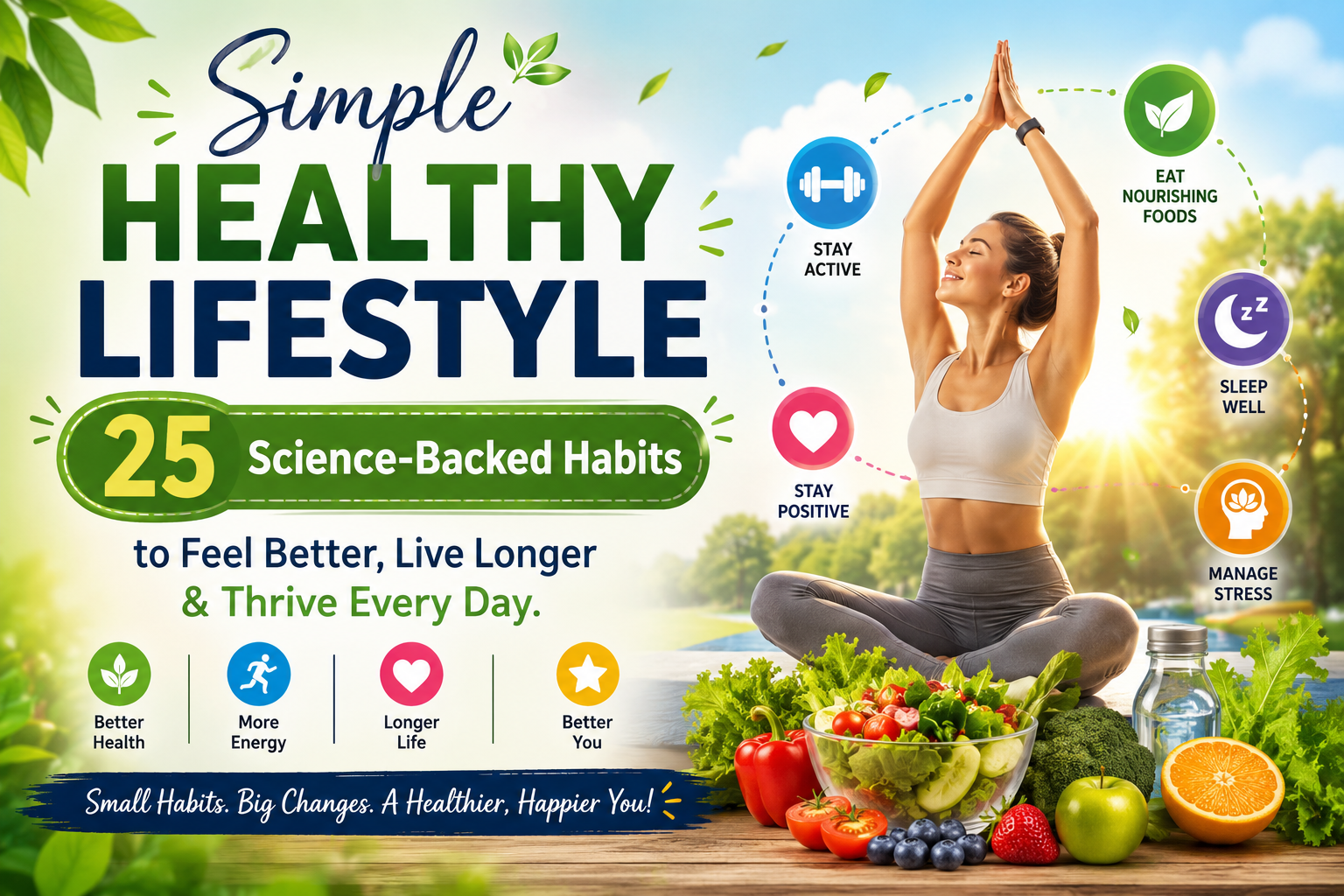
Simple Healthy Lifestyle: 25 Science-Backed Habits to Feel Better, Live Longer & Thrive Every Day
Living a healthier life doesn’t have to mean following strict diets, spending hours in the gym, or completely changing your daily routine overnight. In reality, the most effective improvements often come from small, consistent actions that are easy to maintain over time. A simple healthy lifestyle focuses on building sustainable habits that improve your physical health, mental well-being, and overall quality of life without adding unnecessary stress.
Modern lifestyles are filled with challenges such as busy work schedules, unhealthy eating habits, poor sleep, lack of physical activity, and constant digital distractions. These factors can gradually affect your energy levels, immune system, productivity, and long-term health. Fortunately, research consistently shows that adopting a few practical healthy lifestyle habits can significantly reduce the risk of chronic diseases, improve mood, increase longevity, and enhance everyday performance.
In this guide, you’ll discover 25 science-backed daily healthy habits that are simple enough for beginners yet effective enough to create lasting results. Whether your goal is to eat better, sleep more soundly, manage stress, stay active, or simply feel your best every day, these evidence-based strategies will help you build a healthier future one habit at a time.
What Is a Simple Healthy Lifestyle?
A simple healthy lifestyle is a practical approach to daily living that prioritizes long-term well-being through realistic and sustainable habits. Rather than relying on restrictive diets, intense workout routines, or quick-fix health trends, it focuses on making manageable improvements that can easily fit into everyday life.
These habits include eating a balanced diet, staying physically active, sleeping well, drinking enough water, managing stress, maintaining healthy relationships, and taking care of your mental health. Individually, these actions may seem small, but together they create a powerful foundation for preventing disease, improving energy, and supporting healthy aging.
The goal is consistency rather than perfection. Even modest changes practiced daily can lead to meaningful health improvements over months and years.
Why Healthy Daily Habits Matter
Your health is largely shaped by the choices you make every day. While genetics influence certain aspects of health, research shows that lifestyle factors such as nutrition, physical activity, sleep, stress management, and avoiding harmful behaviors have a major impact on longevity and overall well-being.
Healthy daily habits help regulate blood pressure, support heart health, improve brain function, strengthen immunity, maintain a healthy weight, and reduce the risk of conditions such as type 2 diabetes and cardiovascular disease. They also contribute to better mood, increased productivity, and improved emotional resilience.
Instead of aiming for dramatic transformations, focusing on small, repeatable behaviors makes it easier to maintain progress over the long term.
The Science Behind Small Lifestyle Changes
Behavioral science suggests that lasting habits are easier to build when they are simple, achievable, and repeated consistently. Small actions require less motivation than major lifestyle overhauls, making them more sustainable over time.
For example, replacing one sugary drink with water each day, taking a 20-minute walk after dinner, or adding an extra serving of vegetables to lunch may seem insignificant individually. However, these incremental improvements compound over months and years, producing measurable benefits for cardiovascular health, metabolism, weight management, and mental wellness.
This concept, often referred to as the “compound effect” of healthy habits, demonstrates that consistency is one of the strongest predictors of long-term success.
25 Science-Backed Habits for a Simple Healthy Lifestyle
1. Start Your Day with Water
After several hours of sleep, your body naturally becomes slightly dehydrated. Drinking one or two glasses of water shortly after waking helps replenish lost fluids, supports digestion, improves circulation, and prepares your body for the day ahead.
Proper hydration also plays an important role in regulating body temperature, transporting nutrients, lubricating joints, and maintaining healthy brain function. Many people mistake mild dehydration for hunger or fatigue, leading to unnecessary snacking or reduced productivity.
Quick Tips
- Drink a glass of water before coffee.
- Keep a reusable water bottle nearby.
- Add lemon or cucumber for natural flavor.
- Aim for consistent hydration throughout the day.
2. Eat a Balanced Breakfast
A nutritious breakfast provides essential nutrients and energy after an overnight fast. Choosing foods rich in protein, fiber, healthy fats, and whole grains helps stabilize blood sugar levels, improve concentration, and reduce hunger later in the day.
Instead of sugary cereals or pastries, consider meals that include eggs, oats, yogurt, fruit, nuts, or whole-grain toast. These options provide sustained energy while supporting muscle maintenance and digestive health.
A balanced diet begins with making thoughtful food choices early in the day, setting a positive tone for healthier eating habits.
3. Fill Half Your Plate with Vegetables
Vegetables are naturally rich in vitamins, minerals, antioxidants, fiber, and beneficial plant compounds that support overall health. Filling half your plate with colorful vegetables increases nutrient intake while naturally reducing consumption of highly processed foods.
Regular vegetable consumption has been associated with lower risks of heart disease, certain cancers, obesity, and digestive disorders. Variety is equally important because different colors provide different nutrients and protective compounds.
Easy choices include spinach, broccoli, carrots, tomatoes, bell peppers, cucumbers, cauliflower, and leafy greens.
4. Walk Every Day
Walking is one of the simplest and most effective forms of exercise. It requires no expensive equipment, suits nearly all fitness levels, and offers numerous physical and mental health benefits.
A brisk 30-minute walk most days of the week can improve cardiovascular fitness, strengthen muscles, enhance mood, support weight management, and reduce stress. Walking outdoors also provides exposure to natural light, which helps regulate your body’s internal clock and supports better sleep.
If you have a busy schedule, break your walking into shorter sessions throughout the day. Even brief walks after meals can contribute to better blood sugar control.
5. Prioritize Quality Sleep
Sleep is one of the most important pillars of a simple healthy lifestyle. During sleep, your body repairs tissues, strengthens the immune system, consolidates memories, regulates hormones, and restores energy.
Adults generally benefit from seven to nine hours of quality sleep each night. Poor sleep has been linked to obesity, diabetes, cardiovascular disease, depression, and reduced cognitive performance.
To improve sleep quality:
- Maintain a consistent bedtime.
- Reduce screen exposure before bed.
- Keep your bedroom cool and dark.
- Avoid caffeine late in the day.
- Establish a relaxing nighttime routine.
Consistently prioritizing sleep improves both physical and mental health over time.
6. Reduce Added Sugar
Many processed foods and beverages contain hidden sugars that contribute unnecessary calories without providing significant nutritional value. High sugar intake has been associated with weight gain, tooth decay, insulin resistance, and increased risk of chronic disease.
Instead of eliminating all sweet foods, focus on reducing sugary drinks, packaged snacks, desserts, and sweetened breakfast cereals. Choose naturally sweet foods such as fruit whenever possible.
Reading nutrition labels helps identify hidden sources of added sugars and supports healthier purchasing decisions.
7. Practice Mindful Eating
Mindful eating involves paying full attention to your food, eating slowly, and recognizing your body’s natural hunger and fullness signals. This habit encourages healthier food choices and reduces the likelihood of overeating.
Avoid eating while distracted by television, smartphones, or work whenever possible. Taking time to chew thoroughly and appreciate each meal can improve digestion and increase meal satisfaction.
Mindful eating also helps strengthen your relationship with food, making healthy choices feel more natural rather than restrictive.
8. Stay Physically Active Throughout the Day
Exercise sessions are valuable, but daily movement outside the gym is equally important. Sitting for extended periods has been linked to various health concerns, even among people who exercise regularly.
Simple ways to stay active include taking the stairs, stretching every hour, standing during phone calls, gardening, cycling, or walking while listening to podcasts. These small bursts of movement improve circulation, reduce stiffness, and contribute to better metabolic health.
Increasing overall daily activity complements structured exercise and supports long-term wellness.
9. Manage Stress in Healthy Ways
Stress is an unavoidable part of life, but chronic stress can negatively affect physical health, sleep, digestion, immune function, and emotional well-being. Learning healthy coping strategies is essential for maintaining a balanced lifestyle.
Effective stress-management techniques include deep breathing exercises, meditation, journaling, spending time in nature, practicing gratitude, listening to calming music, and engaging in hobbies you enjoy.
Developing healthy coping skills helps improve resilience and supports both mental and physical health.
10. Build Strong Social Connections
Meaningful relationships contribute significantly to emotional health and overall life satisfaction. Spending quality time with supportive family members, friends, and community groups can reduce stress, improve mental health, and even contribute to longer life expectancy.
Social connections encourage healthy behaviors, provide emotional support during difficult times, and create a sense of belonging. Whether through regular phone calls, shared meals, volunteering, or community activities, nurturing relationships is an important part of maintaining a simple healthy lifestyle.
11. Exercise Your Brain Every Day
Maintaining a simple healthy lifestyle is about caring for your mind as much as your body. Just as muscles become stronger through regular exercise, your brain benefits from consistent mental stimulation. Challenging your mind helps improve memory, concentration, problem-solving skills, and cognitive flexibility while supporting healthy aging.
Activities such as reading books, solving puzzles, learning a new language, playing a musical instrument, or taking online courses encourage the brain to form new neural connections. Even spending a few minutes each day learning something new can keep your mind engaged. Combining mental exercise with physical activity, quality sleep, and a balanced diet provides a comprehensive approach to lifelong brain health.
12. Eat More Whole Foods
Whole foods are foods that remain close to their natural state with little or no processing. They are typically rich in vitamins, minerals, fiber, healthy fats, and antioxidants that support overall wellness. Replacing highly processed foods with whole foods is one of the easiest ways to improve nutrition without following a restrictive diet.
Aim to include fresh fruits, vegetables, whole grains, legumes, nuts, seeds, lean proteins, and healthy fats in your meals. These foods provide sustained energy, improve digestion, help regulate blood sugar, and lower the risk of many chronic diseases. Making whole foods the foundation of your meals is one of the most valuable healthy lifestyle habits you can develop.
13. Practice Portion Control
Healthy eating is not only about choosing nutritious foods but also about eating appropriate portions. Consuming large portions—even of healthy foods—can contribute to excess calorie intake over time. Learning portion awareness helps maintain a healthy weight without feeling deprived.
Simple strategies include using smaller plates, eating slowly, serving meals instead of eating directly from packages, and paying attention to hunger cues. Avoid the habit of finishing every meal simply because food remains on the plate. Portion control encourages mindful eating while making your daily healthy habits more sustainable.
14. Include Protein in Every Meal
Protein plays a vital role in building and repairing muscles, supporting the immune system, producing hormones, and helping you stay full between meals. Including a quality protein source in every meal can reduce cravings and improve energy throughout the day.
Excellent protein sources include eggs, fish, poultry, beans, lentils, tofu, Greek yogurt, cottage cheese, nuts, and seeds. Pairing protein with fiber-rich foods creates balanced meals that support long-term health and stable blood sugar levels.
15. Limit Ultra-Processed Foods
Ultra-processed foods often contain excessive amounts of refined carbohydrates, unhealthy fats, added sugars, sodium, preservatives, and artificial ingredients. While occasional consumption is unlikely to cause harm, relying heavily on these foods may increase the risk of obesity, heart disease, and metabolic disorders.
Instead, prepare more meals at home using fresh ingredients whenever possible. Cooking at home allows better control over portion sizes, sodium levels, and ingredient quality. Small changes, such as replacing packaged snacks with fruit or nuts, can make a meaningful difference over time.
16. Spend Time Outdoors
Nature provides benefits that extend beyond fresh air. Spending time outdoors can improve mood, reduce stress, support vitamin D production from sunlight, and encourage physical activity. Even a short walk in a park or garden can have positive effects on mental well-being.
Research suggests that regular exposure to green spaces may lower stress hormones, improve concentration, and promote relaxation. Whether you enjoy hiking, gardening, cycling, or simply sitting outside, spending time in nature complements a simple healthy lifestyle.
17. Maintain Good Posture
Good posture reduces unnecessary strain on muscles, joints, and the spine while improving breathing and circulation. Many people spend long hours sitting at desks, increasing the risk of neck pain, back pain, and poor posture.
To improve posture, keep your shoulders relaxed, feet flat on the floor, and computer screen at eye level. Stand up regularly, stretch throughout the day, and strengthen your core muscles through simple exercises. Small adjustments can prevent discomfort and support long-term musculoskeletal health.
18. Take Regular Screen Breaks
Digital devices have become essential in modern life, but prolonged screen time may contribute to eye strain, headaches, poor posture, and disrupted sleep. Taking short breaks throughout the day helps reduce these effects and improves productivity.
A practical strategy is the 20-20-20 rule: every 20 minutes, look at something about 20 feet away for at least 20 seconds. Standing, stretching, or walking briefly between work sessions also supports circulation and reduces fatigue.
19. Stay Consistent Instead of Perfect
Many people abandon healthy routines because they believe one unhealthy meal or missed workout means failure. In reality, long-term success comes from consistency rather than perfection. Sustainable habits produce better results than short periods of extreme discipline.
If you miss a workout or enjoy a treat, simply return to your routine at the next opportunity. Building flexibility into your health journey reduces stress and makes healthy lifestyle habits easier to maintain for years rather than weeks.
20. Learn Healthy Cooking Skills
Cooking at home gives you greater control over ingredients, portion sizes, and preparation methods. It also reduces reliance on highly processed restaurant or takeaway meals that are often high in sodium, sugar, and unhealthy fats.
Simple cooking techniques such as grilling, steaming, baking, roasting, and stir-frying preserve nutrients while minimizing unnecessary calories. Learning a few nutritious recipes can make healthy eating enjoyable, affordable, and sustainable.
21. Avoid Smoking and Limit Alcohol
One of the most impactful lifestyle choices you can make is avoiding tobacco products and limiting alcohol consumption. Smoking significantly increases the risk of heart disease, stroke, lung disease, and several cancers. Excessive alcohol intake can affect the liver, brain, heart, and mental health.
If you smoke, seeking professional support can greatly improve your chances of quitting successfully. When consuming alcohol, moderation is essential. Reducing these risk factors contributes substantially to a healthier and longer life.
22. Practice Daily Gratitude
Gratitude is a simple habit that supports emotional well-being by shifting attention toward positive experiences. Studies have found that regularly expressing gratitude may improve happiness, reduce stress, strengthen relationships, and even enhance sleep quality.
Keeping a gratitude journal or reflecting on three positive moments each day encourages a more optimistic outlook. Although simple, this habit contributes to better mental health and complements physical wellness practices.
23. Schedule Preventive Health Checkups
Preventive healthcare allows potential health issues to be detected early, often before symptoms appear. Regular screenings, vaccinations, dental visits, eye examinations, and routine physical checkups help maintain long-term health.
Discuss age-appropriate screenings with your healthcare provider based on your personal and family medical history. Prevention remains one of the most effective strategies for reducing the burden of chronic disease.
24. Set Realistic Health Goals
Large goals can feel overwhelming, while smaller goals are easier to achieve and maintain. Instead of aiming to completely transform your lifestyle overnight, focus on one manageable habit at a time.
Examples include drinking one extra glass of water daily, walking for 20 minutes after dinner, or eating vegetables with every lunch. Achieving these smaller milestones builds confidence and creates momentum for additional healthy changes.
25. Never Stop Learning About Health
Health recommendations continue to evolve as new scientific research becomes available. Staying informed through reliable, evidence-based sources helps you make better decisions and avoid misinformation.
Choose trusted organizations, healthcare professionals, and peer-reviewed research rather than relying on viral social media trends. Lifelong learning empowers you to adapt your simple healthy lifestyle as your needs and circumstances change.
Healthy Habits Comparison Table
| Habit | Main Benefit | Easy Daily Action |
| Drink More Water | Better hydration | Start each morning with a glass of water |
| Eat Whole Foods | Improved nutrition | Replace processed snacks with fruit |
| Daily Walking | Better heart health | Walk 30 minutes daily |
| Quality Sleep | Increased energy | Maintain a consistent bedtime |
| Mindful Eating | Better digestion | Eat without distractions |
| Stress Management | Better mental health | Practice deep breathing for 10 minutes |
| Social Connections | Emotional well-being | Call a friend or family member |
| Outdoor Time | Mood improvement | Spend 20–30 minutes outside |
| Gratitude Practice | Positive mindset | Write three things you’re grateful for |
| Preventive Checkups | Early disease detection | Schedule annual health screenings |
Simple Healthy Lifestyle Checklist
Use this checklist to evaluate your progress toward a healthier lifestyle:
- ✅ Drink enough water every day.
- ✅ Eat a balanced breakfast.
- ✅ Include vegetables in every meal.
- ✅ Walk or exercise regularly.
- ✅ Sleep 7–9 hours each night.
- ✅ Limit added sugar.
- ✅ Choose whole foods more often.
- ✅ Practice mindful eating.
- ✅ Take breaks from sitting.
- ✅ Manage stress with healthy coping strategies.
- ✅ Spend time outdoors.
- ✅ Maintain strong social relationships.
- ✅ Avoid smoking.
- ✅ Limit alcohol intake.
- ✅ Attend routine medical checkups.
- ✅ Practice gratitude.
- ✅ Continue learning about healthy living.
Remember that you do not need to complete every item perfectly every day. Progress is built through consistency and gradual improvement.
Common Mistakes to Avoid When Building Healthy Habits
Many people unintentionally make healthy living more difficult by expecting instant results or attempting too many changes at once. Trying to overhaul every aspect of your lifestyle can quickly become overwhelming and lead to burnout.
Common mistakes include skipping meals, following extreme diets, relying on supplements instead of nutritious foods, neglecting sleep, sitting for prolonged periods, and giving up after occasional setbacks. Another frequent error is comparing your progress to others rather than focusing on your own journey.
The most successful approach is to introduce one or two habits at a time, monitor your progress, celebrate small achievements, and continue improving gradually. Long-lasting health is the result of consistent choices—not perfection.
Frequently Asked Questions (FAQs)
1. What is the easiest way to start a simple healthy lifestyle?
Start with one manageable habit instead of changing everything at once. Drinking more water, walking for 20–30 minutes, eating more vegetables, or maintaining a regular bedtime are excellent first steps. Once one habit becomes routine, gradually add another. This approach is easier to sustain and helps create lasting improvements without feeling overwhelmed.
2. How much exercise do adults need each week?
Most health organizations recommend at least 150 minutes of moderate-intensity aerobic activity each week, along with muscle-strengthening exercises on two or more days. Activities such as brisk walking, cycling, swimming, or dancing all contribute toward this goal. Consistency is more important than intensity for long-term health.
3. Is drinking more water really important?
Yes. Water supports digestion, circulation, temperature regulation, joint lubrication, and nutrient transport. Proper hydration can also improve concentration, energy levels, and physical performance. Individual needs vary based on age, activity level, and climate, but making water your primary beverage is a healthy choice for most people.
4. How does stress affect overall health?
Chronic stress may increase blood pressure, weaken the immune system, disrupt sleep, and affect mental well-being. Over time, unmanaged stress can contribute to heart disease and other health concerns. Practicing relaxation techniques, staying physically active, and maintaining supportive relationships are effective ways to manage stress.
5. Can healthy eating help prevent chronic diseases?
A nutritious diet rich in vegetables, fruits, whole grains, lean proteins, and healthy fats has been linked to a lower risk of heart disease, type 2 diabetes, and certain cancers. While no diet guarantees disease prevention, healthy eating is one of the most important factors in supporting long-term wellness.
Key Takeaways
- A simple healthy lifestyle is built on sustainable daily habits.
- Small, consistent changes often produce significant long-term health benefits.
- A balanced diet supports energy, immunity, and disease prevention.
- Regular physical activity improves cardiovascular and mental health.
- Quality sleep is essential for recovery and overall wellness.
- Stress management is just as important as nutrition and exercise.
- Strong social relationships contribute to emotional well-being.
- Preventive healthcare helps identify health concerns early.
- Progress is more important than perfection.
- Healthy living is a lifelong commitment that evolves with your needs.
Conclusion
Living a healthier life does not require perfection, expensive programs, or dramatic lifestyle changes. Instead, it begins with simple, consistent habits that become part of your daily routine. Drinking enough water, eating nutritious foods, staying physically active, getting quality sleep, managing stress, and nurturing meaningful relationships all contribute to better health and a higher quality of life.
The 25 science-backed habits discussed in this guide demonstrate that sustainable progress comes from small actions repeated consistently over time. While results may not happen overnight, every positive choice you make today lays the foundation for a healthier future.
Remember that your journey is unique. Start with one or two achievable habits, build momentum gradually, and celebrate every milestone along the way. Over time, these daily choices can improve your energy, strengthen your body, support your mental well-being, and help you thrive.
At PureWellLife, our mission is to provide trustworthy, evidence-based health information that empowers you to make informed decisions. Explore more wellness guides on purewelllife.com and continue building a healthier, happier life—one habit at a time.