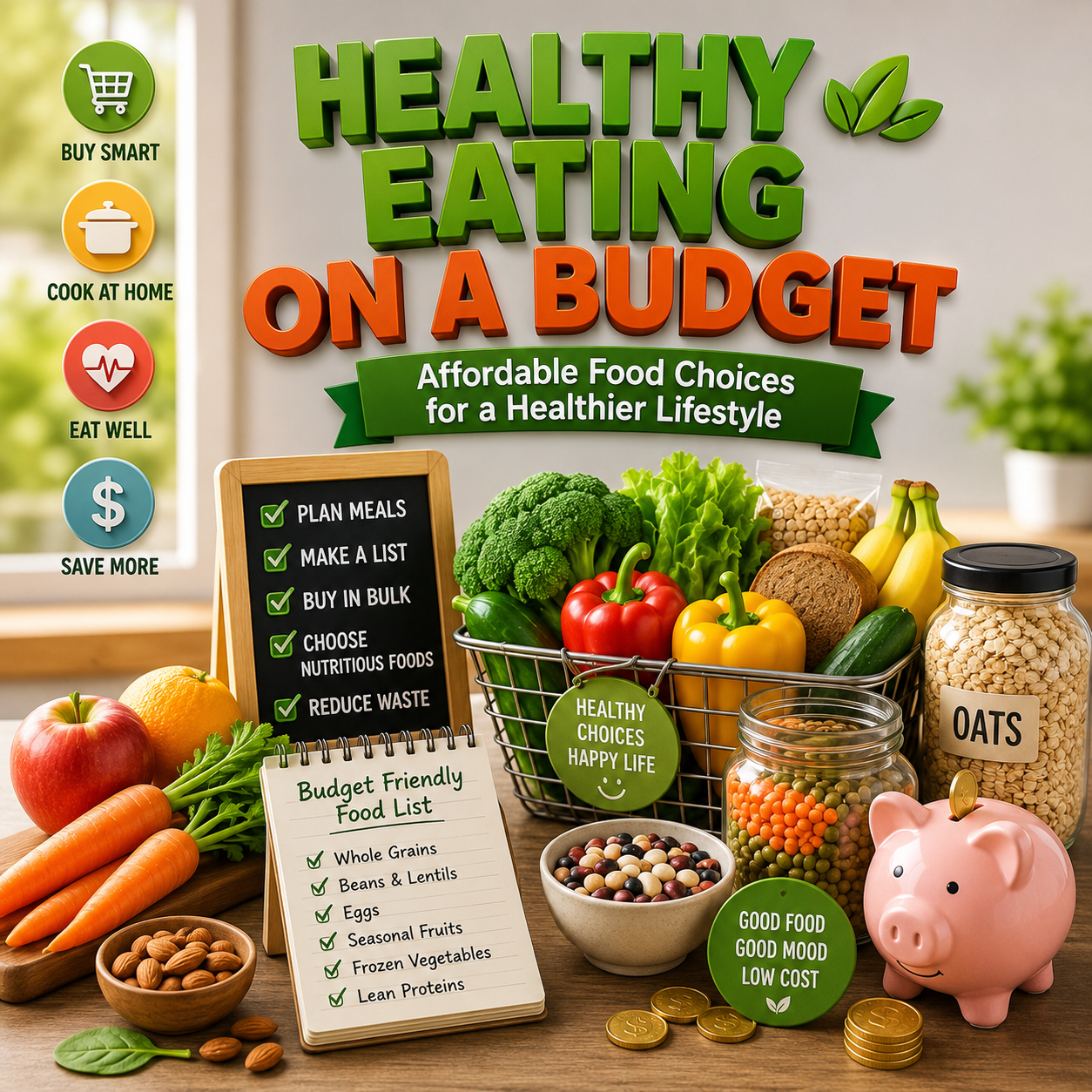
Eating healthy does not have to mean spending more money. Many people assume that nutritious foods are expensive, but the truth is that Healthy eating on a budget is possible with the right planning and food choices. By focusing on affordable, nutrient-rich ingredients and reducing unnecessary spending on processed foods, you can enjoy balanced meals while staying within your budget.
Rising grocery prices often make it difficult for families, students, and individuals to maintain healthy eating habits. However, smart grocery shopping, meal planning, buying seasonal produce, and choosing versatile pantry staples can significantly lower food costs without sacrificing nutrition. Small changes, such as cooking more meals at home and reducing food waste, can lead to substantial savings over time.
This comprehensive guide explains how to eat healthier while spending less. You’ll learn which affordable foods provide the best nutritional value, practical shopping strategies, meal-planning techniques, and simple habits that make healthy eating sustainable. Whether your goal is saving money, improving your health, or both, these tips will help you build a nutritious lifestyle that fits your budget.
What Does Healthy Eating on a Budget Mean?
Healthy eating on a budget means choosing foods that provide the highest nutritional value while keeping grocery expenses under control. Instead of purchasing expensive “health foods” or trendy diet products, this approach focuses on everyday ingredients such as whole grains, beans, eggs, fruits, vegetables, dairy, and lean proteins that deliver essential nutrients at a lower cost.
A budget-friendly diet does not require sacrificing quality or variety. Rather, it emphasizes careful planning, thoughtful shopping, and preparing meals at home. When you prioritize nutrient-dense foods over highly processed convenience items, you often spend less while improving your overall health.
The goal is to maximize nutrition per dollar spent. Every meal should include a balance of carbohydrates, protein, healthy fats, vitamins, and minerals without exceeding your grocery budget.
Why Affordable Healthy Eating Matters
Healthy eating has a direct impact on physical health, mental well-being, and long-term financial stability. A nutritious diet supports energy levels, strengthens the immune system, improves digestion, and reduces the risk of chronic diseases such as obesity, type 2 diabetes, and heart disease. Contrary to common belief, achieving these benefits does not require expensive ingredients or specialty products.
Budget-friendly healthy eating also reduces financial stress. Planning meals, shopping wisely, and minimizing food waste allow households to stretch their grocery budget further. Over time, these habits can free up money for other essential expenses while ensuring consistent access to nourishing meals.
Additionally, learning to cook affordable meals at home encourages healthier eating habits compared to relying on fast food or processed convenience meals, which often cost more per serving and contain excess sodium, sugar, and unhealthy fats.
Benefits of Healthy Eating on a Budget
Adopting affordable healthy eating habits provides benefits that extend beyond grocery savings.
Better Overall Nutrition
Choosing whole foods instead of processed snacks increases your intake of fiber, vitamins, minerals, antioxidants, and high-quality protein. These nutrients support overall health and help prevent nutrient deficiencies while keeping meals satisfying.
Lower Grocery Bills
Meal planning, buying in bulk, and selecting seasonal produce help reduce weekly grocery expenses. Small savings on each shopping trip can add up significantly over months and years.
Reduced Food Waste
Planning meals around ingredients you already have prevents unnecessary purchases and minimizes spoiled food. Using leftovers creatively also stretches your food budget further while reducing household waste.
Improved Long-Term Health
Eating nutrient-rich foods consistently can lower healthcare costs over time by reducing the risk of chronic diseases associated with poor dietary habits.
Greater Cooking Confidence
Preparing affordable meals at home develops cooking skills that make it easier to create delicious, healthy dishes using simple ingredients. This confidence reduces dependence on costly restaurant meals and takeout.
Principles of Budget-Friendly Healthy Eating
Building a sustainable healthy diet starts with a few practical principles that simplify shopping and meal preparation.
Plan Meals Before Shopping
Creating a weekly meal plan helps you purchase only the ingredients you need. This reduces impulse buying, prevents duplicate purchases, and ensures every ingredient has a purpose. A shopping list based on planned meals keeps spending focused and efficient.
Prioritize Whole Foods
Whole foods such as oats, rice, beans, lentils, vegetables, fruits, eggs, yogurt, and chicken are generally more nutritious and affordable than heavily processed foods. They also provide better value because they can be used in multiple recipes throughout the week.
Buy Store Brands
Many supermarket store-brand products offer the same nutritional quality as name brands at a lower price. Comparing ingredient lists rather than brand names can help you save money without compromising on quality.
Cook More Meals at Home
Preparing meals at home allows you to control ingredients, portion sizes, and costs. Home-cooked meals are often healthier and significantly less expensive than restaurant or takeaway options.
Affordable Foods That Offer Excellent Nutrition
Choosing foods with a high nutritional value per dollar is one of the easiest ways to maintain a healthy diet while staying within budget.
| Food | Key Nutrients | Budget Benefit |
| Oats | Fiber, Iron | Inexpensive breakfast option |
| Brown Rice | Complex carbohydrates | Long shelf life |
| Lentils | Protein, Fiber | Affordable meat alternative |
| Beans | Protein, Iron | Highly versatile |
| Eggs | Protein, Vitamin D | Low-cost complete protein |
| Frozen Vegetables | Vitamins, Minerals | Less waste than fresh |
| Bananas | Potassium | Affordable fruit year-round |
| Sweet Potatoes | Vitamin A, Fiber | Filling and nutritious |
| Peanut Butter | Healthy fats, Protein | Budget-friendly snack |
| Plain Yogurt | Calcium, Protein | Versatile for meals and snacks |
These foods form the foundation of many inexpensive, balanced meals. Combining them creatively allows you to prepare breakfasts, lunches, dinners, and snacks without exceeding your grocery budget.
Whole Grains: Affordable Sources of Lasting Energy
Whole grains provide complex carbohydrates that digest slowly, helping maintain stable energy levels throughout the day. They are typically inexpensive, easy to store, and highly versatile in meal preparation. Options such as oats, brown rice, whole wheat pasta, and barley can be purchased in bulk for additional savings.
Including whole grains in your meals also increases fiber intake, which supports digestion and promotes fullness. This can reduce unnecessary snacking and make your food budget stretch even further. Pair whole grains with vegetables and protein sources to create balanced meals that are both satisfying and nutritious.
Beans and Lentils: Budget-Friendly Plant Proteins
Beans and lentils are among the most economical sources of protein available. They contain protein, fiber, iron, folate, and other essential nutrients while costing only a fraction of most animal proteins. Dried varieties offer the greatest savings, although canned options remain affordable and convenient.
These ingredients are extremely versatile and can be used in soups, stews, salads, curries, tacos, grain bowls, and pasta dishes. Because they are filling and nutrient-dense, beans and lentils help reduce overall food costs while supporting a healthy diet.
Eggs: One of the Most Cost-Effective Superfoods
Eggs are an excellent source of complete protein, healthy fats, vitamins, and minerals. They are relatively inexpensive and can be prepared in countless ways, making them a staple in budget-conscious kitchens.
From scrambled eggs and omelets to boiled eggs, sandwiches, and vegetable frittatas, eggs provide quick, nutritious meals suitable for breakfast, lunch, or dinner. Their versatility makes them one of the best investments for healthy eating on a budget.
Smart Grocery Shopping Tips That Save Money
Buying healthy food starts long before you enter the grocery store. A well-planned shopping strategy helps you avoid impulse purchases, reduce waste, and maximize the value of every dollar you spend. The goal is not simply to buy cheaper foods but to purchase nutritious ingredients that can be used in multiple meals throughout the week. With a little preparation, healthy grocery shopping becomes easier, more efficient, and far less expensive.
Creating a grocery list based on a weekly meal plan, comparing unit prices, and shopping when you’re not hungry are simple habits that can significantly reduce your food bill. Taking advantage of sales, coupons, loyalty programs, and store-brand products also contributes to long-term savings without compromising nutrition.
Make a Weekly Shopping List
A detailed shopping list keeps you focused on essential purchases and reduces the temptation to buy unnecessary items. Before shopping, check your refrigerator, freezer, and pantry to see what ingredients you already have. Planning meals around those foods helps prevent duplicates and reduces food waste.
Organize your list by grocery store sections such as produce, dairy, grains, proteins, and pantry staples. This not only saves time while shopping but also makes it easier to stick to your budget.
Compare Unit Prices Instead of Package Prices
Many shoppers compare only the total price of products, but checking the unit price (price per kilogram, liter, or ounce) provides a more accurate comparison. Larger packages often offer better value, especially for foods with a long shelf life such as rice, oats, flour, dried beans, and frozen vegetables.
Buying in bulk should only be done for foods that you know you will use before they expire. Otherwise, wasted food cancels out any savings.
Shop Seasonal Produce
Seasonal fruits and vegetables are generally fresher, tastier, and less expensive because they are abundant during harvest. Shopping according to the season also introduces more variety into your meals while lowering grocery costs.
If your favorite produce is out of season, consider frozen alternatives. Frozen fruits and vegetables are typically harvested at peak ripeness, retain most of their nutrients, and often cost less than fresh options.
Build a Budget-Friendly Healthy Pantry
A well-stocked pantry makes it easier to prepare nutritious meals without making frequent grocery trips. Keeping versatile ingredients on hand allows you to create countless meal combinations while reducing reliance on expensive convenience foods.
Your pantry should include foods with long shelf lives, high nutritional value, and flexibility in recipes. These staples form the foundation of affordable breakfasts, lunches, dinners, and snacks.
Essential Pantry Staples
| Category | Affordable Options |
| Whole Grains | Oats, brown rice, quinoa, whole wheat pasta |
| Legumes | Lentils, black beans, chickpeas, kidney beans |
| Healthy Fats | Peanut butter, olive oil, sunflower seeds |
| Canned Goods | Tomatoes, tuna, beans |
| Herbs & Spices | Garlic powder, paprika, cumin, oregano |
| Baking Essentials | Whole wheat flour, baking powder, oats |
| Snacks | Popcorn kernels, nuts, raisins |
These ingredients combine easily with fresh produce, dairy, and lean proteins to create balanced meals throughout the week.
Fresh vs Frozen vs Canned Foods
Many people believe fresh food is always the healthiest option. While fresh produce is excellent, frozen and canned foods can be equally nutritious when chosen carefully. Understanding the differences helps you make cost-effective decisions without sacrificing nutrition.
| Type | Advantages | Considerations |
| Fresh | Great flavor and texture | Short shelf life |
| Frozen | Long-lasting and nutritious | Choose plain varieties without sauces |
| Canned | Convenient and affordable | Select low-sodium or no-added-sugar options |
Frozen vegetables are particularly valuable for budget-conscious households because they reduce spoilage. Canned beans and tomatoes also provide convenience while supporting healthy meal preparation.
Affordable Protein Sources
Protein is an essential nutrient that supports muscle maintenance, immune function, and overall health. Fortunately, you do not need expensive cuts of meat or specialty products to meet your protein needs.
Best Budget-Friendly Proteins
- Eggs
- Dried beans
- Lentils
- Chickpeas
- Peanut butter
- Greek yogurt
- Cottage cheese
- Canned tuna
- Canned salmon
- Chicken thighs
- Tofu
- Milk
Mixing plant-based and animal-based proteins can lower grocery costs while providing a variety of nutrients. Preparing larger batches of protein-rich meals also saves time during busy weekdays.
Affordable Fruits and Vegetables
Fruits and vegetables provide vitamins, minerals, antioxidants, and fiber that are essential for overall health. Choosing affordable varieties ensures you receive these nutrients without exceeding your grocery budget.
Budget-Friendly Fruits
- Bananas
- Apples
- Oranges
- Watermelon (seasonal)
- Pears
- Frozen berries
Budget-Friendly Vegetables
- Carrots
- Cabbage
- Potatoes
- Sweet potatoes
- Onions
- Spinach
- Broccoli
- Frozen mixed vegetables
- Green beans
Buying produce in season and storing it properly extends freshness and reduces waste, allowing you to enjoy nutritious foods at a lower cost.
Meal Planning for Healthy Eating on a Budget
Meal planning is one of the most effective ways to save money while maintaining a nutritious diet. Planning meals ahead of time reduces last-minute takeout purchases, minimizes food waste, and ensures balanced nutrition throughout the week.
Begin by selecting meals that use similar ingredients. For example, a bag of spinach can be used in omelets, salads, soups, and pasta dishes. Cooking larger portions and repurposing leftovers into new meals also maximizes your grocery budget.
Simple Meal Planning Steps
- Check your pantry and refrigerator.
- Plan meals for the week.
- Write a grocery list.
- Buy only what you need.
- Prep ingredients in advance.
- Cook larger batches.
- Freeze extra portions.
- Use leftovers creatively.
Meal planning not only saves money but also reduces daily decision-making and encourages healthier food choices.
Budget-Friendly Meal Ideas
Healthy meals can be both delicious and affordable. The key is using versatile ingredients that provide balanced nutrition.
| Meal | Main Ingredients |
| Oatmeal with banana | Oats, banana, milk |
| Vegetable omelet | Eggs, spinach, onions |
| Lentil soup | Lentils, carrots, tomatoes |
| Chicken rice bowl | Brown rice, chicken, vegetables |
| Bean chili | Beans, tomatoes, onions |
| Tuna salad | Tuna, vegetables, yogurt dressing |
| Stir-fried vegetables | Frozen vegetables, rice |
| Yogurt parfait | Yogurt, oats, fruit |
| Chickpea curry | Chickpeas, tomatoes, spices |
| Vegetable pasta | Whole wheat pasta, vegetables |
These meals provide protein, fiber, healthy carbohydrates, and essential vitamins while remaining affordable.
Common Mistakes That Increase Grocery Costs
Many households unknowingly spend more on food because of poor shopping and meal-planning habits. Avoiding these common mistakes can make healthy eating much more affordable.
Shopping Without a Plan
Entering the grocery store without a list often leads to impulse purchases and forgotten essentials. Planning ahead reduces unnecessary spending and helps you stick to your budget.
Buying Too Many Convenience Foods
Pre-cut fruits, packaged snacks, frozen dinners, and ready-made meals often cost significantly more than preparing similar foods at home. While convenient, these items can quickly increase grocery bills.
Throwing Away Food
Food waste is one of the biggest reasons households overspend. Proper storage, meal planning, and creative use of leftovers help ensure that purchased food is actually eaten rather than discarded.
Ignoring Sales and Discounts
Weekly promotions, store loyalty programs, and seasonal discounts offer excellent opportunities to reduce grocery costs. However, only purchase discounted items if they fit into your meal plan.
Expert Tips for Long-Term Success
Building healthy eating habits takes consistency rather than perfection. Small changes made over time often lead to lasting improvements in both nutrition and finances.
Some practical strategies include:
- Cook at home more often.
- Keep healthy snacks available.
- Drink water instead of sugary beverages.
- Learn a few versatile recipes.
- Batch cook on weekends.
- Freeze leftovers for busy days.
- Track grocery spending monthly.
- Experiment with affordable ingredients.
- Reduce restaurant meals.
- Focus on progress instead of perfection.
Developing these habits helps make healthy eating sustainable and enjoyable regardless of your budget.
Frequently Asked Questions (FAQs)
1. Can healthy eating actually save money?
Yes. Planning meals, buying affordable whole foods, cooking at home, and reducing food waste often cost less than relying on processed foods or restaurant meals. Over time, these habits can lower grocery expenses while improving your overall nutrition and reducing future healthcare costs associated with poor dietary choices.
2. What is the cheapest healthy breakfast?
Oatmeal with bananas, homemade smoothies, boiled eggs with whole-grain toast, yogurt with fruit, and peanut butter toast are among the most affordable healthy breakfasts. These meals provide fiber, protein, and essential nutrients while keeping you full for longer and costing only a small amount per serving.
3. Are frozen fruits and vegetables as nutritious as fresh ones?
Yes. Frozen produce is typically picked at peak ripeness and frozen quickly, preserving most vitamins and minerals. They are convenient, affordable, and reduce spoilage, making them an excellent option for budget-conscious households seeking nutritious meals throughout the year.
4. How much should I budget for healthy groceries?
The amount varies depending on family size, dietary needs, and local food prices. However, creating a weekly meal plan, sticking to a shopping list, buying seasonal produce, and limiting processed foods can help you stay within a realistic grocery budget while maintaining a balanced diet.
5. Is it healthier to cook at home?
Generally, yes. Home-cooked meals allow you to control ingredients, portion sizes, sodium, sugar, and fat content. Cooking at home also encourages the use of fresh, whole ingredients and is usually much less expensive than eating out regularly.
6. What are the best snacks for healthy eating on a budget?
Affordable healthy snacks include fresh fruit, popcorn, yogurt, boiled eggs, carrots with hummus, peanut butter on whole-grain toast, roasted chickpeas, and homemade trail mix. These options provide sustained energy without the high cost of many packaged snack foods.
7. Should I buy organic foods if I am on a budget?
Organic foods can be beneficial, but they are not essential for maintaining a healthy diet. If your budget is limited, prioritize eating a variety of fruits, vegetables, whole grains, and lean proteins regardless of whether they are organic. Washing produce thoroughly is also a good practice.
8. What drinks are best for saving money and staying healthy?
Water is the healthiest and most affordable beverage. Unsweetened tea, black coffee in moderation, and homemade smoothies are also good choices. Replacing sugary drinks with water can significantly reduce both grocery costs and added sugar intake.
9. How can students eat healthy on a budget?
Students can save money by meal prepping, purchasing staple foods in bulk, sharing grocery costs with roommates, choosing frozen vegetables, cooking simple recipes, and limiting takeout meals. Affordable ingredients such as rice, beans, eggs, oats, and seasonal produce make nutritious meals easy to prepare.
10. What is the biggest mistake people make when trying to eat healthy cheaply?
One of the biggest mistakes is shopping without a plan. This often leads to impulse purchases, food waste, and overspending. Another common error is assuming all healthy foods are expensive, which may discourage people from choosing affordable nutrient-dense options like beans, oats, eggs, and frozen vegetables.
Key Takeaways
- Healthy eating on a budget is achievable with proper planning and smart shopping.
- Whole foods often provide more nutrition for less money than processed foods.
- Meal planning helps reduce food waste and unnecessary spending.
- Seasonal and frozen produce offer excellent nutritional value.
- Affordable proteins such as beans, lentils, and eggs are highly nutritious.
- Cooking at home improves both health and savings.
- Buying in bulk is cost-effective for non-perishable staples.
- Store-brand products often provide the same quality at a lower price.
- Keeping a healthy pantry makes meal preparation easier.
- Small, consistent habits create lasting improvements in nutrition and finances.
Conclusion
Healthy eating on a budget is not about sacrificing quality or flavor—it is about making informed decisions that maximize both nutrition and value. By choosing affordable whole foods, planning meals in advance, shopping strategically, and preparing meals at home, you can enjoy a balanced diet while keeping grocery expenses under control.
Simple habits such as buying seasonal produce, stocking a healthy pantry, reducing food waste, and incorporating budget-friendly proteins can make a significant difference over time. These practical strategies benefit individuals, families, students, and busy professionals alike, proving that nutritious eating is accessible regardless of income.
Remember that healthy living is built on consistent choices rather than expensive products. Every small improvement contributes to better health, increased energy, and long-term financial savings.
Read Our Latest Blog:Healthy Sleep Habits: 21 Science-Backed Secrets to Sleep Better Every Night