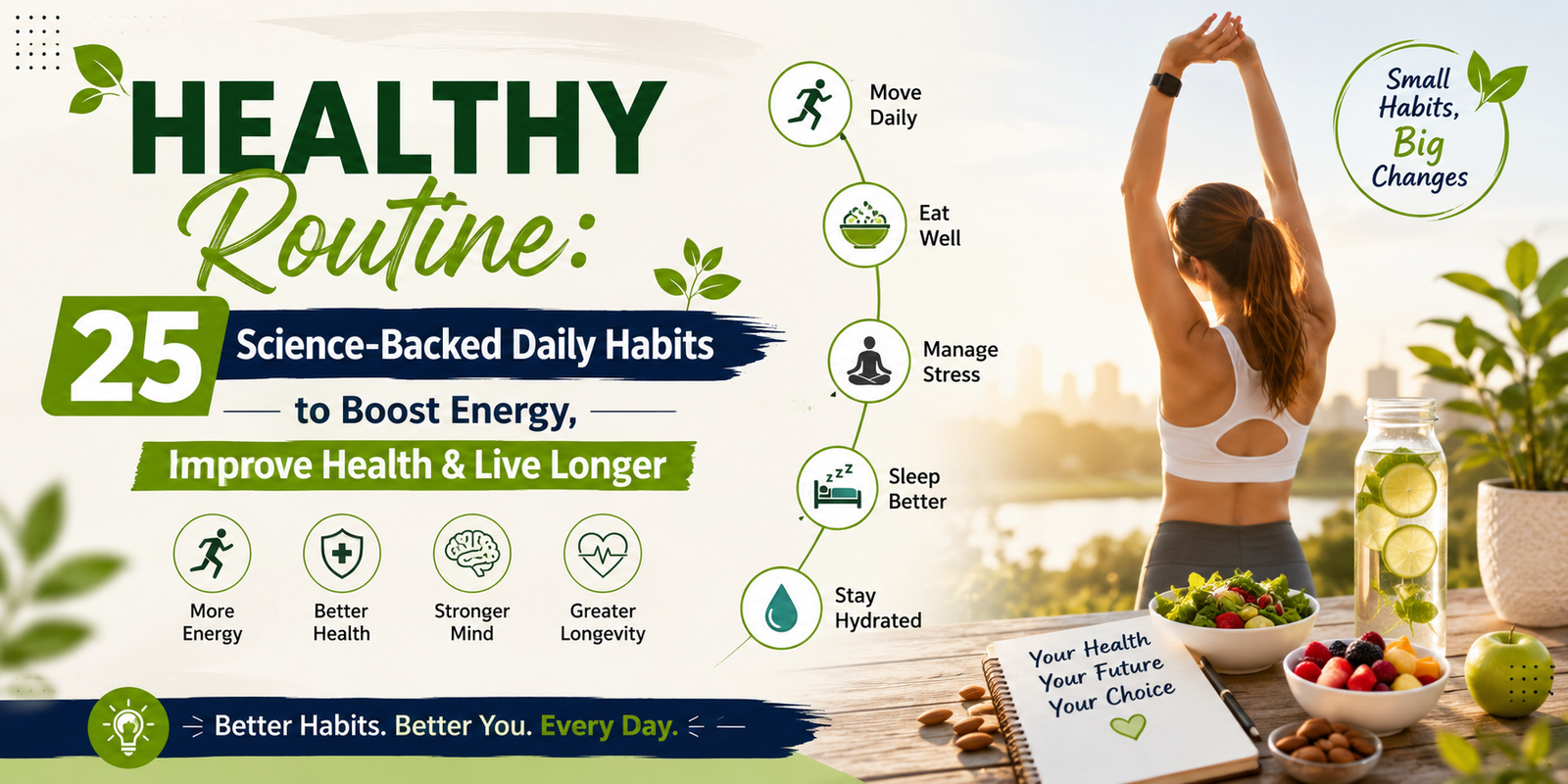
Healthy Routine: 25 Science-Backed Daily Habits to Boost Energy, Improve Health & Live Longer
A healthy routine is more than just eating nutritious foods or exercising occasionally. It is the collection of small, intentional habits you practice every day that shape your physical health, mental well-being, energy levels, and long-term quality of life. While many people believe living a healthy lifestyle requires major sacrifices, research consistently shows that sustainable daily habits often produce the greatest results over time.
Whether your goal is to increase energy, strengthen your immune system, improve sleep quality, manage stress, maintain a healthy weight, or simply feel your best every day, creating a consistent healthy routine can help you achieve lasting success. Even minor changes—such as drinking more water, walking daily, or sleeping on a regular schedule—can have significant health benefits when practiced consistently.
In this guide, you’ll discover 25 science-backed daily habits that are simple, practical, and suitable for people of all ages. These habits are supported by research and can help you build a healthier lifestyle routine without feeling overwhelmed. By the end of this article, you’ll have a clear roadmap for creating a sustainable healthy daily routine that supports both your body and mind for years to come.
What Is a Healthy Routine?
A healthy routine is a set of positive daily behaviors that promote physical, mental, and emotional well-being. Rather than relying on temporary diets or short-term fitness challenges, a healthy routine focuses on consistency and balance. It includes healthy eating, regular movement, sufficient sleep, stress management, hydration, and preventive healthcare.
The purpose of a healthy daily routine is not perfection but progress. Healthy habits become easier over time because repeated actions create lasting behavioral patterns. Instead of making drastic lifestyle changes, adopting one or two sustainable habits at a time often leads to greater long-term success.
Research in behavioral psychology shows that consistent routines reduce decision fatigue, improve productivity, and make healthy choices feel automatic. This is why people who follow structured daily habits often experience improved health outcomes and greater overall well-being.
Why Daily Healthy Habits Matter
Daily habits influence nearly every aspect of your health. From the foods you eat and the amount of physical activity you get to the quality of your sleep and how you handle stress, these routine behaviors accumulate over months and years to determine your long-term health.
A healthy lifestyle routine can help:
- Increase daily energy
- Improve heart health
- Support brain function
- Strengthen the immune system
- Reduce the risk of chronic diseases
- Improve mood and mental health
- Promote healthy aging
- Support healthy weight management
- Enhance productivity
- Improve overall quality of life
Rather than searching for quick fixes, focusing on sustainable daily healthy habits creates a strong foundation for lifelong wellness.
How Small Habits Create Big Results
One of the biggest misconceptions about health is that dramatic changes are necessary for meaningful improvement. In reality, scientific research suggests that small, consistent actions often outperform extreme lifestyle overhauls because they are easier to maintain.
For example, walking an additional 20 minutes every day may seem insignificant, but over a year it adds up to more than 120 hours of physical activity. Similarly, replacing one sugary drink with water each day can significantly reduce calorie intake while improving hydration.
These incremental improvements compound over time, leading to noticeable changes in fitness, energy, weight, sleep quality, and overall health. Building one healthy habit after another creates momentum, making additional positive changes easier to adopt.
25 Science-Backed Daily Habits
1. Wake Up at the Same Time Every Day
Maintaining a consistent wake-up time helps regulate your body’s internal clock, also known as the circadian rhythm. A stable sleep schedule improves sleep quality, enhances alertness, supports hormone regulation, and contributes to better mood throughout the day.
Even on weekends, waking up at approximately the same time reduces “social jet lag” and makes falling asleep at night easier. Over time, this simple habit can significantly improve overall health and daily performance.
Benefits
- Better sleep quality
- More energy
- Improved concentration
- Healthier hormone balance
2. Drink Water First Thing in the Morning
After several hours of sleep, your body naturally becomes mildly dehydrated. Drinking one or two glasses of water shortly after waking helps restore fluid balance, supports digestion, promotes healthy circulation, and prepares your body for the day ahead.
While water alone won’t magically detoxify your body, proper hydration supports kidney function, regulates body temperature, and helps transport nutrients efficiently throughout the body.
Expert Tip
Keep a reusable water bottle beside your bed so drinking water becomes part of your morning routine.
3. Eat a Protein-Rich Breakfast
Starting your morning with a protein-rich breakfast helps stabilize blood sugar levels, reduce hunger, preserve muscle mass, and improve concentration. Compared to sugary breakfasts, protein promotes greater satiety and sustained energy throughout the morning.
Healthy breakfast options include eggs, Greek yogurt, cottage cheese, oatmeal with nuts, tofu scramble, or smoothies containing protein-rich ingredients.
Healthy Choices
- Eggs
- Greek yogurt
- Oats
- Nuts
- Seeds
- Cottage cheese
- Tofu
- Peanut butter
4. Move Your Body Every Day
Daily movement is one of the most effective ways to improve overall health. You don’t need intense workouts every day to experience benefits. Walking, cycling, dancing, swimming, yoga, gardening, or even household chores contribute to better cardiovascular health and increased calorie expenditure.
Regular physical activity helps improve blood circulation, supports healthy joints, boosts mood through endorphin release, and reduces the risk of numerous chronic diseases. The key is consistency rather than intensity.
Aim for at least 30 minutes of moderate activity most days of the week and include activities you genuinely enjoy to make exercise a lasting habit.
5. Spend Time Outdoors
Exposure to natural sunlight and green spaces offers significant physical and mental health benefits. Spending time outside supports vitamin D production, regulates circadian rhythms, reduces stress, and improves mood. Nature also encourages physical activity, whether through walking, hiking, or recreational sports.
Even a short 20-minute walk in a park or garden can help lower stress hormones and improve focus. If possible, combine outdoor time with your daily exercise routine to maximize the health benefits.
6. Prioritize Quality Sleep
Sleep is one of the most overlooked components of a healthy routine. Adults generally need between seven and nine hours of quality sleep each night. During sleep, the body repairs tissues, strengthens the immune system, consolidates memories, and regulates hormones that influence hunger and metabolism.
Poor sleep has been linked to increased risks of obesity, heart disease, diabetes, depression, and reduced cognitive performance. Creating a relaxing bedtime routine, limiting caffeine later in the day, and reducing screen exposure before bed can all contribute to better sleep quality.
7. Practice Mindfulness Every Day
Modern life often leaves people feeling overwhelmed by constant notifications, busy schedules, and ongoing stress. Practicing mindfulness for even five to ten minutes each day can help calm the mind, improve emotional resilience, and reduce anxiety.
Mindfulness may include meditation, deep breathing exercises, guided relaxation, or simply paying close attention to your surroundings without distraction. Regular mindfulness practice has been associated with lower stress levels, improved concentration, and better emotional well-being.
8. Eat More Fruits and Vegetables
Fruits and vegetables are among the most nutrient-dense foods available. They provide essential vitamins, minerals, fiber, antioxidants, and plant compounds that support overall health while reducing the risk of chronic diseases.
A colorful variety of produce ensures you receive a broad range of nutrients. Aim to fill at least half of your plate with fruits and vegetables during most meals to support digestion, immune function, and heart health.
9. Reduce Added Sugar
One of the simplest ways to improve your healthy routine is to reduce added sugar. While naturally occurring sugars in fruits and dairy are generally part of a balanced diet, excessive added sugar from soft drinks, desserts, candy, and many processed foods can contribute to weight gain, tooth decay, type 2 diabetes, and heart disease. Many people consume far more added sugar than they realize because it is hidden in sauces, breakfast cereals, flavored yogurt, and packaged snacks.
Start by reading nutrition labels, choosing unsweetened beverages, and satisfying sweet cravings with fresh fruit instead of sugary treats. Small changes, such as replacing soda with sparkling water or reducing sugar in coffee, can make a meaningful difference over time without feeling restrictive.
Healthier Alternatives
- Fresh fruit
- Plain yogurt with berries
- Unsweetened tea
- Sparkling water
- Homemade smoothies without added sugar
10. Choose Whole Foods More Often
Whole foods are foods that are minimally processed and retain most of their natural nutrients. Examples include vegetables, fruits, whole grains, legumes, nuts, seeds, fish, eggs, and lean meats. Compared with highly processed foods, whole foods generally contain more fiber, vitamins, minerals, and beneficial plant compounds while being lower in added sugars, unhealthy fats, and sodium.
A healthy lifestyle routine doesn’t require perfection, but aiming to make most of your meals from whole-food ingredients can improve digestion, support heart health, maintain steady energy levels, and reduce the risk of chronic illnesses. Preparing simple meals at home also gives you greater control over ingredients and portion sizes.
11. Stay Hydrated Throughout the Day
Hydration affects nearly every function in the body, including circulation, temperature regulation, digestion, joint lubrication, and brain performance. Even mild dehydration can lead to fatigue, headaches, reduced concentration, and lower physical performance. Making hydration part of your healthy daily routine helps maintain both physical and mental well-being.
Instead of waiting until you feel thirsty, sip water consistently throughout the day. Carrying a reusable water bottle, eating water-rich foods like cucumbers and watermelon, and choosing water instead of sugary drinks are practical ways to stay hydrated. Individual needs vary depending on age, climate, and activity level, but consistency is more important than reaching a specific number.
12. Practice Portion Control
Healthy eating is not only about choosing nutritious foods but also about eating appropriate amounts. Large portions can lead to excess calorie intake even when meals are relatively healthy. Learning portion awareness helps support weight management without eliminating favorite foods.
Simple strategies include using smaller plates, eating slowly, paying attention to hunger and fullness cues, and avoiding distractions like television during meals. Mindful eating encourages better digestion and often leads to greater satisfaction because it allows your brain enough time to recognize when you’re full.
13. Strength Train Regularly
Strength training is an essential part of a balanced healthy routine. Building muscle supports metabolism, strengthens bones, improves posture, enhances balance, and helps maintain independence as you age. Contrary to common misconceptions, strength training is beneficial for people of all ages, not just athletes or bodybuilders.
You don’t need a gym to get started. Bodyweight exercises such as squats, lunges, push-ups, and planks can be highly effective. Resistance bands and light dumbbells are also excellent options for beginners. Aim to include muscle-strengthening activities at least two days each week while allowing adequate recovery between sessions.
14. Walk More Every Day
Walking is one of the easiest and most accessible forms of physical activity. It requires no special equipment, can be done almost anywhere, and offers numerous health benefits. Regular walking supports cardiovascular health, helps manage body weight, strengthens muscles, improves mood, and reduces stress.
If your schedule is busy, break walking into shorter sessions throughout the day. Taking the stairs, parking farther away, walking during lunch breaks, or enjoying an evening stroll are all practical ways to increase your daily step count. Consistency matters more than speed or distance.
15. Stretch to Improve Mobility
Stretching keeps muscles flexible, supports joint mobility, and reduces stiffness caused by prolonged sitting. Including just five to ten minutes of stretching in your healthy daily routine can improve posture, decrease muscle tension, and reduce the risk of injury during physical activity.
Focus on major muscle groups such as the neck, shoulders, back, hips, hamstrings, and calves. Stretch gently without bouncing, and never force a movement that causes pain. Pairing stretching with deep breathing can also promote relaxation and reduce stress.
16. Maintain Good Posture
Good posture protects your spine, reduces muscle strain, and supports efficient breathing. Poor posture, especially during long hours of sitting or using digital devices, can contribute to neck pain, back discomfort, headaches, and fatigue.
Make a habit of sitting with your feet flat on the floor, keeping your shoulders relaxed, and positioning computer screens at eye level. Standing and stretching regularly during the day also helps counteract the effects of prolonged sitting. Over time, these simple adjustments can improve comfort and reduce the likelihood of musculoskeletal problems.
17. Protect Your Mental Health
A healthy routine should support both physical and mental health. Emotional well-being influences how you think, feel, and respond to everyday challenges. Chronic stress, anxiety, and burnout can affect sleep, appetite, immune function, and overall quality of life.
Set aside time each day for activities that help you recharge, such as reading, listening to music, practicing mindfulness, journaling, or spending time in nature. If emotional difficulties persist or interfere with daily life, seeking support from a qualified mental health professional is an important step toward long-term well-being.
18. Build Strong Relationships
Positive social connections are closely linked to better health outcomes and longer life expectancy. Spending time with supportive family members, friends, coworkers, or community groups can reduce stress, improve emotional resilience, and provide encouragement during difficult times.
Even small actions, such as sharing meals, making regular phone calls, or participating in group activities, help strengthen relationships. Prioritizing meaningful connections is an often-overlooked but valuable component of a healthy lifestyle routine.
19. Limit Screen Time
Technology offers many benefits, but excessive screen time can affect sleep quality, physical activity, posture, and mental health. Long periods of sitting in front of screens may also contribute to eye strain and reduced productivity.
Create healthy boundaries by scheduling screen-free periods during meals, before bedtime, and while spending time with family or friends. Replacing some recreational screen time with reading, outdoor activities, hobbies, or exercise can improve both physical and emotional well-being.
20. Practice Gratitude
Gratitude is a simple habit that can positively influence mental health. Taking a few moments each day to recognize things you appreciate may help improve mood, reduce stress, and encourage a more optimistic outlook.
Many people find it helpful to keep a gratitude journal, writing down three things they are thankful for each evening. This practice shifts attention away from daily frustrations and toward positive experiences, making it easier to maintain emotional balance over time.
21. Keep Learning New Skills
Lifelong learning keeps the brain active and engaged. Whether you read books, learn a new language, develop a hobby, or take an online course, continuous learning supports cognitive function and personal growth.
Learning also builds confidence and adaptability while providing opportunities to meet new people and explore different interests. Making education part of your healthy routine contributes to both mental stimulation and overall life satisfaction.
22. Avoid Smoking and Tobacco Products
Avoiding tobacco is one of the most effective ways to protect long-term health. Smoking damages nearly every organ in the body and significantly increases the risk of heart disease, stroke, lung disease, and many cancers. Exposure to secondhand smoke also poses health risks to others.
If you currently smoke, quitting at any age can provide substantial health benefits. Many people succeed by combining professional guidance, behavioral support, and approved smoking cessation aids. Every smoke-free day contributes to better health.
23. Limit Alcohol Consumption
While some people choose not to drink alcohol at all, those who do should consider moderation as part of a healthy daily routine. Excessive alcohol intake can negatively affect the liver, heart, brain, sleep quality, and mental health while increasing the risk of several chronic diseases.
Alternating alcoholic beverages with water, setting personal limits, and choosing alcohol-free options during social events can help reduce overall consumption. If alcohol use becomes difficult to control, discussing concerns with a healthcare professional is recommended.
24. Schedule Preventive Health Checkups
Preventive healthcare helps identify potential health issues before they become more serious. Routine medical checkups, vaccinations, dental visits, vision exams, and recommended health screenings are important components of long-term wellness.
The specific tests and screening schedules vary based on age, sex, family history, and personal risk factors. Working with your healthcare provider to stay current with preventive care allows many conditions to be detected and managed early, often leading to better outcomes.
25. Stay Consistent Instead of Being Perfect
The most effective healthy routine is one you can maintain over time. Many people abandon healthy habits because they believe occasional setbacks mean failure. In reality, long-term success comes from consistency rather than perfection.
Missing a workout or enjoying an occasional dessert does not erase your progress. Focus on returning to healthy habits at your next opportunity rather than dwelling on temporary lapses. Sustainable routines are flexible, realistic, and adaptable to life’s changing circumstances.
Comparison Table: Healthy Routine vs. Unhealthy Routine
| Healthy Routine | Unhealthy Routine |
| Regular sleep schedule | Irregular sleep habits |
| Whole foods | Highly processed foods |
| Daily physical activity | Sedentary lifestyle |
| Adequate hydration | Sugary drinks throughout the day |
| Stress management | Chronic unmanaged stress |
| Balanced meals | Frequent fast food |
| Preventive healthcare | Ignoring health checkups |
| Positive relationships | Social isolation |
| Moderate screen time | Excessive screen use |
| Consistent healthy habits | Extreme dieting followed by relapse |
Common Mistakes to Avoid When Building a Healthy Routine
Creating a healthy routine is a gradual process, but several common mistakes can make it difficult to maintain. Trying to change everything at once often leads to frustration and burnout. Setting unrealistic goals, relying on motivation instead of consistency, skipping sleep, ignoring mental health, and following restrictive diets are also common obstacles.
Another frequent mistake is comparing your progress with others. Everyone has different lifestyles, health conditions, and goals. Focus on building habits that fit your own circumstances. Celebrate small victories, make gradual improvements, and remember that long-term consistency produces far better results than short bursts of perfection.
Expert Tips for Building a Healthy Routine That Lasts
Building lasting habits becomes easier when you simplify the process. Begin with one or two manageable changes, such as drinking more water or taking a daily walk. Once those habits feel automatic, gradually add new ones. Tracking your progress with a journal or mobile app can also help maintain motivation.
Surround yourself with supportive people, prepare healthy meals in advance, and make healthy choices more convenient than unhealthy ones. Most importantly, be patient. Sustainable improvements develop over weeks and months, and every positive step contributes to a healthier future.
Frequently Asked Questions (FAQs)
1. What is the best healthy routine for beginners?
The best healthy routine for beginners focuses on simple, sustainable habits rather than drastic lifestyle changes. Start by waking up at a consistent time, drinking enough water, eating balanced meals, taking a daily walk, and getting seven to nine hours of sleep each night. As these habits become part of your daily life, gradually add strength training, mindfulness, and healthier food choices. A routine that is realistic and enjoyable is far more likely to become a lifelong habit.
2. How long does it take to see results from a healthy routine?
The timeline varies depending on your goals, consistency, and current lifestyle. Many people notice improved energy, better sleep, and enhanced mood within a few weeks of following a healthy routine. More significant changes, such as improved fitness, weight management, and better cardiovascular health, often take several months of regular healthy habits. The key is to remain consistent and focus on long-term progress instead of expecting immediate transformation.
3. Can I create a healthy routine without joining a gym?
Absolutely. A healthy routine does not require a gym membership. Walking, jogging, cycling, yoga, bodyweight exercises, stretching, and home workouts can all provide excellent health benefits. Daily movement, combined with nutritious eating, quality sleep, hydration, and stress management, forms the foundation of a healthy lifestyle. The most effective exercise is the one you enjoy and can maintain consistently over time.
4. What foods should be included in a healthy daily routine?
A balanced healthy routine should include a variety of nutrient-rich foods such as fruits, vegetables, whole grains, legumes, lean proteins, nuts, seeds, and healthy fats. Drinking enough water and limiting highly processed foods, sugary drinks, and excessive sodium also support overall health. Rather than following restrictive diets, aim for balanced meals that provide the vitamins, minerals, fiber, and protein your body needs to function optimally.
5. Is sleep really an important part of a healthy routine?
Yes. Quality sleep is one of the most important pillars of a healthy routine. During sleep, your body repairs tissues, supports immune function, regulates hormones, and consolidates memories. Inadequate sleep can affect mood, concentration, metabolism, and overall health. Most adults benefit from seven to nine hours of sleep each night. Maintaining a regular bedtime and reducing screen time before bed can significantly improve sleep quality.
Key Takeaways
- A healthy routine is built through consistency, not perfection. Small daily actions create meaningful long-term health improvements.
- Prioritize the fundamentals: Eat balanced meals, stay hydrated, exercise regularly, sleep well, and manage stress.
- Healthy habits compound over time. Even modest changes, when practiced consistently, can improve energy, productivity, and overall well-being.
- Support both physical and mental health. Exercise, mindfulness, quality sleep, and strong social connections all contribute to a healthier life.
- Choose whole, nutrient-rich foods and reduce added sugars and highly processed foods whenever possible.
- Stay physically active every day. Walking, stretching, strength training, and other enjoyable activities help maintain long-term fitness.
- Preventive healthcare matters. Regular health checkups, vaccinations, and screenings can help detect and manage health concerns early.
- Create habits that fit your lifestyle. A routine you can realistically maintain is more effective than an overly ambitious plan.
- Track your progress and celebrate small wins. Recognizing improvement helps maintain motivation and build lasting habits.
- Remember that every healthy choice counts. Long-term success comes from repeating positive behaviors day after day.
Conclusion
Building a healthy routine doesn’t require dramatic lifestyle changes or complicated wellness programs. Instead, lasting health is created through consistent daily habits that support your body and mind. From waking up on a regular schedule and staying hydrated to eating nutritious foods, exercising regularly, managing stress, and prioritizing quality sleep, every positive action contributes to a healthier future.
The 25 science-backed habits shared in this guide are practical, flexible, and suitable for people at every stage of life. You don’t need to implement them all at once. Begin with one or two habits that feel manageable, practice them consistently, and gradually expand your routine as they become part of your everyday life. Over time, these small improvements can lead to greater energy, better physical fitness, improved mental well-being, and a lower risk of many chronic diseases.
Remember that setbacks are a normal part of any journey. Missing a workout or enjoying an occasional treat does not erase your progress. The goal is not perfection—it is consistency and long-term commitment to your health.
Start today by choosing one healthy habit and making it part of your daily routine. As these habits build upon one another, you’ll create a healthier, happier, and more energetic life for years to come.