Children need balanced nutrition to support healthy growth, brain development, strong bones, and a healthy immune system. However, today’s food environment makes it easier than ever for kids to consume foods that are high in added sugar, unhealthy fats, refined carbohydrates, sodium, and artificial ingredients. Many products marketed specifically to children appear healthy because of colorful packaging or claims such as “fortified with vitamins,” but they often contain ingredients that provide little nutritional value.
Regularly eating Unhealthy Foods for Kids obesity, tooth decay, poor concentration, digestive issues, and long-term health problems such as type 2 diabetes and heart disease. Poor eating habits developed during childhood may also continue into adulthood, making healthy lifestyle changes more difficult later in life.
The good news is that parents don’t have to eliminate every treat. Instead, understanding which foods should be limited and replacing them with healthier alternatives can make a significant difference. Small daily choices can help children develop lifelong healthy eating habits while still enjoying delicious meals and snacks.
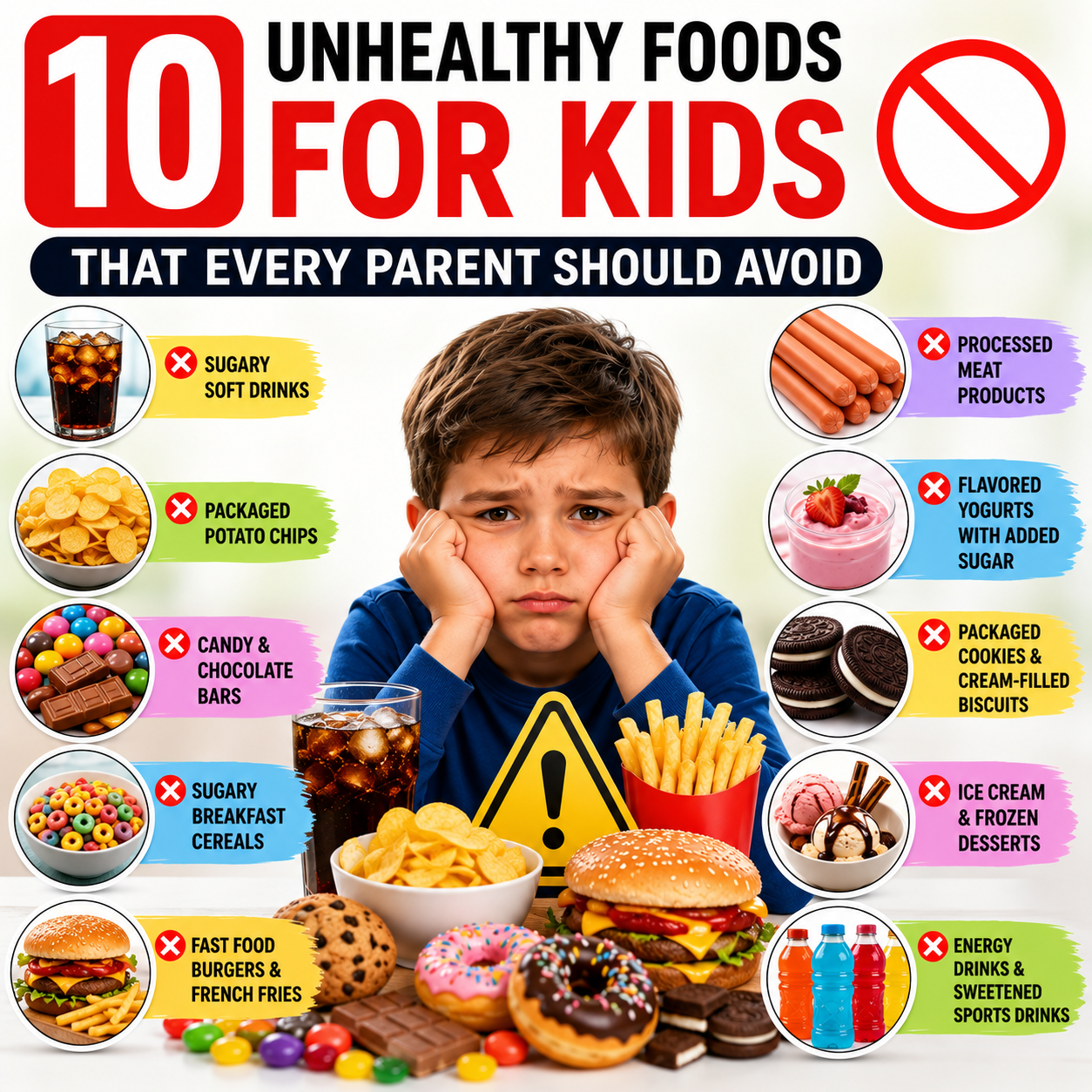
In this guide, we’ll explore the 10 unhealthy foods for kids that every parent should avoid, explain why they’re harmful, and suggest nutritious alternatives that children will actually enjoy.u
Why Healthy Eating Matters for Children
Childhood is one of the most important stages for physical and mental development. During these years, children require a wide variety of nutrients—including protein, healthy fats, vitamins, minerals, fiber, and complex carbohydrates—to support rapid growth. Nutritious meals also improve concentration, memory, learning ability, energy levels, and emotional well-being.
When unhealthy processed foods become a regular part of a child’s diet, they often replace nutrient-rich options like fruits, vegetables, whole grains, dairy, legumes, and lean proteins. This imbalance may contribute to nutritional deficiencies while increasing calorie intake. Parents who understand the impact of everyday food choices are better equipped to create a healthier home environment where nutritious eating becomes a natural habit rather than a struggle.
1. Sugary Soft Drinks and Soda
Soft drinks are among the least nutritious beverages children can consume. They are packed with added sugars, artificial colors, flavorings, and acids while providing virtually no essential nutrients. A single can of soda may contain more sugar than a child should consume in an entire day.
Excessive intake of sugary beverages is associated with childhood obesity, insulin resistance, fatty liver disease, tooth decay, and poor hydration. Since liquid calories don’t provide the same feeling of fullness as solid foods, children often consume more calories without realizing it.
Why Parents Should Avoid It
- Extremely high in added sugar
- Increases risk of obesity
- Damages tooth enamel
- Encourages unhealthy beverage habits
- Provides empty calories
Healthier Alternatives
- Water
- Coconut water (unsweetened)
- Homemade fruit-infused water
- Milk
- Fresh fruit smoothies without added sugar
2. Packaged Potato Chips
Potato chips are a common lunchbox snack, but they are high in sodium, unhealthy fats, refined starches, and artificial flavor enhancers. Most chips are deep-fried, increasing their calorie content while offering very little nutritional value.
Frequent consumption of salty processed snacks may contribute to high blood pressure later in life, unhealthy weight gain, and poor dietary habits. Since chips are designed to be highly palatable, children often eat far more than the recommended serving size.
Why Parents Should Avoid Them
- High sodium content
- Low nutritional value
- High in unhealthy fats
- Encourages overeating
- Replaces healthier snacks
Better Snack Options
- Air-popped popcorn
- Roasted chickpeas
- Homemade baked potato wedges
- Carrot and cucumber sticks
- Mixed nuts (for older children without allergy concerns)
3. Candy and Chocolate Bars
Candy and many chocolate bars contain large amounts of refined sugar, artificial colors, preservatives, and saturated fats. While occasional treats are perfectly acceptable, frequent consumption can lead to rapid spikes in blood sugar followed by energy crashes.
High sugar intake also increases the likelihood of cavities, unhealthy weight gain, and cravings for more sugary foods. Over time, children may begin preferring sweets over naturally nutritious foods like fruit, yogurt, or nuts.
Why Parents Should Limit Them
- Extremely high in added sugar
- Causes blood sugar spikes
- Promotes tooth decay
- Low in vitamins and minerals
- Encourages sugar cravings
Better Sweet Choices
- Fresh fruit
- Dates
- Homemade fruit yogurt
- Frozen banana slices
- Dark chocolate (in moderation for older children)
4. Sugary Breakfast Cereals
Many breakfast cereals marketed toward children feature colorful packaging, cartoon characters, and claims like “whole grain” or “fortified with vitamins.” However, many of these cereals are loaded with added sugars, refined grains, artificial colors, and flavorings. While they may seem like a quick and convenient breakfast, they often provide a burst of energy followed by a rapid blood sugar crash that can leave children feeling hungry, tired, and irritable before lunchtime.
A nutritious breakfast should provide sustained energy through a balance of protein, fiber, and healthy fats. Unfortunately, sugary cereals lack these nutrients and may encourage children to develop a preference for overly sweet foods. Over time, regularly consuming sugary cereals can contribute to weight gain, poor concentration in school, and an increased risk of chronic health conditions.
Why Parents Should Avoid Them
- High in added sugars
- Low in fiber and protein
- Made with refined grains
- Causes energy spikes and crashes
- Encourages unhealthy breakfast habits
Healthier Alternatives
- Plain oatmeal with fresh fruit
- Whole-grain cereal with no added sugar
- Greek yogurt with berries
- Whole-wheat toast with peanut butter
- Homemade overnight oats
5. Fast Food Burgers and French Fries
Fast food is convenient for busy families, but it should not become a regular part of a child’s diet. Burgers, fries, fried chicken, and similar meals are often high in saturated fat, sodium, refined carbohydrates, and calories while being low in essential nutrients like vitamins, minerals, and fiber.
Children who frequently consume fast food may be more likely to develop unhealthy eating habits, gain excess weight, and consume fewer fruits and vegetables. Large portion sizes also encourage overeating, making it difficult for children to recognize natural hunger and fullness cues.
Why Parents Should Avoid It
- High in saturated and trans fats
- Excessive sodium
- High-calorie meals
- Low nutritional value
- Promotes unhealthy eating habits
Healthier Alternatives
- Homemade chicken or veggie burgers
- Baked sweet potato fries
- Grilled chicken wraps
- Whole-grain sandwiches
- Homemade vegetable burgers
6. Processed Meat Products
Processed meats such as hot dogs, sausages, chicken nuggets, salami, and packaged deli meats are popular with children because they are easy to prepare and often taste appealing. However, many processed meats contain high levels of sodium, preservatives, unhealthy fats, and additives that offer little nutritional benefit.
Frequent consumption of processed meats may increase sodium intake beyond recommended levels and reduce the amount of healthier protein sources in a child’s diet. Parents should focus on serving fresh, minimally processed proteins whenever possible.
Why Parents Should Avoid Them
- High in sodium
- Contains preservatives
- High in saturated fat
- Low overall nutritional quality
- Often heavily processed
Better Protein Choices
- Grilled chicken
- Baked fish
- Boiled eggs
- Lentils and beans
- Homemade chicken strips
7. Flavored Yogurts with Added Sugar
Yogurt is generally considered a healthy food, but not all yogurts are created equal. Many flavored yogurts marketed to children contain surprisingly high amounts of added sugar, artificial flavors, sweeteners, and colorful toppings. These added ingredients can turn an otherwise nutritious food into a dessert-like snack.
While yogurt naturally provides calcium, protein, and probiotics that support bone and gut health, excessive sugar can offset these benefits. Choosing plain yogurt and adding fresh fruit at home allows parents to control the sweetness while increasing the nutritional value.
Why Parents Should Avoid Sugary Yogurts
- High in added sugar
- Artificial flavorings
- Less protein than plain yogurt in some varieties
- Can increase sugar cravings
- Misleading “healthy” marketing
Healthier Alternatives
- Plain Greek yogurt
- Yogurt with fresh berries
- Yogurt topped with chopped fruit
- Homemade fruit parfaits
- Unsweetened probiotic yogurt
Healthy Food Swaps for Kids
Replacing unhealthy foods with nutritious alternatives doesn’t have to be difficult. Small, consistent changes can significantly improve a child’s diet without making meals feel restrictive. Instead of eliminating favorite foods overnight, parents can gradually introduce healthier options that are just as enjoyable.
| Unhealthy Food | Healthy Alternative |
| Soda | Water or milk |
| Potato chips | Air-popped popcorn |
| Candy | Fresh fruit |
| Sugary cereal | Oatmeal |
| Fast food | Homemade meals |
| French fries | Baked sweet potato fries |
| Sugary yogurt | Plain yogurt with fruit |
| Cookies | Homemade oat cookies |
| Ice cream | Frozen banana smoothie |
| Energy drinks | Water or coconut water |
Healthy swaps not only improve nutrition but also help children develop lifelong preferences for wholesome foods. Involving kids in grocery shopping and meal preparation can make them more willing to try these healthier alternatives.
8. Packaged Cookies and Cream-Filled Biscuits
Packaged cookies and cream-filled biscuits are a favorite snack for many children because they are sweet, convenient, and heavily advertised. However, these products are often made with refined flour, added sugars, unhealthy fats, artificial flavors, and preservatives. While they may satisfy a sweet craving, they provide very little nutritional value and can contribute to unhealthy eating habits when consumed regularly.
Frequent consumption of cookies can increase calorie intake without supplying essential nutrients such as fiber, vitamins, or minerals. They may also lead to blood sugar spikes followed by energy crashes, leaving children hungry again shortly after eating. Instead of relying on packaged snacks, parents can choose wholesome options that support healthy growth while still satisfying a child’s taste buds.
Why Parents Should Avoid Them
- High in added sugar
- Made with refined flour
- Low in fiber
- Contains unhealthy fats
- Offers little nutritional value
Healthier Alternatives
- Homemade oatmeal cookies
- Whole-grain crackers
- Apple slices with peanut butter
- Homemade banana muffins
- Fresh fruit with yogurt
9. Ice Cream and Frozen Desserts
Ice cream is a popular treat, especially during warm weather, but many commercial varieties contain high amounts of sugar, saturated fat, artificial colors, flavorings, and stabilizers. While occasional treats are perfectly fine, eating ice cream frequently can contribute to excessive calorie intake, weight gain, and dental problems.
Parents don’t need to ban frozen desserts entirely. Instead, they can serve smaller portions or prepare healthier homemade versions using frozen fruit and yogurt. These alternatives provide natural sweetness along with vitamins, minerals, and protein.
Why Parents Should Limit It
- High in sugar
- Rich in saturated fat
- High in calories
- May contribute to tooth decay
- Low nutritional density
Healthier Alternatives
- Frozen banana bites
- Homemade fruit popsicles
- Frozen yogurt with fresh fruit
- Blended fruit smoothies
- Chilled fruit salad
10. Energy Drinks and Sweetened Sports Drinks
Energy drinks are never recommended for children. They often contain excessive amounts of caffeine, added sugar, and stimulants that may negatively affect a child’s developing body. Even sports drinks, which are marketed as healthy hydration options, usually contain unnecessary added sugars unless a child is participating in prolonged, intense physical activity.
Children generally stay well hydrated with plain water and milk. Offering sugary or caffeinated beverages regularly may encourage unhealthy habits while increasing the risk of sleep problems, anxiety, rapid heart rate, and excess calorie consumption.
Why Parents Should Avoid Them
- High in sugar
- Contains caffeine or stimulants
- Can disrupt sleep
- May increase heart rate
- Unnecessary for most children
Healthier Alternatives
- Plain water
- Milk
- Unsweetened coconut water
- Fresh fruit-infused water
- Homemade smoothies
Tips to Build Better Eating Habits for Kids
Helping children develop healthy eating habits takes patience, consistency, and positive encouragement. Instead of focusing on restricting foods, parents should create an environment where nutritious choices become the easiest and most enjoyable option. Children often learn by observing adults, so parents who model healthy eating are more likely to raise children with balanced food habits.
Here are some practical strategies to encourage healthier eating:
- Offer fruits and vegetables at every meal.
- Keep healthy snacks within easy reach.
- Limit sugary drinks and encourage water.
- Eat family meals together whenever possible.
- Avoid using sweets as rewards.
- Read food labels before buying packaged foods.
- Involve children in grocery shopping and cooking.
- Serve age-appropriate portions.
- Introduce new foods gradually.
- Encourage balanced meals rather than restrictive diets.
Small, consistent changes can have a lasting impact on a child’s overall health and relationship with food.
Frequently Asked Questions (FAQs)
Are all processed foods unhealthy for children?
No. Some processed foods, such as plain yogurt, frozen vegetables, whole-grain bread, and canned beans with no added salt, can be part of a healthy diet. The key is choosing minimally processed foods with limited added sugar, sodium, and unhealthy fats.
Can children eat sweets occasionally?
Yes. Occasional treats can fit into a balanced diet. The goal is moderation rather than complete restriction, as overly strict rules may increase cravings.
How much added sugar should children consume?
Children should consume as little added sugar as possible. Most health experts recommend limiting added sugar to less than 10% of daily calorie intake, with even lower amounts for younger children.
What are the best healthy snacks for kids?
Healthy snack ideas include:
- Fresh fruit
- Vegetable sticks with hummus
- Plain yogurt
- Cheese cubes
- Whole-grain crackers
- Boiled eggs
- Air-popped popcorn
- Nuts and seeds (for age-appropriate children)
How can parents encourage picky eaters?
Offer a variety of healthy foods without pressure, involve children in meal preparation, and introduce new foods alongside familiar favorites. It may take several attempts before a child accepts a new food.
Key Takeaways
- Children need nutrient-rich foods for healthy growth and development.
- Many packaged foods marketed to kids contain excessive sugar, sodium, and unhealthy fats.
- Limiting sugary drinks, processed snacks, fast food, and energy drinks supports long-term health.
- Healthy alternatives can be just as tasty and satisfying.
- Parents play a key role by modeling balanced eating habits and creating a healthy food environment at home.
Conclusion
Choosing nutritious foods for children doesn’t mean eliminating every favorite snack or dessert. Instead, it’s about creating a balanced diet that emphasizes whole, minimally processed foods while limiting products high in added sugar, unhealthy fats, and sodium. By understanding which foods to avoid and replacing them with healthier alternatives, parents can help support their child’s physical growth, brain development, and lifelong well-being.
Remember, healthy habits are built one meal at a time. Simple changes—such as swapping soda for water, choosing fresh fruit instead of candy, or preparing homemade snacks—can make a significant difference over time. With consistency and positive encouragement, parents can help their children develop a healthy relationship with food that lasts a lifetime.
Read Our latest Blog :7 Daily Habits for a Pure, Well Life: Small Changes, Big Results