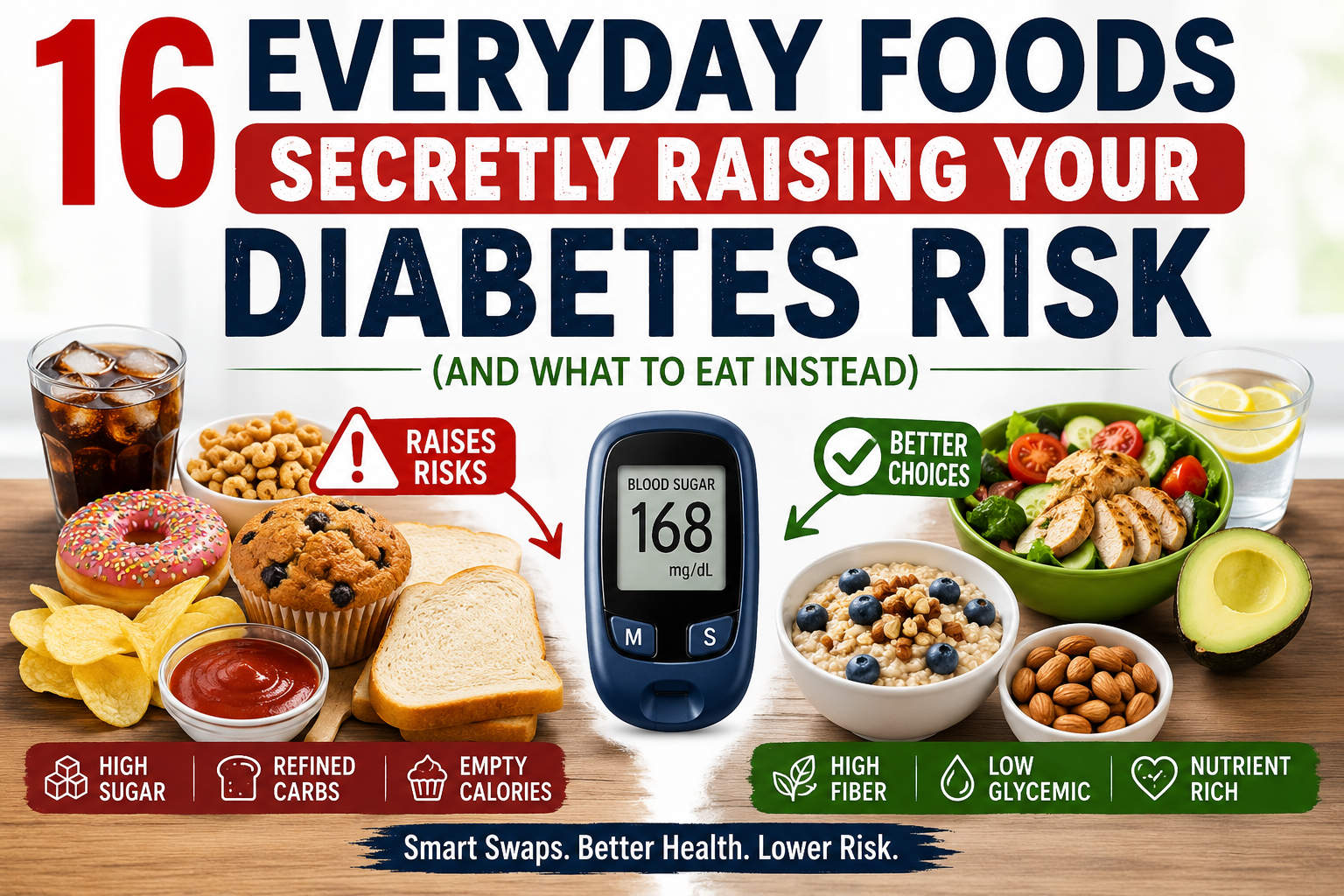
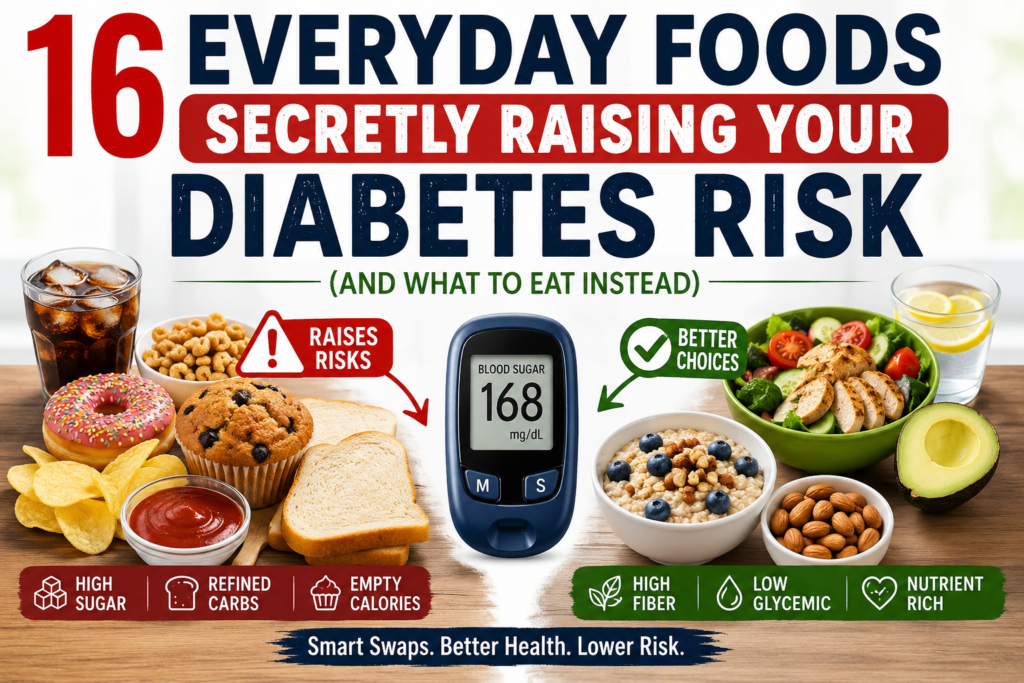
16 Everyday Foods Secretly Raising Your Diabetes Risk (And What to Eat Instead)
Diabetes has become one of the fastest-growing health concerns worldwide, affecting millions of people across all age groups. While genetics, physical activity, stress, and overall lifestyle all influence your chances of developing type 2 diabetes, your daily diet remains one of the most significant factors you can control. Surprisingly, some of the foods people eat every day without a second thought may gradually contribute to insulin resistance, weight gain, and unstable blood sugar levels over time.
Many products marketed as “healthy,” “low-fat,” or “natural” can still contain excessive amounts of added sugars, refined carbohydrates, unhealthy fats, or sodium. These ingredients may increase blood glucose levels more than expected, especially when consumed regularly. Understanding which foods that increase diabetes risk can help you make smarter dietary choices before health problems develop.
This guide from PureWellLife.com explores 16 everyday foods that may quietly increase your diabetes risk, explains why they can be problematic, and offers healthier alternatives that support balanced blood sugar and long-term wellness. Whether you’re trying to prevent diabetes, manage prediabetes, or simply improve your nutrition, this article will help you make informed decisions every time you eat.
Why Diet Matters for Diabetes Prevention
Diet plays a central role in maintaining healthy blood sugar levels and reducing the risk of developing type 2 diabetes. Every meal influences how much glucose enters the bloodstream and how efficiently insulin helps move that glucose into the body’s cells. A diet rich in whole foods, fiber, lean protein, and healthy fats generally supports stable blood sugar, while frequent consumption of processed foods, refined carbohydrates, and sugary beverages can increase insulin resistance over time.
The good news is that dietary habits are one of the most modifiable risk factors for diabetes. Small, consistent improvements—such as replacing sugary drinks with water or choosing whole grains over refined grains—can have meaningful long-term benefits. Understanding the connection between food choices and metabolic health empowers people to reduce their diabetes risk while improving energy, heart health, and overall well-being.
How Certain Foods Affect Blood Sugar
Not every carbohydrate affects the body in the same way. Foods high in refined sugars and refined starches are digested quickly, causing rapid increases in blood glucose levels. These frequent spikes force the pancreas to produce more insulin. Over many years, the body’s cells may become less responsive to insulin, a condition known as insulin resistance, which is a major contributor to type 2 diabetes.
In contrast, foods rich in fiber, protein, and healthy fats digest more slowly, leading to steadier blood sugar levels. Portion size, cooking methods, and the overall balance of a meal also influence blood glucose responses. Instead of eliminating all carbohydrates, the goal is to choose nutrient-dense foods that provide lasting energy and better metabolic health.
1. Sugary Soft Drinks
Sugary soft drinks rank among the biggest contributors to excess sugar consumption worldwide. A single can often contains far more added sugar than most health experts recommend for an entire day. Because these beverages provide calories without promoting fullness, people can easily consume large amounts without realizing how much sugar they are taking in.
Regular consumption of soda has been associated with weight gain, insulin resistance, and an increased risk of type 2 diabetes. Liquid sugar enters the bloodstream rapidly because it requires little digestion, causing significant spikes in blood glucose. Replacing sugary sodas with sparkling water, plain water infused with fruit, or unsweetened tea can substantially reduce daily sugar intake while supporting healthier blood sugar control.
Better Alternative
- Sparkling water
- Lemon-infused water
- Unsweetened iced tea
- Plain mineral water
2. Sweetened Coffee Drinks
Many specialty coffee beverages contain far more sugar and calories than people expect. Flavored syrups, whipped cream, sweetened creamers, and sugary toppings can transform a simple cup of coffee into a dessert-like drink. Although coffee itself may fit into a balanced diet, heavily sweetened versions contribute significant added sugars.
Frequent consumption of these beverages may increase calorie intake, promote weight gain, and contribute to insulin resistance over time. Choosing black coffee, adding a small amount of milk, or using minimal added sweetener allows you to enjoy coffee while limiting unnecessary sugar. Cinnamon or unsweetened cocoa powder can also add flavor without substantially affecting blood glucose.
Better Alternative
- Black coffee
- Unsweetened latte
- Coffee with low-fat milk
- Cinnamon-flavored coffee without syrup
3. White Bread
White bread is produced using refined flour that has lost much of its fiber during processing. Without fiber to slow digestion, white bread breaks down quickly into glucose, leading to rapid increases in blood sugar. While it may be convenient and inexpensive, frequent consumption may contribute to unstable glucose levels, especially when eaten in large portions.
Whole-grain bread provides more fiber, vitamins, minerals, and plant compounds that support better blood sugar regulation. Pairing bread with healthy protein sources such as eggs, peanut butter, or hummus can further reduce blood sugar spikes and improve satiety throughout the day.
Better Alternative
- 100% whole-grain bread
- Sprouted grain bread
- Whole wheat sourdough
- Rye bread
4. Sugary Breakfast Cereals
Many breakfast cereals marketed toward children and even adults contain surprisingly high amounts of added sugar. Although they are often fortified with vitamins and minerals, these cereals can still deliver a large glycemic load with relatively little fiber or protein. As a result, hunger may return quickly after eating.
Starting the day with a high-sugar breakfast can lead to fluctuating energy levels and increased cravings later in the day. Choosing high-fiber cereals with little or no added sugar, or preparing oatmeal with nuts and fresh fruit, provides a more balanced breakfast that supports stable blood sugar and sustained energy.
Better Alternative
- Steel-cut oats
- Plain oatmeal
- High-fiber cereal
- Greek yogurt with berries
5. Flavored Yogurt
Yogurt can be an excellent source of protein, calcium, and probiotics. However, many flavored varieties contain significant amounts of added sugar, sometimes approaching the sugar content of desserts. These hidden sugars may contribute to higher calorie intake and elevated blood glucose levels.
Plain Greek yogurt offers more protein and less sugar than many flavored options. Adding fresh berries, sliced fruit, chia seeds, or cinnamon allows you to customize flavor while maintaining better nutritional quality. This simple swap supports healthier blood sugar management and promotes greater fullness between meals.
Better Alternative
- Plain Greek yogurt
- Unsweetened natural yogurt
- Greek yogurt with berries
- Yogurt topped with nuts
6. Packaged Fruit Juice
Although fruit juice contains vitamins and minerals, many packaged juices lack the fiber found in whole fruit. Without fiber, natural fruit sugars are absorbed more rapidly, resulting in quicker increases in blood glucose levels. Some commercial fruit drinks also include added sugars, further increasing their impact on blood sugar.
Eating whole fruit instead provides fiber that slows sugar absorption while increasing fullness. Water, herbal tea, or naturally flavored sparkling water are also refreshing choices that help reduce sugar intake without sacrificing hydration.
Better Alternative
- Whole oranges
- Fresh apples
- Fresh berries
- Infused water
- Unsweetened herbal tea
7. Potato Chips
Potato chips are one of the most popular snack foods worldwide, but they offer very little nutritional value compared to their calorie content. They are typically made from refined potatoes, deep-fried in oils, and heavily seasoned with salt and flavor enhancers. This combination of refined carbohydrates, unhealthy fats, and excess sodium makes them easy to overeat without feeling satisfied.
Regularly eating potato chips may contribute to weight gain, increased calorie intake, and insulin resistance, all of which are associated with a higher risk of type 2 diabetes. Because chips are low in fiber and protein, they do not provide lasting fullness, often leading to additional snacking later in the day.
Why people eat it
- Convenient snack
- Widely available
- Crunchy and flavorful
- Easy to pair with meals
Why it may be unhealthy
- High in refined carbohydrates
- Often deep-fried
- Rich in sodium
- Low in fiber
Nutritional concerns
- Excess calories
- Saturated and trans fats (depending on the product)
- High sodium
- Minimal vitamins after processing
Health risks
- Blood sugar spikes
- Weight gain
- High blood pressure
- Increased diabetes risk
Better alternatives
- Air-popped popcorn
- Roasted chickpeas
- Unsalted mixed nuts
- Vegetable sticks with hummus
8. French Fries
French fries are another everyday food that may quietly increase diabetes risk when consumed frequently. Potatoes naturally contain carbohydrates, but deep-frying significantly increases their calorie and fat content. Restaurants often serve oversized portions, making it easy to consume hundreds of extra calories in a single meal.
Frequent intake of fried foods has been linked to obesity, inflammation, and poorer insulin sensitivity. Baking, roasting, or air-frying potatoes with minimal oil preserves more nutrients while reducing unhealthy fats. Sweet potatoes can also be a nutritious alternative because they provide additional fiber, vitamins, and antioxidants.
Why people eat it
- Popular fast-food side
- Crispy texture
- Inexpensive
- Highly satisfying
Why it may be unhealthy
- Deep-fried
- High glycemic impact
- Large serving sizes
- Often paired with sugary drinks
Nutritional concerns
- High calories
- Excess fat
- High sodium
- Low fiber after preparation
Health risks
- Obesity
- Elevated blood sugar
- Insulin resistance
- Cardiovascular disease
Better alternatives
- Baked sweet potato wedges
- Air-fried potatoes
- Roasted vegetables
- Grilled corn
9. Pastries and Doughnuts
Pastries, croissants, muffins, and doughnuts combine refined flour, sugar, butter, and unhealthy fats into highly processed foods that can quickly raise blood sugar. They also tend to be calorie-dense while offering little fiber or protein, making them less filling than whole-food breakfasts.
Eating pastries regularly may increase cravings for sugary foods throughout the day and contribute to weight gain. Replacing them with whole-grain toast, eggs, fruit, or oatmeal provides more balanced nutrition and helps maintain steadier energy levels.
Why people eat it
- Quick breakfast
- Sweet taste
- Easy to find
- Popular with coffee
Why it may be unhealthy
- Loaded with sugar
- Refined flour
- High saturated fat
- Low nutritional value
Better alternatives
- Whole-grain toast
- Oatmeal with berries
- Boiled eggs
- Homemade banana muffins with oats
10. Candy
Candy contains concentrated amounts of added sugars with almost no vitamins, minerals, fiber, or protein. Because these sugars are absorbed rapidly, candy can cause dramatic spikes in blood glucose followed by energy crashes that often lead to additional cravings.
Occasional treats can fit into a balanced lifestyle, but frequent candy consumption increases overall sugar intake and may contribute to obesity and insulin resistance. Choosing naturally sweet foods such as fruit satisfies cravings while providing valuable nutrients and fiber.
Why people eat it
- Sweet cravings
- Convenient snack
- Celebration treats
- Quick energy
Why it may be unhealthy
- Extremely high in added sugar
- Minimal nutrients
- Easy to overconsume
Better alternatives
- Fresh fruit
- Dates in moderation
- Dark chocolate (70% cocoa or higher)
- Apple slices with peanut butter
11. Processed Meats
Processed meats such as bacon, sausages, hot dogs, and deli meats have been associated with several chronic health conditions. While they are often low in carbohydrates, they frequently contain high amounts of sodium, preservatives, saturated fat, and additives.
Research suggests that regularly consuming processed meats may be associated with an increased risk of type 2 diabetes, possibly due to inflammation, excess sodium, and compounds formed during processing. Lean poultry, fish, beans, lentils, and tofu are healthier protein choices that support better long-term health.
Why people eat it
- Convenient
- High in protein
- Long shelf life
- Popular breakfast option
Why it may be unhealthy
- High sodium
- Saturated fat
- Chemical preservatives
- Heavy processing
Better alternatives
- Grilled chicken
- Turkey breast
- Lentils
- Fish
- Tofu
12. White Rice
White rice is a staple food in many countries, but it has a higher glycemic index than many whole grains because the fiber-rich outer layers are removed during processing. Eating large portions regularly may cause rapid increases in blood glucose, particularly when meals lack protein or vegetables.
This does not mean white rice must be completely avoided. Portion control and balanced meals are key. Replacing part or all of the white rice with brown rice, quinoa, barley, or cauliflower rice increases fiber intake and promotes steadier blood sugar levels.
Why people eat it
- Affordable
- Versatile
- Easy to prepare
- Common cultural staple
Better alternatives
- Brown rice
- Quinoa
- Barley
- Wild rice
- Cauliflower rice
13. Ice Cream
Ice cream combines added sugar with saturated fat, making it a dessert that can significantly affect blood glucose when eaten in large amounts. While occasional enjoyment is perfectly reasonable for many people, frequent servings can increase daily calorie and sugar intake.
Healthier frozen desserts made with Greek yogurt, frozen fruit, or reduced-sugar ingredients can satisfy cravings while providing more protein and less added sugar.
Better alternatives
- Frozen Greek yogurt
- Frozen banana slices
- Homemade fruit smoothie bowls
- Fresh berries
14. Fast Food Burgers
Many fast-food burgers contain refined white buns, processed meats, cheese, creamy sauces, and large amounts of sodium. When paired with fries and sugary drinks, these meals become extremely high in calories, unhealthy fats, and refined carbohydrates.
Preparing burgers at home using lean meat or plant-based patties on whole-grain buns allows better control over ingredients while increasing vegetable intake.
Better alternatives
- Homemade lean turkey burgers
- Black bean burgers
- Whole-grain sandwiches
- Grilled chicken wraps
15. Sweetened Energy Drinks
Energy drinks often contain high levels of sugar alongside caffeine and other stimulants. While they may temporarily increase alertness, they can also cause rapid blood sugar spikes followed by crashes in energy.
People who consume energy drinks regularly may unknowingly add hundreds of extra calories each week. Choosing unsweetened coffee, green tea, or plain water provides hydration and alertness without excessive sugar.
Better alternatives
- Green tea
- Black coffee
- Sparkling water
- Lemon water
16. Flavored Instant Oatmeal
Oatmeal itself is considered one of the healthiest breakfast choices because it contains soluble fiber that supports heart and metabolic health. However, flavored instant varieties often contain added sugars, artificial flavors, and sweeteners that reduce many of these benefits.
Preparing plain rolled oats or steel-cut oats at home lets you control sweetness naturally by adding fresh fruit, cinnamon, chopped nuts, or seeds. This creates a more balanced breakfast that supports healthy blood sugar.
Better alternatives
- Plain rolled oats
- Steel-cut oats
- Overnight oats
- Homemade oatmeal with berries
Healthy Food Swaps That Support Better Blood Sugar
Instead of focusing only on foods to avoid, building a healthier diet is about making smart substitutions. Small changes made consistently can significantly improve blood sugar control while reducing the long-term risk of type 2 diabetes.
| Instead of… | Choose… | Benefit |
| Soft drinks | Water or sparkling water | No added sugar |
| White bread | 100% whole-grain bread | More fiber |
| White rice | Brown rice or quinoa | Lower glycemic impact |
| Chips | Roasted chickpeas | Higher protein and fiber |
| Ice cream | Greek yogurt with berries | More protein, less sugar |
| Candy | Fresh fruit | Natural sweetness and fiber |
| Sugary cereal | Plain oatmeal | Longer-lasting energy |
| Fruit juice | Whole fruit | Slower sugar absorption |
Expert Tips to Lower Your Diabetes Risk Naturally
Preventing diabetes isn’t about eliminating every favorite food—it’s about creating sustainable habits that support healthy blood sugar over time. The following evidence-based strategies can make a meaningful difference:
- Fill half your plate with non-starchy vegetables.
- Choose whole grains instead of refined grains whenever possible.
- Include lean protein at every meal.
- Eat fiber-rich foods such as beans, lentils, vegetables, and fruits.
- Limit sugary beverages and choose water most often.
- Practice portion control, even with healthier foods.
- Stay physically active for at least 150 minutes each week.
- Get enough quality sleep, as poor sleep affects insulin sensitivity.
- Manage stress through exercise, meditation, or hobbies.
- Schedule regular health checkups if you have risk factors for diabetes.
Meal Planning for Diabetes: A Practical Approach
Healthy meal planning for diabetes or diabetes prevention does not require complicated diets. Instead, aim to build balanced meals that include fiber-rich carbohydrates, lean protein, healthy fats, and plenty of vegetables.
A simple plate method works well:
- ½ plate: Non-starchy vegetables such as broccoli, spinach, peppers, or salad.
- ¼ plate: Lean protein like chicken, fish, beans, tofu, or lentils.
- ¼ plate: Whole grains or high-fiber carbohydrates such as brown rice, quinoa, or sweet potatoes.
- Add a serving of healthy fat such as avocado, olive oil, seeds, or nuts.
- Drink water or unsweetened beverages instead of sugary drinks.
Following this balanced approach can help stabilize blood sugar, improve satiety, and support long-term metabolic health while still allowing flexibility and enjoyment in your diet.
Frequently Asked Questions (FAQs)
1. Which everyday foods secretly raise diabetes risk?
Sugary beverages, refined breads, pastries, breakfast cereals with added sugar, processed meats, potato chips, French fries, candy, and sweetened dairy products are among the most common foods associated with increased diabetes risk. Regular consumption may contribute to weight gain and insulin resistance. Replacing these foods with whole, nutrient-rich alternatives supports better metabolic health.
2. Can healthy-looking packaged foods still increase diabetes risk?
Yes. Many products labeled “low-fat,” “natural,” or “healthy” may still contain large amounts of added sugar or refined carbohydrates. Reading ingredient lists and nutrition labels helps identify hidden sugars and choose healthier options.
3. What is the healthiest breakfast for blood sugar control?
A balanced breakfast should include protein, fiber, and healthy fats. Examples include plain Greek yogurt with berries, oatmeal topped with nuts, vegetable omelets, or whole-grain toast with avocado and eggs. These meals promote longer-lasting energy and steadier blood sugar.
4. Should I stop eating desserts completely?
Not necessarily. Completely restricting favorite foods may make healthy eating difficult to maintain. Enjoy desserts occasionally and in moderate portions while focusing on an overall balanced diet rich in whole foods. Healthier homemade desserts can also satisfy sweet cravings with less added sugar.
5. Does eating late at night increase diabetes risk?
Late-night eating itself is not always harmful, but consuming large, high-calorie meals close to bedtime may negatively affect blood sugar control in some people. Choosing lighter, balanced evening meals and maintaining regular eating patterns may be more beneficial.
Key Takeaways
- Highly processed foods often contain hidden sugars and refined carbohydrates.
- Sugary drinks are among the biggest contributors to excess sugar intake.
- Whole grains help stabilize blood sugar better than refined grains.
- Fiber slows glucose absorption and promotes fullness.
- Lean proteins support balanced meals and healthy metabolism.
- Replacing processed snacks with whole foods improves overall nutrition.
- Portion control is just as important as food quality.
- Regular physical activity enhances insulin sensitivity.
- Reading nutrition labels helps identify hidden added sugars.
- Small, sustainable dietary changes can significantly reduce long-term diabetes risk.
Conclusion
Making healthier food choices doesn’t require following a strict or complicated diet. Instead, it’s about understanding which everyday foods may quietly increase your diabetes risk and replacing them with more nutritious alternatives whenever possible. While enjoying an occasional treat is perfectly normal, consistently choosing whole, minimally processed foods can help maintain healthy blood sugar levels, support weight management, and improve overall well-being.
Remember that diabetes prevention is influenced by many lifestyle factors, including physical activity, sleep, stress management, and regular medical checkups. No single food causes diabetes on its own, but long-term eating patterns have a powerful impact on metabolic health.
By incorporating more vegetables, fruits, whole grains, legumes, lean proteins, and healthy fats into your daily meals, you can create sustainable habits that benefit your health for years to come. Even small changes—such as replacing sugary drinks with water or swapping white bread for whole-grain bread—can make a meaningful difference over time.
At PureWellLife.com, our goal is to provide practical, evidence-based health information that empowers you to make informed choices. If you found this guide helpful, explore our other nutrition and wellness articles for more expert tips on healthy eating, disease prevention, and living your healthiest life.