How to Prevent Kidney Disease
Your kidneys play a vital role in keeping your body healthy by filtering waste products, balancing fluids, regulating blood pressure, and maintaining electrolyte levels. When the kidneys become damaged over time, they may lose their ability to perform these essential functions, leading to chronic kidney disease (CKD). While not all kidney diseases can be prevented, many cases can be delayed or avoided through healthy lifestyle choices and proper management of underlying health conditions.
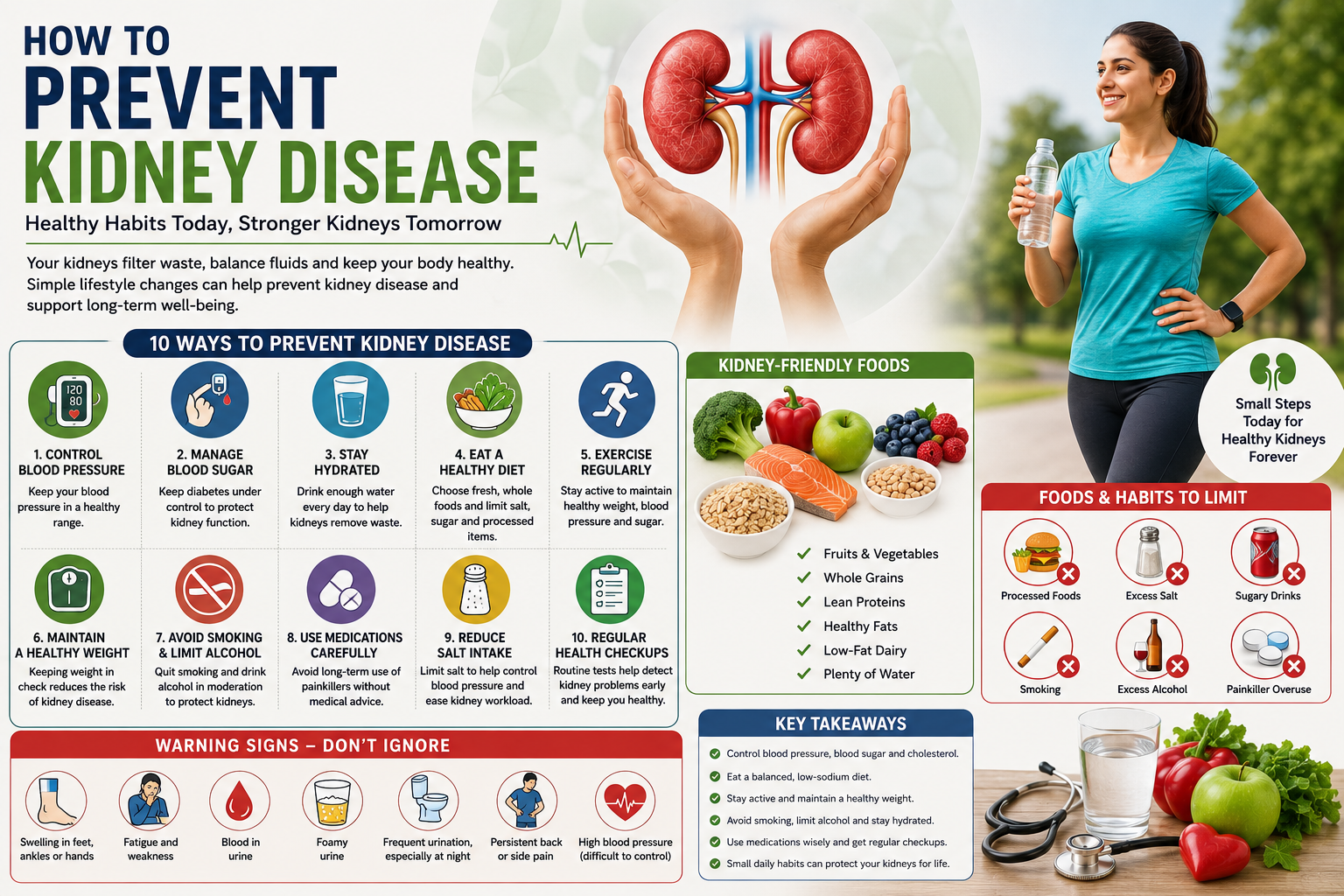
Natural kidney disease prevention focuses on maintaining healthy blood pressure, controlling blood sugar, eating a balanced diet, staying hydrated, avoiding harmful habits, and attending regular health checkups. These simple daily habits can help protect kidney function and improve overall health.
What Is Kidney Disease?
Kidney disease occurs when the kidneys become damaged and cannot effectively filter waste and excess fluids from the blood.
Common Types of Kidney Disease
- Chronic Kidney Disease (CKD)
- Acute Kidney Injury (AKI)
- Kidney stones
- Polycystic kidney disease
- Kidney infections
This article mainly focuses on lifestyle habits that may help reduce the risk of chronic kidney disease.
Why Kidney Health Is Important
Healthy kidneys perform several essential functions that keep the body working properly.
Healthy kidneys help:
- Remove waste products from the blood
- Balance body fluids
- Regulate blood pressure
- Maintain healthy electrolyte levels
- Support red blood cell production
- Keep bones healthy
- Maintain overall body balance
Protecting kidney health also supports heart health and overall well-being.
Common Risk Factors for Kidney Disease
Some risk factors cannot be changed, while many others can be managed through healthy lifestyle habits.
Non-Modifiable Risk Factors
- Increasing age
- Family history of kidney disease
- Certain inherited kidney disorders
Modifiable Risk Factors
- High blood pressure
- Diabetes
- Obesity
- Smoking
- High cholesterol
- Physical inactivity
- Unhealthy diet
- Long-term misuse of certain pain medications
Managing these risk factors can significantly lower the chance of kidney damage.
Natural Ways to Prevent Kidney Disease
1. Keep Blood Pressure Under Control
High blood pressure is one of the leading causes of chronic kidney disease.
Healthy Habits
- Check your blood pressure regularly.
- Reduce sodium intake.
- Exercise consistently.
- Eat a balanced diet.
- Take prescribed medications as directed by your healthcare provider.
Maintaining healthy blood pressure helps protect both your kidneys and your heart.
2. Manage Blood Sugar Levels
Poorly controlled diabetes can damage the tiny blood vessels inside the kidneys over time.
Healthy Practices
- Follow a balanced meal plan.
- Monitor blood sugar as recommended.
- Stay physically active.
- Take diabetes medications or insulin as prescribed.
- Attend routine medical appointments.
Good diabetes management reduces the risk of kidney complications.
3. Stay Hydrated
Drinking enough water helps the kidneys remove waste products efficiently and supports overall body function.
Healthy Hydration Tips
- Drink water regularly throughout the day.
- Increase fluid intake during hot weather or exercise, unless your healthcare provider advises otherwise.
- Limit sugary beverages.
- Choose water as your primary drink.
Hydration needs vary depending on age, activity level, climate, and medical conditions.
4. Eat a Kidney-Friendly Diet
A nutritious diet supports healthy kidney function and overall wellness.
Include More of These Foods
- Fresh fruits
- Vegetables
- Whole grains
- Beans and lentils
- Fish
- Skinless chicken
- Low-fat dairy products
- Healthy fats such as olive oil
Choosing minimally processed foods helps reduce excess sodium and unhealthy fats.
5. Exercise Regularly
Regular physical activity helps maintain healthy blood pressure, body weight, and blood sugar levels.
Recommended Activities
- Brisk walking
- Cycling
- Swimming
- Yoga
- Jogging
- Strength training
Adults should aim for at least 150 minutes of moderate-intensity physical activity each week, along with muscle-strengthening activities on two or more days.
6. Maintain a Healthy Weight
Being overweight or obese increases the risk of diabetes, high blood pressure, and chronic kidney disease.
Healthy Weight Management Tips
- Eat balanced meals.
- Control portion sizes.
- Exercise regularly.
- Limit sugary drinks.
- Avoid highly processed foods.
Maintaining a healthy weight reduces strain on the kidneys and supports overall health.
7. Avoid Smoking and Limit Alcohol
Smoking damages blood vessels and reduces blood flow to the kidneys, while excessive alcohol consumption can contribute to dehydration and high blood pressure.
Healthy Choices
- Quit smoking if you currently smoke.
- Avoid exposure to secondhand smoke.
- If you drink alcohol, do so in moderation.
- Seek support if quitting smoking is difficult.
These habits benefit both kidney and cardiovascular health.
8. Be Careful with Pain Medications
Frequent or long-term use of certain over-the-counter pain relievers, such as nonsteroidal anti-inflammatory drugs (NSAIDs), may damage the kidneys in some people.
Safe Medication Practices
- Take medications only as directed.
- Avoid unnecessary long-term use of pain relievers.
- Consult your healthcare provider before taking medicines regularly.
- Inform your doctor about all medications and supplements you use.
Never exceed the recommended dosage without medical advice.
9. Reduce Salt Intake
Excess sodium may increase blood pressure, placing additional strain on the kidneys.
Ways to Reduce Sodium
- Cook more meals at home.
- Use herbs and spices instead of extra salt.
- Limit packaged and processed foods.
- Read nutrition labels before purchasing products.
A lower-sodium eating pattern supports kidney and heart health.
10. Schedule Regular Kidney Health Checkups
Routine health screenings help detect kidney problems early, often before symptoms appear.
Important Health Checks
- Blood pressure
- Blood sugar
- Kidney function blood tests
- Urine tests
- Cholesterol levels
- Body weight
Early detection can help slow the progression of kidney disease.
Foods and Habits to Limit
Reduce or Avoid
- Highly processed foods
- Packaged salty snacks
- Fast food
- Sugary soft drinks
- Excess salt
- Excess added sugar
- Processed meats
- Smoking
- Excessive alcohol consumption
Choosing fresh, minimally processed foods supports healthy kidney function.
Daily Habits That Support Kidney Health
Drink Enough Water
Stay hydrated throughout the day unless your healthcare provider has advised you to limit fluids because of a medical condition.
Stay Physically Active
Aim to include physical activity every day by:
- Walking
- Cycling
- Swimming
- Gardening
- Stretching
- Taking the stairs
Regular movement supports healthy circulation and kidney function.
Eat Balanced Meals
Each meal should include:
- Fruits
- Vegetables
- Whole grains
- Lean proteins
- Healthy fats
A balanced diet provides nutrients that support overall wellness.
Monitor Existing Health Conditions
If you have diabetes, high blood pressure, or heart disease, follow your treatment plan carefully to help protect your kidneys.
Maintain Good Hygiene
Practicing good personal hygiene and seeking prompt treatment for urinary tract infections may help reduce the risk of kidney infections.
Warning Signs That Require Medical Attention
Consult a healthcare professional promptly if you experience:
- Swelling in the feet, ankles, or hands
- Persistent fatigue
- Blood in the urine
- Foamy urine
- Pain during urination
- Frequent urination, especially at night
- Reduced urine output
- Persistent lower back or side pain
- High blood pressure that is difficult to control
Early evaluation can help identify kidney problems before they become more serious.
Frequently Asked Questions
Can kidney disease be prevented naturally?
Many cases of chronic kidney disease can be delayed or prevented by maintaining healthy blood pressure and blood sugar levels, eating a balanced diet, staying physically active, avoiding smoking, staying hydrated, and attending regular medical checkups.
Is drinking more water good for the kidneys?
Drinking enough water supports normal kidney function for most healthy people. However, people with certain kidney or heart conditions may need to limit fluid intake based on medical advice.
Which foods support kidney health?
Fresh fruits, vegetables, whole grains, lean proteins, beans, healthy fats, and low-sodium foods can be part of a kidney-friendly eating pattern.
Can high blood pressure damage the kidneys?
Yes. Long-term uncontrolled high blood pressure can damage the blood vessels in the kidneys and increase the risk of chronic kidney disease.
How often should kidney function be checked?
The frequency depends on your age, medical history, and risk factors. People with diabetes, hypertension, or a family history of kidney disease should discuss appropriate screening intervals with their healthcare provider.
Key Takeaways
- Healthy kidneys are essential for filtering waste, balancing fluids, and maintaining overall health.
- Control blood pressure and blood sugar to reduce the risk of kidney disease.
- Stay hydrated and eat a balanced, low-sodium diet.
- Exercise regularly and maintain a healthy weight.
- Avoid smoking and use pain medications responsibly.
- Schedule regular health screenings to detect kidney problems early.
- Seek medical attention if you notice symptoms such as swelling, blood in the urine, or persistent changes in urination.
Conclusion
Protecting your kidneys begins with healthy daily habits that support your entire body. Maintaining healthy blood pressure, controlling diabetes, eating nutritious foods, staying physically active, drinking enough water, and avoiding smoking are all effective ways to reduce the risk of chronic kidney disease. Small lifestyle improvements made consistently over time can help preserve kidney function and contribute to better overall health.
Routine medical checkups are equally important because kidney disease often develops silently during its early stages. Early detection and proper management can help prevent complications and improve long-term outcomes. By taking care of your kidneys today, you are investing in your future health and well-being.