Healthy Weight Loss Tips for Overweight Kids
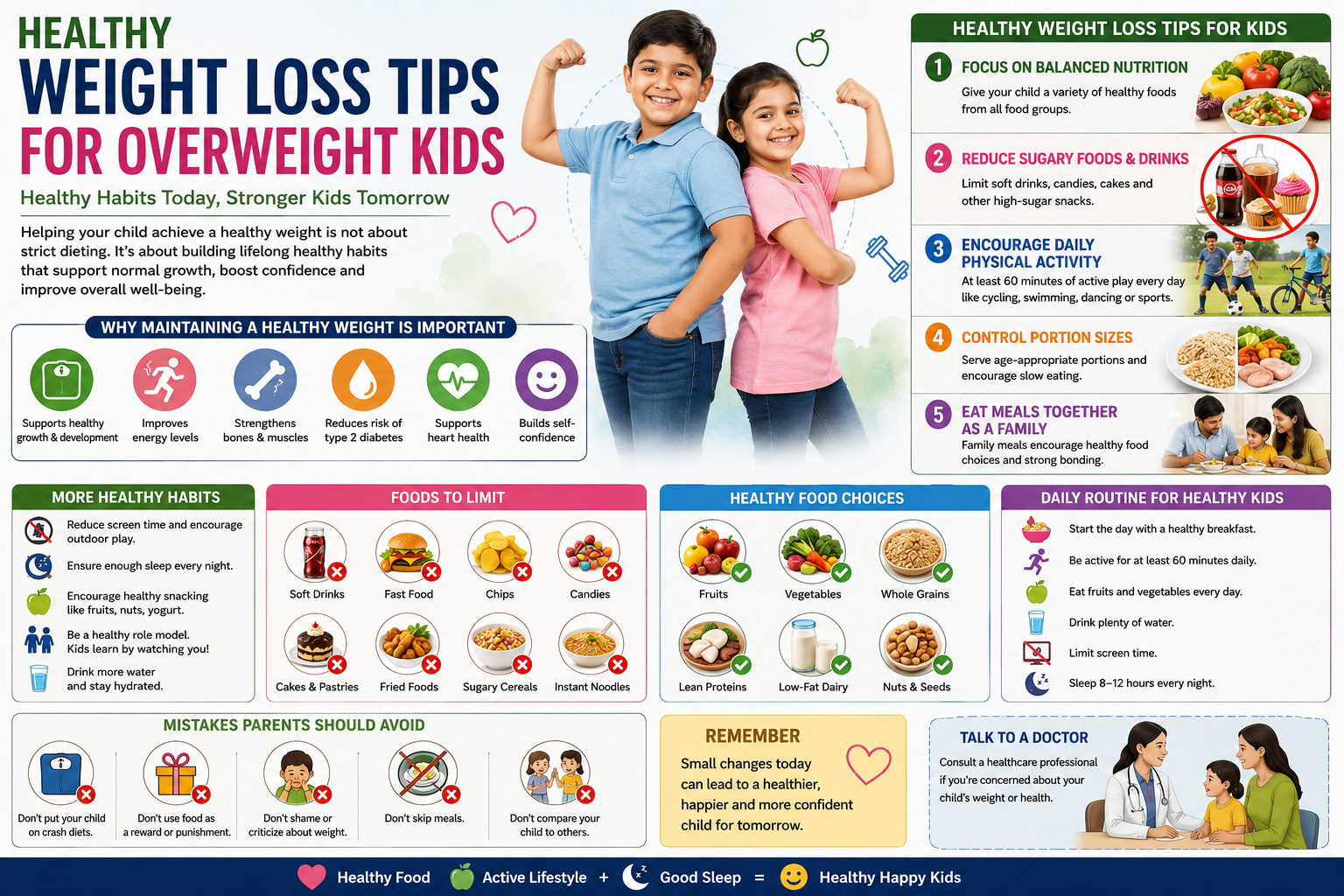
Childhood overweight and obesity have become increasingly common around the world. Helping children achieve a healthy weight is not about strict dieting or rapid weight loss—it is about encouraging lifelong healthy habits that support normal growth and development. A balanced diet, regular physical activity, quality sleep, and family involvement can help children gradually reach and maintain a healthy weight.
The goal should always be to improve overall health, build confidence, and establish sustainable routines rather than focusing only on the number on the scale.
What Is Childhood Overweight?
Childhood overweight occurs when a child has excess body weight for their age and height. Healthcare professionals typically assess this using Body Mass Index (BMI)-for-age percentiles, along with other health factors.
A healthcare provider can determine whether a child is at a healthy weight and recommend an appropriate care plan if needed.
Why Maintaining a Healthy Weight Is Important
A healthy weight supports children’s physical, emotional, and mental well-being.
Healthy weight management helps:
- Support healthy growth and development
- Improve energy levels
- Strengthen bones and muscles
- Reduce the risk of type 2 diabetes
- Support heart health
- Improve sleep quality
- Build self-confidence
- Encourage lifelong healthy habits
Healthy lifestyle changes benefit the entire family.
Common Causes of Childhood Overweight
Many factors can contribute to excess weight in children.
Lifestyle Factors
- Eating large portion sizes
- Frequent consumption of sugary drinks
- Regular fast food intake
- Low physical activity
- Excess screen time
- Poor sleep habits
Other Contributing Factors
- Family history
- Certain medical conditions
- Some medications
- Emotional eating
- Limited opportunities for physical activity
Understanding the underlying causes helps create a realistic and effective plan.
Healthy Weight Loss Tips for Overweight Kids
1. Focus on Balanced Nutrition
Children need nutritious foods to support growth while maintaining a healthy weight.
Include More of These Foods
- Fresh fruits
- Vegetables
- Whole grains
- Brown rice
- Oats
- Beans
- Lentils
- Eggs
- Fish
- Lean chicken
- Low-fat dairy products
- Nuts and seeds (age-appropriate and supervised for young children)
A colorful, balanced diet provides essential vitamins, minerals, protein, and fiber.
2. Reduce Sugary Foods and Drinks
Sugar-sweetened beverages and high-sugar snacks can contribute to excess calorie intake.
Limit
- Soft drinks
- Sweetened juices
- Candy
- Cakes
- Cookies
- Ice cream
- Sugary breakfast cereals
Replace sugary drinks with water or plain milk whenever appropriate.
3. Encourage Daily Physical Activity
Regular movement helps children build strong muscles and bones while supporting a healthy weight.
Fun Activities
- Walking
- Cycling
- Swimming
- Dancing
- Football
- Skipping rope
- Outdoor games
Children and adolescents should aim for at least 60 minutes of moderate-to-vigorous physical activity every day.
4. Control Portion Sizes
Serving age-appropriate portions can help children recognize hunger and fullness cues.
Healthy Portion Tips
- Use smaller plates when appropriate.
- Encourage slow eating.
- Avoid forcing children to finish every meal.
- Offer healthy snacks between meals if needed.
Balanced portions support healthy eating habits.
5. Eat Meals Together as a Family
Family meals encourage healthier food choices and positive eating behaviors.
Benefits of Family Meals
- Better nutrition
- Less fast food
- Improved communication
- Positive eating habits
- Better emotional well-being
Children often develop healthier habits by observing adults.
6. Reduce Screen Time
Spending long hours on screens can reduce physical activity and encourage unhealthy snacking.
Healthy Screen Time Habits
- Set daily screen time limits.
- Encourage outdoor play.
- Take movement breaks every 30–60 minutes.
- Avoid screens during meals.
- Keep electronic devices out of the bedroom at night.
Balancing screen time with active play supports healthy growth.
7. Make Sure Your Child Gets Enough Sleep
Adequate sleep is essential for healthy growth, energy levels, and maintaining a healthy weight.
Recommended Sleep Duration
- Preschool children (3–5 years): 10–13 hours
- School-age children (6–12 years): 9–12 hours
- Teenagers (13–18 years): 8–10 hours
A consistent bedtime routine helps children sleep better.
8. Encourage Healthy Snacking
Nutritious snacks help children stay full between meals and reduce cravings for unhealthy foods.
Healthy Snack Ideas
- Apple slices with peanut butter
- Plain yogurt with fresh fruit
- Carrot and cucumber sticks
- Roasted chickpeas
- Mixed nuts (for older children, where safe)
- Boiled eggs
- Homemade vegetable sandwiches
Choose snacks that provide protein, fibre, and healthy fats.
9. Be a Healthy Role Model
Children are more likely to adopt healthy habits when parents and caregivers practise them too.
Lead by Example
- Eat healthy meals together.
- Exercise as a family.
- Drink water instead of sugary drinks.
- Choose nutritious snacks.
- Encourage positive attitudes toward food and physical activity.
Family involvement makes healthy lifestyle changes easier to maintain.
10. Consult a Healthcare Professional When Needed
If your child is overweight or gaining weight rapidly, seek advice from a qualified healthcare professional.
A Healthcare Provider May Help With
- Growth assessment
- BMI-for-age evaluation
- Nutrition guidance
- Physical activity recommendations
- Screening for underlying medical conditions
- Personalised weight management plans
Avoid starting restrictive diets without professional guidance.
Foods to Limit
Reduce Intake of
- Sugary soft drinks
- Candy and chocolates
- Cakes and pastries
- Chips
- Fast food
- Fried foods
- Instant noodles
- Sugary breakfast cereals
- Processed snacks
These foods are often high in calories and low in nutrients.
Healthy Daily Routine for Kids
Start the Day With a Healthy Breakfast
A nutritious breakfast provides energy and helps children concentrate during school.
Stay Active Every Day
Encourage at least 60 minutes of physical activity daily, including:
- Walking
- Cycling
- Swimming
- Football
- Dancing
- Outdoor games
Eat Plenty of Fruits and Vegetables
Aim to include colourful fruits and vegetables in every meal.
Drink More Water
Replace sugary drinks with water whenever possible to help maintain hydration.
Sleep on Time
A regular sleep schedule supports healthy growth, appetite regulation, and overall well-being.
Mistakes Parents Should Avoid
Do Not Put Children on Crash Diets
Very restrictive diets can interfere with normal growth, development, and nutrient intake.
Avoid Using Food as a Reward or Punishment
Using sweets or favourite foods as rewards may create unhealthy eating behaviours.
Never Shame or Criticise a Child About Weight
Focus on health, strength, and healthy habits instead of appearance. Positive encouragement helps build confidence and long-term motivation.
Do Not Skip Meals
Skipping meals may lead to overeating later in the day. Encourage regular, balanced meals and healthy snacks.
Avoid Comparing Children to Others
Every child grows at a different pace. Work with your child’s healthcare provider to set realistic and healthy goals.
Frequently Asked Questions
Can overweight children lose weight safely?
Yes. Most overweight children can improve their health through balanced nutrition, regular physical activity, healthy sleep, and family support. Weight management should always support normal growth and development.
Should children follow weight-loss diets?
Strict weight-loss diets are generally not recommended unless prescribed and supervised by a healthcare professional. Healthy lifestyle changes are usually the preferred approach.
What is the best exercise for overweight kids?
Activities children enjoy—such as walking, cycling, swimming, dancing, football, and active outdoor play—are excellent choices because they encourage regular participation.
How much physical activity do children need?
Children and adolescents should aim for at least 60 minutes of moderate-to-vigorous physical activity every day.
When should parents seek medical advice?
Consult a healthcare professional if your child is gaining weight rapidly, has obesity-related health concerns, experiences breathing or sleep problems, or if you are unsure how to support healthy weight management.
Key Takeaways
- Healthy weight management in children should focus on lifelong healthy habits rather than rapid weight loss.
- Provide balanced meals with fruits, vegetables, whole grains, lean proteins, and healthy fats.
- Encourage at least 60 minutes of physical activity every day.
- Limit sugary drinks, fast food, and highly processed snacks.
- Ensure children get enough sleep and reduce screen time.
- Support children with positive encouragement rather than criticism.
- Seek professional guidance before making major dietary changes.
Conclusion
Helping an overweight child achieve a healthier weight is a gradual process that requires patience, encouragement, and consistent healthy habits. Nutritious meals, regular physical activity, adequate sleep, and positive family involvement are the foundations of healthy weight management. Rather than focusing on quick weight loss, families should aim to create a supportive environment that encourages lifelong healthy behaviours.
Every child is unique, and growth patterns vary with age and development. Working closely with a healthcare professional can help ensure that weight management plans are safe, appropriate, and tailored to your child’s individual needs. By building healthy habits early in life, children can enjoy better physical health, greater confidence, and a lower risk of future chronic diseases.