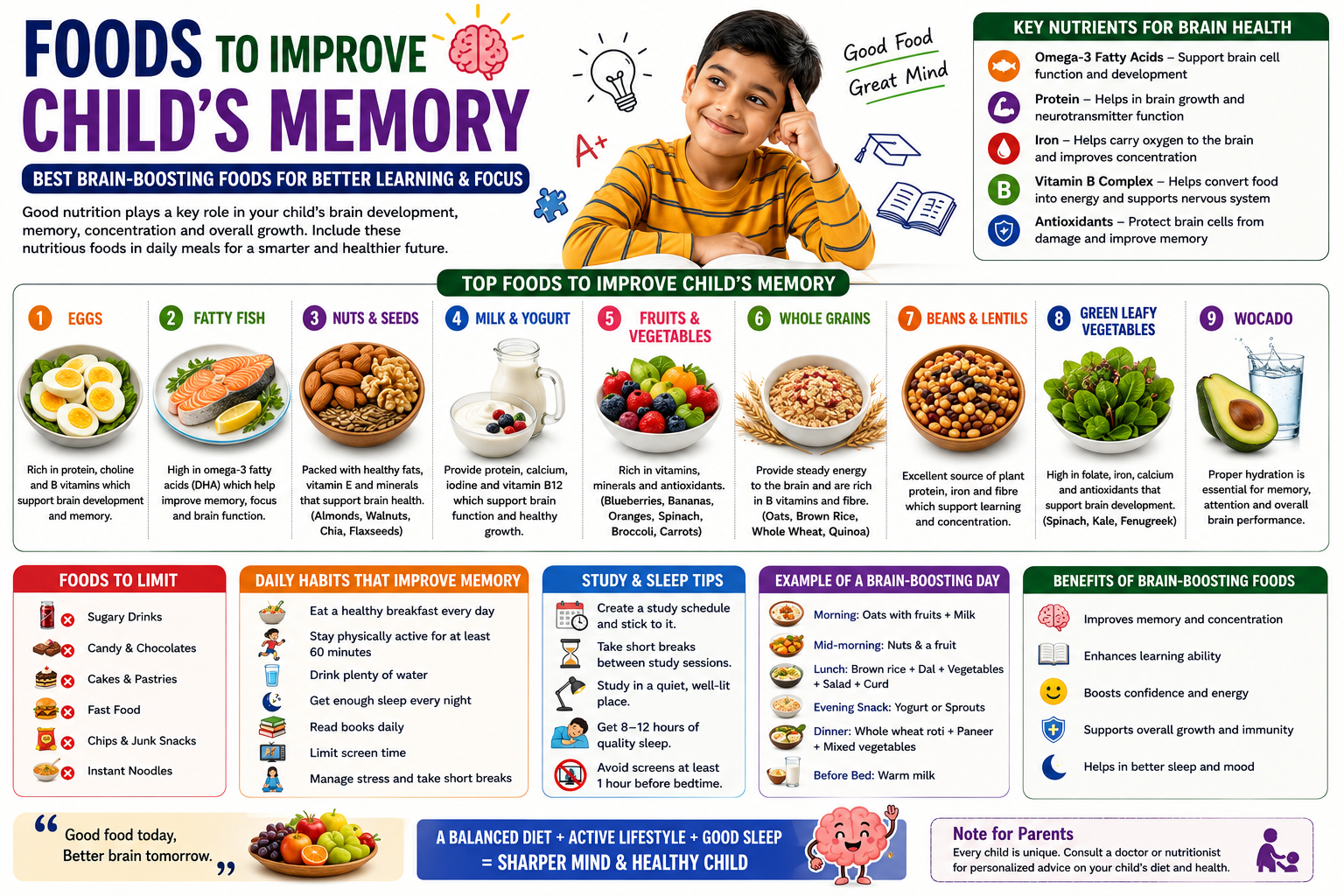
Foods to Improve Child’s Memory
A child’s brain grows rapidly during the early years, making proper nutrition essential for healthy brain development, learning, memory, and concentration. While no single food can instantly improve memory or intelligence, a balanced diet rich in essential nutrients helps support normal brain function and overall cognitive development.
Providing children with a variety of nutrient-rich foods, regular physical activity, quality sleep, and a positive learning environment can help them perform better at school and maintain good mental health.
Why Nutrition Is Important for Brain Development
The brain requires a continuous supply of nutrients to support learning, memory, attention, and problem-solving skills.
A healthy diet helps:
- Support normal brain development
- Improve concentration
- Enhance learning ability
- Maintain steady energy levels
- Support healthy nervous system function
- Promote overall growth and development
Balanced nutrition is one of the most important foundations for lifelong brain health.
Key Nutrients That Support Brain Health
Omega-3 Fatty Acids
Omega-3 fats, especially DHA, are important for normal brain development and function.
Food Sources
- Salmon
- Sardines
- Tuna
- Chia seeds
- Flaxseeds
- Walnuts
Protein
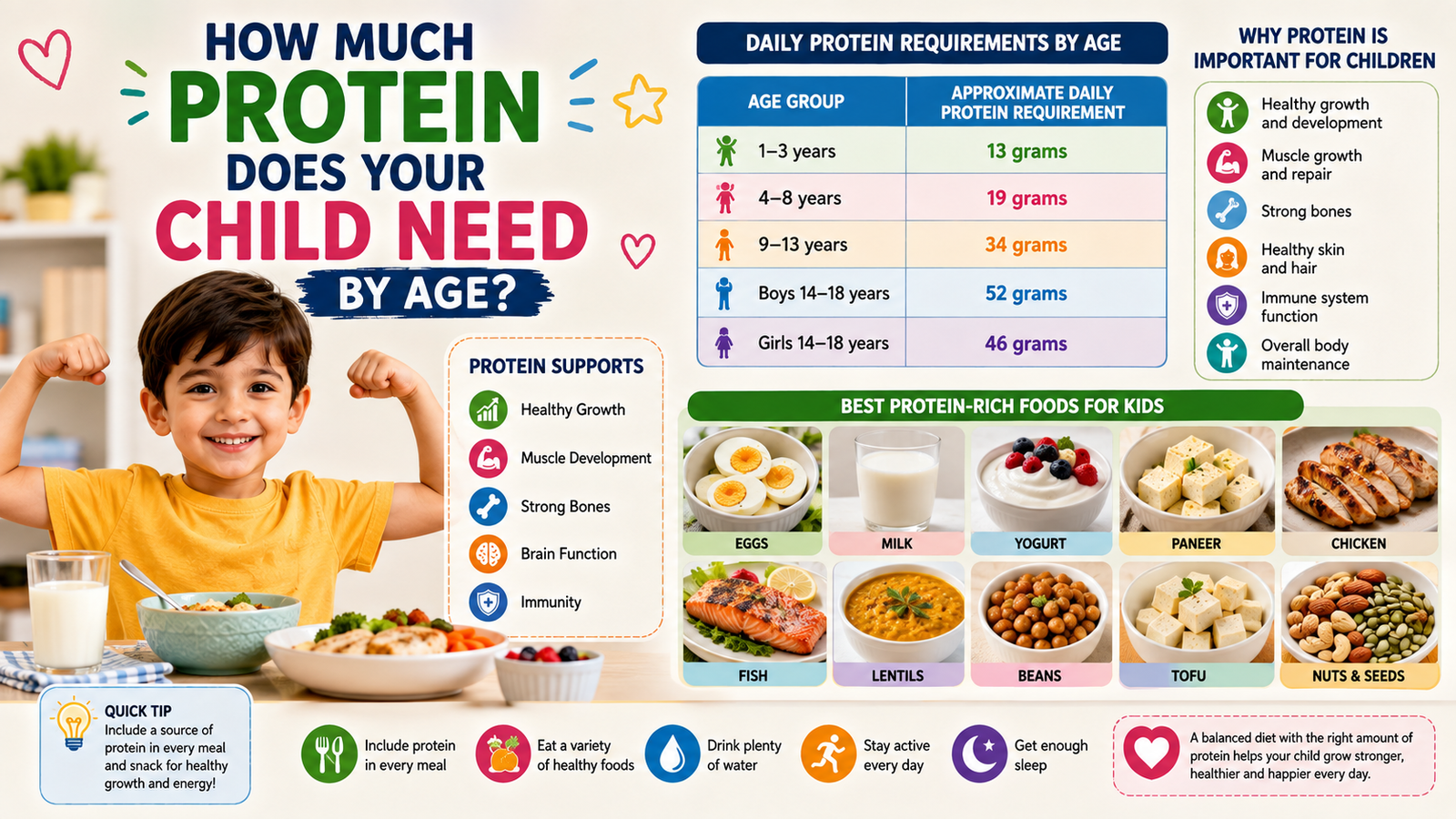
Protein provides amino acids that help support brain function and overall growth.
Healthy Protein Sources
- Eggs
- Fish
- Chicken
- Beans
- Lentils
- Milk
- Yogurt
- Cheese
Iron
Iron helps carry oxygen to the brain and supports learning and attention.
Iron-Rich Foods
- Lean meat
- Spinach
- Lentils
- Chickpeas
- Pumpkin seeds
- Fortified cereals
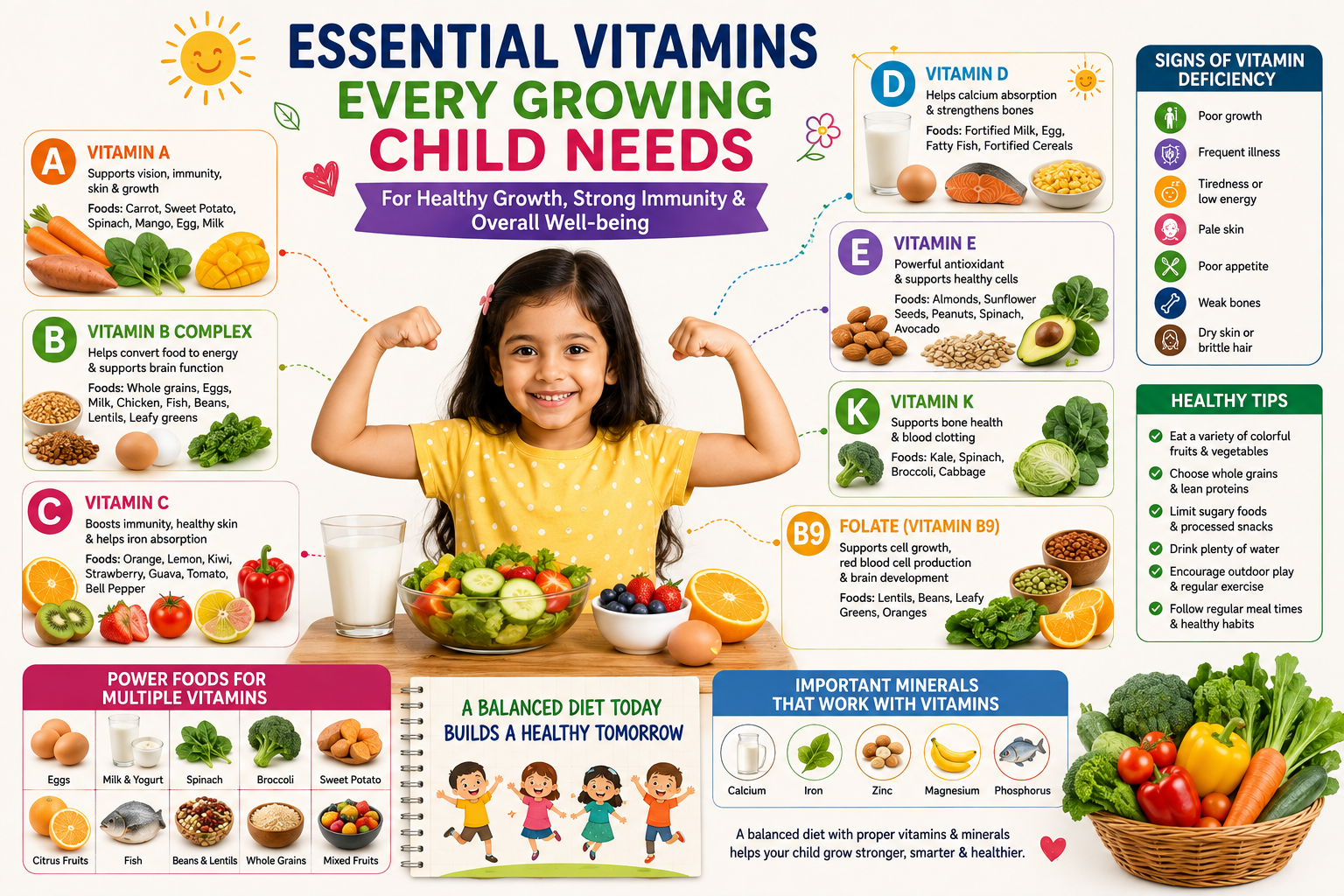
Vitamin B Complex
B vitamins help the brain convert food into energy and support the nervous system.
Good Sources
- Whole grains
- Eggs
- Dairy products
- Green leafy vegetables
- Beans
Antioxidants
Antioxidants help protect brain cells from oxidative stress.
Foods Rich in Antioxidants
- Blueberries
- Strawberries
- Oranges
- Tomatoes
- Bell peppers
- Carrots
Best Foods to Improve Child’s Memory
1. Eggs
Eggs are an excellent source of protein, choline, and B vitamins, which support brain development and memory.
Benefits
- Supports learning
- Helps brain cell development
- Provides long-lasting energy
2. Fatty Fish
Fish such as salmon and sardines provide omega-3 fatty acids that support healthy brain function.
Benefits
- Supports memory
- Helps concentration
- Promotes healthy brain development
3. Nuts and Seeds
Walnuts, almonds, chia seeds, flaxseeds, and pumpkin seeds contain healthy fats, vitamin E, and minerals.
Benefits
- Support brain health
- Provide healthy fats
- Supply important nutrients
Always supervise young children when eating whole nuts because of the choking risk.
4. Milk and Yogurt
Dairy products provide protein, calcium, iodine, and vitamin B12 that support brain and body development.
Benefits
- Supports healthy growth
- Provides steady energy
- Helps normal brain function
Choose plain, unsweetened varieties whenever possible.
5. Colourful Fruits and Vegetables
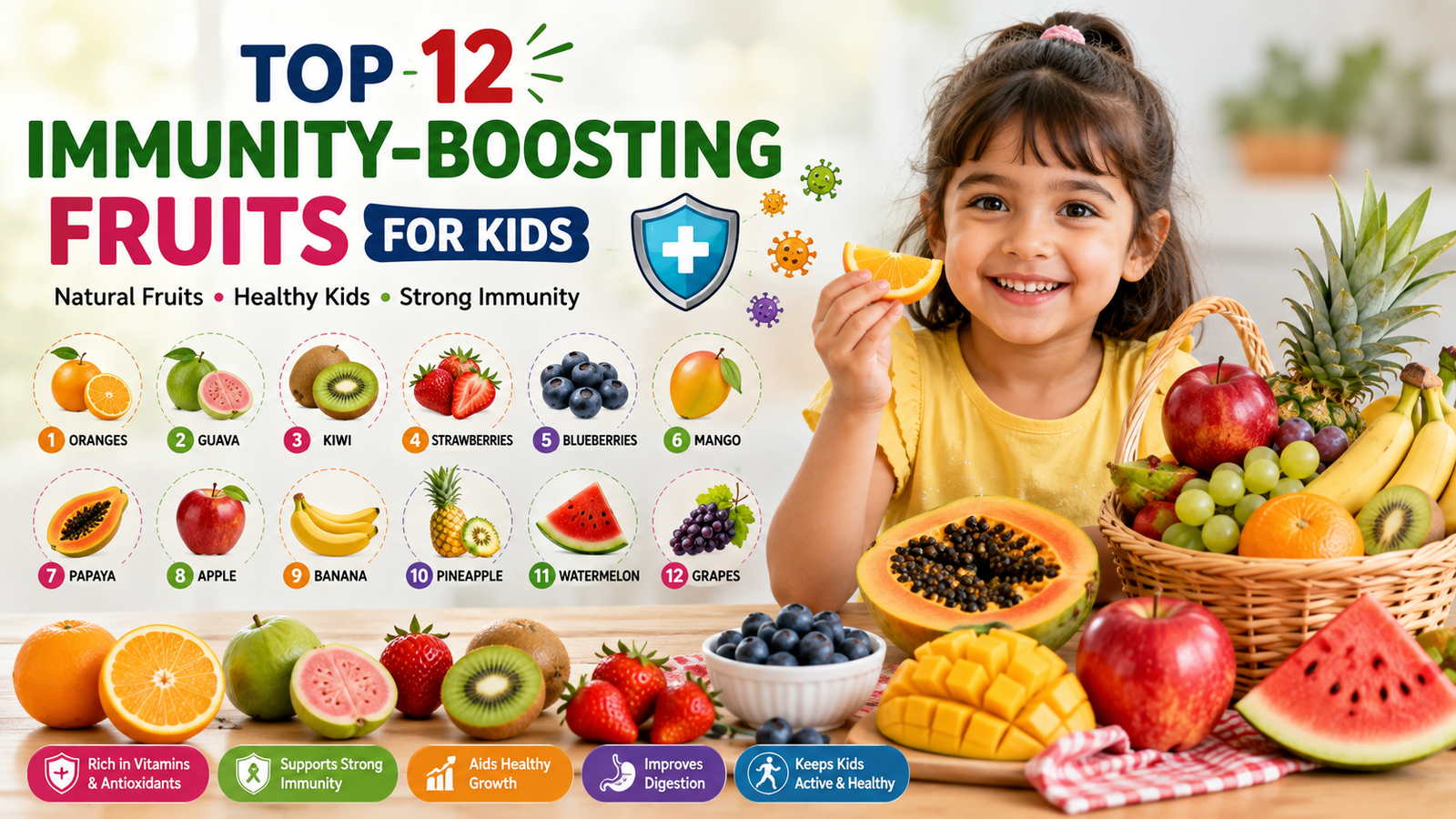
A variety of colourful fruits and vegetables provide vitamins, minerals, fibre, and antioxidants.
Excellent Choices
- Blueberries
- Strawberries
- Bananas
- Oranges
- Apples
- Spinach
- Broccoli
- Carrots
Including different colours on the plate helps provide a wide range of nutrients.
6. Whole Grains
Whole grains provide a steady supply of energy to the brain, helping children stay focused throughout the day.
Healthy Whole Grain Choices
- Oats
- Brown rice
- Whole wheat bread
- Whole wheat pasta
- Quinoa
- Millet
Whole grains are rich in fibre and B vitamins that support normal brain function.
7. Green Leafy Vegetables
Leafy vegetables contain vitamins, minerals, and antioxidants that support healthy brain development.
Best Choices
- Spinach
- Kale
- Fenugreek leaves
- Lettuce
- Mustard greens
Including leafy vegetables several times a week helps provide essential nutrients.
8. Beans and Lentils
Beans and lentils are excellent sources of plant protein, iron, and fibre.
Benefits
- Support concentration
- Help maintain steady energy
- Promote healthy brain development
Examples include:
- Kidney beans
- Chickpeas
- Black beans
- Green gram
- Red lentils
9. Avocados
Avocados provide healthy monounsaturated fats that support overall brain health.
Benefits
- Support healthy blood circulation
- Provide vitamin E and folate
- Contribute to normal brain function
Serve avocado as a spread, salad ingredient, or smoothie addition.
10. Water
Hydration is essential for memory, concentration, and learning.
Healthy Hydration Tips
- Encourage children to drink water throughout the day.
- Pack a water bottle for school.
- Replace sugary drinks with water whenever possible.
Even mild dehydration can make it harder for children to concentrate.
Foods to Limit
Reduce Intake of
- Sugary soft drinks
- Candy
- Chocolates
- Cakes and pastries
- Chips
- Instant noodles
- Fast food
- Sugary breakfast cereals
- Highly processed snacks
These foods may provide excess calories while offering fewer nutrients needed for healthy brain development.
Daily Habits That Improve Memory and Concentration
Eat a Nutritious Breakfast
A healthy breakfast provides the brain with energy needed for learning and attention.
Healthy Breakfast Ideas
- Oatmeal with fruit
- Boiled eggs with whole wheat toast
- Yogurt with berries
- Vegetable omelette
- Peanut butter on whole grain bread
Encourage Daily Reading
Reading helps improve vocabulary, memory, imagination, and cognitive development.
Set aside at least 20–30 minutes each day for reading.
Stay Physically Active
Regular exercise improves blood flow to the brain and supports learning.
Children should aim for at least 60 minutes of physical activity every day, including:
- Running
- Cycling
- Swimming
- Football
- Dancing
- Outdoor games
Ensure Enough Sleep
Good sleep is essential for memory, learning, and emotional well-being.
Recommended Sleep Duration
- Preschool children (3–5 years): 10–13 hours
- School-age children (6–12 years): 9–12 hours
- Teenagers (13–18 years): 8–10 hours
A regular bedtime routine supports better sleep quality.
Reduce Screen Time
Too much recreational screen time may interfere with sleep, physical activity, and learning.
Encourage a healthy balance between screen use, outdoor play, reading, and family activities.
Tips for Better Learning and Memory
Create a Study Routine
Help children study at the same time each day to build consistency.
Give Short Study Breaks
Short breaks between study sessions help improve focus and reduce mental fatigue.
Encourage Curiosity
Ask questions, play educational games, and explore new topics together.
Praise Effort Instead of Results
Positive encouragement builds confidence and motivates children to keep learning.
Make Learning Fun
Use puzzles, storytelling, flashcards, drawing, and educational activities to make learning enjoyable.
Frequently Asked Questions
Can food improve a child’s memory?
A balanced diet rich in protein, healthy fats, vitamins, minerals, and whole grains supports normal brain development and cognitive function. No single food can instantly improve memory, but healthy eating patterns contribute to better learning and concentration.
Which fruit is best for children’s brain health?
Fruits such as blueberries, strawberries, oranges, bananas, and apples provide vitamins, antioxidants, and fibre that support overall health and brain function.
Are eggs good for children’s memory?
Yes. Eggs provide protein, choline, and B vitamins, which are important nutrients for healthy brain development and cognitive function.
Does drinking enough water help concentration?
Yes. Staying hydrated supports normal brain function and helps children stay alert and focused during learning activities.
Should children take memory supplements?
Most healthy children can obtain the nutrients they need from a balanced diet. Supplements should only be used if recommended by a qualified healthcare professional.
Key Takeaways
- A balanced diet is essential for healthy brain development, memory, and learning.
- Include eggs, fish, dairy, whole grains, fruits, vegetables, beans, nuts, and seeds in your child’s diet.
- Encourage regular physical activity and at least 60 minutes of active play every day.
- Ensure children get enough sleep and stay well hydrated.
- Limit sugary drinks, highly processed snacks, and excessive recreational screen time.
- Combine healthy nutrition with reading, play, and positive learning habits for the best results.
Conclusion
Supporting your child’s memory and brain development begins with healthy everyday habits. A nutritious diet filled with whole foods, regular physical activity, adequate sleep, proper hydration, and an encouraging learning environment all play important roles in helping children reach their full potential. Rather than relying on a single “brain food,” focus on offering a variety of nutrient-rich meals that provide the vitamins, minerals, healthy fats, and protein needed for normal cognitive development.
Parents and caregivers can also strengthen memory and concentration by creating consistent routines, encouraging reading, reducing unnecessary screen time, and making learning enjoyable. These healthy habits not only support academic performance but also contribute to lifelong physical and mental well-being.