Have you ever filled your grocery cart with foods labeled “healthy,” “natural,” “low-fat,” or “organic,” only to wonder why you’re still gaining weight, feeling tired, or struggling to meet your health goals? You’re not alone. Modern food marketing has made it increasingly difficult to distinguish genuinely nutritious foods from products that merely appear healthy. Many everyday foods marketed as wellness staples are actually loaded with hidden sugars, unhealthy fats, excess sodium, artificial additives, and empty calories that can quietly undermine your health.
The truth is that eating healthy isn’t just about choosing foods with attractive labels. It requires understanding ingredients, portion sizes, and how different foods affect your body. Even foods considered nutritious can become unhealthy when processed, sweetened, or consumed in large amounts. This is why many people unknowingly eat foods that sabotage weight loss, blood sugar control, heart health, and overall wellness.
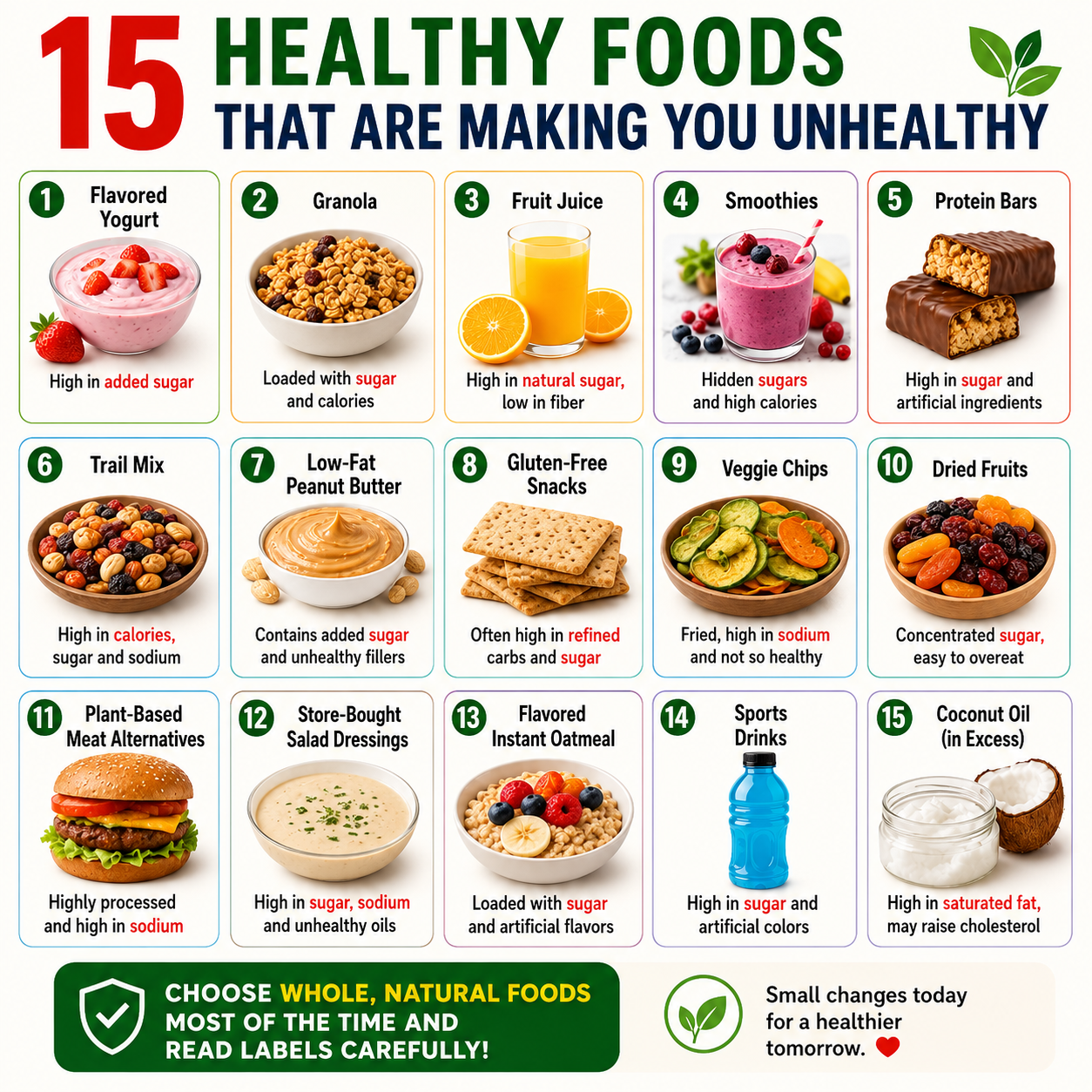
In this comprehensive guide, we’ll explore Healthy Foods That Are Making You Unhealthy, explain why they’re problematic, identify healthier alternatives, and provide practical tips for making smarter choices. Whether your goal is weight management, improved energy, better heart health, or disease prevention, understanding these hidden diet traps can help you make informed decisions every day.
Why Healthy Foods Can Become Unhealthy
Many foods earn a healthy reputation because they contain beneficial nutrients such as vitamins, minerals, fiber, or protein. However, food manufacturers often modify these products by adding sugar, refined starches, unhealthy oils, preservatives, artificial flavors, and excess sodium to improve taste, texture, and shelf life. As a result, a food that starts out healthy may end up contributing to weight gain, insulin resistance, inflammation, and poor heart health.
Marketing claims can also be misleading. Labels like “organic,” “natural,” “low-fat,” “multigrain,” or “gluten-free” don’t automatically mean a product is nutritious. Reading the nutrition facts panel and ingredient list is far more important than trusting the front of the package. The healthiest choices are usually foods that are minimally processed and close to their natural form.
Signs Your “Healthy Diet” May Not Be Working
If you’re regularly eating foods that seem healthy but are actually loaded with hidden calories and added ingredients, your body may give you warning signs. Recognizing these symptoms can help you identify whether your diet needs adjustment before long-term health issues develop.
Common signs include:
- Constant hunger after meals
- Unexpected weight gain
- Low energy throughout the day
- Frequent sugar cravings
- Blood sugar fluctuations
- Digestive discomfort
- Difficulty losing body fat
- High cholesterol levels
- Increased blood pressure
- Feeling tired despite eating regularly
If several of these symptoms sound familiar, it may be time to take a closer look at the foods you’re eating every day.
1. Flavored Yogurt
Yogurt is widely considered one of the healthiest breakfast and snack options because it provides protein, calcium, probiotics, and essential nutrients that support digestive and bone health. However, flavored yogurts often contain surprisingly large amounts of added sugar, artificial flavorings, fruit syrups, and sweeteners that can outweigh their nutritional benefits. Some single-serving containers contain as much sugar as a dessert.
Consuming high-sugar yogurt regularly may contribute to blood sugar spikes, increased calorie intake, fat storage, and a greater risk of developing metabolic disorders over time. Many fruit-flavored varieties also contain very little actual fruit, relying instead on sweetened fruit concentrates and additives to create flavor.
Why It’s Unhealthy
- High added sugar
- Artificial flavors
- Hidden calories
- Increased blood sugar
- Promotes fat storage
Better Alternative
Choose plain Greek yogurt and add fresh strawberries, blueberries, bananas, or a drizzle of natural honey if needed. This provides protein, probiotics, and fiber without unnecessary added sugar.
2. Granola
Granola has earned a reputation as a healthy breakfast and snack because it often contains oats, nuts, and seeds. While these ingredients are nutritious on their own, commercially prepared granola frequently includes large amounts of added sugar, honey, syrups, vegetable oils, and dried fruits coated in sweeteners. The result is a calorie-dense food that is easy to overeat without realizing it.
Many people also underestimate portion sizes. A serving of granola is usually much smaller than the amount people pour into a bowl. Eating multiple servings can quickly add hundreds of extra calories, making weight management much more difficult despite choosing what appears to be a healthy food.
Why It’s Unhealthy
- High sugar content
- Excess calories
- Added oils
- Easy to overeat
- Blood sugar spikes
Better Alternative
Prepare homemade granola using rolled oats, nuts, seeds, cinnamon, and minimal natural sweetener, or simply enjoy plain oatmeal topped with fresh fruit and almonds.
3. Fruit Juice
Fruit juice is often marketed as an easy way to get vitamins and minerals, but even 100% fruit juice lacks the fiber found in whole fruits. Without fiber to slow sugar absorption, fruit juice can cause rapid increases in blood sugar levels. Drinking several glasses daily may contribute to excess calorie intake without creating the same feeling of fullness that whole fruit provides.
Many juice products also contain added sugars, flavor enhancers, or concentrated fruit syrups that further increase their sugar content. Because juice is easy to consume quickly, people often drink the equivalent of several pieces of fruit in just one serving.
Why It’s Unhealthy
- Low fiber
- High natural sugars
- Blood sugar spikes
- Less filling than whole fruit
- Easy to consume excess calories
Better Alternative
Eat whole fruits such as apples, oranges, berries, or pears. Their fiber slows digestion, promotes fullness, and supports better blood sugar control.
4. Smoothies
Smoothies can be incredibly nutritious when prepared with balanced ingredients. Unfortunately, many commercially available smoothies contain fruit concentrates, flavored yogurt, sherbet, syrups, sweetened plant milks, ice cream, and fruit juice instead of whole fruits and vegetables. This transforms a healthy drink into a high-calorie, high-sugar beverage.
Even homemade smoothies can become unhealthy when oversized portions include multiple bananas, nut butters, sweetened protein powders, and large amounts of dried fruit. While each ingredient may be healthy individually, combining too many calorie-dense foods into one drink can significantly increase overall calorie intake.
Why It’s Unhealthy
- Hidden sugars
- Large portion sizes
- High calorie content
- Less chewing reduces satiety
- Can exceed daily sugar recommendations
Better Alternative
Blend spinach, frozen berries, unsweetened almond milk, Greek yogurt, chia seeds, and a small amount of banana for a balanced smoothie rich in fiber and protein.
5. Protein Bars
Protein bars are often promoted as convenient meal replacements or post-workout snacks. While protein is essential for muscle repair and overall health, many commercial protein bars resemble candy bars more than health foods. They frequently contain added sugars, sugar alcohols, artificial sweeteners, processed oils, chocolate coatings, and numerous preservatives.
Some protein bars contain over 300 calories and as much sugar as a chocolate dessert. Eating them regularly without considering overall calorie intake may hinder weight-loss goals rather than support them.
Why It’s Unhealthy
- Added sugar
- Artificial ingredients
- High calorie density
- Processed oils
- Low fiber in many brands
Better Alternative
Choose boiled eggs, cottage cheese, roasted chickpeas, plain Greek yogurt, or a handful of nuts for a naturally protein-rich snack.
6. Trail Mix
Trail mix is often promoted as the perfect healthy snack because it combines nuts, seeds, and dried fruits. While these ingredients are naturally nutritious, many store-bought versions include chocolate candies, yogurt-coated raisins, sweetened dried fruits, caramel pieces, and heavily salted nuts. These additions significantly increase the sugar, sodium, and calorie content.
Another common issue is portion control. Nuts contain healthy fats, but they are also calorie-dense. A handful can quickly turn into several servings, leading to excess calorie consumption. Eating large amounts of trail mix regularly can make weight management difficult, especially if you snack mindlessly throughout the day.
Why It’s Unhealthy
- High calorie density
- Added sugar from dried fruit and candy
- Excess sodium
- Easy to overeat
- Hidden fats
Better Alternative
Make your own trail mix using unsalted almonds, walnuts, pumpkin seeds, sunflower seeds, and a small amount of unsweetened dried cranberries or raisins. Measure portions to about one-quarter cup for a satisfying snack.
7. Low-Fat Peanut Butter
Many people assume low-fat peanut butter is healthier than regular peanut butter. However, when manufacturers remove the natural healthy fats, they often replace them with sugar, corn syrup, maltodextrin, and other fillers to improve flavor and texture.
Healthy fats found in peanuts help keep you full, support heart health, and provide lasting energy. Removing these fats while adding refined carbohydrates can actually make the product less nutritious than traditional natural peanut butter.
Why It’s Unhealthy
- Added sugars
- Artificial fillers
- Reduced healthy fats
- Less satisfying
- Highly processed
Better Alternative
Choose natural peanut butter that contains only peanuts and a small amount of salt. Stir before use since natural oils separate naturally.
8. Gluten-Free Snacks
Gluten-free products have become extremely popular, even among people who do not have celiac disease or gluten sensitivity. While gluten-free foods are medically necessary for some individuals, they are not automatically healthier.
Many gluten-free crackers, cookies, breads, and snack bars are made with refined rice flour, potato starch, tapioca starch, and added sugars. These ingredients often contain less fiber and fewer nutrients than whole-grain alternatives while having a higher glycemic index.
Why It’s Unhealthy
- Low fiber
- Refined starches
- Added sugar
- Highly processed
- May spike blood sugar
Better Alternative
Unless medically necessary, choose whole-grain products like oats, quinoa, brown rice, or whole-wheat bread that provide more fiber and nutrients.
9. Veggie Chips
Veggie chips sound like a nutritious alternative to potato chips because they often feature vegetables such as spinach, carrots, or beets on the package. However, many brands contain mostly potato starch or corn flour with only small amounts of vegetable powder.
These snacks are usually fried or heavily processed and often contain nearly the same amount of fat, sodium, and calories as traditional potato chips. The vegetable content is generally too small to provide meaningful nutritional benefits.
Why It’s Unhealthy
- Fried in oil
- High sodium
- Minimal real vegetables
- Highly processed
- Similar calories to potato chips
Better Alternative
Snack on roasted vegetables, baked kale chips, cucumber slices, baby carrots, celery sticks, or bell peppers with hummus.
10. Dried Fruits
Dried fruits retain many vitamins and minerals found in fresh fruit, but removing water makes their natural sugars much more concentrated. Some commercial dried fruits are also coated with additional sugar to improve taste.
Because dried fruit is compact, it’s easy to consume several servings without realizing it. A small handful may contain the same sugar and calories as multiple pieces of fresh fruit while providing less fullness.
Why It’s Unhealthy
- Concentrated natural sugar
- Added sweeteners
- High calorie density
- Easy to overeat
- Less filling than fresh fruit
Better Alternative
Choose fresh seasonal fruits whenever possible. If eating dried fruit, stick to small portions and buy varieties with no added sugar.
11. Plant-Based Meat Alternatives
Plant-based burgers, sausages, and nuggets have become increasingly popular among people looking to reduce meat consumption. While they can be useful options, many highly processed meat substitutes contain large amounts of sodium, refined oils, preservatives, flavor enhancers, and stabilizers.
These products are often designed to mimic the taste and texture of meat rather than maximize nutrition. Although they may contain protein, frequent consumption of heavily processed alternatives may not provide the same health benefits as eating whole plant foods.
Why It’s Unhealthy
- Highly processed
- High sodium
- Added oils
- Artificial ingredients
- Long ingredient lists
Better Alternative
Choose whole-food protein sources such as lentils, chickpeas, black beans, tofu, edamame, quinoa, and homemade bean burgers.
12. Store-Bought Salad Dressings
Salads are among the healthiest meals you can eat, but the dressing can dramatically change their nutritional value. Many bottled dressings contain refined vegetable oils, added sugars, preservatives, artificial flavors, and excessive sodium.
A salad filled with leafy greens and fresh vegetables can easily become a high-calorie meal when topped with several tablespoons of creamy dressing. In some cases, the dressing contains more calories than the vegetables themselves.
Why It’s Unhealthy
- Hidden sugar
- High sodium
- Refined oils
- Artificial preservatives
- Extra calories
Better Alternative
Prepare a homemade dressing using extra-virgin olive oil, fresh lemon juice, vinegar, Dijon mustard, garlic, and herbs. This simple combination adds flavor while providing healthier fats.
13. Flavored Instant Oatmeal
Oatmeal is an excellent source of soluble fiber that supports heart health and digestion. However, flavored instant oatmeal packets often include brown sugar, artificial flavorings, dried fruit with added sugar, and other sweeteners.
These added ingredients can significantly increase the sugar content while reducing the health benefits associated with plain oats. Eating sugary oatmeal may also leave you hungry sooner because of rapid blood sugar changes.
Why It’s Unhealthy
- Added sugar
- Artificial flavors
- Less fiber than steel-cut oats
- Blood sugar spikes
- Lower satiety
Better Alternative
Cook plain rolled or steel-cut oats and add cinnamon, chopped apples, berries, flaxseed, walnuts, or chia seeds for natural sweetness and extra nutrition.
14. Sports Drinks
Sports drinks are heavily marketed as essential for hydration and athletic performance. While they can be beneficial for endurance athletes participating in intense exercise lasting more than an hour, they are unnecessary for most people. Many sports drinks contain high amounts of added sugar, artificial colors, flavorings, and sodium that can contribute to excess calorie intake.
If you’re using sports drinks during light workouts or as an everyday beverage, you may be consuming unnecessary sugar without gaining any real performance benefits. Water is usually sufficient for hydration during normal daily activities and moderate exercise.
Why It’s Unhealthy
- High added sugar
- Artificial colors and flavors
- Unnecessary calories
- Can contribute to weight gain
- May increase blood sugar levels
Better Alternative
Drink plain water throughout the day. For longer or more intense workouts, consider coconut water (without added sugar) or an electrolyte drink with minimal sugar if needed.
15. Coconut Oil
Coconut oil has gained popularity as a “superfood,” but it’s important to understand both its benefits and limitations. Although coconut oil contains medium-chain triglycerides (MCTs), it is also very high in saturated fat. Consuming excessive amounts may raise LDL (“bad”) cholesterol levels in some individuals, especially when it replaces healthier unsaturated fats.
Using coconut oil occasionally is unlikely to be harmful for most healthy people, but relying on it as your primary cooking oil may not be the best choice for heart health. Current nutrition guidelines generally recommend emphasizing unsaturated fats from sources like olive oil, avocados, nuts, and seeds.
Why It’s Unhealthy
- High in saturated fat
- Can raise LDL cholesterol
- Easy to overconsume
- High in calories
- Not a miracle health food
Better Alternative
Use extra-virgin olive oil for most cooking and salad dressings. It is rich in heart-healthy monounsaturated fats and antioxidants.
Healthy Food Swaps: Quick Comparison Table
| Instead of… | Choose… | Why It’s Better |
| Flavored Yogurt | Plain Greek Yogurt + Fresh Fruit | Less sugar, more protein |
| Granola | Steel-Cut Oats | More fiber, fewer added sugars |
| Fruit Juice | Whole Fruit | Higher fiber, more filling |
| Store-Bought Smoothies | Homemade Smoothies | Better control of ingredients |
| Protein Bars | Boiled Eggs or Cottage Cheese | Fewer additives, more natural protein |
| Trail Mix with Candy | Homemade Nut & Seed Mix | Lower sugar and sodium |
| Low-Fat Peanut Butter | Natural Peanut Butter | Healthy fats, fewer additives |
| Gluten-Free Snacks | Whole-Grain Snacks | More fiber and nutrients |
| Veggie Chips | Fresh Vegetables with Hummus | More vitamins and fewer calories |
| Sweetened Dried Fruit | Fresh Fruit | Better hydration and portion control |
| Plant-Based Processed Burgers | Lentils or Chickpeas | Less processing, more fiber |
| Bottled Salad Dressing | Homemade Olive Oil Dressing | Fewer preservatives |
| Flavored Instant Oatmeal | Plain Oats with Fruit | Lower sugar, higher nutrition |
| Sports Drinks | Water | No unnecessary sugar |
| Coconut Oil (in excess) | Extra-Virgin Olive Oil | Better for heart health |
How to Read Food Labels Like a Nutrition Expert
One of the best ways to avoid misleading “healthy” foods is to learn how to read nutrition labels. The front of a package is designed to attract attention, but the nutrition facts panel and ingredient list reveal what’s actually inside.
When shopping, pay attention to:
- The amount of added sugar per serving.
- The serving size, as packages often contain multiple servings.
- The amount of dietary fiber, which helps keep you full.
- The protein content, especially in snacks and breakfast foods.
- The sodium level, particularly in processed foods.
- The ingredient list—shorter lists with recognizable ingredients are often a better choice.
As a general rule, the fewer highly processed ingredients a product contains, the healthier it is likely to be.
Tips for Building a Truly Healthy Diet
Rather than relying on marketing claims, focus on whole, minimally processed foods. Building healthy eating habits doesn’t require perfection—it requires consistency and informed choices.
Here are some practical tips:
- Fill half your plate with vegetables.
- Eat whole fruits instead of drinking fruit juice.
- Choose whole grains over refined grains.
- Include lean protein with every meal.
- Use healthy fats such as olive oil, nuts, and seeds in moderation.
- Read ingredient lists before buying packaged foods.
- Watch portion sizes, even for healthy foods.
- Drink plenty of water throughout the day.
- Limit foods with added sugars and artificial ingredients.
- Plan meals in advance to reduce reliance on processed convenience foods.
These habits can support long-term health, improve energy levels, and reduce the risk of chronic diseases.
Frequently Asked Questions (FAQs)
1. Are all foods labeled “healthy” actually good for you?
No. Many foods marketed as healthy contain hidden sugars, refined carbohydrates, excess sodium, or artificial additives. Always check the nutrition label and ingredient list rather than relying on marketing claims.
2. Is fruit juice healthier than soda?
While 100% fruit juice contains vitamins and minerals, it is still high in natural sugars and lacks the fiber found in whole fruit. For most people, whole fruit is the healthier option.
3. Is natural peanut butter better than low-fat peanut butter?
Yes. Natural peanut butter typically contains only peanuts (and sometimes a little salt), while many low-fat versions replace healthy fats with added sugar and fillers.
4. Should I completely avoid processed foods?
Not necessarily. Some minimally processed foods, such as frozen vegetables, canned beans (with no added salt), and plain yogurt, can be part of a healthy diet. The goal is to limit highly processed foods with excessive sugar, sodium, and unhealthy fats.
5. Can healthy foods still cause weight gain?
Yes. Even nutritious foods contain calories. Consuming large portions of calorie-dense foods like nuts, granola, dried fruit, or nut butter can contribute to weight gain if they exceed your energy needs.
6. How can I identify hidden sugars?
Look for ingredients such as cane sugar, corn syrup, high-fructose corn syrup, maltose, dextrose, honey, agave syrup, fruit juice concentrate, and molasses on the ingredient list.
Key Takeaways
- Foods labeled as “healthy” are not always nutritious.
- Hidden sugars, sodium, and unhealthy fats are common in many packaged products.
- Portion size matters—even healthy foods can contribute to excess calorie intake.
- Whole, minimally processed foods are generally the best choice.
- Reading food labels helps you make informed decisions.
- Small daily changes can lead to significant long-term health improvements.
Conclusion
Eating healthy is about more than choosing foods with attractive packaging or trendy health claims. Many products marketed as nutritious can contain hidden ingredients that work against your health goals. By understanding what goes into your food and choosing whole, minimally processed options whenever possible, you can avoid common diet traps and make choices that truly nourish your body.
Remember, no single food determines your overall health. A balanced diet built around vegetables, fruits, whole grains, lean proteins, healthy fats, and mindful portion sizes is the foundation of lasting wellness. Focus on consistency rather than perfection, and let informed decisions guide your eating habits.
The next time you’re shopping, take a few extra moments to read nutrition labels and ingredient lists. Those small efforts can make a big difference in supporting your energy, weight management, heart health, and overall well-being.
Read Our Latest Blog : The 15 Most Dangerous Breakfast Foods You Need to Avoid Right Now