Eating healthy doesn’t have to drain your wallet. Many people believe that nutritious food is expensive, but smart Budget meal planning proves otherwise. By making thoughtful choices before shopping, selecting affordable ingredients, and preparing meals at home, you can enjoy balanced, delicious meals while keeping grocery costs under control.
Whether you’re feeding a family, living alone, managing student expenses, or simply trying to reduce your monthly food budget, meal planning is one of the most effective ways to save money without sacrificing nutrition. It helps eliminate impulse purchases, reduces food waste, and ensures you always have healthy ingredients available for quick meals.
This guide explains simple ways to build healthy meals on a tight budget, covering everything from creating grocery lists and choosing affordable protein sources to meal prepping, smart shopping habits, and avoiding costly mistakes. By the end of this article, you’ll have practical strategies to make healthy eating both affordable and sustainable for the long term.
What Is Budget Meal Planning?
Budget meal planning is the process of organizing meals in advance while staying within a predetermined grocery budget. It involves deciding what to eat for the week, creating a shopping list based on those meals, and purchasing only the ingredients you truly need. This proactive approach helps reduce unnecessary spending and ensures you always have nutritious foods available.
Unlike last-minute meal decisions that often lead to expensive takeout or impulse grocery purchases, budget meal planning encourages thoughtful preparation. It focuses on affordable ingredients, seasonal produce, pantry staples, and recipes that make the most of every purchase. With consistent planning, households can lower grocery expenses while maintaining a balanced and satisfying diet.
Why Budget Meal Planning Matters
Food prices continue to fluctuate, making grocery shopping more challenging for many families. Without a clear plan, it’s easy to overspend on convenience foods, duplicate purchases, or ingredients that eventually spoil before they’re used. Budget meal planning provides a structured solution by helping households maximize every dollar spent.
Planning meals also supports healthier eating habits. Instead of relying on processed or fast foods during busy days, you already have ingredients ready for nutritious home-cooked meals. This not only benefits your financial well-being but also contributes to better overall health by encouraging balanced nutrition and portion control.
Benefits of Planning Healthy Meals on a Budget
Budget meal planning offers far more than financial savings. It creates healthier routines, reduces stress, and makes cooking more efficient. By planning ahead, you eliminate daily uncertainty about what to prepare while ensuring that your meals contain a healthy balance of nutrients.
Major Benefits
- Saves money on groceries
- Reduces food waste
- Minimizes impulse purchases
- Encourages healthier eating habits
- Saves cooking time during busy weeks
- Helps control portion sizes
- Supports weight management goals
- Reduces reliance on takeout
- Improves family meal consistency
- Makes grocery shopping faster and more organized
When practiced consistently, these benefits compound over time, making healthy eating a sustainable lifestyle rather than an expensive challenge.
How to Set a Weekly Food Budget
Creating a realistic weekly grocery budget is the foundation of successful meal planning. Start by reviewing your previous grocery receipts to understand your average spending. From there, determine how much you can comfortably allocate each week without affecting other financial priorities.
Next, divide your budget into major food categories such as fruits, vegetables, proteins, grains, dairy, and pantry essentials. This helps ensure that you’re purchasing a variety of nutritious foods rather than overspending in one category. Tracking your spending over several weeks allows you to identify opportunities to cut costs and improve efficiency.
Example Weekly Grocery Budget
| Category | Suggested Budget |
| Fruits & Vegetables | 25% |
| Protein Foods | 30% |
| Whole Grains | 15% |
| Dairy or Alternatives | 10% |
| Pantry Staples | 15% |
| Healthy Snacks | 5% |
This balanced allocation provides flexibility while prioritizing nutrient-dense foods.
Essential Principles of Budget Meal Planning
Successful meal planning follows several practical principles that simplify shopping and cooking while reducing overall costs. Rather than focusing solely on finding the cheapest foods, the goal is to maximize nutritional value for every dollar spent.
Key principles include planning meals around weekly grocery sales, using ingredients in multiple recipes, choosing seasonal produce, and cooking larger batches to create leftovers. Buying versatile ingredients such as oats, beans, brown rice, frozen vegetables, eggs, and canned tomatoes allows you to prepare a wide variety of affordable meals throughout the week.
Another important principle is maintaining an organized pantry. Knowing what ingredients you already have prevents duplicate purchases and encourages creative use of existing supplies before they expire.
Build Healthy Meals Using the Balanced Plate Method
One of the simplest ways to create affordable and nutritious meals is by following the balanced plate method. This approach ensures that each meal includes an appropriate combination of vegetables, whole grains, lean proteins, and healthy fats without requiring expensive specialty foods.
A balanced plate typically consists of half vegetables and fruits, one-quarter lean protein, and one-quarter whole grains or starchy vegetables. Adding a serving of healthy fats, such as nuts, seeds, avocado, or olive oil, further improves nutritional quality while enhancing flavor and satiety.
Balanced Plate Example
| Plate Section | Affordable Food Options |
| 50% Vegetables | Frozen broccoli, carrots, cabbage, spinach |
| 25% Protein | Eggs, beans, lentils, canned tuna, chicken |
| 25% Whole Grains | Brown rice, oats, whole wheat pasta |
| Healthy Fat | Peanut butter, sunflower seeds, olive oil |
Using this framework makes meal planning simple while ensuring nutritional balance regardless of budget.
Affordable Foods That Deliver Great Nutrition
Healthy eating becomes much easier when you focus on foods that provide high nutritional value at a low cost. Many inexpensive staples are rich in protein, fiber, vitamins, and minerals, making them ideal for budget-conscious households.
Beans and lentils are among the most affordable protein sources available. They are versatile, filling, and packed with fiber and essential nutrients. Eggs provide high-quality protein at a relatively low cost and can be used in countless recipes. Oats are another excellent staple, offering whole grains, fiber, and long-lasting energy.
Frozen fruits and vegetables deserve special attention because they are often less expensive than fresh produce, last much longer, and retain most of their nutritional value. Buying seasonal produce, store-brand products, and whole grains in bulk can further reduce grocery expenses while supporting a healthy diet.
Top Budget-Friendly Healthy Foods
| Food | Main Benefit |
| Oats | High fiber breakfast |
| Brown Rice | Affordable whole grain |
| Lentils | Protein and fiber |
| Beans | Budget-friendly protein |
| Eggs | Complete protein |
| Frozen Vegetables | Long shelf life |
| Frozen Fruit | Nutritious smoothies |
| Sweet Potatoes | Rich in vitamins |
| Peanut Butter | Healthy fats and protein |
| Canned Tuna | Affordable lean protein |
Smart Grocery Shopping Tips That Save Money
Buying healthy food on a budget starts long before you enter the grocery store. Smart shopping habits can significantly reduce your food expenses while ensuring you bring home nutritious ingredients. The key is to shop with a plan, compare prices, and focus on foods that provide the best value rather than simply choosing the cheapest options.
Shopping after you’ve eaten, sticking to a prepared grocery list, and comparing unit prices are simple habits that prevent impulse purchases. Taking advantage of weekly promotions, loyalty programs, and seasonal produce can also stretch your budget further. Over time, these small changes add up to meaningful savings without compromising the quality of your meals.
Best Grocery Shopping Tips
- Make a shopping list and stick to it.
- Plan meals before going to the store.
- Compare unit prices instead of package prices.
- Buy store brands when quality is comparable.
- Choose seasonal fruits and vegetables.
- Purchase frozen produce when fresh options are expensive.
- Buy grains, beans, and oats in bulk when practical.
- Use coupons and digital store discounts wisely.
- Avoid shopping while hungry.
- Limit purchases of highly processed convenience foods.
These habits not only reduce spending but also help you make healthier food choices and minimize unnecessary purchases.
How to Create a Budget-Friendly Weekly Meal Plan
A weekly meal plan removes the guesswork from daily cooking and helps ensure that every ingredient you purchase has a purpose. Start by checking your refrigerator, freezer, and pantry to identify foods you already have. Building meals around existing ingredients prevents waste and reduces grocery costs.
Next, review local grocery store flyers or online promotions to identify discounted items. Plan meals that use those ingredients in multiple recipes throughout the week. For example, roasted chicken can be served for dinner, added to salads for lunch, and used in soups or wraps later in the week. This strategy maximizes value while reducing preparation time.
Step-by-Step Meal Planning Process
- Check your current food inventory.
- Set your grocery budget.
- Review weekly store sales.
- Select affordable recipes.
- Create a detailed shopping list.
- Prepare ingredients in advance.
- Store leftovers safely for future meals.
Following the same planning routine each week makes healthy eating easier and helps establish long-term money-saving habits.
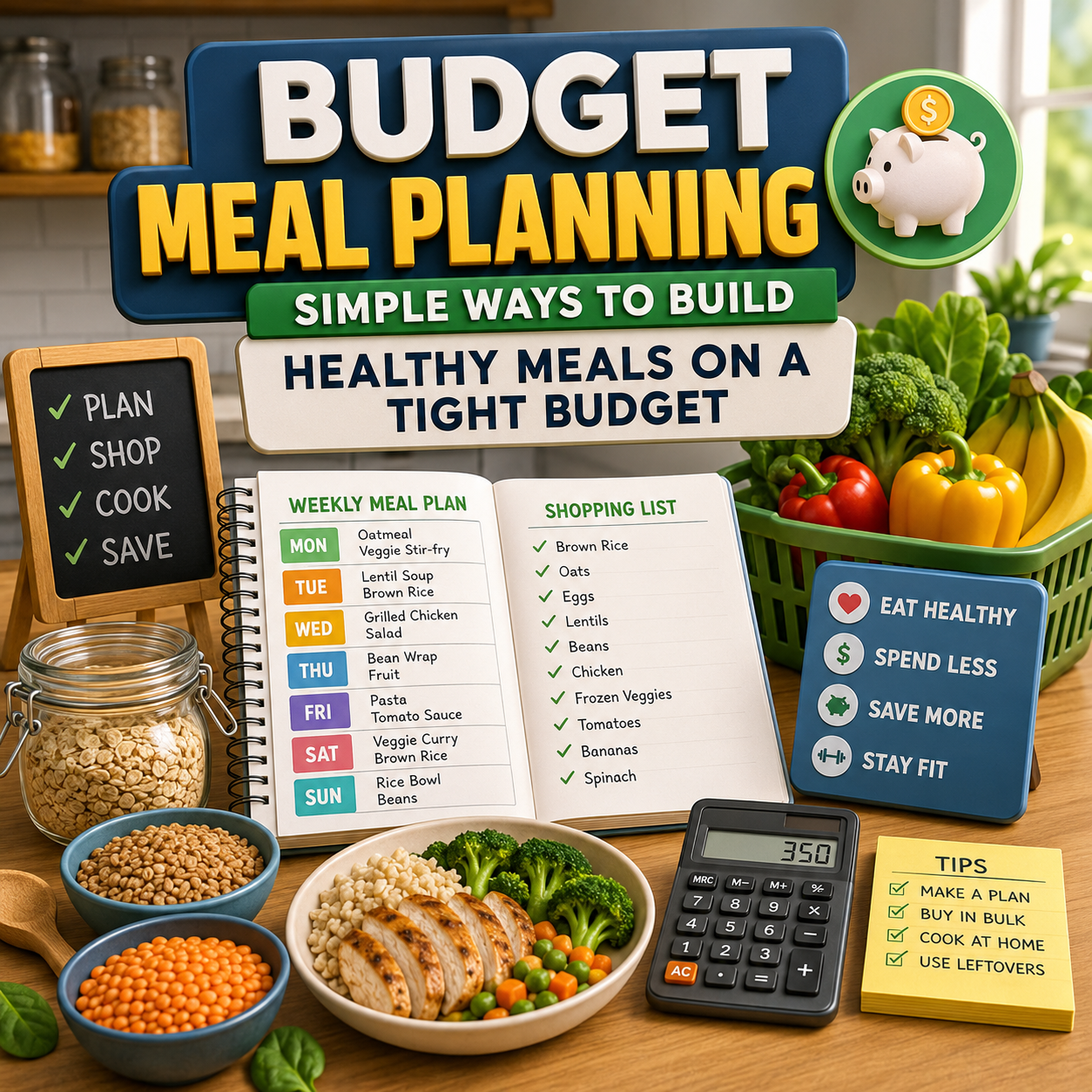
Sample 7-Day Budget Meal Plan
The following meal plan demonstrates how affordable ingredients can be combined into balanced, satisfying meals. Feel free to adjust portion sizes and substitute ingredients based on personal preferences, dietary needs, or local food availability.
| Day | Breakfast | Lunch | Dinner |
| Monday | Oatmeal with banana | Lentil soup | Grilled chicken, rice, vegetables |
| Tuesday | Scrambled eggs and toast | Bean salad | Whole wheat pasta with vegetables |
| Wednesday | Yogurt with oats | Chicken wrap | Vegetable stir-fry with brown rice |
| Thursday | Peanut butter toast | Leftover stir-fry | Lentil curry with rice |
| Friday | Overnight oats | Tuna sandwich | Baked potatoes with beans |
| Saturday | Vegetable omelet | Rice bowl with vegetables | Homemade vegetable soup |
| Sunday | Whole wheat pancakes | Chicken salad | Baked chicken with roasted vegetables |
This plan emphasizes affordable staples such as oats, eggs, beans, lentils, rice, seasonal vegetables, and chicken while providing balanced nutrition throughout the week.
Meal Prep Strategies That Save Time and Money
Meal preparation is one of the most effective ways to stay within your grocery budget. Preparing meals in advance reduces the temptation to order takeout, shortens cooking time during busy weekdays, and ensures that healthy meals are always available.
Choose one or two days each week to prepare ingredients or cook complete meals. Washing vegetables, chopping produce, cooking grains, and portioning proteins ahead of time can make weekday cooking much faster. Batch cooking soups, casseroles, chili, or rice dishes also provides convenient leftovers that reduce food waste.
Practical Meal Prep Ideas
- Cook a large batch of brown rice for multiple meals.
- Prepare overnight oats for several breakfasts.
- Roast a tray of mixed vegetables.
- Cook dried beans or lentils in bulk.
- Portion snacks into reusable containers.
- Freeze extra servings for future meals.
- Label containers with preparation dates.
- Rotate older foods to the front of the refrigerator.
Meal prepping not only saves money but also encourages healthier eating habits by making nutritious choices the most convenient option.
Budget-Friendly Protein Sources
Protein is often the most expensive part of a meal, but there are many affordable options that provide excellent nutritional value. Incorporating a mix of plant-based and animal-based proteins can help lower grocery costs while maintaining a balanced diet.
Beans, lentils, peas, eggs, canned fish, tofu, and plain Greek yogurt are all cost-effective protein sources. Purchasing larger packages of chicken or turkey when they’re on sale and freezing individual portions can also lead to significant savings over time.
Affordable Protein Comparison
| Protein Source | Cost | Nutritional Benefits | Best Uses |
| Eggs | Low | Complete protein | Breakfast, baking, salads |
| Lentils | Very Low | Protein, fiber, iron | Soups, curries, stews |
| Black Beans | Very Low | Protein, fiber | Burritos, salads, bowls |
| Chickpeas | Low | Protein, fiber | Hummus, salads, curries |
| Canned Tuna | Moderate | Lean protein, omega-3s | Sandwiches, salads |
| Tofu | Moderate | Plant protein | Stir-fries, soups |
| Chicken Thighs | Moderate | Protein, B vitamins | Roasting, grilling |
Choosing a variety of these proteins keeps meals interesting while supporting good nutrition within a limited budget.
Affordable Healthy Snacks
Healthy snacks can prevent overeating during meals and help maintain steady energy throughout the day. Instead of purchasing expensive packaged snack foods, choose simple whole-food options that are both nutritious and budget-friendly.
Examples include fresh fruit, homemade popcorn, yogurt, hard-boiled eggs, roasted chickpeas, peanut butter with apple slices, and vegetable sticks with hummus. Preparing snacks at home reduces costs and gives you better control over ingredients, sugar, and sodium levels.
Budget Snack Ideas
- Apple slices with peanut butter
- Homemade trail mix
- Carrot sticks with hummus
- Plain yogurt with berries
- Air-popped popcorn
- Banana with oats
- Hard-boiled eggs
- Cottage cheese with fruit
- Roasted chickpeas
- Whole-grain crackers with cheese
These snacks are satisfying, nutrient-dense, and easy to prepare in advance.
How to Reduce Food Waste and Save More Money
Reducing food waste is one of the easiest ways to stretch your grocery budget. Every ingredient that gets thrown away represents money lost. Planning meals around what you already have, storing food correctly, and using leftovers creatively can significantly reduce waste.
Organize your refrigerator so older items are visible and used first. Freeze foods before they spoil if you don’t plan to eat them immediately. Leftover vegetables can be added to soups, stir-fries, omelets, or casseroles, while cooked grains can become fried rice or grain bowls.
Common Budget Meal Planning Mistakes
Many people begin meal planning with enthusiasm but unknowingly make mistakes that increase costs or make the process difficult to maintain. Recognizing these common pitfalls can help you create a sustainable routine that saves both time and money.
One of the biggest mistakes is buying food without a plan. Impulse purchases often lead to overspending and wasted ingredients. Another common error is choosing recipes with many specialty ingredients that are expensive and rarely used again. Failing to use leftovers, ignoring expiration dates, and shopping while hungry are additional habits that can quickly inflate your grocery bill.
Mistakes to Avoid
- Shopping without a grocery list.
- Buying too much fresh produce at once.
- Ignoring freezer storage.
- Purchasing expensive convenience meals.
- Cooking portions that are too large without freezing leftovers.
- Forgetting to check pantry inventory before shopping.
- Choosing recipes with costly specialty ingredients.
- Throwing away edible leftovers instead of repurposing them.
Avoiding these mistakes makes budget meal planning simpler, more efficient, and easier to maintain over the long term.
Frequently Asked Questions (FAQs)
1. Why is budget meal planning important?
Budget meal planning helps families and individuals control grocery expenses while maintaining a nutritious diet. It reduces impulse purchases, minimizes food waste, and encourages home cooking. Planning meals ahead also saves time during busy weekdays and makes it easier to achieve long-term health and financial goals.
2. How often should I create a meal plan?
Most people benefit from creating a meal plan once each week. Weekly planning allows you to take advantage of grocery store promotions, use fresh ingredients efficiently, and prepare meals before the week becomes busy. Monthly planning can also work for pantry staples and freezer meals.
3. Can meal planning help with weight management?
Yes. Meal planning encourages balanced meals, portion control, and consistent eating habits. Having healthy meals prepared reduces the temptation to order fast food or consume highly processed snacks. Combined with regular physical activity, meal planning can support healthy weight management.
4. Are store-brand products healthy?
Many store-brand products offer nutrition comparable to national brands at a lower price. Reading the nutrition facts and ingredient list helps you make informed choices. Whole grains, frozen vegetables, canned beans, dairy products, and pantry staples are often excellent value as store brands.
5. Should I buy fresh, frozen, or canned vegetables?
Each option has benefits. Fresh vegetables are excellent when in season, frozen vegetables provide convenience and long shelf life, and canned vegetables can be affordable if you choose varieties with little or no added sodium. A combination of all three offers flexibility and helps reduce food waste.
6. How can I prevent food waste?
Prevent food waste by planning meals, storing foods correctly, labeling leftovers with dates, freezing extra portions, and rotating older ingredients to the front of your refrigerator or pantry. Creative use of leftovers in soups, casseroles, salads, and stir-fries also minimizes waste.
7. Is buying in bulk always cheaper?
Not always. Bulk purchasing is cost-effective only for foods you regularly use before they expire. Dry beans, rice, oats, whole grains, and certain frozen foods are excellent bulk purchases. Avoid buying perishable items in bulk unless you have a plan to use or freeze them.
8. What kitchen tools help with meal planning?
Useful tools include reusable food storage containers, measuring cups, a slow cooker, freezer-safe bags, a digital kitchen scale, sharp knives, cutting boards, and meal planning apps or printable planners. These tools improve efficiency and help preserve prepared meals safely.
9. Can vegetarians meal plan on a budget?
Absolutely. Plant-based proteins such as lentils, beans, chickpeas, tofu, peas, oats, quinoa, and peanut butter are nutritious and generally inexpensive. Building meals around these staples makes vegetarian meal planning both healthy and budget-friendly.
10. How do I stay consistent with budget meal planning?
Start with simple recipes, prepare meals you genuinely enjoy, keep a well-stocked pantry of affordable staples, and schedule a regular meal-planning day each week. Tracking grocery spending and celebrating small savings can also help build long-term consistency.
Key Takeaways
- Budget meal planning helps reduce grocery costs without sacrificing nutrition.
- Planning meals before shopping minimizes impulse purchases.
- Buying seasonal produce and store brands saves money.
- Beans, lentils, eggs, oats, and frozen vegetables are affordable, nutrient-rich staples.
- Meal prepping reduces cooking time and food waste.
- Using leftovers creatively stretches your grocery budget.
- Shopping with a list keeps spending under control.
- Bulk buying works best for non-perishable foods you use regularly.
- A balanced plate supports healthy eating on any budget.
- Consistency is the key to long-term financial and nutritional success.
Conclusion
Healthy eating does not require an expensive grocery budget. With thoughtful budget meal planning, you can prepare balanced, satisfying meals while spending less and wasting less food. The most effective strategies include planning meals before shopping, choosing affordable nutrient-dense ingredients, cooking at home, preparing meals in advance, and making the most of leftovers.
Small changes, such as creating a grocery list, comparing prices, buying seasonal produce, and stocking your pantry with versatile staples, can lead to meaningful savings over time. Beyond lowering food costs, these habits support better nutrition, reduce stress around daily meal decisions, and encourage healthier lifestyle choices for individuals and families alike.
Whether your goal is to reduce monthly expenses, improve your diet, or simplify your weekly routine, budget meal planning provides a practical solution that delivers long-term benefits. Start with one week’s meal plan, monitor your spending, and refine your approach as you learn what works best for your household.