Best Superfoods for Overall Health
A healthy diet is one of the most important foundations of good health. While the term “superfood” is widely used in nutrition and marketing, there is no official scientific definition. It generally refers to foods that are rich in vitamins, minerals, antioxidants, fiber, and other nutrients that can support overall health when included as part of a balanced diet.
Rather than relying on a single food, eating a variety of nutrient-dense foods is the best way to nourish your body and reduce the risk of chronic diseases.
What Are Superfoods?
Superfoods are natural foods that provide high amounts of beneficial nutrients relative to their calorie content.
They Often Contain
- Vitamins
- Minerals
- Fiber
- Healthy fats
- Antioxidants
- Plant compounds (phytonutrients)
- Protein
These nutrients work together to support overall health and normal body functions.
Benefits of Including Superfoods in Your Diet
Adding a variety of nutrient-rich foods to your meals may help support:
- Heart health
- Brain function
- Digestive health
- Bone health
- Healthy skin
- Energy production
- Normal immune function
- Healthy weight management
No single food can prevent or cure disease, but a balanced eating pattern provides long-term health benefits.
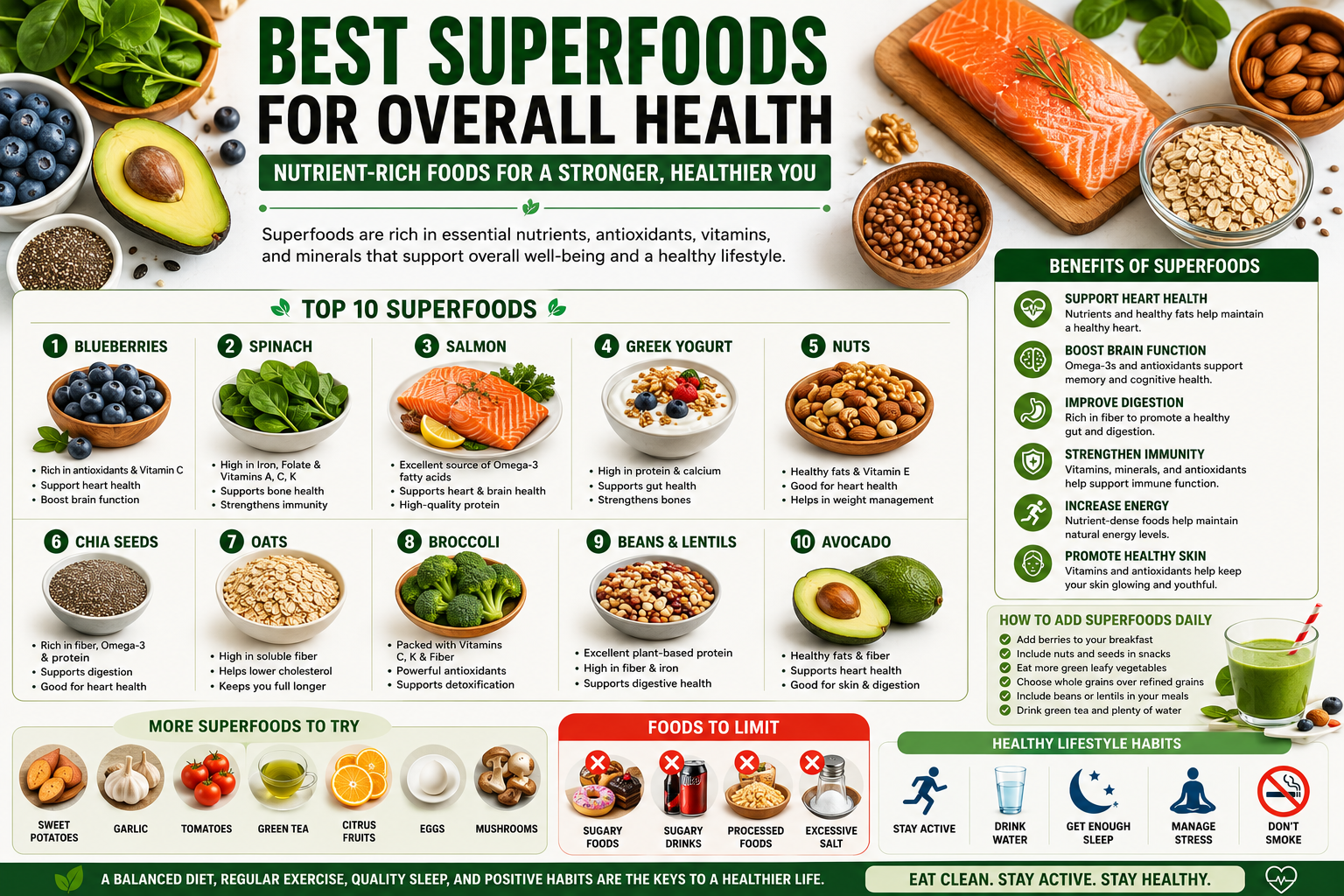
Best Superfoods for Overall Health
1. Blueberries
Blueberries are rich in antioxidants, vitamin C, and fiber.
Benefits
- Support heart health
- Provide antioxidants
- Promote digestive health
- Fit well into healthy snacks
2. Spinach
Spinach is packed with vitamins A, C, K, folate, and iron.
Benefits
- Supports bone health
- Provides essential nutrients
- Adds fiber to meals
- Easy to include in salads and smoothies
3. Salmon
Salmon is an excellent source of protein and omega-3 fatty acids.
Benefits
- Supports heart health
- Contributes to brain health
- Provides vitamin D
- Rich in high-quality protein
4. Greek Yogurt
Greek yogurt contains protein and calcium.
Benefits
- Supports bone health
- Helps meet daily protein needs
- Can be included in breakfast or snacks
Choose plain varieties with little or no added sugar.
5. Nuts
Healthy options include:
- Almonds
- Walnuts
- Pistachios
Benefits
- Healthy unsaturated fats
- Vitamin E
- Magnesium
- Plant protein
Enjoy nuts in moderate portions.
6. Chia Seeds
Chia seeds provide:
- Fiber
- Omega-3 fats
- Calcium
- Protein
They can be added to yogurt, oatmeal, or smoothies.
7. Oats
Whole oats are rich in soluble fiber.
Benefits
- Support heart health
- Promote digestive health
- Help you feel full longer
Choose plain oats instead of sweetened varieties.
8. Broccoli
Broccoli is a nutrient-dense vegetable containing vitamin C, vitamin K, folate, and fiber.
Benefits
- Supports overall health
- Provides antioxidants
- Adds fiber to meals
9. Beans and Lentils
These foods are excellent plant-based protein sources.
Benefits
- High in fiber
- Rich in iron
- Support digestive health
- Help maintain steady energy levels
10. Avocados
Avocados contain healthy monounsaturated fats, fiber, and potassium.
Benefits
- Support heart health
- Provide healthy fats
- Add creaminess to healthy meals
How to Add Superfoods to Your Daily Diet
Simple ways to enjoy superfoods include:
- Add berries to oatmeal or yogurt.
- Blend spinach into smoothies.
- Eat nuts as a healthy snack.
- Replace refined grains with oats.
- Include beans in soups and salads.
- Add avocado to sandwiches or salads.
- Eat fish such as salmon one or two times per week.
- Fill half your plate with colorful vegetables.
More Superfoods to Include in Your Diet
Adding a wide variety of nutrient-rich foods helps ensure you get essential vitamins, minerals, healthy fats, and fiber.
Sweet Potatoes
Sweet potatoes are rich in:
- Vitamin A
- Fiber
- Potassium
- Vitamin C
Benefits
- Support eye health
- Help maintain healthy skin
- Provide long-lasting energy
Garlic
Garlic contains natural plant compounds and adds flavor to meals without extra salt.
Benefits
- Supports overall health
- Adds antioxidants to the diet
- Enhances the flavor of healthy meals
Tomatoes
Tomatoes are a good source of:
- Vitamin C
- Potassium
- Lycopene (a natural antioxidant)
Enjoy them fresh in salads or cooked in soups and sauces.
Green Tea
Unsweetened green tea contains natural plant compounds called polyphenols.
Benefits
- Provides antioxidants
- Supports hydration
- Can be enjoyed hot or cold
Limit added sugar when preparing tea.
Citrus Fruits
Examples include:
- Oranges
- Lemons
- Grapefruits
- Sweet limes
These fruits provide vitamin C and fiber and are easy to include in daily meals.
Eggs
Eggs are a high-quality source of protein.
They also provide:
- Vitamin B12
- Choline
- Vitamin D (in smaller amounts)
Eggs can be part of a balanced diet for most healthy people.
Mushrooms
Many mushrooms provide:
- B vitamins
- Selenium
- Copper
- Fiber
They are a nutritious addition to soups, stir-fries, and salads.
Foods to Limit
A healthy eating pattern is not only about adding nutritious foods but also about limiting foods that are high in sugar, salt, and unhealthy fats.
Reduce Sugary Foods
Limit:
- Cakes
- Cookies
- Candy
- Sugary cereals
- Sweet desserts
Limit Sugary Drinks
Choose water or unsweetened beverages instead of:
- Soft drinks
- Energy drinks
- Sweetened fruit beverages
Reduce Highly Processed Foods
Examples include:
- Fast food
- Chips
- Processed meats
- Instant noodles
- Packaged snack foods
These foods are often high in sodium, saturated fat, or added sugars.
Limit Excessive Salt
Too much sodium may contribute to high blood pressure in some people.
Flavor meals with:
- Herbs
- Spices
- Garlic
- Lemon juice
instead of excessive salt.
Healthy Lifestyle Habits
Superfoods work best as part of an overall healthy lifestyle.
Stay Active
Aim for at least 150 minutes of moderate-intensity physical activity per week for adults.
Examples include:
- Walking
- Cycling
- Swimming
- Dancing
- Strength training
Drink Plenty of Water
Water supports digestion, circulation, and normal body functions.
Carry a reusable water bottle and drink regularly throughout the day.
Get Enough Sleep
Healthy sleep supports physical and mental well-being.
Recommended sleep:
- Adults: 7–9 hours
- Teenagers: 8–10 hours
- Children: 9–12 hours (depending on age)
Manage Stress
Healthy ways to manage stress include:
- Meditation
- Yoga
- Deep breathing
- Reading
- Spending time outdoors
- Talking with family or friends
Avoid Smoking
Smoking increases the risk of many chronic diseases.
Quitting smoking benefits nearly every part of the body.
Frequently Asked Questions
What is the healthiest superfood?
There is no single healthiest superfood. A balanced diet that includes a variety of fruits, vegetables, whole grains, lean proteins, nuts, seeds, and healthy fats provides the greatest nutritional benefit.
Can superfoods prevent diseases?
No single food can prevent or cure diseases. However, eating a nutrient-rich diet may help reduce the risk of certain chronic diseases as part of an overall healthy lifestyle.
How often should I eat superfoods?
Include a variety of nutrient-dense foods every day rather than focusing on one specific food.
Are frozen fruits and vegetables healthy?
Yes. Frozen fruits and vegetables are often picked at peak ripeness and retain many nutrients. Choose options without added sugar or high-sodium sauces.
Do I need expensive foods to eat healthy?
No. Many affordable foods are highly nutritious, including oats, beans, lentils, eggs, seasonal fruits, frozen vegetables, yogurt, and whole grains.
Key Takeaways
- There is no official scientific definition of a “superfood.”
- Eat a variety of nutrient-rich foods instead of relying on one ingredient.
- Include fruits, vegetables, whole grains, lean proteins, nuts, seeds, and healthy fats in your diet.
- Limit sugary foods, processed foods, and sugar-sweetened beverages.
- Combine healthy eating with regular exercise, adequate sleep, hydration, and stress management.
- Consistency is more important than following short-term food trends.
Conclusion
Superfoods can be a valuable part of a healthy diet because they provide a wide range of essential nutrients that support overall health. However, no single food has special powers on its own. The greatest health benefits come from eating a balanced variety of nutrient-rich foods every day while maintaining healthy lifestyle habits.
By filling your plate with colorful fruits and vegetables, whole grains, lean proteins, healthy fats, nuts, seeds, and legumes, you can nourish your body and support long-term well-being. Combined with regular physical activity, quality sleep, proper hydration, and routine health checkups, these habits form the foundation of a healthier lifestyle