
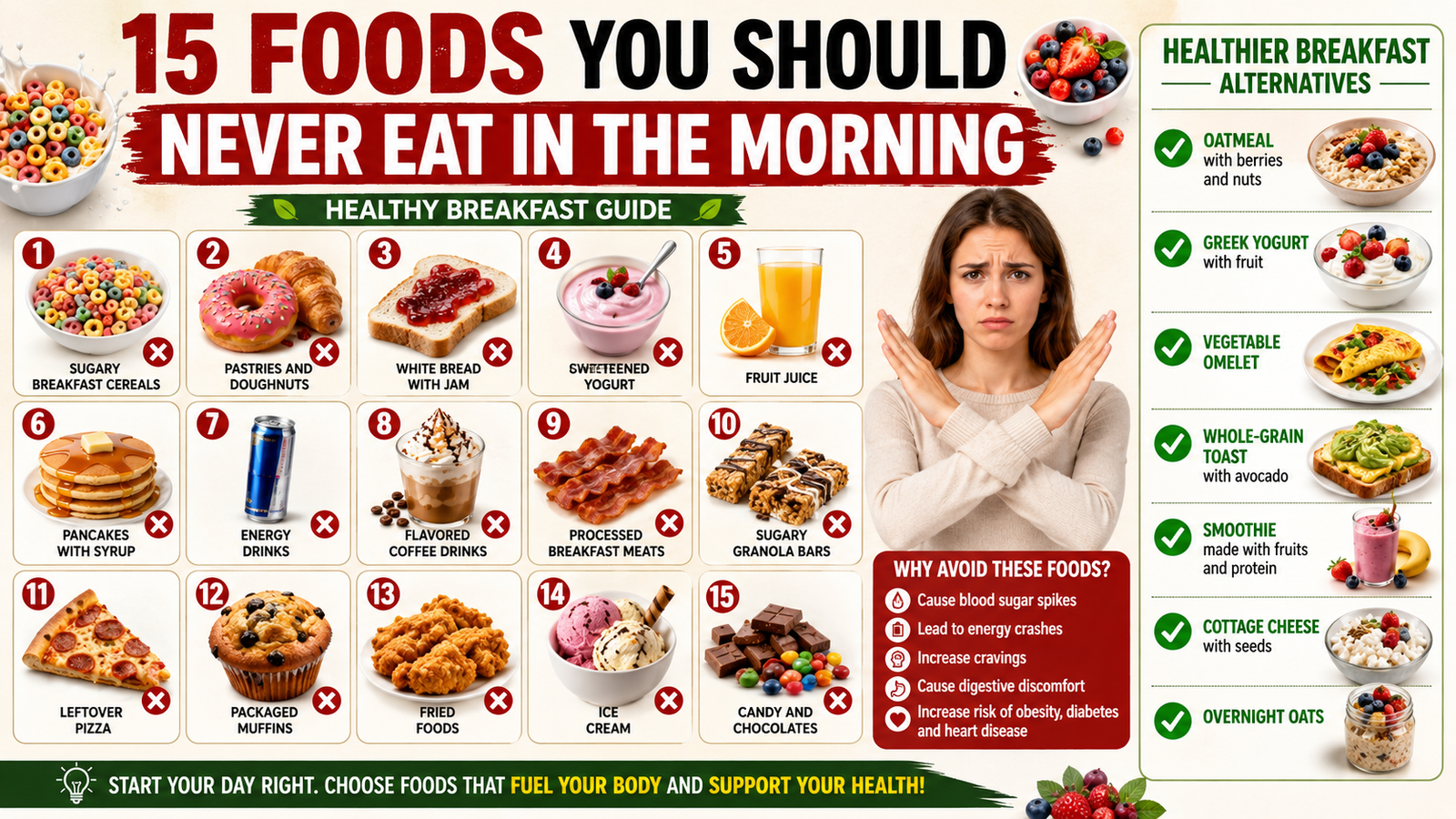
Breakfast is often described as the most important meal of the day because it provides your body with the fuel it needs after a night of fasting. The foods you choose in the morning can have a significant impact on your energy levels, concentrtion, metabolism, and overall health for the rest of the day. While many breakfast items are marketed as healthy or convenient, not all of them are good choices.
In fact, some popular breakfast foods are packed with added sugars, refined carbohydrates, unhealthy fats, and artificial ingredients that can cause blood sugar spikes, energy crashes, and increased hunger just a few hours later. Over time, regularly eating these foods may contribute to weight gain, poor heart health, insulin resistance, and other chronic health problems.
The Foods You Should Never Eat in the Morning have to be difficult. By avoiding a few common breakfast mistakes and replacing unhealthy foods with nutrient-rich alternatives, you can enjoy steady energy, improved digestion, and better overall well-being.
This guide explores 15 foods you should never eat in the morning and suggests healthier alternatives to help you start your day the right way.
1. Sugary Breakfast Cereals
Many breakfast cereals are marketed as healthy, but a large number contain significant amounts of added sugar and refined grains. They digest quickly, causing rapid increases in blood sugar levels followed by an energy crash.
These cereals often lack adequate protein and fiber, which are essential for keeping you full and energized throughout the morning. Regular consumption can contribute to increased hunger and unhealthy snacking later in the day.
Better alternative: Choose oatmeal, unsweetened whole-grain cereals, or overnight oats with fruits and nuts.
2. Pastries and Doughnuts
Doughnuts and breakfast pastries are high in sugar, refined flour, and unhealthy fats. Although they provide quick energy, they are nutritionally poor and offer little satiety.
Eating these foods in the morning may lead to blood sugar fluctuations and increased cravings throughout the day. Their high calorie content can also contribute to weight gain if consumed frequently.
Better alternative: Whole-grain toast with nut butter or homemade banana muffins made with oats.
3. White Bread with Jam
White bread is made from refined flour and lacks fiber. Combined with sugary jam, it becomes a breakfast that is high in simple carbohydrates but low in nutrients.
This combination can spike blood sugar quickly and leave you feeling hungry shortly afterward.
Better alternative: Whole-grain bread topped with avocado, peanut butter, or eggs.
4. Sweetened Yogurt
Many flavored yogurts contain as much sugar as desserts. Excess sugar in the morning may increase cravings and reduce energy stability.
While yogurt naturally contains protein and probiotics, excessive sweeteners diminish its nutritional benefits.
Better alternative: Plain Greek yogurt topped with berries and nuts.
5. Fruit Juice
Even 100% fruit juice lacks the fiber found in whole fruits. Drinking juice alone can result in rapid sugar absorption and insufficient fullness.
Large servings may contribute to increased calorie intake without providing lasting satisfaction.
Better alternative: Eat whole fruits such as apples, berries, or oranges.
6. Pancakes with Syrup
Traditional pancakes made from refined flour and topped with syrup contain large amounts of sugar and simple carbohydrates.
This breakfast often leads to a quick energy spike followed by fatigue and hunger.
Better alternative: Whole-grain pancakes served with fresh fruit and Greek yogurt.
7. Energy Drinks
Energy drinks may seem like a quick solution for morning fatigue, but they are often loaded with sugar and caffeine.
Consuming them on an empty stomach can increase nervousness, heart palpitations, and dehydration in some individuals.
Better alternative: Water, green tea, or black coffee in moderation.
8. Flavored Coffee Drinks
Many coffee beverages contain whipped cream, flavored syrups, and added sugars that turn them into high-calorie desserts.
These drinks may provide temporary energy but often contribute to sugar crashes later in the day.
Better alternative: Black coffee or coffee with a small amount of milk.
9. Processed Breakfast Meats
Processed meats such as bacon and sausages often contain high amounts of sodium, preservatives, and saturated fats.
Frequent consumption has been associated with various long-term health concerns and may not provide the balanced nutrition needed for breakfast.
Better alternative: Eggs, beans, or grilled chicken.
10. Sugary Granola Bars
Many granola bars marketed as healthy snacks contain added sugars, artificial ingredients, and refined grains.
They are convenient but may not provide sufficient nutrients to support sustained energy.
Better alternative: Homemade oat bars with nuts and seeds.
11. Leftover Pizza
Pizza is typically high in saturated fat, refined carbohydrates, and sodium. Eating it first thing in the morning can leave you feeling sluggish.
Although convenient, it rarely provides the balanced nutrition required to start the day.
Better alternative: Vegetable omelet with whole-grain toast.
12. Packaged Muffins
Store-bought muffins often contain excessive sugar, refined flour, and unhealthy oils. Some contain more calories than a doughnut.
Despite appearing healthy, they frequently function more like dessert than breakfast.
Better alternative: Homemade oat muffins with fruit.
13. Fried Foods
Deep-fried foods are difficult to digest and may cause discomfort, bloating, and sluggishness during the morning.
They are generally high in calories and unhealthy fats.
Better alternative: Boiled eggs, fresh fruit, and whole grains.
14. Ice Cream
Ice cream is high in sugar and saturated fat and lacks the nutrients required for a balanced breakfast.
Eating ice cream in the morning can contribute to rapid blood sugar fluctuations and early hunger.
Better alternative: Greek yogurt with fruit.
15. Candy and Chocolates
Candy bars and chocolates are high in sugar and provide very little nutritional value. Starting the day with candy often leads to energy crashes and increased cravings.
They fail to provide protein, fiber, vitamins, and minerals that the body needs in the morning.
Better alternative: Dark chocolate in moderation alongside a balanced breakfast.
Healthier Breakfast Alternatives
A nutritious breakfast should contain a combination of protein, healthy fats, and fiber-rich carbohydrates. This combination promotes stable energy levels and keeps you full for longer periods.
Healthy breakfast ideas include:
- Oatmeal with berries and nuts
- Greek yogurt with fruit
- Vegetable omelet
- Whole-grain toast with avocado
- Smoothie made with fruits and protein
- Cottage cheese with seeds
- Overnight oats
Frequently Asked Questions
What is the worst food to eat in the morning?
Foods high in sugar and refined carbohydrates, such as doughnuts, sugary cereals, and candy, are among the least healthy breakfast choices.
Is fruit juice healthy for breakfast?
Whole fruits are generally a better option because they provide fiber and help increase fullness.
Why do sugary breakfasts cause fatigue?
Because they cause sharp blood sugar spikes followed by a rapid crash.
What should a healthy breakfast include?
Sugar can cause rapid increases in blood glucose followed by a decline that may leave you feeling tired and hungry.
A balanced breakfast should contain protein, healthy fats, fiber, and nutrient-dense foods.
Conclusion
Breakfast plays a major role in determining your energy levels, focus, and overall health throughout the day. Although many popular breakfast foods seem convenient and appealing, they often contain excessive sugar, refined carbohydrates, and unhealthy fats that provide short-lived energy and poor nutrition.
Avoiding these 15 foods in the morning and replacing them with balanced, nutrient-rich alternatives can improve satiety, support better digestion, and help maintain steady energy levels. Small changes in your breakfast choices can make a significant difference in your long-term health and well-being.