
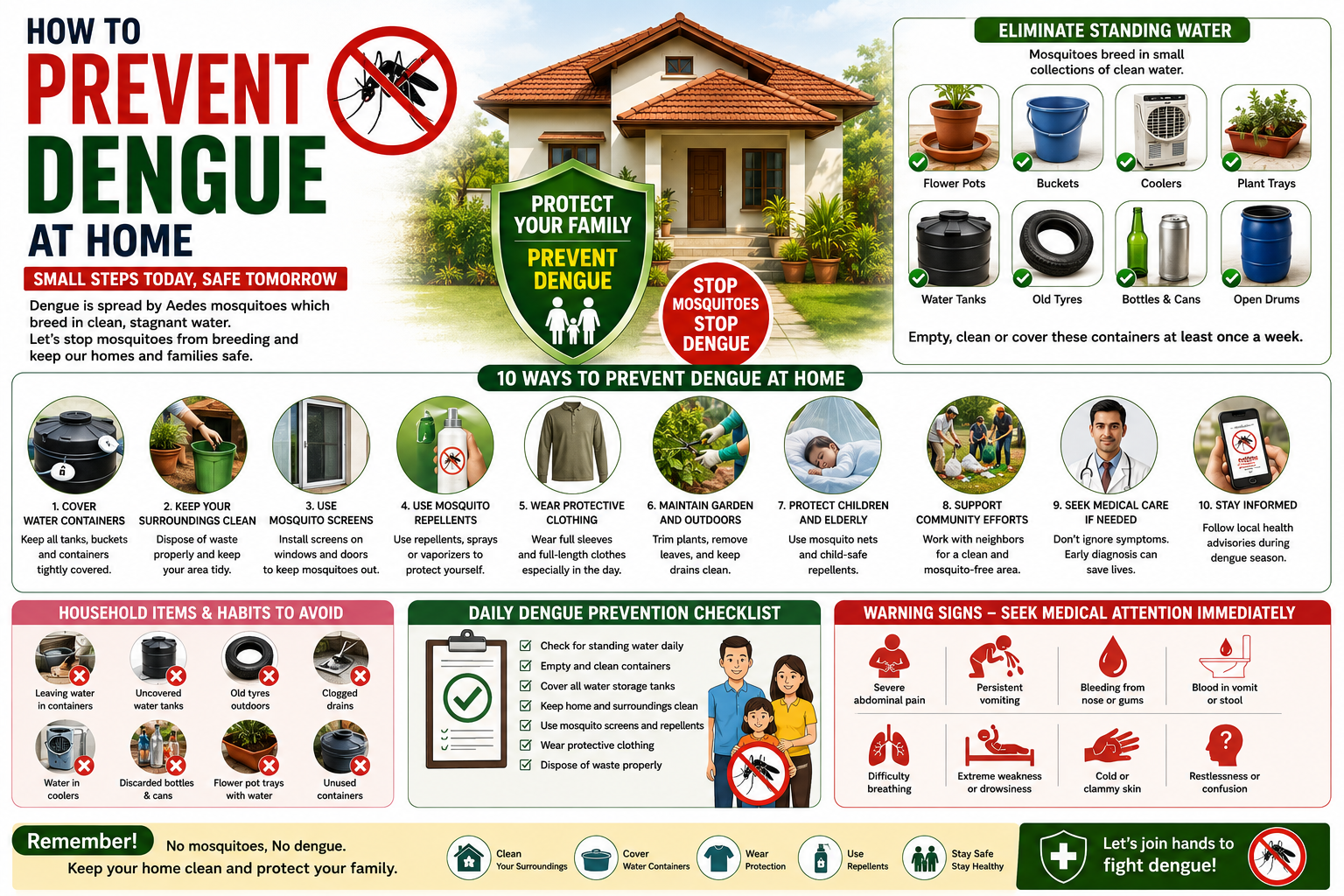
How to Prevent Dengue at Home
Dengue is a mosquito-borne viral infection spread primarily by the Aedes aegypti mosquito. These mosquitoes usually bite during the daytime and breed in clean, stagnant water found around homes. While there is no guaranteed way to eliminate the risk of dengue, reducing mosquito breeding sites and protecting yourself from mosquito bites are among the most effective ways to lower the risk of infection.
Preventing dengue at home involves maintaining a clean environment, eliminating standing water, using mosquito protection, and encouraging good hygiene practices. These simple preventive measures help protect your family and community.
What Is Dengue?
Dengue is a viral illness transmitted through the bite of an infected Aedes mosquito. It is common in tropical and subtropical regions, especially during the rainy season.
Common Symptoms of Dengue
- High fever
- Severe headache
- Pain behind the eyes
- Muscle and joint pain
- Skin rash
- Nausea and vomiting
- Fatigue
Some people may develop severe dengue, which requires immediate medical attention.
Why Is Dengue Prevention Important?
Preventing mosquito bites and controlling mosquito breeding can reduce the spread of dengue.
Effective dengue prevention helps:
- Lower the risk of dengue infection
- Protect children and older adults
- Reduce mosquito breeding around homes
- Support community health
- Minimize the spread of mosquito-borne diseases
Community participation plays a key role in dengue prevention.
How to Prevent Dengue at Home
1. Eliminate Standing Water
The Aedes mosquito lays eggs in clean, stagnant water.
Check These Common Places
- Flower pots
- Buckets
- Water storage containers
- Old tyres
- Coolers
- Bird baths
- Plant trays
- Open drums
- Bottles and cans
Empty, clean, or cover these containers at least once a week.
2. Cover Water Storage Containers
Keep all water tanks, buckets, and containers tightly covered to prevent mosquitoes from laying eggs.
Good Practices
- Use fitted lids.
- Clean water containers regularly.
- Replace stored water frequently when possible.
3. Keep Your Home Clean
A clean home and surrounding area reduce mosquito breeding opportunities.
Home Cleaning Tips
- Dispose of unused containers.
- Remove household clutter.
- Keep drains clean.
- Trim overgrown plants.
- Clean roof gutters regularly.
Maintaining a tidy environment discourages mosquito breeding.
4. Use Mosquito Screens
Install protective screens on:
- Windows
- Doors
- Ventilation openings
Screens help prevent mosquitoes from entering your home.
5. Protect Yourself from Mosquito Bites
Reducing mosquito bites lowers the risk of dengue infection.
Personal Protection Measures
- Wear long-sleeved shirts.
- Wear full-length trousers.
- Use mosquito repellents according to product instructions.
- Sleep under mosquito nets when appropriate.
- Keep infants protected with suitable mosquito netting.
These precautions are especially important during periods of increased mosquito activity.
6. Use Mosquito Repellents Safely
Mosquito repellents can help reduce mosquito bites when used according to the manufacturer’s instructions.
Effective Protection Options
- Mosquito repellent creams or lotions
- Mosquito repellent sprays
- Electric mosquito vaporisers
- Mosquito coils (use with proper ventilation)
- Mosquito repellent patches, where appropriate
Always use products according to the label, especially for children and pregnant women.
7. Wear Protective Clothing
Covering exposed skin helps reduce the chance of mosquito bites.
Recommended Clothing
- Long-sleeved shirts
- Full-length trousers
- Socks
- Light-colored clothing
Light-colored clothes make it easier to spot mosquitoes.
8. Keep Outdoor Areas Clean
Mosquitoes often hide in shaded and damp places.
Outdoor Maintenance Tips
- Trim bushes and tall grass.
- Remove fallen leaves.
- Keep gardens tidy.
- Clear blocked drains.
- Dispose of unused containers.
A clean outdoor environment reduces mosquito resting and breeding areas.
9. Protect Children and Older Adults
Young children, older adults, and people with weakened immune systems may be more vulnerable to complications.
Safety Tips
- Apply child-safe mosquito repellent as directed.
- Use mosquito nets over baby cribs and strollers.
- Dress children in long sleeves and long pants.
- Keep elderly family members protected indoors during peak mosquito activity.
10. Support Community Mosquito Control
Dengue prevention is most effective when the entire community works together.
Community Actions
- Report mosquito breeding sites to local authorities if needed.
- Participate in neighborhood clean-up campaigns.
- Encourage neighbors to remove standing water.
- Follow public health advisories during dengue outbreaks.
Community cooperation helps reduce mosquito populations.
Household Items and Habits to Avoid
Avoid These Common Mistakes
- Leaving buckets filled with water
- Keeping uncovered water tanks
- Allowing flower pot trays to collect water
- Storing old tyres outdoors
- Ignoring clogged drains
- Allowing coolers to hold stagnant water
- Leaving empty bottles or cans outside
- Skipping weekly home inspections
Even small amounts of standing water can become mosquito breeding sites.
Daily Dengue Prevention Checklist
Every Day
- Check for standing water around your home.
- Empty water collected in containers.
- Keep water tanks tightly covered.
- Close doors and windows or use screens.
- Apply mosquito repellent when needed.
- Wear protective clothing outdoors.
- Keep indoor and outdoor areas clean.
- Dispose of household waste properly.
Simple daily habits can greatly reduce mosquito breeding.
Warning Signs That Require Immediate Medical Attention
Seek medical care immediately if someone with suspected or confirmed dengue develops:
- Severe abdominal pain
- Persistent vomiting
- Difficulty breathing
- Bleeding from the nose or gums
- Blood in vomit or stool
- Extreme weakness or drowsiness
- Cold or clammy skin
- Restlessness or confusion
These may be warning signs of severe dengue, which requires urgent medical treatment.
Frequently Asked Questions
Can dengue be prevented completely?
No. There is no guaranteed way to completely prevent dengue, but reducing mosquito breeding sites and preventing mosquito bites significantly lowers the risk of infection.
Where do dengue mosquitoes breed?
Aedes mosquitoes commonly breed in clean, stagnant water found in containers such as buckets, flower pots, water tanks, coolers, tyres, and discarded bottles.
What time do dengue mosquitoes usually bite?
Unlike many other mosquitoes, Aedes aegypti mosquitoes are most active during the daytime, especially in the early morning and late afternoon.
Does keeping the house clean help prevent dengue?
Yes. Regular cleaning, proper waste disposal, removing standing water, and maintaining a tidy environment reduce mosquito breeding opportunities around the home.
When should I see a doctor if I have dengue symptoms?
Seek medical evaluation promptly if you develop symptoms such as high fever, severe headache, muscle or joint pain, rash, or persistent vomiting after mosquito exposure. Immediate emergency care is needed if warning signs of severe dengue develop.
Key Takeaways
- Dengue spreads through the bite of infected Aedes mosquitoes.
- Remove standing water from your home every week.
- Keep water storage containers tightly covered.
- Use mosquito repellents, screens, and protective clothing.
- Keep your home, garden, and surrounding areas clean.
- Participate in community mosquito-control efforts.
- Recognize the warning signs of severe dengue and seek immediate medical care if they occur.
Conclusion
Preventing dengue at home starts with simple, consistent actions that reduce mosquito breeding and protect your family from mosquito bites. Eliminating standing water, covering water storage containers, maintaining a clean environment, using mosquito repellents, and wearing protective clothing are among the most effective ways to lower the risk of dengue infection.
Because dengue is spread by mosquitoes that often breed close to homes, community participation is equally important. When households work together to remove breeding sites and follow public health recommendations, the spread of dengue can be significantly reduced. Staying alert to dengue symptoms and seeking prompt medical care when needed can also help prevent serious complications.