Ways to Boost Your Immune System
Your immune system is your body’s natural defense against harmful bacteria, viruses, fungi, and other disease-causing microorganisms. A healthy immune system helps your body recognize and fight infections while supporting overall health. Although no food, supplement, or lifestyle habit can guarantee protection from illness, healthy daily habits can help your immune system function effectively.
Supporting your immune system naturally involves eating a balanced diet, staying physically active, getting enough sleep, managing stress, maintaining good hygiene, and staying up to date with recommended vaccinations. Together, these habits contribute to better overall health and resilience.
Why Is a Strong Immune System Important?
The immune system works around the clock to protect your body from harmful germs and help you recover from illnesses.
A healthy immune system helps:
- Fight infections
- Support faster recovery after illness
- Protect against harmful microorganisms
- Promote healthy wound healing
- Maintain overall well-being
- Support healthy aging
Keeping your immune system healthy benefits every stage of life.
How Does the Immune System Work?
Your immune system is made up of different cells, tissues, and organs that work together to defend your body.
Key Parts of the Immune System
- White blood cells
- Bone marrow
- Lymph nodes
- Spleen
- Thymus
- Antibodies
These components work together to identify and respond to harmful invaders while protecting healthy body tissues.
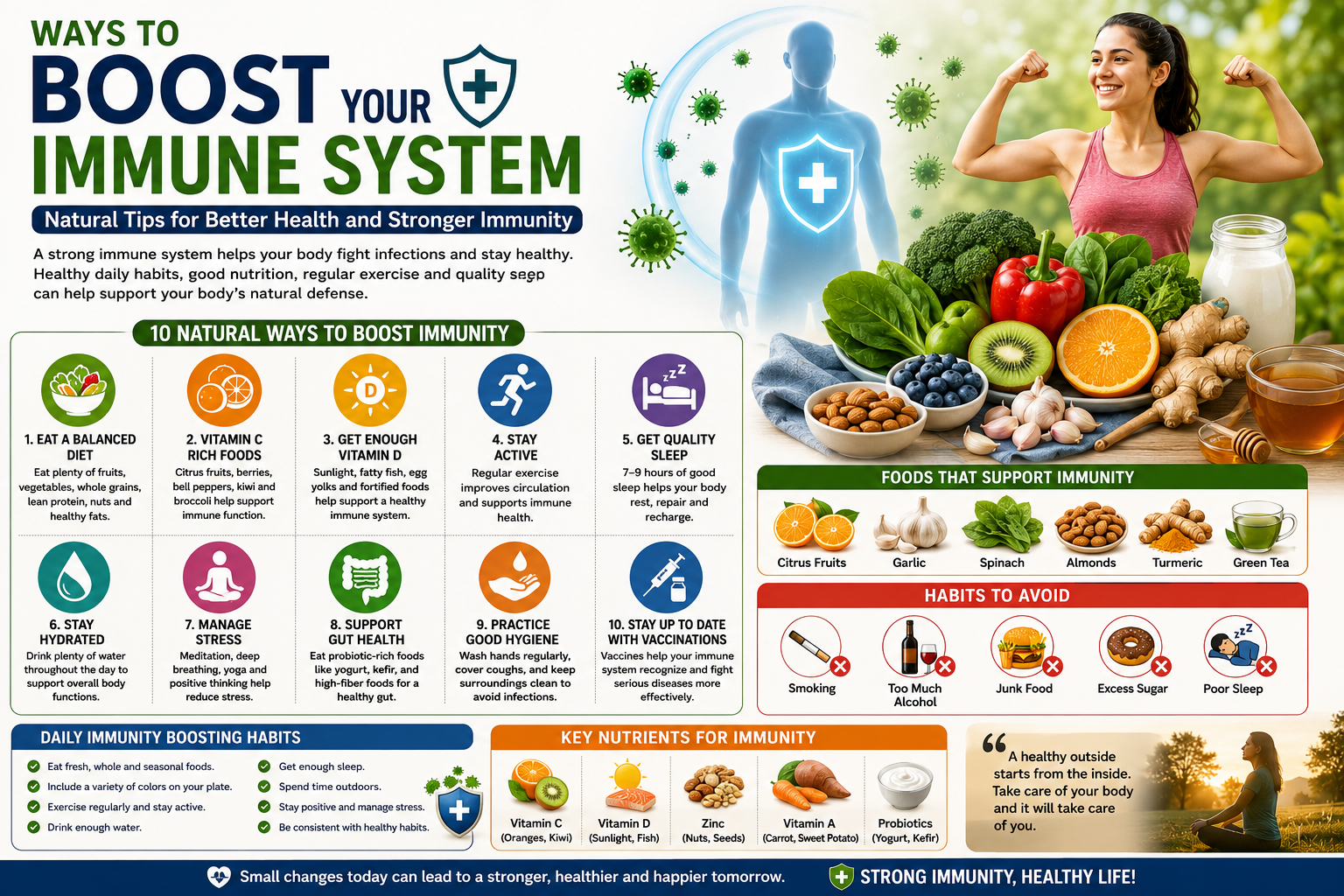
Natural Ways to Boost Your Immune System
1. Eat a Balanced and Nutritious Diet
Good nutrition provides the vitamins, minerals, protein, and antioxidants needed for normal immune function.
Include More of These Foods
- Fresh fruits
- Vegetables
- Whole grains
- Beans
- Lentils
- Nuts
- Seeds
- Lean chicken
- Fish
- Eggs
- Low-fat dairy products
Eating a variety of colorful foods helps ensure you receive a wide range of nutrients.
2. Eat Foods Rich in Vitamin C
Vitamin C supports normal immune cell function and acts as an antioxidant.
Vitamin C-Rich Foods
- Oranges
- Guava
- Kiwi
- Strawberries
- Bell peppers
- Broccoli
- Tomatoes
Including these foods regularly can help meet your daily vitamin C needs.
3. Get Enough Vitamin D
Vitamin D supports healthy immune function and bone health.
Good Sources of Vitamin D
- Fatty fish
- Egg yolks
- Fortified milk
- Fortified cereals
Safe sunlight exposure also helps your body produce vitamin D naturally.
4. Stay Physically Active
Regular exercise improves overall health and supports normal immune function.
Recommended Activities
- Brisk walking
- Cycling
- Swimming
- Jogging
- Yoga
- Dancing
Adults should aim for at least 150 minutes of moderate-intensity physical activity each week, along with muscle-strengthening activities on two or more days.
5. Get Enough Quality Sleep
Sleep allows your body to recover and supports healthy immune responses.
Recommended Sleep Duration
- Adults: 7–9 hours
- Teenagers: 8–10 hours
- School-age children: 9–12 hours
Maintaining a regular sleep schedule helps improve sleep quality.
6. Stay Hydrated
Water is essential for every cell in your body, including those involved in immune function. Proper hydration supports nutrient transport, body temperature regulation, and the removal of waste products.
Healthy Hydration Tips
- Drink water regularly throughout the day.
- Carry a reusable water bottle.
- Choose water instead of sugary beverages.
- Eat water-rich fruits and vegetables such as watermelon, cucumber, and oranges.
Your hydration needs depend on your age, activity level, climate, and overall health.
7. Manage Stress Effectively
Long-term stress may affect the normal functioning of the immune system and contribute to unhealthy habits.
Healthy Ways to Reduce Stress
- Practice meditation or mindfulness.
- Take deep breathing breaks.
- Spend time outdoors.
- Read books or listen to music.
- Practice yoga.
- Stay connected with family and friends.
Making stress management part of your daily routine supports both physical and mental well-being.
8. Maintain Good Gut Health
A healthy gut plays an important role in supporting the immune system.
Foods That Support Gut Health
- Plain yogurt with live cultures
- Kefir
- High-fiber vegetables
- Fruits
- Whole grains
- Beans and lentils
Eating a variety of fiber-rich foods helps nourish beneficial gut bacteria.
9. Practice Good Hygiene
Good hygiene helps reduce the spread of germs and lowers the risk of infections.
Healthy Hygiene Habits
- Wash your hands regularly with soap and water.
- Cover your mouth and nose when coughing or sneezing.
- Avoid touching your face with unwashed hands.
- Keep frequently touched surfaces clean.
- Stay home when you are sick to help prevent spreading illness.
10. Stay Up to Date with Recommended Vaccinations
Vaccines help train your immune system to recognize and respond to certain infectious diseases.
Talk to Your Healthcare Provider About
- Routine vaccinations
- Annual flu vaccination
- COVID-19 vaccination, when recommended
- Travel-related vaccines
- Age-specific immunizations
Following recommended vaccination schedules is an important part of maintaining overall health.
Foods and Habits to Limit
Reduce or Avoid
- Sugary soft drinks
- Highly processed foods
- Excess sweets
- Deep-fried foods
- Smoking
- Excessive alcohol consumption
- Frequent fast food meals
- Poor sleep habits
- Long periods of physical inactivity
Replacing unhealthy habits with nutritious foods and regular physical activity supports immune health.
Daily Habits That Support a Healthy Immune System
Eat a Variety of Nutritious Foods
Choose meals that include:
- Fruits
- Vegetables
- Whole grains
- Lean proteins
- Healthy fats
- Dairy or fortified alternatives
A balanced diet provides essential nutrients needed for normal immune function.
Exercise Consistently
Aim to stay active every day through activities such as:
- Walking
- Cycling
- Swimming
- Dancing
- Gardening
- Stretching
Regular movement supports overall health and immune function.
Sleep on a Regular Schedule
Go to bed and wake up at the same time each day to improve sleep quality and support your body’s natural recovery processes.
Spend Time Outdoors
Moderate outdoor activity provides opportunities for physical exercise and, in some cases, safe sunlight exposure that supports vitamin D production.
Avoid Smoking
Smoking weakens the body’s natural defenses and increases the risk of many chronic diseases and respiratory infections.
Common Myths About Boosting Immunity
Myth 1: One Superfood Can Prevent Illness
No single food can prevent disease. A balanced diet and healthy lifestyle are more effective than relying on one food or supplement.
Myth 2: More Vitamins Are Always Better
Taking excessive amounts of vitamins or supplements does not necessarily improve immune function and may even be harmful. Only use supplements when recommended by a healthcare professional.
Myth 3: You Can Boost Immunity Overnight
Healthy immune function develops over time through consistent lifestyle habits such as nutritious eating, exercise, quality sleep, and stress management.
Frequently Asked Questions
Can I boost my immune system naturally?
Yes. Healthy habits such as eating a balanced diet, exercising regularly, sleeping well, managing stress, staying hydrated, practicing good hygiene, and following recommended vaccination schedules support normal immune function.
Which foods are best for the immune system?
Fruits, vegetables, whole grains, lean proteins, legumes, nuts, seeds, yogurt with live cultures, and healthy fats are all part of a balanced diet that supports immune health.
Does exercise help the immune system?
Yes. Regular moderate physical activity supports overall health and contributes to normal immune function.
Is drinking more water good for immunity?
Staying hydrated supports normal body functions, including those involved in immune health. While water does not directly prevent illness, proper hydration is an important part of overall wellness.
Can supplements replace a healthy diet?
No. Supplements should not replace a balanced diet. Most people can obtain the nutrients they need from a varied and nutritious eating pattern, although some individuals may require supplements based on medical advice.
Key Takeaways
- A healthy immune system depends on consistent lifestyle habits rather than quick fixes.
- Eat a balanced diet rich in fruits, vegetables, whole grains, lean proteins, and healthy fats.
- Include foods that provide vitamin C, vitamin D, zinc, and probiotics.
- Stay physically active for at least 150 minutes each week.
- Get enough sleep, stay hydrated, and manage stress effectively.
- Practice good hygiene and stay up to date with recommended vaccinations.
- Avoid smoking, excessive alcohol, and highly processed foods.
Conclusion
Supporting your immune system naturally begins with making healthy choices every day. Eating a nutritious diet, staying active, getting enough sleep, drinking plenty of water, managing stress, and practicing good hygiene all help your immune system function effectively. While no lifestyle habit can completely prevent illness, these evidence-based practices help your body stay prepared to fight infections and recover more efficiently.
Building these habits gradually and maintaining them over time offers lasting benefits for your overall health. Combined with regular medical checkups and recommended vaccinations, a healthy lifestyle is one of the most effective ways to support your immune system throughout every stage of life.