How to Prevent Stroke
A stroke is a serious medical emergency that occurs when the blood supply to part of the brain is interrupted or when a blood vessel in the brain bursts. Without adequate oxygen and nutrients, brain cells begin to die within minutes. While not every stroke can be prevented, many risk factors can be managed through healthy lifestyle choices and regular medical care.
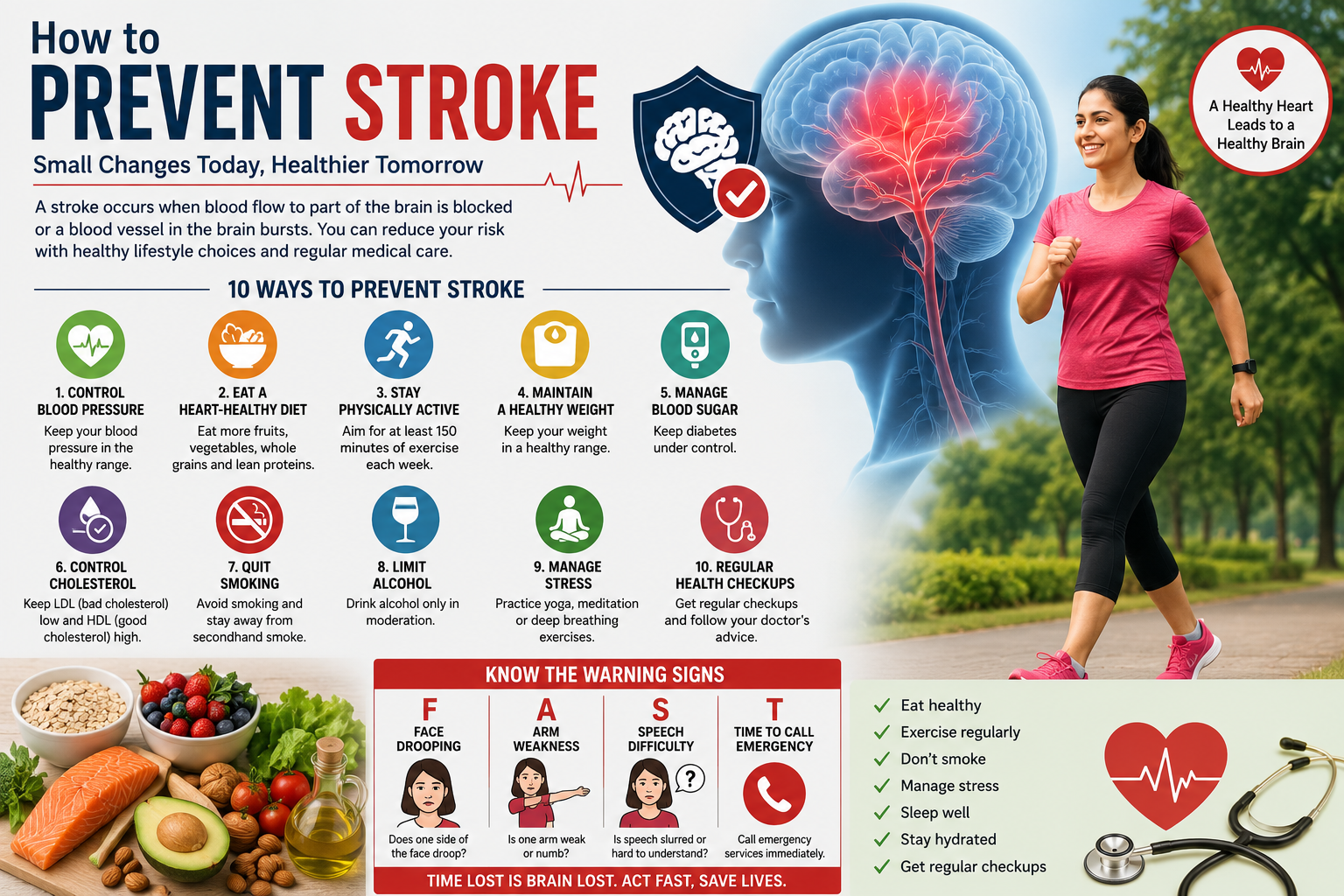
Preventing stroke naturally involves maintaining healthy blood pressure, eating a balanced diet, staying physically active, avoiding tobacco, managing diabetes, and keeping cholesterol levels within a healthy range. These habits also support overall heart and brain health.
What Is a Stroke?
A stroke occurs when blood flow to part of the brain is reduced or blocked, preventing brain tissue from receiving oxygen and nutrients.
Main Types of Stroke
- Ischemic stroke (caused by a blocked blood vessel)
- Hemorrhagic stroke (caused by bleeding in the brain)
- Transient Ischemic Attack (TIA), often called a “mini-stroke”
Although a TIA may resolve quickly, it is an important warning sign and requires immediate medical evaluation.
Why Stroke Prevention Is Important
Reducing stroke risk helps protect both brain and overall health.
A healthy lifestyle helps:
- Maintain healthy blood circulation
- Support normal brain function
- Reduce the risk of disability
- Protect heart health
- Improve quality of life
- Support healthy aging
Early prevention can significantly lower the risk of stroke and its complications.
Common Risk Factors for Stroke
Some risk factors cannot be changed, while many others can be improved through healthy lifestyle habits.
Non-Modifiable Risk Factors
- Increasing age
- Family history of stroke
- Certain inherited medical conditions
Modifiable Risk Factors
- High blood pressure
- High cholesterol
- Diabetes
- Smoking
- Physical inactivity
- Obesity
- Excessive alcohol consumption
- Unhealthy diet
- Chronic stress
Managing these risk factors can greatly reduce the likelihood of experiencing a stroke.
How to Prevent Stroke Naturally
1. Keep Blood Pressure Under Control
High blood pressure is one of the most significant risk factors for stroke.
Healthy Habits
- Monitor blood pressure regularly.
- Reduce sodium intake.
- Eat more fruits and vegetables.
- Exercise consistently.
- Take prescribed medications if recommended by your healthcare provider.
Regular blood pressure checks help detect problems early.
2. Eat a Heart-Healthy Diet
A balanced diet supports healthy blood vessels and reduces cardiovascular risk.
Include More of These Foods
- Fresh fruits
- Vegetables
- Whole grains
- Oats
- Brown rice
- Beans
- Lentils
- Fish
- Skinless chicken
- Low-fat dairy products
- Nuts and seeds
Choose a variety of colorful foods to increase your intake of vitamins, minerals, and antioxidants.
3. Stay Physically Active
Regular exercise improves blood circulation and supports heart and brain health.
Recommended Activities
- Brisk walking
- Cycling
- Swimming
- Jogging
- Dancing
- Yoga
Adults should aim for at least 150 minutes of moderate-intensity physical activity each week, along with muscle-strengthening exercises on two or more days.
4. Maintain a Healthy Weight
Maintaining a healthy body weight helps reduce the risk of high blood pressure, diabetes, and high cholesterol.
Healthy Weight Management Tips
- Eat balanced meals
- Control portion sizes
- Stay physically active
- Limit sugary beverages
- Avoid highly processed foods
Small lifestyle changes can have lasting health benefits.
5. Manage Blood Sugar Levels
People with diabetes have a higher risk of stroke if blood sugar is not well managed.
Healthy Practices
- Follow a balanced diet.
- Exercise regularly.
- Monitor blood sugar as advised.
- Attend regular medical checkups.
- Take medications as prescribed.
Keeping blood sugar within a healthy range supports overall cardiovascular health.
6. Control Cholesterol Levels
High cholesterol can contribute to the buildup of fatty deposits inside arteries, increasing the risk of stroke.
Healthy Ways to Manage Cholesterol
- Eat more fiber-rich foods.
- Choose healthy fats such as olive oil and nuts.
- Limit foods high in saturated and trans fats.
- Exercise regularly.
- Follow your healthcare provider’s recommendations for cholesterol management.
Routine cholesterol screening helps identify problems before symptoms develop.
7. Quit Smoking and Avoid Secondhand Smoke
Smoking damages blood vessels, increases blood clot formation, and significantly raises the risk of stroke.
Benefits of Quitting Smoking
- Improves blood circulation
- Supports healthier blood vessels
- Lowers the risk of stroke
- Reduces the risk of heart disease
- Improves lung function
Avoiding secondhand smoke also benefits cardiovascular health.
8. Limit Alcohol Consumption
Drinking excessive amounts of alcohol may increase blood pressure and stroke risk.
Healthy Drinking Habits
- If you choose to drink alcohol, do so in moderation.
- Avoid binge drinking.
- Follow your healthcare provider’s advice regarding alcohol consumption.
Reducing alcohol intake supports both heart and brain health.
9. Manage Stress
Long-term stress may contribute to unhealthy lifestyle habits that increase stroke risk.
Healthy Stress Management Techniques
- Meditation
- Deep breathing exercises
- Yoga
- Walking outdoors
- Reading
- Spending time with loved ones
- Listening to calming music
Managing stress regularly supports overall physical and mental well-being.
10. Get Regular Medical Checkups
Routine medical care helps identify and manage stroke risk factors before complications develop.
Important Health Screenings
- Blood pressure
- Blood sugar
- Cholesterol levels
- Body weight
- Heart health assessment
Follow your healthcare provider’s recommendations for routine preventive care.
Foods to Limit
Reduce Intake of
- Processed meats
- Deep-fried foods
- Sugary soft drinks
- Highly processed snacks
- Fast food
- Foods high in saturated fat
- Foods containing trans fats
- Excess salt
- Excess added sugar
Replacing processed foods with fresh, nutrient-rich meals supports healthy blood vessels and overall cardiovascular health.
Daily Habits That Help Reduce Stroke Risk
Stay Physically Active
Aim to move throughout the day by:
- Walking
- Cycling
- Swimming
- Gardening
- Taking the stairs
- Stretching regularly
Regular activity supports healthy blood circulation.
Eat Balanced Meals
Include:
- Fruits
- Vegetables
- Whole grains
- Lean proteins
- Healthy fats
- Legumes
A balanced eating pattern helps maintain healthy blood pressure, cholesterol, and blood sugar.
Sleep Well
Good-quality sleep supports healthy blood pressure, metabolism, and overall cardiovascular function.
Adults should generally aim for 7–9 hours of sleep each night.
Stay Hydrated
Drink enough water throughout the day to support normal body functions and overall health.
Follow Medical Advice
If you have high blood pressure, diabetes, atrial fibrillation, or high cholesterol, follow your treatment plan and never stop prescribed medications without consulting your healthcare provider.
Recognize Stroke Warning Signs (FAST)
Knowing the warning signs of stroke can save lives.
F – Face Drooping
One side of the face may droop or feel numb. Ask the person to smile and check if the smile appears uneven.
A – Arm Weakness
One arm may feel weak or numb. Ask the person to raise both arms and see if one arm drifts downward.
S – Speech Difficulty
Speech may become slurred, difficult to understand, or the person may be unable to speak clearly.
T – Time to Call Emergency Services
If any of these symptoms appear, seek emergency medical care immediately. Prompt treatment greatly improves the chances of recovery.
Frequently Asked Questions
Can stroke be prevented naturally?
Many strokes can be prevented by managing blood pressure, controlling diabetes and cholesterol, avoiding smoking, exercising regularly, eating a balanced diet, maintaining a healthy weight, and attending regular medical checkups.
Which foods help reduce stroke risk?
A diet rich in fruits, vegetables, whole grains, legumes, nuts, seeds, lean proteins, and healthy fats supports heart and brain health and may help reduce stroke risk.
Is walking good for stroke prevention?
Yes. Regular brisk walking is a moderate-intensity physical activity that supports healthy blood circulation, helps maintain a healthy weight, and benefits cardiovascular health.
Who is at higher risk of stroke?
People with high blood pressure, diabetes, high cholesterol, heart disease, obesity, or a family history of stroke generally have a higher risk. Increasing age and smoking also increase stroke risk.
Can young adults have a stroke?
Yes. Although stroke is more common in older adults, it can occur at any age. Maintaining healthy lifestyle habits is important for everyone.
Key Takeaways
- Many strokes can be prevented through healthy lifestyle choices.
- Control blood pressure, blood sugar, and cholesterol.
- Eat a balanced diet rich in fruits, vegetables, whole grains, and lean proteins.
- Exercise for at least 150 minutes each week.
- Avoid smoking and limit alcohol consumption.
- Manage stress, sleep well, and stay hydrated.
- Learn the FAST warning signs and seek emergency medical care immediately if symptoms occur.
Conclusion
Stroke prevention begins with healthy daily habits that support both the heart and the brain. Maintaining healthy blood pressure, controlling diabetes and cholesterol, eating a balanced diet, staying physically active, avoiding tobacco, and limiting alcohol can significantly reduce stroke risk. While factors such as age and family history cannot be changed, many other risk factors can be managed through consistent lifestyle improvements.
Equally important is recognizing the warning signs of stroke and acting quickly. Immediate medical attention can reduce brain damage and improve recovery outcomes. By combining preventive healthcare with healthy living, you can protect your long-term brain health and overall well-being.