Eating healthy doesn’t have to mean spending a fortune. Many people believe nutritious meals require expensive ingredients, specialty foods, or gourmet recipes. In reality, some of the healthiest dishes are made from simple, affordable ingredients found in almost every grocery store. By choosing budget-friendly staples like beans, oats, rice, eggs, seasonal vegetables, and lean proteins, anyone can prepare satisfying meals without stretching their grocery budget.
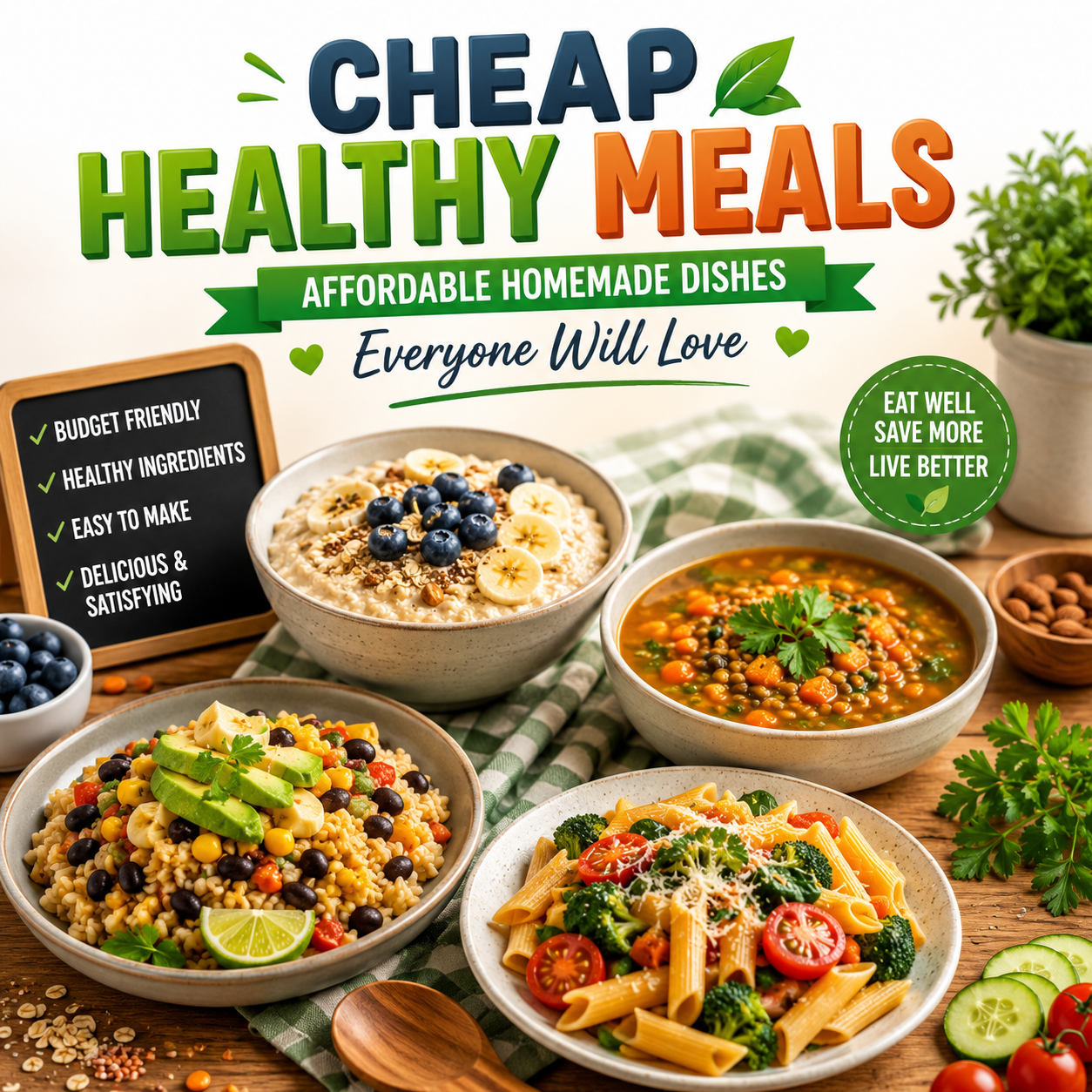
This guide explores Cheap healthy meals that combine great taste, balanced nutrition, and affordability. Whether you’re feeding a family, cooking for one, or trying to reduce food expenses while maintaining a healthy lifestyle, these homemade recipes and practical strategies can help. You’ll also discover money-saving shopping tips, meal planning advice, ingredient substitutions, and expert recommendations for making healthy eating sustainable over the long term.
What Are Cheap Healthy Meals?
Cheap healthy meals are nutritious dishes prepared using affordable ingredients that provide essential vitamins, minerals, protein, healthy fats, and fiber without exceeding your grocery budget. These meals emphasize whole foods rather than heavily processed products, making them healthier and often more economical.
Affordable homemade meals are built around ingredients that offer excellent nutritional value for their price. Staples such as brown rice, oats, beans, lentils, frozen vegetables, eggs, potatoes, and seasonal produce can create balanced meals that support overall health while reducing food costs. Choosing these ingredients allows households to enjoy delicious meals without compromising nutrition.
Why Affordable Homemade Meals Are Better Than Takeout
Preparing meals at home gives you complete control over ingredients, portion sizes, and cooking methods. Restaurant meals often contain excess sodium, unhealthy fats, added sugars, and hidden calories. Homemade meals, on the other hand, can be customized to suit your nutritional needs and taste preferences while costing significantly less.
Cooking at home also encourages healthier eating habits and reduces food waste. Leftovers can be repurposed into lunches or future dinners, stretching your grocery budget further. Over time, these habits contribute to better health, lower monthly food expenses, and improved confidence in the kitchen.
Benefits of Cheap Healthy Meals
Affordable healthy meals provide numerous advantages beyond saving money.
Major Benefits
- Lower monthly grocery bills
- Better nutrition
- Portion control
- Reduced processed food intake
- More vegetables and whole grains
- Lower sodium consumption
- Improved heart health
- Better weight management
- Less food waste
- Greater meal variety
By focusing on wholesome ingredients, families can enjoy flavorful dishes while supporting long-term wellness and financial stability.
Essential Budget-Friendly Pantry Staples
A well-stocked pantry forms the foundation of inexpensive healthy cooking. Buying staple foods in bulk often reduces the cost per serving and ensures you always have ingredients available for quick meals.
Essential pantry staples include:
| Ingredient | Why It’s Valuable |
| Brown rice | Affordable whole grain |
| Oats | Fiber-rich breakfast staple |
| Lentils | High in protein and fiber |
| Dried beans | Inexpensive protein source |
| Whole wheat pasta | Budget-friendly carbohydrate |
| Peanut butter | Healthy fats and protein |
| Canned tomatoes | Base for many recipes |
| Olive oil | Healthy cooking fat |
| Herbs and spices | Add flavor without extra calories |
| Low-sodium broth | Useful for soups and stews |
These ingredients can be combined in countless ways to create nutritious meals throughout the week.
Affordable Protein Sources
Protein is often the most expensive component of a meal, but many affordable options provide excellent nutrition without increasing grocery costs.
Eggs
Eggs are one of the most economical complete protein sources available. They contain essential amino acids, vitamin D, choline, and several B vitamins. Scrambled eggs, omelets, boiled eggs, and vegetable frittatas are inexpensive meal options suitable for breakfast, lunch, or dinner.
Beans and Lentils
Beans and lentils are rich in protein, fiber, iron, and complex carbohydrates. They are extremely affordable, especially when purchased dried. These legumes work well in soups, salads, curries, tacos, chili, and grain bowls.
Canned Tuna
Canned tuna offers lean protein and omega-3 fatty acids at a relatively low cost. It can be mixed into salads, sandwiches, wraps, pasta dishes, or rice bowls for quick, satisfying meals.
Chicken Thighs
Chicken thighs are usually less expensive than chicken breasts while remaining flavorful and versatile. They stay moist during cooking and pair well with vegetables, potatoes, rice, or whole grains.
Greek Yogurt
Plain Greek yogurt is rich in protein, calcium, and probiotics. It serves as a healthy breakfast, snack, or ingredient in smoothies, sauces, and dips.
Affordable Fruits and Vegetables
Fresh produce doesn’t need to be expensive when purchased strategically. Buying seasonal fruits and vegetables or choosing frozen varieties often reduces costs while maintaining nutritional quality.
Budget-friendly vegetables include:
- Carrots
- Cabbage
- Spinach
- Sweet potatoes
- Potatoes
- Broccoli
- Onions
- Bell peppers
- Frozen mixed vegetables
- Green beans
Affordable fruits include:
- Apples
- Bananas
- Oranges
- Pears
- Watermelon (seasonal)
- Frozen berries
Frozen produce is harvested at peak ripeness and retains most of its nutrients, making it an excellent option for healthy budget cooking.
Cheap Healthy Breakfast Ideas
Starting the day with a nutritious breakfast doesn’t require expensive ingredients. Simple homemade breakfasts provide lasting energy and help prevent unnecessary snacking later in the day.
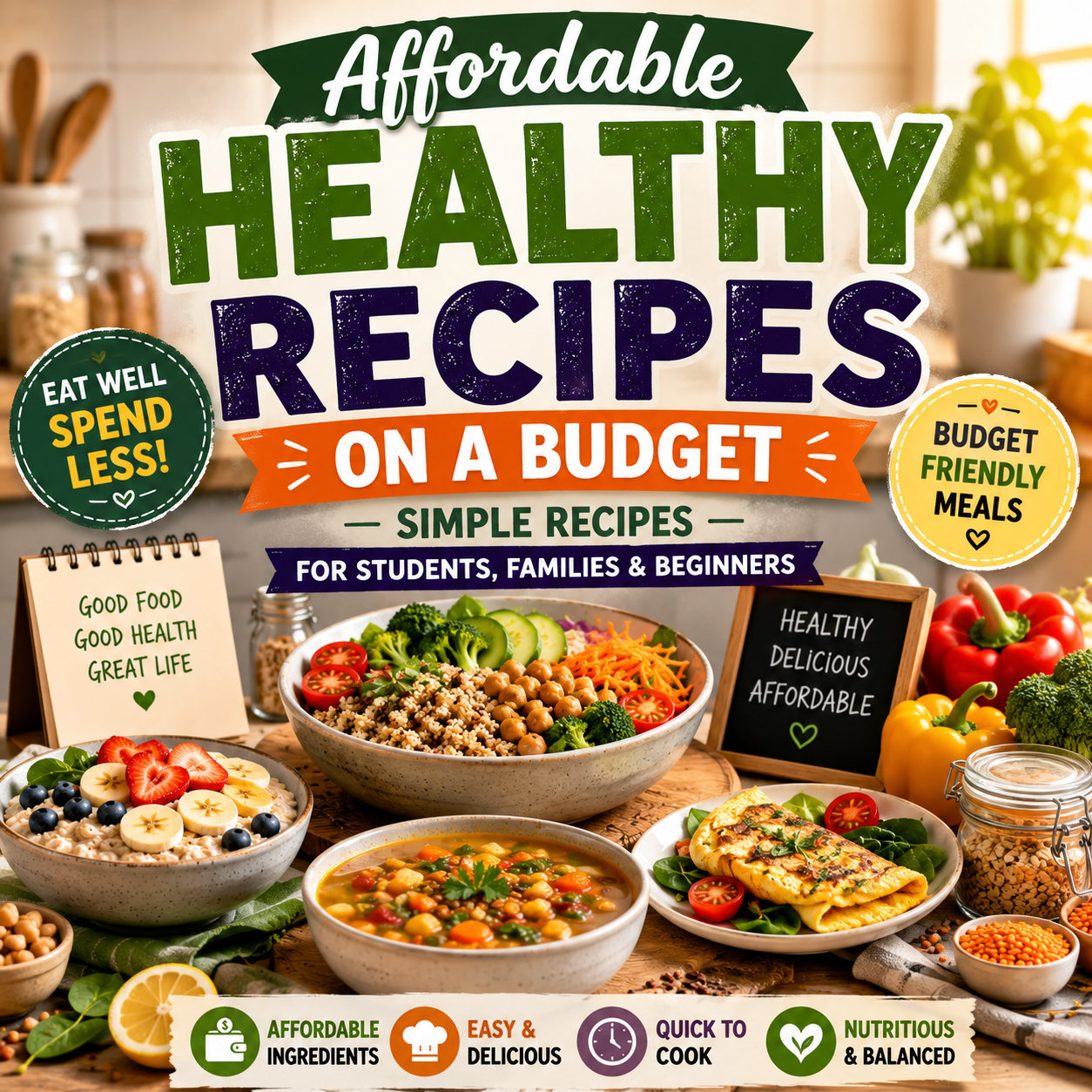
Overnight Oats
Combine rolled oats, milk, yogurt, chia seeds, and fruit in a jar overnight. This meal is rich in fiber, protein, and complex carbohydrates while costing only a small amount per serving.
Vegetable Omelet
Eggs mixed with onions, spinach, tomatoes, and peppers create a protein-rich breakfast packed with vitamins and minerals. Pair with whole-grain toast for additional fiber.
Peanut Butter Banana Toast
Whole-grain bread topped with natural peanut butter and sliced bananas delivers healthy fats, potassium, and sustained energy. It is one of the most affordable nutritious breakfasts available.
Greek Yogurt Fruit Bowl
Mix plain Greek yogurt with fresh fruit and oats for a quick meal containing protein, calcium, probiotics, and fiber.
Budget-Friendly Lunch Recipes
Lunch is an ideal opportunity to use leftovers or prepare meals in advance. Planning lunches ahead reduces reliance on expensive takeout and helps maintain healthy eating habits.
Lentil Soup
Lentil soup combines dried lentils, carrots, onions, celery, tomatoes, garlic, and herbs into a filling meal that costs very little per serving. It freezes well and can be prepared in large batches for convenient weekday lunches.
Brown Rice and Vegetable Bowl
A bowl made with cooked brown rice, roasted vegetables, black beans, and a simple homemade dressing provides balanced nutrition and can be customized with seasonal ingredients. It is easy to prepare in advance and stores well in the refrigerator.
Affordable Homemade Dinner Ideas
Dinner is often the largest meal of the day, but it doesn’t have to be the most expensive. By building meals around affordable staples such as whole grains, beans, seasonal vegetables, and economical protein sources, you can prepare satisfying dinners that nourish the entire family. Planning dinners ahead also reduces food waste and minimizes the temptation to order costly takeout.
The recipes below are easy to customize based on what’s available in your pantry. They provide a good balance of protein, healthy carbohydrates, fiber, and essential nutrients while keeping grocery expenses under control.
1. Vegetable Stir-Fry with Brown Rice
A vegetable stir-fry is one of the quickest and most versatile budget-friendly dinners. Use seasonal vegetables or frozen mixed vegetables, add tofu, eggs, or chicken, and season with garlic, ginger, and low-sodium soy sauce. Serve over brown rice for a complete meal.
Benefits
- High in fiber
- Rich in vitamins and minerals
- Low in saturated fat
- Ready in about 30 minutes
- Excellent for using leftover vegetables
2. Black Bean Chili
Black bean chili is hearty, filling, and inexpensive. Combine black beans, tomatoes, onions, garlic, peppers, corn, and spices for a protein-packed dinner. Serve with brown rice or whole-grain bread.
| Nutrition Benefit | Value |
| Protein | High |
| Fiber | Very High |
| Cost | Very Low |
| Meal Prep Friendly | Yes |
| Freezer Friendly | Yes |
3. Baked Chicken and Roasted Vegetables
Chicken thighs paired with roasted carrots, potatoes, onions, and broccoli create a nutritious family dinner. Roasting enhances natural flavors without requiring expensive sauces or ingredients.
This meal offers lean protein, complex carbohydrates, and antioxidants while remaining budget-conscious.
4. Lentil Curry
Lentils absorb spices beautifully, making them perfect for flavorful curries. Cook lentils with onions, tomatoes, garlic, ginger, turmeric, cumin, and spinach. Serve alongside brown rice or whole-wheat flatbread.
Lentil curry is naturally high in plant protein and fiber, making it both filling and economical.
5. Whole Wheat Pasta Primavera
Whole wheat pasta combined with sautéed vegetables and a light olive oil or tomato-based sauce creates a colorful, nutritious dinner. Add beans or grilled chicken for additional protein.
This recipe is perfect for families because it is affordable, easy to prepare, and adaptable to different tastes.
Healthy Snacks That Won’t Break Your Budget
Healthy snacks help maintain energy between meals and prevent overeating later in the day. Choosing homemade or minimally processed snacks is usually much cheaper than buying packaged convenience foods.
Affordable snack options include:
- Apple slices with peanut butter
- Homemade popcorn
- Roasted chickpeas
- Carrot sticks with hummus
- Greek yogurt with fruit
- Cottage cheese and cucumber
- Hard-boiled eggs
- Banana with oats
- Homemade trail mix
- Whole-grain crackers with cheese
Preparing snacks in advance also saves time during busy weekdays and encourages healthier choices.
How to Plan Cheap Healthy Meals for an Entire Week
Meal planning is one of the most effective ways to reduce grocery costs while maintaining a nutritious diet. A weekly plan helps you purchase only what you need, avoid impulse buying, and make better use of leftovers.
Step 1: Check Your Pantry
Before shopping, review the ingredients you already have. Building meals around existing pantry staples prevents unnecessary purchases and reduces waste.
Step 2: Choose Budget-Friendly Proteins
Base your meals around affordable protein sources such as eggs, beans, lentils, canned tuna, chicken thighs, and Greek yogurt. Rotate these throughout the week to add variety.
Step 3: Buy Seasonal Produce
Seasonal fruits and vegetables are usually fresher, more nutritious, and less expensive than out-of-season produce. Frozen vegetables are another excellent budget-friendly option.
Step 4: Cook in Large Batches
Preparing soups, stews, chili, rice, or casseroles in larger quantities saves both time and money. Portion leftovers into containers for lunches or future dinners.
Step 5: Repurpose Leftovers
Transform leftovers into entirely new meals. For example:
- Roasted chicken becomes wraps.
- Cooked rice becomes fried rice.
- Extra vegetables become soup.
- Lentils become taco filling.
- Chili becomes baked potato topping.
These simple changes reduce food waste while keeping meals interesting.
Sample 7-Day Budget Meal Plan
| Day | Breakfast | Lunch | Dinner |
| Monday | Overnight oats | Lentil soup | Vegetable stir-fry |
| Tuesday | Vegetable omelet | Rice bowl | Chicken with roasted vegetables |
| Wednesday | Yogurt with fruit | Tuna sandwich | Black bean chili |
| Thursday | Peanut butter toast | Leftover chili | Lentil curry |
| Friday | Oatmeal with banana | Pasta salad | Whole wheat pasta primavera |
| Saturday | Scrambled eggs | Vegetable wrap | Homemade vegetable soup |
| Sunday | Smoothie bowl | Chicken salad | Baked potatoes with beans |
This meal plan demonstrates how affordable ingredients can provide variety, balanced nutrition, and satisfying meals throughout the week.
Grocery Shopping Tips to Save More Money
Smart grocery shopping can significantly lower your monthly food expenses without sacrificing quality or nutrition. A few intentional habits make a noticeable difference over time.
Shop with a List
A grocery list helps you stay focused and reduces impulse purchases. Plan meals before shopping so every ingredient has a purpose.
Compare Unit Prices
Larger packages often provide better value, but always compare the price per unit rather than the total package price.
Buy Store Brands
Store-brand products frequently match the quality of national brands while costing considerably less.
Purchase Frozen Produce
Frozen vegetables and fruits are nutritious, convenient, and often cheaper than fresh produce, especially outside the growing season.
Limit Processed Foods
Highly processed foods typically cost more per serving than whole foods and often contain excess sodium, sugar, and unhealthy fats.
Avoid Shopping Hungry
Shopping while hungry increases the likelihood of buying unnecessary snacks and convenience foods.
Common Mistakes That Increase Food Costs
Many households spend more on groceries than necessary because of small habits that add up over time. Avoiding these mistakes can lead to substantial savings.
Buying Too Much Fresh Produce
Purchasing more fruits and vegetables than you can use often leads to spoilage. Buy realistic quantities and supplement with frozen produce when needed.
Ignoring Leftovers
Leftovers are valuable ingredients for future meals. Throwing them away wastes both food and money.
Skipping Meal Planning
Without a plan, it’s easier to rely on expensive takeout or convenience foods during busy days.
Choosing Convenience Foods
Pre-cut vegetables, individually packaged snacks, and ready-made meals usually cost much more than preparing foods yourself.
Shopping Without Comparing Prices
Taking a few moments to compare brands and unit prices can save hundreds of dollars over the course of a year.
Expert Tips for Eating Healthy on a Budget
Nutrition experts consistently recommend focusing on whole foods rather than expensive “superfoods.” Healthy eating is more about overall dietary patterns than purchasing premium ingredients.
Some practical expert tips include:
- Cook more meals at home.
- Use seasonal ingredients.
- Buy pantry staples in bulk.
- Include beans and lentils several times each week.
- Freeze leftovers before they spoil.
- Drink water instead of sugary beverages.
- Plan meals around weekly grocery sales.
- Keep healthy snacks readily available.
- Reduce food waste through proper storage.
- Experiment with simple homemade recipes instead of packaged meals.
These habits not only reduce grocery bills but also contribute to long-term health and sustainability.
Frequently Asked Questions (FAQs)
1. Are cheap healthy meals nutritious?
Yes. Budget-friendly meals can provide excellent nutrition when they include whole grains, vegetables, fruits, lean proteins, legumes, and healthy fats. Foods such as beans, eggs, oats, and seasonal produce are inexpensive yet rich in vitamins, minerals, protein, and fiber, making them ideal for a healthy diet.
2. How much money can meal planning save?
Meal planning can significantly reduce grocery expenses by minimizing impulse purchases, reducing food waste, and making better use of leftovers. Many households save 15–30% on monthly grocery bills by planning meals and shopping with a list.
3. Is buying in bulk worth it?
Buying pantry staples such as rice, oats, beans, lentils, and pasta in bulk often lowers the cost per serving. However, purchase bulk items only if you can store and use them before they expire to avoid unnecessary waste.
4. What is the healthiest inexpensive breakfast?
Oatmeal with fruit, vegetable omelets, peanut butter toast, overnight oats, and Greek yogurt with berries are nutritious and affordable breakfast options. They provide fiber, protein, and healthy carbohydrates to keep you full and energized.
5. How do I avoid food waste?
Plan meals, store food properly, freeze leftovers, rotate pantry items using the “first in, first out” method, and repurpose extra ingredients into soups, salads, or stir-fries. These habits help maximize every grocery purchase.
6. Can frozen vegetables replace fresh vegetables?
Absolutely. Frozen vegetables are convenient, affordable, and retain most of their nutrients. They are ideal for soups, stir-fries, casseroles, and side dishes while reducing spoilage and saving money.
7. Which healthy snacks are budget-friendly?
Affordable healthy snacks include bananas, apples, homemade popcorn, roasted chickpeas, boiled eggs, yogurt, carrot sticks with hummus, and peanut butter on whole-grain toast. These options are nutritious and inexpensive.
8. How often should I cook at home?
Cooking at home most days of the week is a practical way to improve diet quality and reduce food expenses. Even preparing four to five homemade dinners weekly can lead to noticeable savings and healthier eating habits.
9. Are plant-based meals cheaper?
Many plant-based meals built around beans, lentils, rice, vegetables, and whole grains are more affordable than meals centered on meat. They also provide fiber, vitamins, and minerals that support overall health.
10. What is the best strategy for healthy eating on a budget?
The most effective approach combines meal planning, smart shopping, cooking at home, buying seasonal produce, choosing whole foods, and using leftovers creatively. These habits make nutritious eating sustainable and cost-effective.
Key Takeaways
- Cheap healthy meals are both nutritious and affordable.
- Whole foods usually cost less than processed convenience foods.
- Meal planning reduces grocery bills and food waste.
- Pantry staples provide endless recipe possibilities.
- Frozen vegetables are nutritious and budget-friendly.
- Affordable proteins include eggs, beans, lentils, and chicken thighs.
- Homemade meals support better portion control and overall health.
- Buying seasonal produce helps maximize savings.
- Batch cooking saves time and money.
- Small shopping habits can lead to significant long-term savings.
Conclusion
Eating well doesn’t require expensive ingredients or complicated recipes. By focusing on cheap healthy meals, you can enjoy delicious homemade dishes that nourish your body while protecting your budget. Simple staples such as beans, lentils, whole grains, eggs, seasonal vegetables, and lean proteins offer outstanding nutritional value and can be transformed into countless satisfying meals.
Success comes from planning ahead, shopping wisely, cooking at home, and making the most of every ingredient. These habits not only reduce food expenses but also encourage healthier eating patterns, less food waste, and greater confidence in the kitchen.
Whether you’re feeding a family, managing a busy schedule, or simply looking to save money without sacrificing nutrition, affordable homemade meals are a practical solution for long-term wellness.
Read Our Latest Blog:Budget Meal Planning: Simple Ways to Build Healthy Meals on a Tight Budget