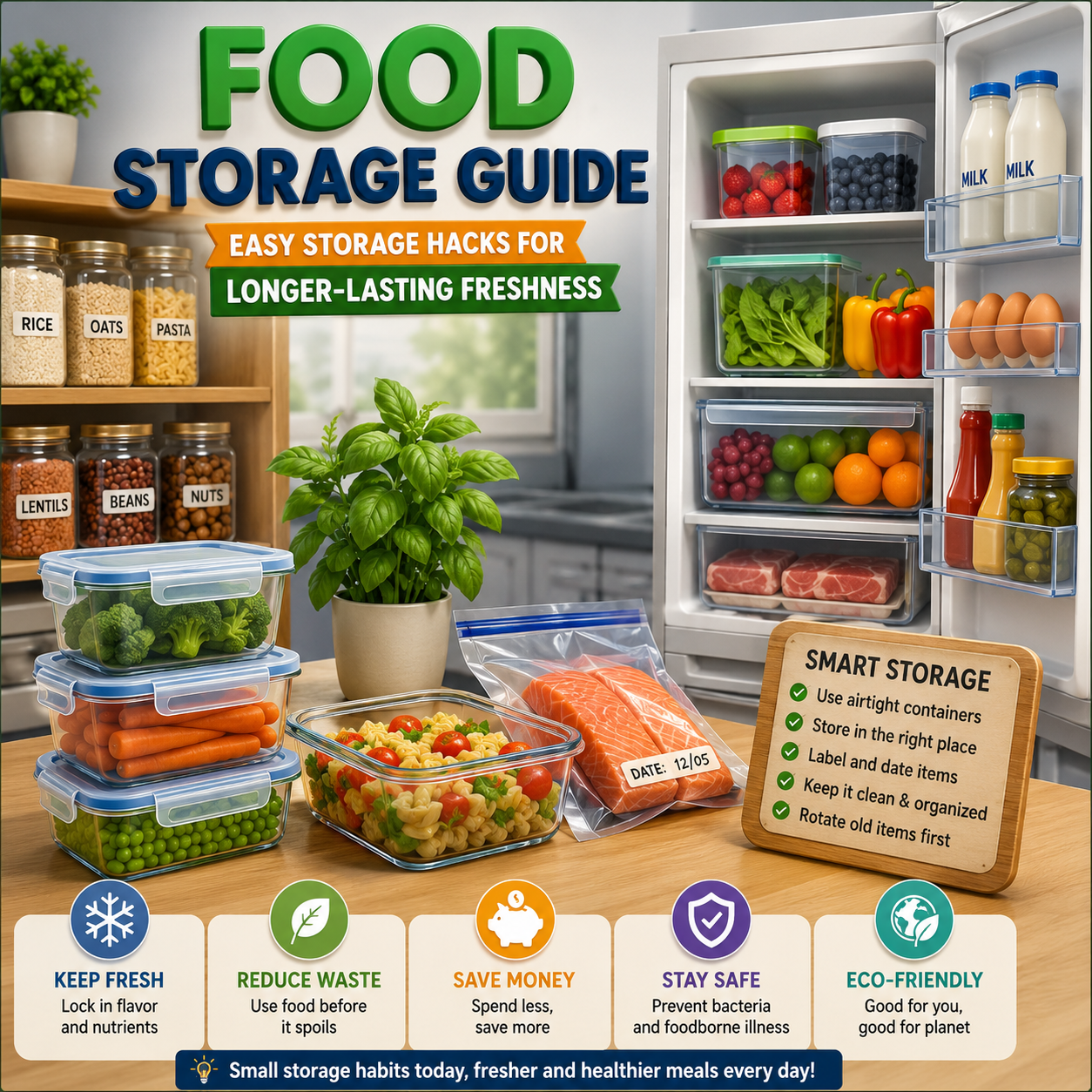
Proper food storage is one of the simplest ways to keep your groceries fresh, reduce food waste, and save money. Every year, millions of households throw away perfectly edible food because it spoils before being used. In many cases, the problem isn’t buying too much food—it’s storing food incorrectly.
This Food Storage Guide explains practical and science-backed storage methods that help preserve freshness, maintain nutritional value, and extend shelf life. Whether you’re storing fruits, vegetables, dairy products, meat, leftovers, or pantry staples, knowing the correct storage conditions can make a significant difference.
You’ll also discover easy storage hacks, common mistakes to avoid, refrigerator organization tips, freezer best practices, and expert recommendations for keeping food safe. By following these strategies, you can enjoy fresher meals, lower grocery bills, and contribute to reducing food waste while maintaining food safety in your home.
What Is Food Storage?
Food storage is the process of preserving food under appropriate environmental conditions to maintain its freshness, nutritional quality, flavor, and safety for as long as possible. Proper storage involves controlling factors such as temperature, humidity, light exposure, airflow, and packaging to slow down spoilage and prevent contamination.
Modern food storage combines traditional methods with scientific principles. Refrigeration slows bacterial growth, freezing preserves food for extended periods, airtight containers reduce moisture loss, and correct pantry organization protects dry goods from pests and humidity.
Understanding these basic principles allows households to maximize the shelf life of groceries while minimizing waste and maintaining food quality.
Why Proper Food Storage Matters
Correct food storage is about much more than convenience. It directly affects food safety, household budgets, environmental sustainability, and nutritional value. Improperly stored food can become contaminated by bacteria, mold, or other microorganisms that may lead to foodborne illnesses.
Proper storage also helps retain vitamins, minerals, texture, and flavor. Fresh produce stays crisp, dairy products last longer, meats remain safe, and leftovers maintain their quality when stored correctly. By extending the usable life of food, families reduce grocery expenses and contribute to lowering global food waste.
Developing good storage habits is a practical investment in both health and financial savings.
Benefits of Following a Food Storage Guide
Using a reliable food storage guide offers several advantages that improve daily meal planning and kitchen efficiency.
Major Benefits
- Extends food freshness
- Reduces household food waste
- Saves money on groceries
- Prevents foodborne illness
- Preserves nutrients
- Improves refrigerator organization
- Simplifies meal preparation
- Reduces emergency grocery trips
- Helps maintain food quality
- Supports environmentally friendly living
When these benefits are combined, households enjoy better food management and greater confidence in the safety and quality of their meals.
Understanding Food Spoilage
Food spoilage occurs when food undergoes physical, chemical, or biological changes that make it undesirable or unsafe to eat. While some spoilage is visible through mold, discoloration, or unpleasant odors, harmful bacteria may grow without obvious signs.
Several factors accelerate spoilage, including warm temperatures, excess moisture, oxygen exposure, and improper handling. Different foods spoil at different rates depending on their composition. Fresh meats, seafood, and dairy products are highly perishable, while dry grains and canned goods can remain safe for months or even years when stored properly.
Recognizing the causes of spoilage helps consumers take preventive measures and avoid unnecessary food waste.
The Four Main Food Storage Zones
Different foods require different storage environments. Organizing your kitchen into four storage zones helps maximize freshness and maintain food safety.
1. Refrigerator (0°C–4°C)
The refrigerator is ideal for highly perishable foods, including milk, yogurt, cheese, eggs, cooked meals, fresh vegetables, fruits, and leftovers. Maintaining a consistent refrigerator temperature below 4°C slows bacterial growth and preserves freshness.
Avoid overcrowding the refrigerator, as good air circulation is essential for maintaining an even temperature throughout the appliance.
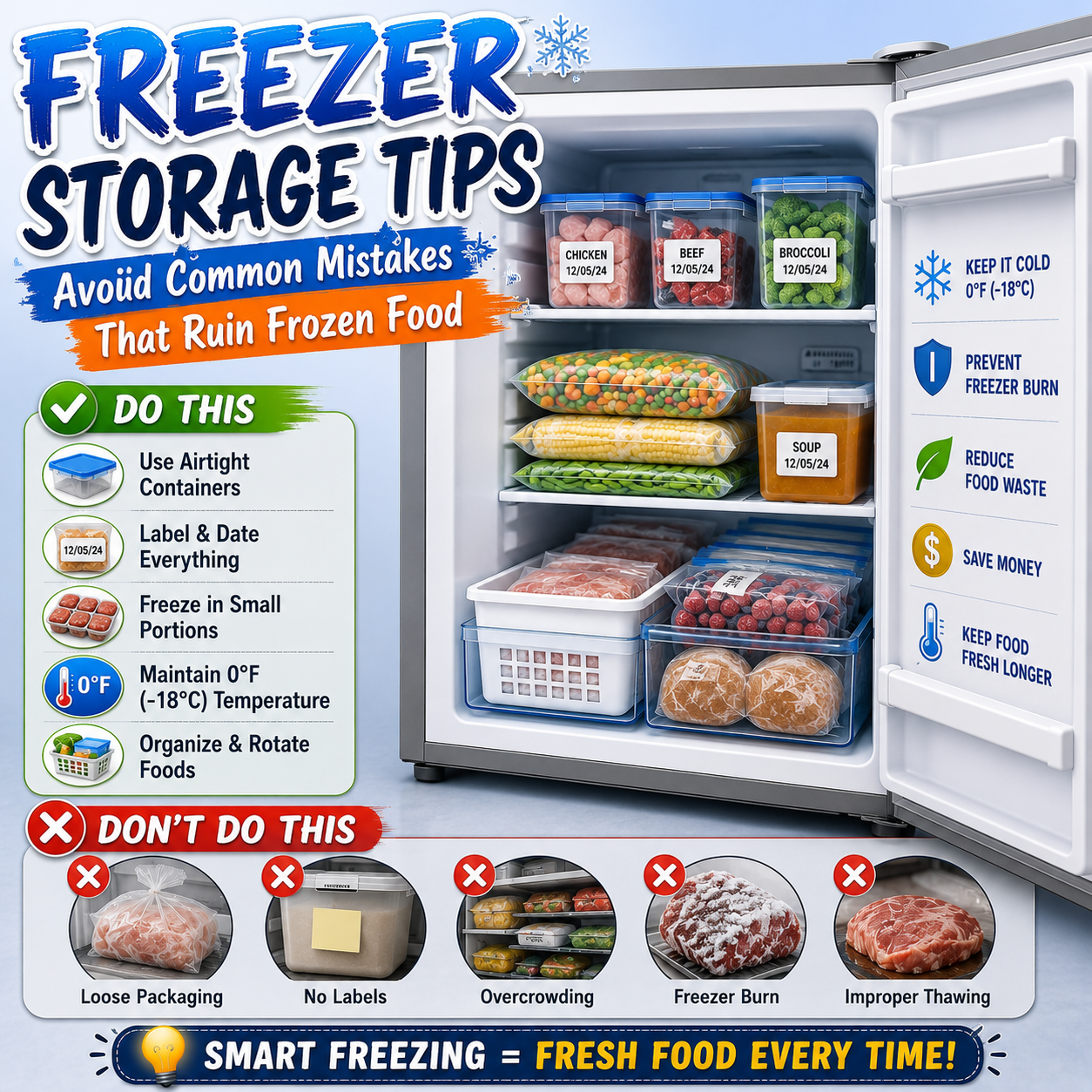
2. Freezer (-18°C or Lower)
Freezing preserves food by stopping bacterial growth and significantly slowing chemical reactions. Meat, poultry, seafood, frozen vegetables, bread, and prepared meals can be stored for several months without major quality loss when packaged correctly.
Use freezer-safe containers or vacuum-sealed bags to minimize freezer burn and maintain texture.
3. Pantry
A pantry provides a cool, dry, and dark environment suitable for dry foods such as rice, pasta, flour, beans, spices, canned foods, cereals, and cooking oils. Proper pantry organization helps prevent pest infestations and moisture damage while making ingredients easier to locate.
4. Countertop
Some foods should never be refrigerated because cold temperatures affect their texture or flavor. Bananas, tomatoes, onions, garlic, potatoes, whole pumpkins, and certain tropical fruits generally stay fresher when stored at room temperature in a well-ventilated area.
Refrigerator Storage Guide
The refrigerator contains multiple temperature zones, and understanding them improves food safety and freshness.
| Refrigerator Area | Best Foods |
| Top Shelf | Leftovers, drinks, ready-to-eat foods |
| Middle Shelf | Dairy products, yogurt, cheese |
| Bottom Shelf | Raw meat in leak-proof containers |
| Crisper Drawer | Fruits and vegetables |
| Door | Condiments, sauces, beverages |
Always store raw meat on the lowest shelf to prevent juices from dripping onto ready-to-eat foods. Keep leftovers in shallow airtight containers and consume them within a few days for the best quality.
1. Store Herbs Like Fresh Flowers
Fresh herbs such as parsley, cilantro, dill, and mint stay fresh much longer when their stems are placed in a glass of water. Cover the leaves loosely with a plastic bag and refrigerate. This method helps retain moisture while allowing airflow, extending freshness by several days compared to leaving herbs in their original packaging.
2. Keep Apples Separate
Apples naturally release ethylene gas, which speeds up the ripening process of nearby fruits and vegetables. Store apples separately from leafy greens, bananas, berries, and other produce to prevent premature spoilage and reduce waste.
3. Use Paper Towels with Leafy Greens
Line salad containers with dry paper towels before storing lettuce, spinach, kale, or mixed greens. The paper towels absorb excess moisture, reducing the likelihood of slimy leaves and mold growth. Replace damp towels as needed to keep greens crisp for longer.
4. Don’t Wash Produce Until Needed
Although washing fruits and vegetables immediately after shopping may seem convenient, excess moisture encourages mold and bacterial growth. Instead, store produce dry and wash only before eating or cooking. This simple habit significantly extends shelf life.
5. Store Berries in a Breathable Container
Berries are highly perishable because they contain a lot of moisture and have delicate skins. Instead of leaving them in their original packaging, transfer them to a shallow container lined with a paper towel. Keep the lid slightly open or use a container with ventilation holes to improve airflow. Remove any damaged berries immediately because mold spreads quickly from one berry to another. Washing berries only before eating also helps keep them fresh for several extra days.
6. Freeze Bread Before It Gets Stale
If you won’t finish a loaf of bread within a few days, freezing it is one of the easiest ways to prevent waste. Slice the bread before freezing so you can remove only what you need. Wrap it tightly in freezer-safe packaging to prevent freezer burn. Frozen bread maintains good quality for up to three months and can be toasted directly from frozen without affecting taste or texture.
7. Store Potatoes and Onions Separately
Although potatoes and onions are pantry staples, they should never be stored together. Onions release moisture and gases that encourage potatoes to sprout and spoil more quickly. Store potatoes in a cool, dark, and well-ventilated place, while onions should be kept in a separate basket or mesh bag. Proper separation can significantly extend the shelf life of both vegetables.
8. Use Airtight Containers for Pantry Staples
Dry foods such as rice, flour, pasta, sugar, oats, cereals, and beans stay fresh much longer when transferred into airtight containers. These containers protect food from humidity, insects, and odors while making pantry organization easier. Clear containers also allow you to monitor food levels and identify ingredients quickly, helping reduce duplicate purchases and food waste.
9. Label and Date Stored Foods
A simple labeling system helps prevent forgotten leftovers and expired ingredients. Write the storage date and food name on freezer bags or storage containers using a permanent marker or reusable labels. Following the “First In, First Out” (FIFO) method ensures older food is used before newer purchases, reducing waste and improving kitchen organization.
10. Cool Leftovers Quickly
Leaving cooked food at room temperature for extended periods encourages bacterial growth. Divide large meals into shallow containers so they cool faster before refrigerating. Refrigerate leftovers within two hours of cooking, or within one hour if the room temperature is very hot. Proper cooling helps maintain food safety and preserves flavor and texture.
Best Food Storage Containers
Choosing the right storage container is just as important as storing food in the correct location. Different materials provide different advantages depending on the type of food being stored.
| Container Type | Best For | Advantages | Considerations |
| Glass Containers | Leftovers, meal prep | Durable, stain-resistant, microwave-safe | Heavier than plastic |
| BPA-Free Plastic | Dry foods, lunches | Lightweight and affordable | Replace if cracked or stained |
| Silicone Storage Bags | Snacks, freezer foods | Reusable and eco-friendly | Higher initial cost |
| Vacuum-Sealed Bags | Meat, seafood | Greatly extend freezer life | Requires vacuum sealer |
| Mason Jars | Grains, salads, sauces | Airtight and reusable | Breakable |
Investing in quality food storage containers protects food quality while reducing reliance on disposable packaging.
Food Storage Tips by Food Category
Fruits
Most fruits benefit from cool storage, but some are best kept at room temperature until ripe. Apples, grapes, and berries last longer in the refrigerator, while bananas, avocados, peaches, and mangoes should ripen on the countertop before refrigeration if necessary. Keep ethylene-producing fruits away from sensitive produce to slow ripening.
Vegetables
Leafy greens should be refrigerated with moisture-absorbing paper towels. Root vegetables such as carrots, beets, and radishes stay crisp when stored in the refrigerator’s crisper drawer. Potatoes, onions, garlic, and winter squash belong in a cool, dark pantry instead of the refrigerator to preserve flavor and texture.
Dairy Products
Milk, yogurt, cheese, butter, and cream should be stored on the middle shelves of the refrigerator where temperatures remain stable. Avoid storing milk in the refrigerator door because frequent opening causes temperature fluctuations that shorten its shelf life. Always reseal dairy products tightly after each use.
Meat and Poultry
Raw meat and poultry should always be stored on the bottom refrigerator shelf in leak-proof containers to prevent cross-contamination. If they won’t be used within a couple of days, freeze them immediately. Separate raw meat from ready-to-eat foods during storage and preparation to reduce the risk of foodborne illness.
Seafood
Fresh seafood is among the most perishable foods and should be cooked within one to two days of purchase. Keep seafood in the coldest section of the refrigerator or freeze it immediately for longer storage. Proper packaging helps preserve quality and prevents unpleasant odors from spreading.
Eggs
Store eggs in their original carton on an interior refrigerator shelf rather than the door. The carton protects eggs from absorbing odors and reduces moisture loss. Keeping eggs at a consistent temperature helps maintain freshness and food safety.
Leftovers
Store leftovers in shallow, airtight containers and refrigerate promptly. Label each container with the preparation date and consume leftovers within three to four days for the best quality. Reheat leftovers thoroughly before serving and avoid reheating the same food multiple times.
Common Food Storage Mistakes to Avoid
Even with good intentions, many people unknowingly shorten the life of their groceries. Avoiding these common mistakes can significantly improve food freshness and safety.
Storing Hot Food Directly in the Refrigerator
Large amounts of hot food can temporarily raise the refrigerator’s internal temperature, affecting nearby foods. Allow food to cool slightly, then divide it into shallow containers before refrigerating.
Overcrowding the Refrigerator
Packing shelves too tightly restricts air circulation, causing uneven cooling. Leave enough space between containers so cold air can circulate effectively.
Ignoring Expiration and Use-By Dates
Regularly check food labels and organize groceries so older items are used first. This simple practice minimizes waste and reduces the chance of consuming spoiled food.
Using Damaged Storage Containers
Cracked or worn containers may not seal properly, allowing moisture, odors, and bacteria to enter. Replace damaged containers to maintain food quality.
Forgetting to Clean the Refrigerator
Food spills and old leftovers encourage bacterial growth and unpleasant odors. Clean refrigerator shelves, drawers, and door compartments regularly to maintain a hygienic storage environment.
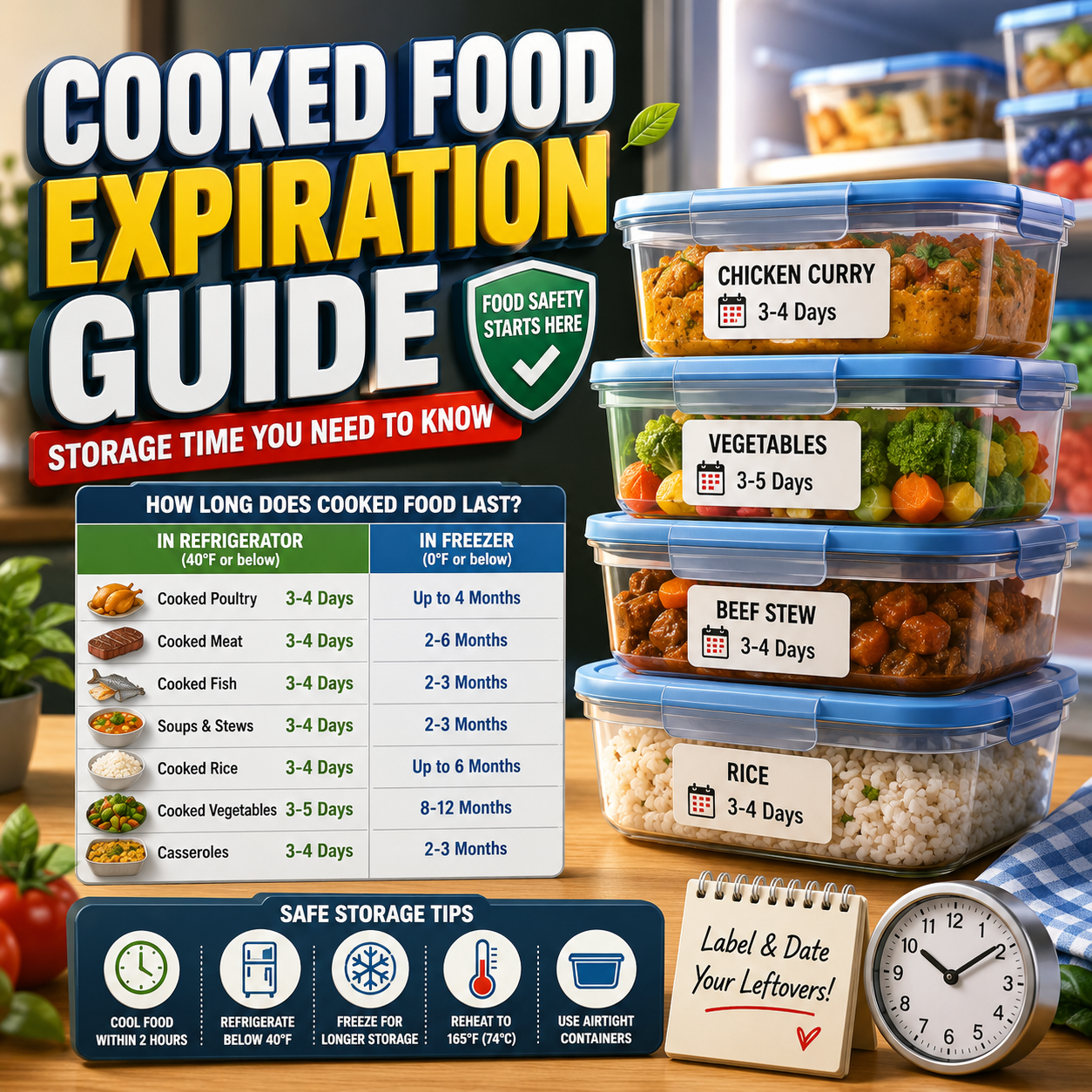
Food Storage Time Chart
| Food Item | Refrigerator | Freezer |
| Cooked Chicken | 3–4 Days | Up to 4 Months |
| Cooked Rice | 3–4 Days | Up to 6 Months |
| Ground Meat | 1–2 Days | Up to 4 Months |
| Steak | 3–5 Days | Up to 12 Months |
| Fish | 1–2 Days | Up to 6 Months |
| Bread | 5–7 Days | Up to 3 Months |
| Milk | About 1 Week (after opening, depending on date) | Not usually recommended |
| Cheese (Hard) | 3–4 Weeks | Up to 6 Months |
| Vegetables (Fresh) | 3–7 Days | 8–12 Months (blanched) |
| Fruits (Fresh) | Varies by type | 8–12 Months |
Note: These are general quality guidelines. Always discard food that shows signs of spoilage such as mold, foul odor, unusual texture, or discoloration.
Expert Tips for Keeping Food Fresh Longer
- Plan meals before grocery shopping.
- Buy only what you can realistically use.
- Check your refrigerator temperature regularly.
- Rotate pantry items using the FIFO method.
- Freeze excess food before it spoils.
- Store produce according to its specific needs.
- Keep dry foods in airtight containers.
- Clean your refrigerator weekly.
- Label leftovers with preparation dates.
- Inspect food frequently and remove spoiled items promptly.
These simple habits can dramatically reduce food waste while helping you enjoy fresher, safer meals every day.
Frequently Asked Questions (FAQs)
1. How should I organize my refrigerator?
Store ready-to-eat foods on the upper shelves, dairy on the middle shelves, raw meat on the bottom shelf, fruits and vegetables in the crisper drawers, and condiments in the door. This arrangement improves food safety and helps maintain freshness.
2. Can I freeze cooked meals?
Yes. Most cooked meals freeze well when cooled quickly and stored in airtight freezer-safe containers. Label each container with the preparation date and consume within the recommended storage period for the best quality.
3. Why do vegetables become soggy?
Excess moisture is a common cause. Store leafy greens with paper towels to absorb moisture and keep vegetables in the refrigerator’s crisper drawer to maintain the proper humidity level.
4. Should I wash produce before storing it?
Generally, no. Washing before storage adds moisture that can encourage mold growth. Wash fruits and vegetables just before eating or cooking unless the packaging specifically states they are prewashed.
5. How can I keep herbs fresh longer?
Trim the stems, place them in a jar with a small amount of water, loosely cover the leaves with a plastic bag, and refrigerate. Change the water every few days to extend freshness.
6. Is freezer burn dangerous?
Freezer burn affects texture and flavor because of moisture loss but does not necessarily make food unsafe. Wrapping food tightly and removing excess air helps prevent freezer burn.
7. What are airtight containers used for?
Airtight containers protect food from moisture, pests, odors, and air exposure. They help preserve freshness, especially for pantry staples such as rice, flour, cereals, pasta, and beans.
8. How often should pantry items be checked?
Inspect your pantry every month. Remove expired items, check for pests, rotate older products to the front, and clean shelves to keep ingredients fresh and organized.
9. Can I refreeze thawed food?
Food thawed safely in the refrigerator can often be refrozen, although quality may decline. However, food left at room temperature for more than two hours should generally be discarded for safety reasons.
10. What is the easiest way to reduce grocery waste?
Plan meals, buy only what you need, organize food by expiration dates, store items correctly, freeze extras before they spoil, and use leftovers creatively. These habits help save money and minimize waste.
Key Takeaways
- Store food at the correct temperature to maximize freshness.
- Use airtight containers to protect food from moisture and pests.
- Refrigerate leftovers promptly in shallow containers.
- Keep raw meat separate from ready-to-eat foods.
- Freeze foods you won’t use soon to extend shelf life.
- Label and date stored food to prevent waste.
- Clean your refrigerator regularly for food safety.
- Store fruits and vegetables according to their individual needs.
- Rotate older groceries using the FIFO method.
- Proper food storage saves money, reduces waste, and supports healthier eating.
Conclusion
Following a reliable food storage guide is one of the easiest ways to keep food fresh, reduce waste, and protect your family’s health. Small changes—such as organizing your refrigerator, using airtight containers, separating ethylene-producing fruits, and labeling leftovers—can significantly extend the life of your groceries.
Proper food storage also helps preserve flavor, texture, and nutritional value while reducing unnecessary grocery expenses. By understanding where and how to store different foods, you can build better kitchen habits that benefit both your household budget and the environment.
Make food storage a daily routine rather than an afterthought. With the practical tips and easy storage hacks shared in this guide, you’ll enjoy fresher ingredients, safer meals, and less food waste every week.
Read Our Latest Blog:Affordable Healthy Diet Tips: Build a Balanced Meal Plan for Less