Homemade Baby Food Recipes
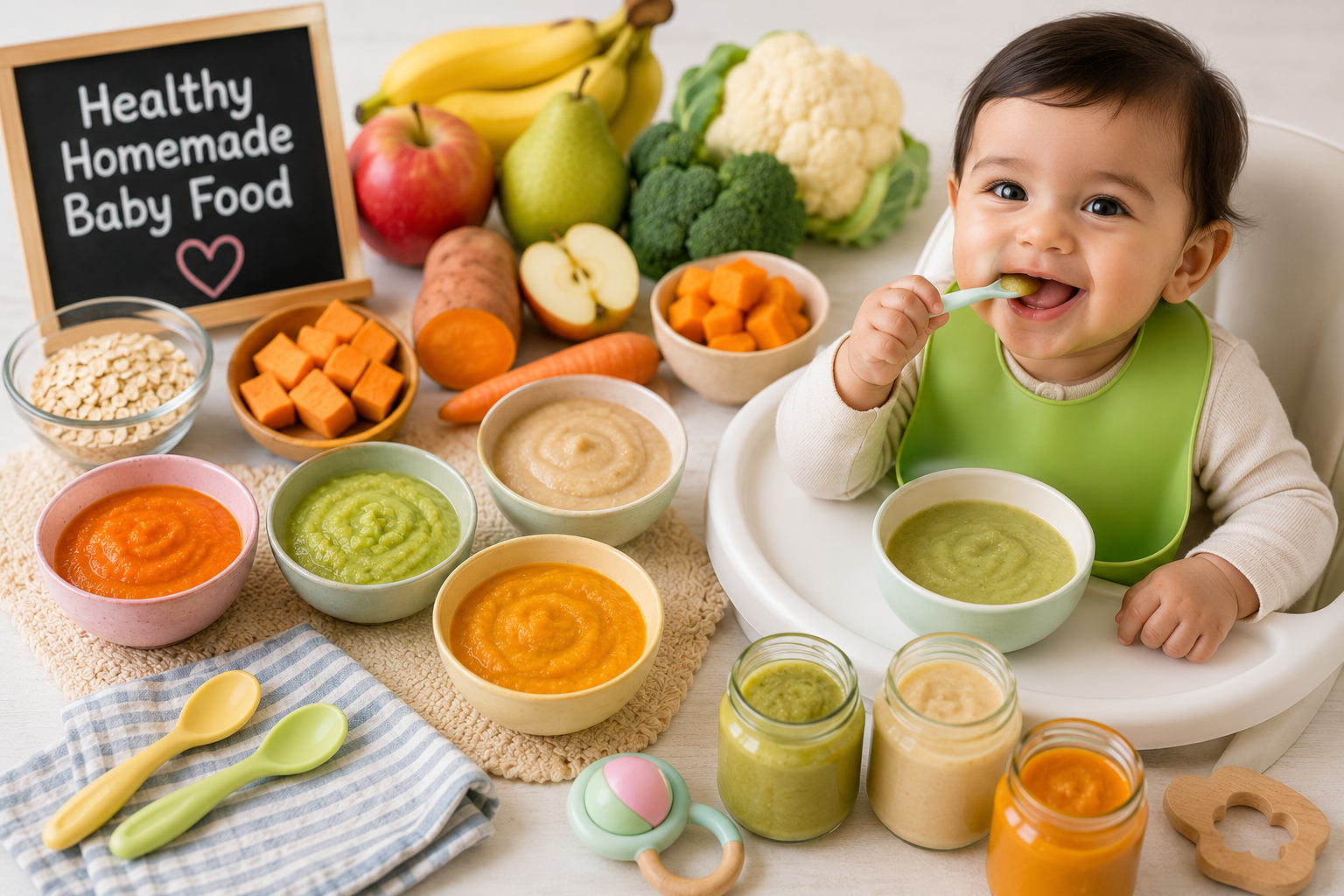
Preparing homemade baby food is a wonderful way to provide fresh, nutritious meals for your little one. Homemade recipes allow parents to choose wholesome ingredients, avoid unnecessary additives, and introduce babies to a variety of natural flavors and textures. As babies begin complementary feeding—typically around six months of age, while continuing breastfeeding or formula feeding—they need nutrient-rich foods that support healthy growth and development.
Simple homemade baby foods can provide essential vitamins, minerals, healthy fats, protein, and carbohydrates needed for brain development, strong bones, and a healthy immune system.
Why Choose Homemade Baby Food?
Making baby food at home offers several benefits for both babies and parents.
Benefits of Homemade Baby Food
- Uses fresh ingredients
- No artificial colors or preservatives
- Better control over ingredients
- Easy to customize based on your baby’s age
- Introduces natural flavors
- Can be more economical than packaged baby foods
- Encourages healthy eating habits from an early age
Always prepare baby food using clean utensils and safe food handling practices.
When Can Babies Start Solid Foods?
Most healthy babies are ready for complementary foods at around 6 months of age, while continuing breast milk or infant formula.
Signs Your Baby May Be Ready
- Can sit with minimal support
- Has good head and neck control
- Shows interest in food
- Opens the mouth when food is offered
- Can swallow food instead of pushing it out with the tongue
Consult your pediatrician before introducing solid foods, especially if your baby was born prematurely or has medical conditions.
Nutrients Babies Need for Healthy Growth
A balanced diet supports healthy development during infancy.
Iron
Iron supports brain development and healthy blood cells.
Good Sources
- Iron-fortified baby cereals
- Lentils
- Beans
- Pureed meats
Protein
Protein supports muscle growth and tissue repair.
Healthy Sources
- Eggs (when age-appropriate)
- Chicken
- Fish
- Lentils
- Yogurt
- Tofu
Healthy Fats
Healthy fats support brain and nervous system development.
Sources
- Avocado
- Full-fat yogurt
- Nut butters (introduced safely according to pediatric guidance)
- Olive oil (small amounts in cooked foods)
Fruits and Vegetables
These provide vitamins, minerals, and fiber.
Healthy Choices
- Apples
- Bananas
- Pears
- Sweet potatoes
- Carrots
- Pumpkin
- Spinach
- Peas
Easy Homemade Baby Food Recipes
1. Banana Puree
Bananas are naturally sweet and easy to digest.
Ingredients
- 1 ripe banana
How to Prepare
- Peel the banana.
- Mash thoroughly using a fork or blender.
- Add a small amount of breast milk, formula, or boiled cooled water if a thinner consistency is needed.
2. Apple Puree
Apples provide vitamin C and dietary fiber.
Ingredients
- 1 apple
How to Prepare
- Peel and remove the seeds.
- Steam until soft.
- Blend into a smooth puree.
3. Sweet Potato Mash
Sweet potatoes are rich in vitamin A and complex carbohydrates.
Ingredients
- 1 small sweet potato
How to Prepare
- Peel and cut into small pieces.
- Steam until tender.
- Mash until smooth.
4. Carrot Puree
Carrots provide beta-carotene, which the body converts to vitamin A.
Ingredients
- 2 carrots
How to Prepare
- Peel and slice.
- Steam until soft.
- Blend with a little water until smooth.
5. Avocado Mash
Avocados provide healthy fats that support brain development.
Ingredients
- 1 ripe avocado
How to Prepare
- Scoop out the flesh.
- Mash until smooth.
- Serve immediately to reduce browning.
6. Pear Puree
Pears are naturally sweet, easy to digest, and a good source of fiber and vitamin C.
Ingredients
- 1 ripe pear
How to Prepare
- Wash, peel, and remove the seeds.
- Cut into small pieces.
- Steam until soft.
- Blend into a smooth puree.
7. Pumpkin Puree
Pumpkin is rich in vitamin A and antioxidants that support healthy growth.
Ingredients
- 1 cup pumpkin cubes
How to Prepare
- Peel and remove the seeds.
- Steam until tender.
- Blend until smooth.
- Add a little boiled, cooled water if needed.
8. Rice and Lentil Mash
This simple recipe provides carbohydrates, plant-based protein, and iron.
Ingredients
- 2 tablespoons rice
- 2 tablespoons yellow lentils (moong dal)
- Water
How to Prepare
- Wash the rice and lentils thoroughly.
- Cook until very soft.
- Mash or blend to a smooth consistency.
- Allow it to cool before serving.
9. Oatmeal with Banana
Oats provide fiber and energy, while bananas add natural sweetness.
Ingredients
- 2 tablespoons oats
- Half a ripe banana
How to Prepare
- Cook the oats until soft.
- Mash the banana separately.
- Mix both together until smooth.
- Adjust the texture with breast milk, formula, or water if necessary.
10. Vegetable Puree
A combination of vegetables introduces babies to different flavors and nutrients.
Ingredients
- Carrots
- Peas
- Sweet potato
- Pumpkin
How to Prepare
- Wash and peel the vegetables.
- Steam until soft.
- Blend into a smooth puree.
- Introduce one new ingredient at a time when starting complementary feeding to help identify any food sensitivities.
Baby Feeding Tips
Introduce One New Food at a Time
Offer only one new food every few days before introducing another. This helps identify possible food allergies or intolerances.
Start with Smooth Textures
Begin with smooth purees and gradually move to mashed and soft finger foods as your baby develops chewing skills.
Feed Slowly and Patiently
Allow your baby time to explore new tastes and textures. Avoid forcing your baby to finish a meal.
Watch Hunger and Fullness Cues
Feed your baby when they show signs of hunger and stop when they appear full. Responsive feeding helps build healthy eating habits.
Continue Breastfeeding or Formula Feeding
Breast milk or infant formula remains the primary source of nutrition during the first year, while solid foods gradually complement milk feeds.
Foods to Avoid for Babies
Some foods are not suitable during infancy due to safety or nutritional concerns.
Avoid
- Honey for babies under 12 months of age
- Whole nuts because of choking risk
- Popcorn
- Hard candies
- Excess salt
- Added sugar
- Unpasteurized dairy products
- Raw or undercooked eggs, meat, or fish
- Highly processed foods
Always cut foods into age-appropriate sizes to reduce choking risk.
Baby Food Safety and Storage Tips
Practice Good Hygiene
- Wash your hands before preparing food.
- Clean all utensils and feeding equipment thoroughly.
- Wash fruits and vegetables well.
Store Food Safely
- Refrigerate homemade baby food promptly.
- Store in clean, airtight containers.
- Label containers with the preparation date.
- Discard leftovers that have been in contact with your baby’s spoon.
Reheat Carefully
Warm food evenly before serving and allow it to cool to a safe temperature. Always test the temperature before feeding your baby.
Frequently Asked Questions
When can babies start eating homemade baby food?
Most healthy babies can begin complementary foods at around 6 months of age, while continuing breast milk or infant formula. Always consult your pediatrician before introducing solid foods.
Can homemade baby food be frozen?
Yes. Many homemade purees can be frozen in small portions using clean, airtight containers or freezer-safe trays. Follow safe food storage practices and use frozen portions within the recommended storage period.
Is homemade baby food healthier than packaged baby food?
Homemade baby food allows parents to use fresh ingredients and control what goes into each meal. Both homemade and commercially prepared baby foods can be part of a healthy diet when chosen and prepared appropriately.
How many times should a baby eat solid foods each day?
The number of meals depends on the baby’s age and stage of development. As complementary feeding progresses, meal frequency gradually increases while breast milk or formula continues to provide most of the nutrition during the first year.
What should I do if my baby refuses a new food?
It is normal for babies to reject new foods at first. Continue offering the food on different occasions without pressure. Repeated exposure often helps babies accept new flavors over time.
Key Takeaways
- Homemade baby food provides fresh, nutritious meals using simple ingredients.
- Introduce solid foods around six months of age after consulting your pediatrician.
- Offer a variety of fruits, vegetables, grains, and protein-rich foods to support healthy growth.
- Introduce one new food at a time to monitor for possible allergies or sensitivities.
- Practice safe food preparation, storage, and feeding habits.
- Continue breastfeeding or formula feeding while gradually increasing complementary foods.
Conclusion
Preparing homemade baby food is a simple and rewarding way to support your baby’s healthy growth and development. Fresh fruits, vegetables, whole grains, and protein-rich foods provide essential nutrients that help build strong bones, support brain development, and strengthen the immune system. Introducing a variety of healthy foods early in life also encourages positive eating habits that can last into adulthood.
By following safe food preparation practices, offering age-appropriate textures, and responding to your baby’s hunger and fullness cues, parents can make mealtimes enjoyable while ensuring their little one receives balanced nutrition during this important stage of development.