Healthy School Lunch Ideas
Packing a healthy school lunch is one of the best ways to support your child’s growth, learning, and overall well-being. A nutritious lunch provides the energy children need to stay active, concentrate in class, and participate in school activities throughout the day. A well-balanced lunch box should include a combination of whole grains, lean protein, fruits, vegetables, healthy fats, and dairy or other calcium-rich foods.
Creating healthy lunches doesn’t have to be complicated. With a little planning and variety, parents can prepare meals that are both nutritious and appealing to children.
Why Is a Healthy School Lunch Important?
Children spend several hours at school, making lunch one of the most important meals of the day.
A balanced lunch helps:
- Provide long-lasting energy
- Improve concentration and learning
- Support healthy growth and development
- Strengthen the immune system
- Encourage healthy eating habits
- Reduce the consumption of processed snacks
Healthy eating during childhood lays the foundation for lifelong wellness.
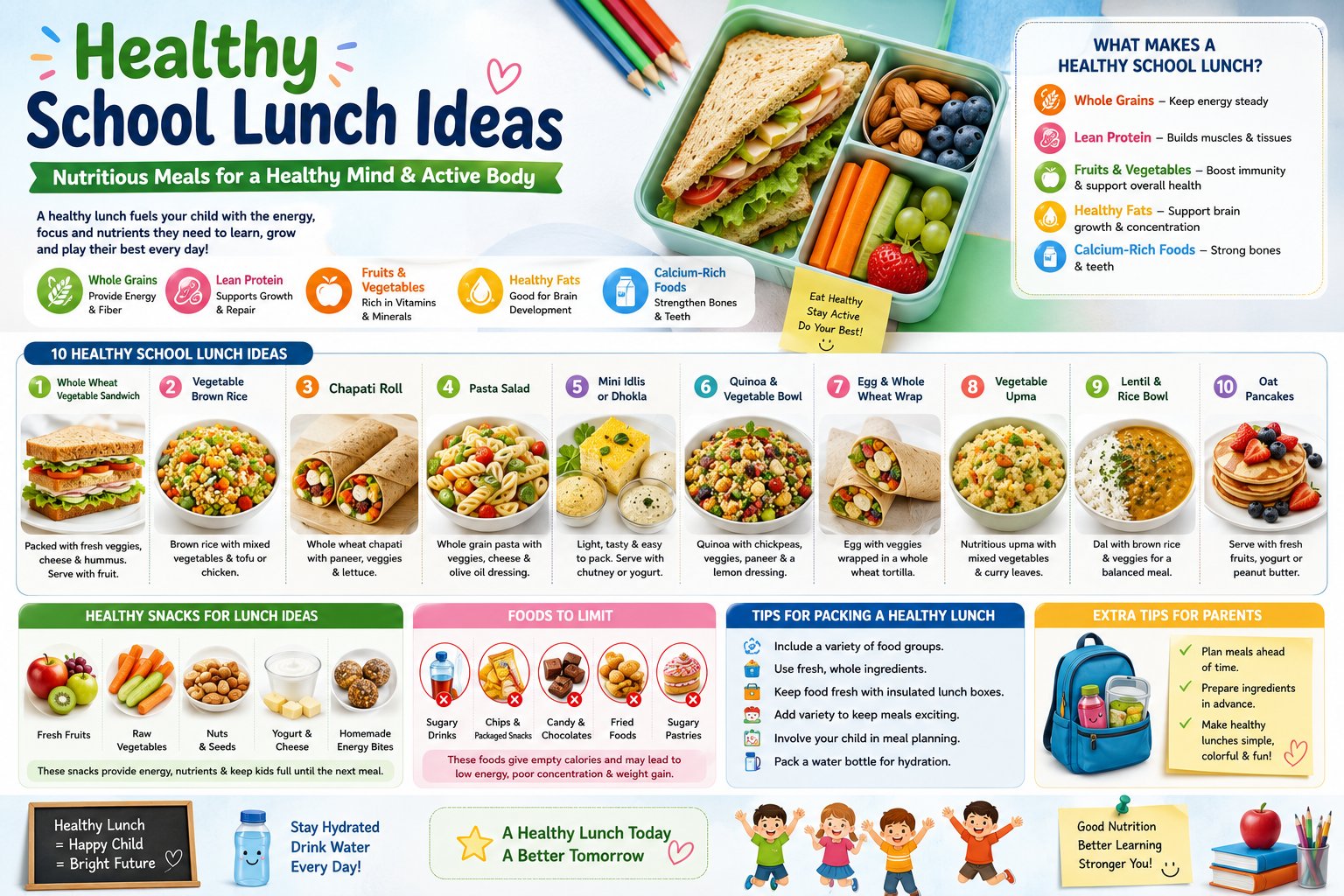
What Makes a Healthy School Lunch?
A nutritious lunch should contain foods from different food groups to provide a variety of essential nutrients.
Whole Grains
Whole grains provide complex carbohydrates and fiber that supply steady energy.
Examples include:
- Whole wheat bread
- Brown rice
- Whole wheat chapati
- Whole grain pasta
- Oats
- Quinoa
Lean Protein
Protein supports muscle growth, tissue repair, and healthy development.
Healthy choices include:
- Eggs
- Grilled chicken
- Paneer
- Tofu
- Lentils
- Chickpeas
- Beans
- Fish
Fruits and Vegetables
Colorful fruits and vegetables provide vitamins, minerals, antioxidants, and dietary fiber.
Include options such as:
- Apples
- Bananas
- Oranges
- Grapes
- Carrots
- Cucumbers
- Tomatoes
- Bell peppers
- Broccoli
Healthy Fats
Healthy fats support brain development and overall health.
Good sources include:
- Avocados
- Walnuts
- Almonds
- Chia seeds
- Flaxseeds
- Peanut butter
Dairy or Calcium-Rich Foods
Calcium supports healthy bones and teeth.
Examples include:
- Milk
- Yogurt
- Cheese
- Fortified plant-based milk
Healthy School Lunch Ideas
1. Whole Wheat Vegetable Sandwich
A simple sandwich packed with fresh vegetables is both nutritious and easy to prepare.
Ingredients
- Whole wheat bread
- Cucumber
- Tomato
- Lettuce
- Cheese or paneer
- Hummus or light cream cheese
Serve with fresh fruit and yogurt.
2. Vegetable Fried Brown Rice
Brown rice mixed with colorful vegetables makes a balanced lunch.
Add
- Carrots
- Green peas
- Corn
- Bell peppers
- Tofu or grilled chicken
3. Chapati Roll
Whole wheat chapati rolls are easy for children to eat during lunch breaks.
Fill With
- Paneer
- Grilled chicken
- Mixed vegetables
- Lettuce
4. Pasta Salad
Whole grain pasta combined with vegetables provides fiber and nutrients.
Add
- Cherry tomatoes
- Cucumbers
- Sweet corn
- Cheese cubes
- Olive oil dressing
5. Homemade Mini Idlis or Dhokla
These are light, nutritious, and easy to pack.
Serve With
- Coconut chutney
- Yogurt
- Fresh fruit
6. Quinoa and Vegetable Bowl
Quinoa is a nutritious whole grain that provides protein, fiber, and essential minerals. It makes an excellent base for a healthy school lunch.
Add
- Cucumber
- Cherry tomatoes
- Sweet corn
- Boiled chickpeas
- Grilled paneer or tofu
- A light lemon dressing
This colorful meal is filling, easy to prepare, and packed with nutrients.
7. Egg and Whole Wheat Wrap
Eggs are an excellent source of high-quality protein and important vitamins.
Fill With
- Scrambled or boiled eggs
- Lettuce
- Tomatoes
- Cucumbers
- Whole wheat tortilla or chapati
Pair with fresh fruit for a complete lunch.
8. Homemade Vegetable Upma
Vegetable upma is a wholesome option that provides carbohydrates, fiber, and vegetables in one meal.
Include
- Carrots
- Green peas
- Beans
- Bell peppers
- Curry leaves
Pack it warm in an insulated lunch box to maintain freshness.
9. Lentil and Rice Bowl
Lentils provide plant-based protein, iron, and fiber.
Serve With
- Brown rice
- Dal (lentil curry)
- Steamed vegetables
- Cucumber salad
This balanced meal supports healthy growth and provides long-lasting energy.
10. Homemade Oat Pancakes
Oat pancakes are a nutritious alternative to refined flour pancakes.
Serve With
- Fresh berries
- Banana slices
- Peanut butter
- Unsweetened yogurt
They can be prepared in advance and packed easily for school.
Healthy Snacks for School Lunch Boxes
Nutritious snacks help children stay energized between meals without relying on processed foods.
Fresh Fruits
Easy-to-pack options include:
- Apples
- Bananas
- Grapes
- Oranges
- Pears
- Berries
Raw Vegetables
Fresh vegetables provide fiber and important vitamins.
Choose:
- Carrot sticks
- Cucumber slices
- Bell pepper strips
- Cherry tomatoes
Serve with hummus or yogurt dip if desired.
Nuts and Seeds
For children without allergies, healthy choices include:
- Almonds
- Walnuts
- Pumpkin seeds
- Sunflower seeds
Always follow your child’s school allergy policy.
Dairy Options
Good choices include:
- Plain yogurt
- Cheese cubes
- Low-fat milk
Homemade Energy Bites
Prepare simple snacks using:
- Oats
- Dates
- Peanut butter
- Chia seeds
- Flaxseeds
These provide natural energy and are easy to carry.
Foods to Limit in School Lunches
Limiting highly processed foods helps children develop healthier eating habits.
Try to Avoid
- Sugary soft drinks
- Candy
- Chocolate bars
- Packaged chips
- Deep-fried snacks
- Instant noodles
- Highly processed meats
- Sugary pastries
Replacing these foods with whole, nutrient-rich options supports better health and concentration.
Tips for Packing a Healthy Lunch Box
Include Different Food Groups
Aim to include:
- Whole grains
- Lean protein
- Fruits
- Vegetables
- Healthy fats
- Calcium-rich foods
A balanced lunch provides a variety of nutrients.
Keep Food Fresh
Use:
- Insulated lunch boxes
- Ice packs for cold foods
- Airtight containers
Proper storage helps maintain food quality and safety.
Add Variety
Rotate meals every week to prevent boredom and encourage children to try different healthy foods.
Involve Your Child
Allow children to help choose fruits, vegetables, and healthy snacks. This can increase their interest in eating nutritious meals.
Pack Enough Water
Include a reusable water bottle to encourage hydration throughout the school day.
Frequently Asked Questions
What is the healthiest school lunch?
A healthy school lunch includes whole grains, lean protein, fruits, vegetables, healthy fats, and a calcium-rich food such as yogurt or milk.
How can I make lunch more appealing for picky eaters?
Use colorful fruits and vegetables, cut foods into fun shapes, offer a variety of textures, and involve your child in planning and preparing meals.
Can children eat homemade leftovers for lunch?
Yes. Properly stored leftovers such as rice, pasta, grilled chicken, vegetables, or lentils can make nutritious and convenient school lunches.
Should children have snacks in their lunch box?
Yes. Healthy snacks like fruits, yogurt, nuts (where allowed), or vegetable sticks provide extra energy during the school day.
How can I keep lunch fresh until lunchtime?
Use insulated lunch boxes, ice packs for cold foods, and airtight containers. Hot meals can be packed in insulated food jars to help maintain temperature.
Key Takeaways
- A healthy school lunch supports children’s growth, learning, and daily energy needs.
- Include whole grains, lean protein, fruits, vegetables, healthy fats, and calcium-rich foods.
- Pack colorful, balanced meals to encourage healthy eating habits.
- Limit sugary drinks and highly processed snacks.
- Keep food fresh using insulated containers and proper storage methods.
- Offer variety throughout the week to make lunchtime enjoyable and nutritious.
Conclusion
Preparing a healthy school lunch is one of the simplest ways to support your child’s physical growth, brain development, and academic performance. By combining nutritious ingredients from different food groups, parents can create balanced meals that provide sustained energy and essential nutrients throughout the school day.
Small changes—such as replacing processed snacks with fresh fruits, vegetables, whole grains, and lean proteins—can make a meaningful difference in your child’s long-term health. With thoughtful planning and a little creativity, healthy school lunches can be both delicious and exciting, helping children build lifelong healthy eating habits.