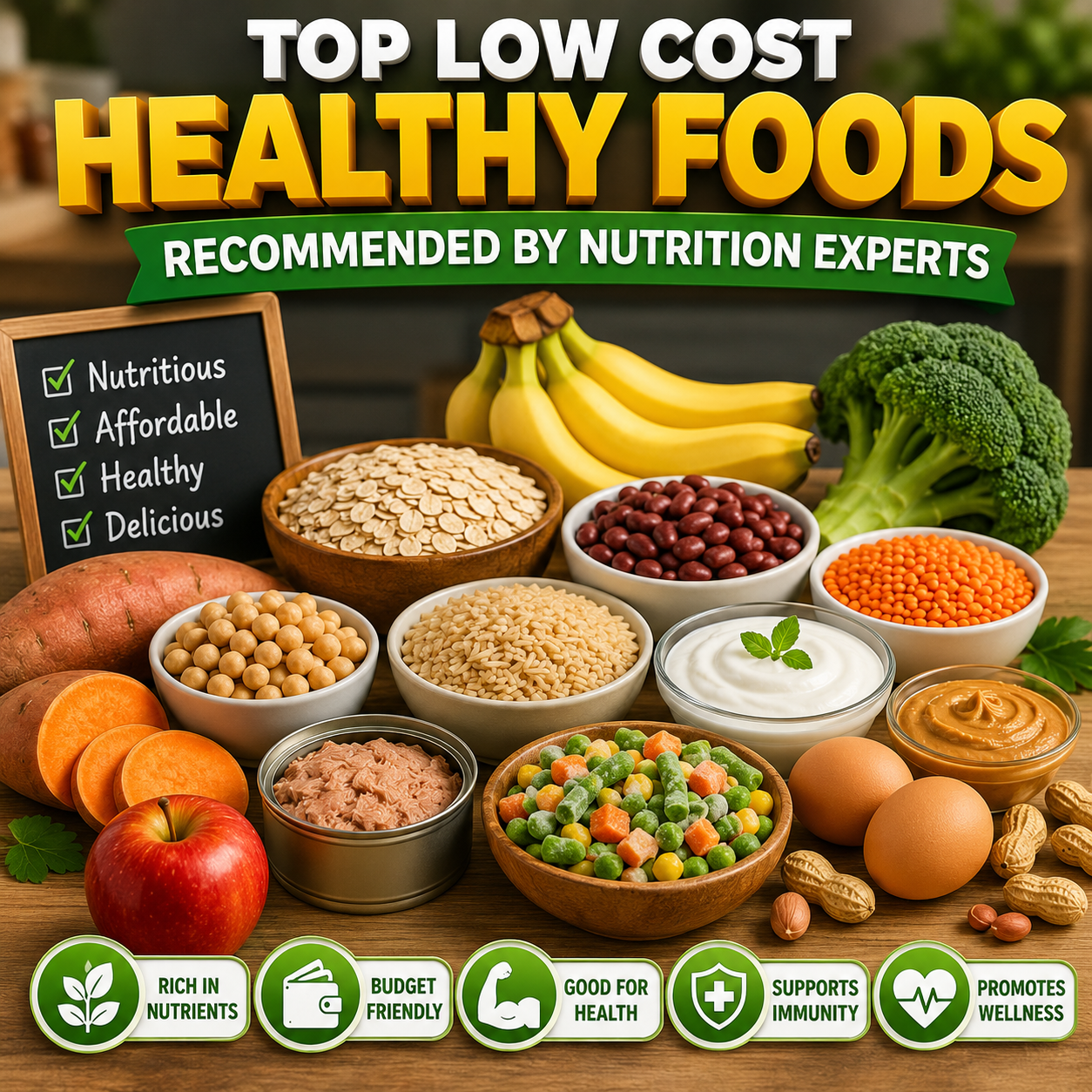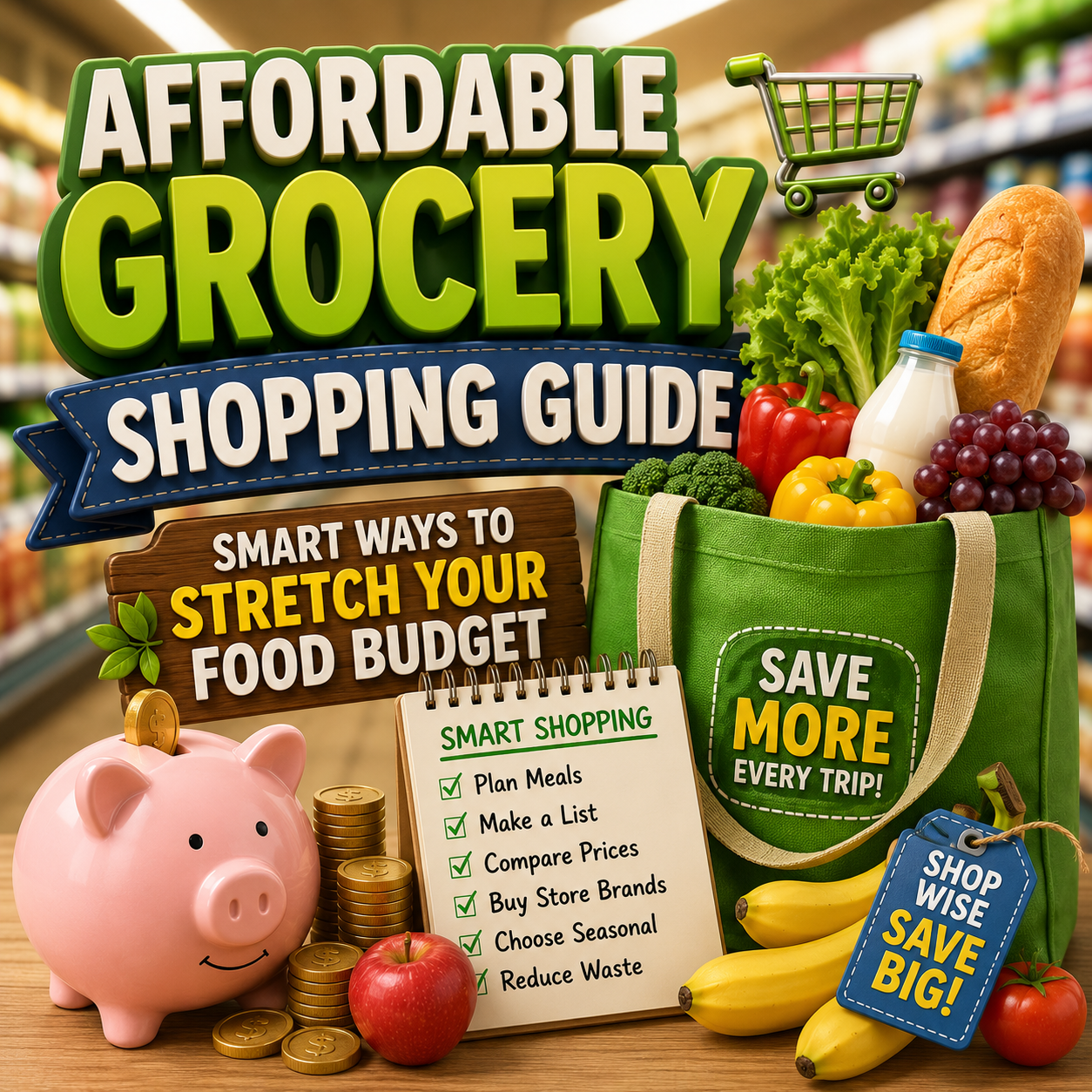
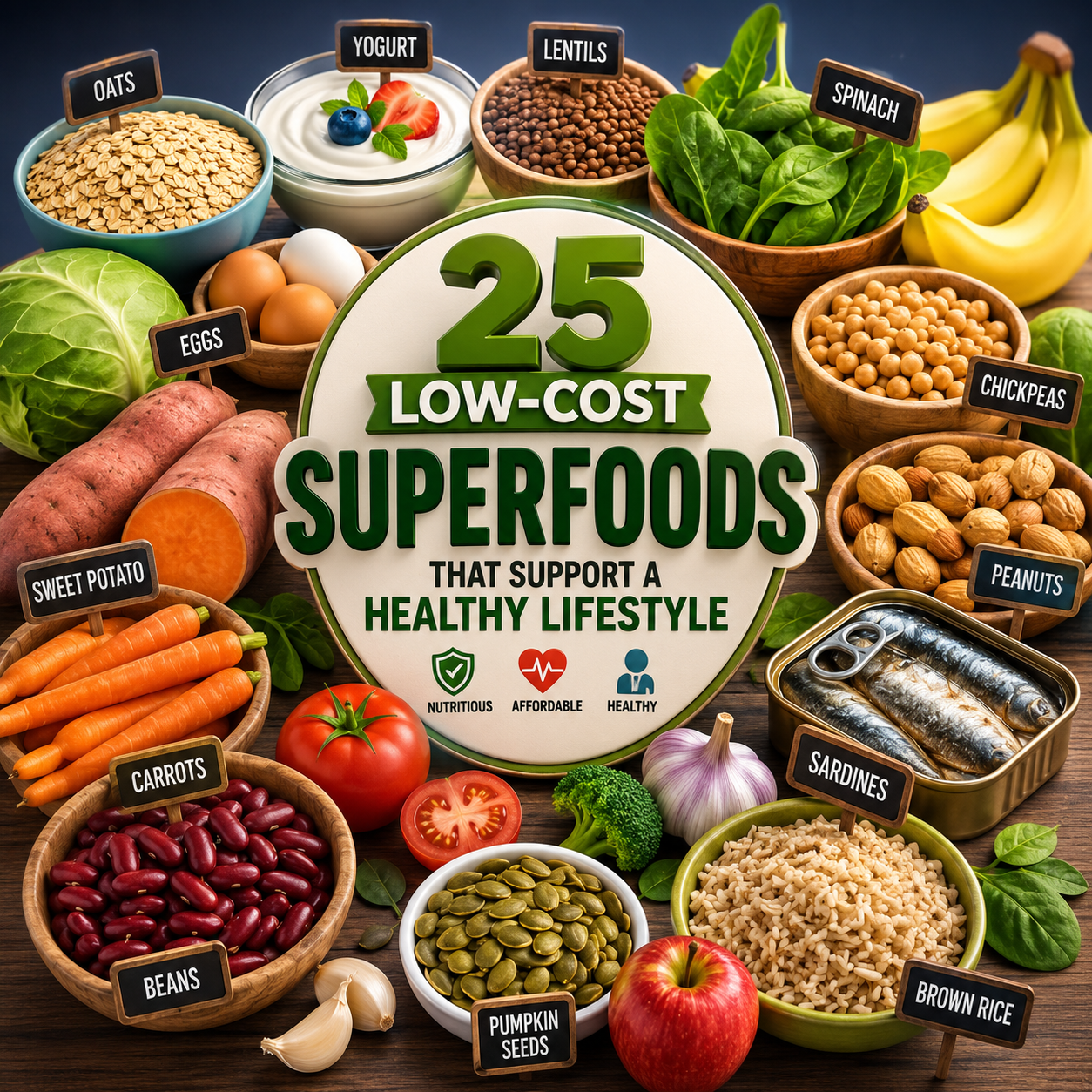
Eating healthy doesn’t have to mean spending more at the grocery store. One of the biggest myths about nutrition is that only expensive organic products, imported fruits, or premium health foods can provide the nutrients your body needs. In reality, many of the world’s Low-cost superfoods are also among the most affordable.
Low-cost superfoods are everyday ingredients packed with vitamins, minerals, antioxidants, healthy fats, fiber, and protein. They help support heart health, digestion, immunity, energy levels, and overall well-being while fitting comfortably into almost any budget. Whether you’re feeding a family, living on your own, or simply trying to reduce grocery costs, choosing nutrient-dense foods can help you save money without sacrificing quality.
This guide explores 25 low-cost superfoods that support a healthy lifestyle, explains why each food deserves a place in your kitchen, and shares practical tips for shopping smarter, reducing food waste, and building balanced meals. By the end of this article, you’ll know how to maximize nutrition while keeping your grocery bill under control.
What Are Low-Cost Superfoods?
The term low-cost superfoods refers to affordable foods that provide exceptional nutritional value compared to their price. Unlike trendy products that often come with premium price tags, these foods are widely available, easy to prepare, and rich in essential nutrients. Many contain high levels of fiber, vitamins, minerals, antioxidants, healthy fats, or protein, making them valuable additions to a balanced diet.
Choosing low-cost superfoods doesn’t mean compromising on quality. Staples such as oats, beans, lentils, eggs, seasonal fruits, and vegetables have nourished populations around the world for generations. These foods help support healthy digestion, stable energy levels, heart health, and immune function while keeping grocery costs manageable.
Why Affordable Nutrition Matters
Eating nutritious food consistently has a greater impact on long-term health than occasionally purchasing expensive specialty products. Affordable nutrition helps people maintain healthy eating habits without financial stress, making it easier to meet daily nutrient needs over time.
Budget-friendly eating also encourages cooking at home, reducing reliance on highly processed convenience foods. Meals prepared from inexpensive whole foods often contain less added sugar, sodium, and unhealthy fats while providing more fiber, protein, and micronutrients. Small, sustainable dietary improvements can contribute to better overall health and reduced healthcare costs in the future.
How to Choose Budget-Friendly Superfoods
When shopping for healthy foods on a budget, focus on nutritional value rather than marketing claims. Compare foods based on their protein, fiber, vitamin, and mineral content per serving instead of choosing products labeled as “superfoods.” Buying seasonal produce, frozen vegetables, dried legumes, and whole grains often provides excellent nutrition at a lower cost.
Planning meals before shopping, purchasing store brands, buying in bulk when practical, and minimizing food waste are additional strategies that stretch your grocery budget. Reading nutrition labels and ingredient lists also helps you identify healthier options without overspending.
25 Low-Cost Superfoods That Support a Healthy Lifestyle
1. Oats
Oats are among the most affordable and nutritious breakfast staples available. They are rich in soluble fiber, particularly beta-glucan, which supports heart health, promotes fullness, and helps maintain healthy cholesterol levels. Oats also provide important minerals such as manganese, magnesium, and phosphorus.
Because oats are versatile, they can be used in porridge, overnight oats, smoothies, homemade granola, muffins, and healthy baking recipes. Their long shelf life makes them an economical pantry staple for households of any size.
2. Eggs
Eggs provide high-quality protein along with vitamins B12, D, choline, and selenium at a relatively low cost. They are one of the most complete protein sources available, supporting muscle maintenance, brain function, and overall health.
Whether boiled, scrambled, poached, or added to salads and sandwiches, eggs are quick to prepare and suitable for breakfast, lunch, or dinner. Their affordability and versatility make them one of the best budget-friendly superfoods.
3. Lentils
Lentils are packed with plant-based protein, dietary fiber, folate, iron, and potassium. They are filling, inexpensive, and cook faster than many other dried legumes, making them convenient for busy households.
Lentils work well in soups, curries, salads, casseroles, and grain bowls. Regularly including lentils in meals can support digestive health, improve satiety, and help reduce grocery expenses while increasing overall nutrient intake.
4. Beans
Beans such as black beans, kidney beans, navy beans, and pinto beans are excellent sources of protein, fiber, antioxidants, and complex carbohydrates. They provide sustained energy and contribute to heart health and healthy blood sugar management.
Buying dried beans is usually the most economical option, although canned beans can also be affordable when purchased on sale. They can easily replace part of the meat in many recipes, lowering food costs without sacrificing nutrition.
5. Brown Rice
Brown rice is a whole grain that provides fiber, B vitamins, magnesium, and manganese. Compared to refined white rice, it retains more nutrients because the bran and germ remain intact.
Brown rice pairs well with vegetables, beans, lean proteins, and stir-fries. Buying larger bags often reduces the cost per serving, making it a practical staple for healthy meal planning.
6. Sweet Potatoes
Sweet potatoes are naturally rich in beta-carotene, vitamin C, potassium, and fiber. Their natural sweetness makes them appealing to both children and adults while providing complex carbohydrates for sustained energy.
They can be baked, roasted, mashed, or added to soups and stews. Their long storage life and nutritional profile make them one of the best-value vegetables available.
7. Bananas
Bananas remain one of the least expensive fruits in many grocery stores. They are high in potassium, vitamin B6, vitamin C, and natural carbohydrates that provide quick energy.
Fresh bananas are ideal for snacks, smoothies, oatmeal, yogurt bowls, and healthy baking. Overripe bananas can also be frozen to reduce food waste and used later in recipes.
8. Cabbage
Cabbage is an inexpensive vegetable that delivers vitamin C, vitamin K, fiber, and beneficial plant compounds. A single head often provides multiple servings, making it one of the most economical vegetables available.
It can be eaten raw in salads, fermented into sauerkraut, sautéed, roasted, or added to soups and stir-fries. Its versatility and long refrigerator life help minimize waste while supporting healthy eating.
9. Carrots
Carrots are one of the most affordable vegetables available year-round and are packed with beta-carotene, fiber, vitamin K1, and potassium. Beta-carotene is converted into vitamin A in the body, supporting healthy vision, immune function, and skin health. Their natural sweetness also makes them a healthier alternative to processed snacks.
Carrots are extremely versatile and can be eaten raw, roasted, steamed, stir-fried, blended into soups, or grated into salads. They store well for weeks in the refrigerator, reducing food waste and making them an excellent staple for budget-conscious households.
10. Spinach
Spinach is a nutrient-dense leafy green that provides vitamins A, C, K, folate, iron, magnesium, and antioxidants. Whether purchased fresh or frozen, spinach offers exceptional nutritional value at a relatively low cost. Frozen spinach is often even more economical and retains most of its nutrients.
Adding spinach to omelets, smoothies, soups, curries, pasta dishes, or salads is an easy way to increase daily vegetable intake. Its mild flavor makes it suitable for many recipes without significantly changing the taste.
11. Plain Yogurt
Plain yogurt is an affordable source of protein, calcium, phosphorus, vitamin B12, and probiotics that help maintain a healthy gut microbiome. Choosing unsweetened yogurt helps reduce added sugar intake while allowing you to customize flavors with fresh fruit, cinnamon, or nuts.
Yogurt works well as a breakfast food, snack, smoothie ingredient, or healthy substitute for sour cream and mayonnaise in recipes. Buying larger containers instead of individual cups can further reduce costs.
12. Peanuts
Peanuts provide healthy fats, plant protein, fiber, niacin, vitamin E, magnesium, and antioxidants at a fraction of the cost of many other nuts. Although technically legumes, they offer nutritional benefits similar to tree nuts while remaining budget-friendly.
A handful of peanuts makes a satisfying snack, and they can also be added to stir-fries, salads, oatmeal, or homemade trail mix. Unsalted varieties are generally the healthiest option for regular consumption.
13. Sardines
Sardines are one of the most affordable seafood options and are naturally rich in omega-3 fatty acids, vitamin D, calcium, and high-quality protein. Because they are small fish, they also tend to contain lower levels of mercury than many larger fish species.
Canned sardines can be served on whole-grain toast, mixed into salads, or incorporated into pasta dishes. Their long shelf life makes them a practical pantry staple for nutritious meals.
14. Potatoes
Regular potatoes are inexpensive, filling, and surprisingly nutritious. They provide potassium, vitamin C, vitamin B6, and resistant starch when cooked and cooled. Potatoes often receive criticism because of how they are prepared, but baked or boiled potatoes are a healthy part of a balanced diet.
They can be baked, mashed, roasted, added to soups, or used in vegetable curries. Pairing potatoes with lean protein and vegetables creates affordable, well-balanced meals.
15. Garlic
Garlic adds flavor to countless dishes while providing beneficial sulfur compounds and antioxidants. It has been widely studied for its potential role in supporting heart health and immune function as part of a healthy dietary pattern.
Fresh garlic is inexpensive and lasts for several weeks when stored properly. It enhances soups, sauces, roasted vegetables, stir-fries, marinades, and many traditional recipes without adding significant calories.
16. Onions
Onions are one of the most economical vegetables and are rich in antioxidants, vitamin C, and beneficial plant compounds. They add depth of flavor to meals, making it easier to prepare satisfying dishes without relying on excess salt or processed seasonings.
They can be sautéed, roasted, grilled, caramelized, or eaten raw in salads and sandwiches. Their affordability and versatility make onions a must-have ingredient in budget-friendly kitchens.
17. Pumpkin Seeds
Pumpkin seeds are nutrient-rich and provide protein, healthy fats, magnesium, zinc, iron, and antioxidants. Buying them in bulk often makes them more affordable than individually packaged snack products.
They make excellent toppings for yogurt, oatmeal, salads, soups, and homemade granola. Roasted pumpkin seeds are also a nutritious snack that supports overall health while helping satisfy hunger between meals.
18. Apples
Apples are among the most widely available and affordable fruits, especially when purchased in season. They are an excellent source of dietary fiber, vitamin C, and polyphenol antioxidants that support heart health and digestive wellness.
Apples can be eaten fresh, sliced into oatmeal, baked into healthy desserts, or paired with peanut butter for a balanced snack. Their portability also makes them convenient for school lunches and work meals.
19. Frozen Vegetables
Frozen vegetables are often just as nutritious as fresh vegetables because they are typically frozen shortly after harvesting. They are available throughout the year, reduce food waste, and frequently cost less than fresh produce when certain vegetables are out of season.
Mixed vegetables, broccoli, cauliflower, peas, and green beans can quickly be added to soups, pasta, rice dishes, casseroles, or stir-fries, making healthy eating more convenient and affordable.
20. Frozen Berries
Frozen berries are an economical way to enjoy antioxidant-rich fruits throughout the year. Blueberries, strawberries, raspberries, and mixed berries contain vitamin C, fiber, and polyphenols that help support overall health.
They are ideal for smoothies, yogurt bowls, oatmeal, overnight oats, and healthy desserts. Since only the needed portion is used, frozen berries help minimize spoilage compared to fresh berries.
21. Chickpeas
Chickpeas are an affordable source of plant protein, fiber, folate, manganese, and iron. They promote fullness, support digestive health, and can easily replace more expensive protein sources in many meals.
They are delicious in curries, salads, soups, roasted snacks, and homemade hummus. Buying dried chickpeas generally offers the greatest value, although canned varieties remain convenient and budget-friendly.
22. Whole Wheat Pasta
Whole wheat pasta contains more fiber, vitamins, and minerals than refined pasta, making it a healthier option for many people. It provides sustained energy and pairs well with vegetables, beans, lean proteins, and tomato-based sauces.
Buying store-brand whole wheat pasta often costs little more than regular pasta while offering additional nutritional benefits for long-term health.
23. Natural Peanut Butter
Natural peanut butter made with peanuts and minimal added ingredients provides healthy fats, protein, vitamin E, magnesium, and niacin. It is an affordable spread that helps create filling meals and snacks.
Spread it on whole-grain bread, stir it into oatmeal, blend it into smoothies, or use it as a dip for apples and bananas. Choosing products without added sugars or hydrogenated oils offers the greatest health benefits.
24. Tomatoes
Fresh, canned, or frozen tomatoes are rich in vitamin C, potassium, and the antioxidant lycopene. Canned tomatoes are often one of the most economical pantry staples and can be used in countless recipes throughout the year.
Tomatoes are excellent in soups, sauces, stews, curries, pasta dishes, and salads. Selecting low-sodium canned varieties helps reduce overall sodium intake.
25. Popcorn
Air-popped popcorn is an inexpensive whole grain that provides fiber and antioxidants while being naturally low in calories when prepared without excessive butter or salt. It is a healthier alternative to many processed snack foods.
Seasoning popcorn with herbs, nutritional yeast, or small amounts of spices instead of heavy toppings creates a satisfying snack that supports a balanced diet without increasing grocery costs.
Comparison Table: Best Low-Cost Superfoods by Nutritional Benefit
| Superfood | Key Nutrients | Main Health Benefit | Budget Rating |
| Oats | Fiber, Magnesium | Heart Health | ★★★★★ |
| Eggs | Protein, Choline | Muscle & Brain Health | ★★★★★ |
| Lentils | Protein, Iron | Energy & Digestion | ★★★★★ |
| Beans | Fiber, Protein | Heart Health | ★★★★★ |
| Brown Rice | Fiber, B Vitamins | Sustained Energy | ★★★★☆ |
| Sweet Potatoes | Vitamin A, Fiber | Eye Health | ★★★★★ |
| Spinach | Iron, Folate | Overall Nutrition | ★★★★☆ |
| Sardines | Omega-3, Calcium | Heart & Bone Health | ★★★★☆ |
| Yogurt | Calcium, Probiotics | Gut Health | ★★★★☆ |
| Frozen Vegetables | Vitamins & Minerals | Daily Nutrition | ★★★★★ |
Best Practices for Eating Healthy on a Budget
Healthy eating becomes easier when you focus on planning instead of impulse buying. Preparing meals in advance, shopping with a list, and choosing whole foods over heavily processed products can significantly reduce grocery expenses while improving diet quality.
Some practical strategies include:
- Buy seasonal fruits and vegetables.
- Choose frozen produce when fresh options are expensive.
- Purchase dried beans, lentils, and grains in bulk.
- Compare unit prices instead of package prices.
- Cook larger batches and freeze leftovers.
- Limit sugary drinks and packaged snacks.
- Plan meals around weekly grocery sales.
- Store food properly to reduce waste.
Following these habits allows you to maximize nutrition while keeping your grocery budget under control.
Expert Tips to Get the Most Nutrition from Low-Cost Superfoods
Eating healthy on a budget is not only about choosing inexpensive foods—it is also about preparing and storing them wisely. Small changes in your shopping and cooking habits can significantly increase the nutritional value of your meals while helping you reduce waste and save money. The following tips will help you maximize every grocery dollar.
1. Plan Your Meals Before Shopping
Creating a weekly meal plan helps you buy only what you need. Planning meals around ingredients that can be used in multiple recipes reduces food waste and prevents unnecessary purchases. For example, spinach can be added to omelets, smoothies, soups, and pasta dishes throughout the week.
2. Buy Seasonal Produce
Seasonal fruits and vegetables are usually fresher, tastier, and less expensive because they are more abundant. Shopping according to the season allows you to enjoy a wider variety of nutritious foods without increasing your grocery budget.
3. Choose Frozen When It Saves Money
Frozen vegetables and fruits are harvested at peak ripeness and frozen quickly, helping preserve nutrients. They are often less expensive than fresh produce, especially when certain fruits or vegetables are out of season.
4. Buy Pantry Staples in Bulk
Whole grains, oats, rice, lentils, beans, and seeds generally cost less when purchased in larger quantities. Store them in airtight containers to extend shelf life and reduce food waste.
5. Cook at Home More Often
Preparing meals at home gives you complete control over ingredients, portion sizes, sodium, sugar, and unhealthy fats. Home-cooked meals are usually more nutritious and significantly cheaper than restaurant meals or takeout.
6. Reduce Food Waste
Store fruits and vegetables properly, freeze leftovers, and use older ingredients before opening new ones. Even simple habits such as making vegetable soup from leftover vegetables can save money over time.
Common Mistakes to Avoid
Even with the best intentions, many people unknowingly make choices that increase grocery costs or reduce the nutritional quality of their meals. Avoiding these common mistakes can help you build healthier eating habits while staying within your budget.
Buying Trendy “Superfoods”
Many expensive products are marketed as superfoods, but everyday foods like oats, beans, eggs, carrots, and spinach often provide similar nutritional benefits at a much lower cost.
Shopping Without a List
Impulse purchases quickly increase grocery bills. A shopping list helps you stay focused on nutritious essentials and avoid unnecessary spending.
Ignoring Store Brands
Store-brand products frequently offer the same nutritional quality as national brands while costing considerably less. Comparing nutrition labels rather than brand names is often the smarter choice.
Buying Too Much Fresh Produce
Purchasing more fresh produce than you can use often leads to spoilage. Mixing fresh and frozen vegetables helps reduce waste while maintaining a nutritious diet.
Depending on Processed Convenience Foods
Packaged meals and snacks may save time, but they often cost more per serving and contain added sugars, sodium, and unhealthy fats. Preparing simple meals from whole ingredients is usually healthier and more economical.
Sample One-Day Budget-Friendly Meal Plan
A healthy diet doesn’t have to be complicated. Here’s an example of a balanced daily menu using many of the low-cost superfoods discussed in this guide.
| Meal | Foods |
| Breakfast | Oatmeal topped with banana slices and natural peanut butter |
| Morning Snack | Plain yogurt with chopped apple |
| Lunch | Brown rice, lentils, spinach, and roasted carrots |
| Afternoon Snack | Air-popped popcorn |
| Dinner | Baked sweet potato with chickpeas and steamed frozen vegetables |
| Evening Snack | A handful of peanuts |
This meal plan provides a balance of complex carbohydrates, protein, healthy fats, fiber, vitamins, and minerals while remaining affordable.
Benefits of Including Low-Cost Superfoods in Your Diet
Regularly eating nutrient-rich, affordable foods offers numerous health advantages beyond saving money. Building meals around these ingredients can support both short-term wellness and long-term disease prevention.
Some key benefits include:
- Better heart health through increased fiber and healthy fats.
- Improved digestion from whole grains, legumes, fruits, and vegetables.
- More stable energy levels due to complex carbohydrates and protein.
- Stronger immune function with vitamins A, C, D, zinc, and antioxidants.
- Better weight management by increasing satiety and reducing processed foods.
- Improved bone health through calcium-rich foods like yogurt and sardines.
- Enhanced brain function with omega-3 fats, choline, and B vitamins.
- Lower grocery costs without sacrificing nutrition.
FAQ Section
1. What are the best low-cost superfoods for beginners?
If you’re new to healthy eating, start with simple, versatile foods like oats, eggs, lentils, beans, bananas, carrots, spinach, yogurt, and brown rice. These foods are affordable, easy to prepare, and rich in essential nutrients. They can be combined into countless balanced meals, making it easier to build healthy eating habits without increasing your grocery budget.
2. Can I get enough protein from inexpensive foods?
Absolutely. Many budget-friendly foods are excellent protein sources, including eggs, lentils, chickpeas, beans, yogurt, sardines, peanuts, and natural peanut butter. Combining plant-based proteins with whole grains throughout the day also helps create a balanced diet that supports muscle health, energy, and overall wellness.
3. Are fresh foods always better than frozen foods?
Not necessarily. Frozen fruits and vegetables are often frozen shortly after harvest, helping preserve vitamins and minerals. They can be just as nutritious as fresh produce while lasting much longer, reducing food waste and saving money. Choosing frozen options is especially beneficial when fresh produce is expensive or out of season.
4. How can I lower my grocery bill without sacrificing nutrition?
Planning meals, shopping with a list, buying store brands, purchasing seasonal produce, choosing frozen vegetables, and cooking at home are some of the most effective ways to save money. Building meals around affordable whole foods instead of processed convenience products helps improve both nutrition and your overall food budget.
5. What makes a food a “superfood”?
There is no official scientific definition of a superfood. Generally, the term refers to foods that are exceptionally rich in nutrients such as vitamins, minerals, antioxidants, fiber, healthy fats, or protein. Everyday foods like beans, oats, spinach, yogurt, and sweet potatoes provide impressive nutritional value without being expensive.
6. Can children benefit from low-cost superfoods?
Yes. Growing children need a variety of nutrient-rich foods to support healthy development. Affordable foods such as eggs, yogurt, bananas, oats, beans, carrots, apples, and sweet potatoes provide essential nutrients that contribute to growth, learning, and immune function while keeping family grocery costs manageable.
7. Are low-cost superfoods good for seniors?
Yes. Older adults can benefit greatly from nutrient-dense foods that support bone health, muscle maintenance, heart health, and digestion. Yogurt, sardines, leafy greens, oats, beans, and sweet potatoes are affordable options that provide calcium, protein, fiber, vitamins, and minerals important for healthy aging.
8. How often should I eat superfoods?
There is no set number. The best approach is to include a variety of nutrient-rich foods in your daily meals rather than relying on one specific food. Eating a diverse range of fruits, vegetables, whole grains, legumes, dairy, nuts, and lean proteins helps ensure you receive a broad spectrum of nutrients.
9. Can low-cost superfoods help prevent chronic diseases?
A balanced dietary pattern rich in fruits, vegetables, whole grains, legumes, and healthy protein sources is associated with a lower risk of several chronic diseases, including heart disease and type 2 diabetes. While no single food can prevent disease, consistently choosing nutrient-dense foods supports overall health and long-term wellness.
10. Is healthy eating expensive?
Healthy eating does not have to be expensive. Many of the most nutritious foods available—including oats, beans, lentils, potatoes, bananas, carrots, cabbage, eggs, and frozen vegetables—are among the least expensive items in the grocery store. Smart shopping and meal planning make healthy eating affordable for most households.
Key Takeaways
- Affordable superfoods offer excellent nutrition without increasing grocery expenses.
- Oats, beans, lentils, eggs, and yogurt are among the most cost-effective healthy foods.
- Seasonal and frozen produce can provide outstanding nutritional value.
- Whole foods generally deliver more nutrients than highly processed alternatives.
- Meal planning and buying in bulk help reduce food costs.
- Home cooking improves nutrition while saving money.
- A varied diet provides a wider range of vitamins, minerals, and antioxidants.
- Consistent healthy eating habits matter more than buying expensive specialty foods.
- Budget-friendly nutrition supports long-term heart, digestive, immune, and metabolic health.
- Small changes in grocery shopping can lead to significant health and financial benefits over time.
Conclusion
Eating a healthy diet doesn’t require expensive ingredients or specialty products. As this guide has shown, many of the most nutritious foods available are also among the most affordable. Everyday staples such as oats, eggs, lentils, beans, brown rice, sweet potatoes, spinach, yogurt, bananas, and frozen vegetables provide essential nutrients that support heart health, digestion, immunity, energy levels, and overall well-being.
The key to successful budget-friendly nutrition is focusing on whole, minimally processed foods while planning meals carefully and reducing food waste. Shopping seasonally, choosing store brands, buying pantry staples in bulk, and preparing meals at home can dramatically lower grocery costs without sacrificing quality or flavor.
Remember that healthy eating is built on consistency rather than perfection. Incorporating even a few of these 25 low-cost superfoods into your weekly meals can make a meaningful difference to your health while keeping your food budget under control.
Read Our Latest Blog:Budget Meal Planning: How to Save 40% on Grocery Costs This Month