Foods to Improve Child’s Memory
Every parent wants their child to perform well in school, stay focused during learning, and develop strong memory skills. While good study habits and adequate sleep are important, nutrition plays an equally essential role in supporting brain health. The brain requires a steady supply of vitamins, minerals, healthy fats, and proteins to function efficiently. A balanced diet filled with nutrient-rich foods can improve concentration, support cognitive development, and enhance memory naturally.
Children experience rapid brain growth during their early years, making it the perfect time to build healthy eating habits. Including brain-friendly foods in daily meals can help improve learning ability, attention span, and overall mental performance.
Why Nutrition Matters for Brain Development
The human brain uses a large amount of the body’s energy every day. Children need a variety of nutrients to support healthy brain cells, improve communication between neurons, and strengthen memory. Deficiencies in essential nutrients such as iron, omega-3 fatty acids, vitamin B12, and zinc may affect learning, attention, and cognitive development.
Providing nutritious meals every day helps children stay active, focused, and mentally sharp throughout their school years.
Essential Nutrients That Support Memory
Omega-3 Fatty Acids
Omega-3 fats are important for brain structure and communication between brain cells. They support learning, memory, and concentration.
Iron
Iron helps carry oxygen to the brain. Low iron levels may reduce attention span and learning ability in children.
Protein
Protein provides amino acids that help produce neurotransmitters responsible for memory, mood, and concentration.
Vitamins and Minerals
B vitamins, vitamin D, vitamin E, zinc, magnesium, and antioxidants all contribute to healthy brain development and protect brain cells from damage.
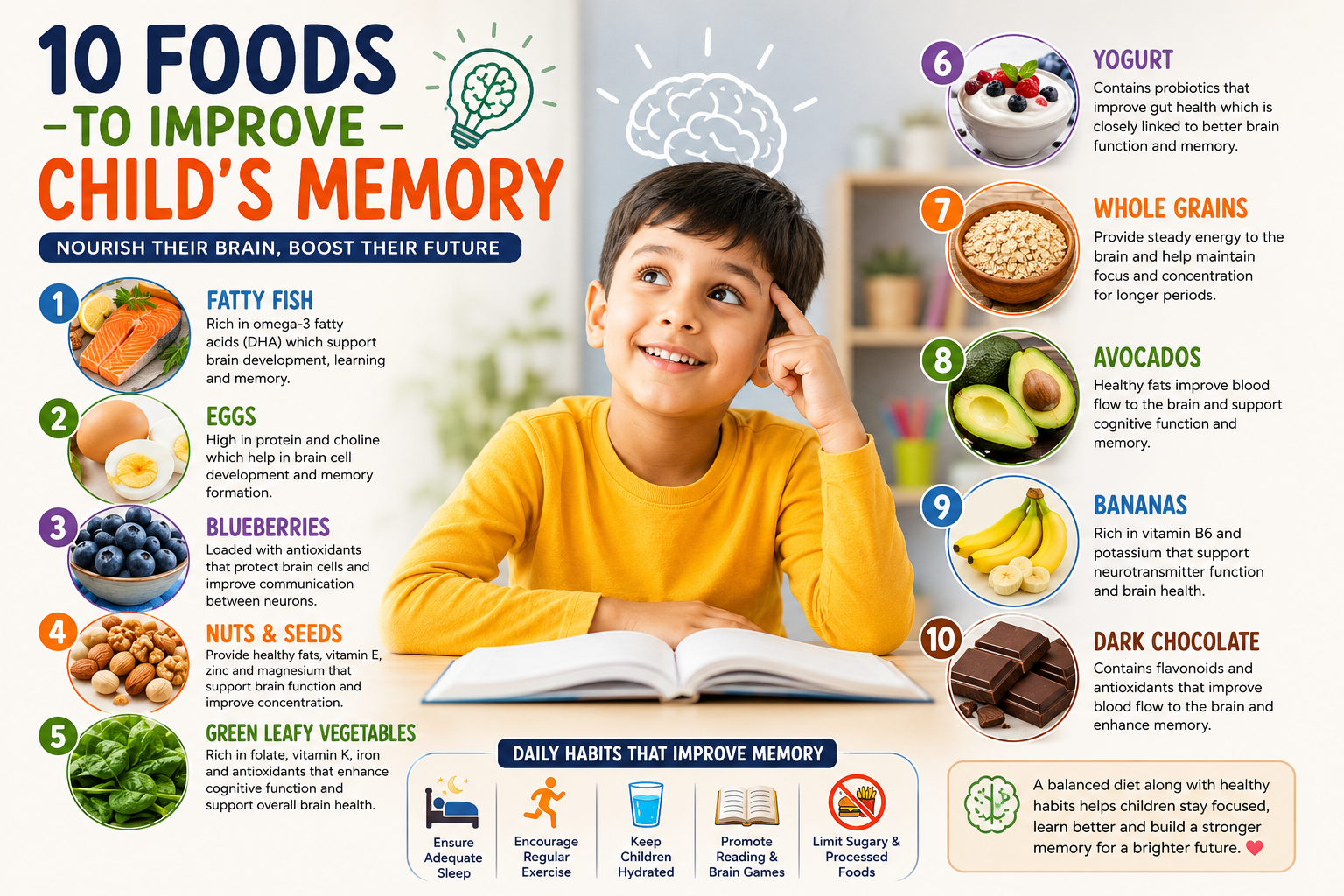
Best Foods to Improve Child’s Memory
1. Fatty Fish
Fatty fish such as salmon, sardines, and mackerel are among the richest natural sources of omega-3 fatty acids. DHA, a type of omega-3, is a major component of the brain and supports memory, learning, and cognitive development.
Children who regularly consume omega-3-rich foods may experience improved attention and better academic performance. If your child does not enjoy fish, consult a healthcare professional about suitable alternatives.
2. Eggs
Eggs are packed with high-quality protein and contain choline, a nutrient that plays an important role in brain development and memory formation.
They also provide vitamins B6, B12, and folate, which support healthy nerve function. Serving boiled eggs, omelets, or scrambled eggs for breakfast can provide lasting energy and help children stay focused during school hours.
3. Blueberries
Blueberries are rich in antioxidants known as flavonoids. These natural compounds help protect brain cells from oxidative stress and may improve communication between brain cells.
Adding fresh or frozen blueberries to yogurt, smoothies, oatmeal, or breakfast cereals is an easy way to include this brain-friendly fruit in your child’s diet.
4. Nuts and Seeds
Almonds, walnuts, pumpkin seeds, sunflower seeds, and flaxseeds contain healthy fats, vitamin E, zinc, and magnesium. These nutrients support healthy brain function and may improve concentration and memory.
For younger children, use finely ground nuts or nut butter to reduce choking risk. Older children can enjoy a small handful of mixed nuts as a healthy snack.
5. Green Leafy Vegetables
Spinach, kale, broccoli, and other green vegetables provide folate, vitamin K, iron, and antioxidants that support healthy brain function.
Regular consumption of leafy greens may contribute to better cognitive performance while also supporting overall growth and immunity. Parents can include these vegetables in soups, sandwiches, parathas, pasta, or smoothies to make them more appealing to children.
More Foods That Improve Child’s Memory
6. Yogurt
Yogurt is an excellent source of protein, calcium, and probiotics that support both gut health and brain function. Research suggests that a healthy gut microbiome may positively influence mood, learning, and cognitive performance through the gut-brain connection.
Choose plain, unsweetened yogurt and add fresh fruits like bananas, berries, or apples for a naturally sweet and nutritious snack. Greek yogurt is another great option because it contains higher protein, which helps provide steady energy for growing children.
7. Whole Grains
Whole grains such as oats, brown rice, whole wheat bread, quinoa, and millet provide complex carbohydrates that release energy slowly throughout the day. Unlike sugary snacks that cause quick energy spikes and crashes, whole grains help maintain stable blood sugar levels, allowing the brain to stay focused for longer periods.
Serving oatmeal for breakfast or replacing refined grains with whole-grain options can improve concentration and support better learning throughout the school day.
8. Avocados
Avocados are rich in healthy monounsaturated fats that help improve blood flow to the brain. They also provide vitamin E, folate, potassium, and fiber, all of which contribute to healthy brain development.
Mashed avocado can be spread on whole-grain toast, added to sandwiches, or blended into smoothies for a creamy and nutritious meal that children often enjoy.
9. Bananas
Bananas are packed with vitamin B6, potassium, and natural carbohydrates that provide quick yet sustained energy for the brain. Vitamin B6 helps produce neurotransmitters such as serotonin and dopamine, which support memory, mood, and concentration.
A banana makes an ideal pre-school or after-school snack and pairs well with peanut butter or yogurt for a balanced combination of carbohydrates and protein.
10. Dark Chocolate (In Moderation)
Dark chocolate contains flavonoids and antioxidants that may improve blood flow to the brain and support cognitive function. It also contains small amounts of magnesium, which plays a role in nerve function.
For children, dark chocolate should only be offered occasionally and in small portions. Choose varieties with lower sugar content and avoid making chocolate a daily habit.
Daily Habits That Improve Children’s Memory
Good nutrition works best when combined with healthy daily habits. Parents can encourage simple lifestyle practices that strengthen memory and support overall brain development.
Ensure Adequate Sleep
Children need enough quality sleep every night because the brain processes and stores new information during sleep. Poor sleep can reduce concentration, learning ability, and memory retention.
Encourage Regular Physical Activity
Exercise increases blood flow to the brain and supports healthy brain cell growth. Outdoor games, cycling, swimming, dancing, and sports all contribute to better cognitive performance.
Limit Sugary Foods and Processed Snacks
Highly processed foods and sugary drinks can lead to energy crashes, making it difficult for children to stay focused. Replacing these with fruits, nuts, yogurt, and whole grains provides more consistent energy for the brain.
Promote Reading and Brain Games
Reading books, solving puzzles, memory games, storytelling, and educational activities help stimulate the brain and strengthen problem-solving skills.
Keep Children Hydrated
Even mild dehydration can affect concentration and memory. Encourage children to drink enough water throughout the day, especially during school and outdoor activities.
Frequently Asked Questions
Can food really improve a child’s memory?
Yes. A balanced diet rich in healthy fats, protein, vitamins, minerals, and antioxidants supports brain development and helps improve concentration, learning, and memory over time.
Which fruit is best for memory?
Blueberries are considered one of the best fruits for brain health because they are rich in antioxidants. Bananas, oranges, strawberries, and apples also provide nutrients that support cognitive function.
Are omega-3 supplements necessary for children?
Most children can meet their nutritional needs through a balanced diet. If a child has dietary restrictions or a diagnosed deficiency, a healthcare professional can advise whether supplementation is appropriate.
How quickly can healthy eating improve memory?
Improved nutrition supports brain health gradually. Combined with proper sleep, exercise, and regular learning activities, positive changes in focus and concentration may become noticeable over several weeks or months.
What foods should children avoid for better brain health?
Limit sugary drinks, excessive sweets, highly processed snacks, fried foods, and foods high in trans fats. These provide little nutritional value and may negatively affect overall health when consumed frequently.
Key Takeaways
- Brain development depends on a balanced diet rich in essential nutrients.
- Omega-3 fatty acids, protein, iron, vitamins, and antioxidants play an important role in memory and learning.
- Foods such as fatty fish, eggs, blueberries, nuts, leafy vegetables, yogurt, whole grains, avocados, bananas, and moderate amounts of dark chocolate support healthy brain function.
- Healthy habits like adequate sleep, regular exercise, hydration, and daily reading further improve memory and concentration.
- Consistency is more important than individual “superfoods.” A varied and nutritious diet delivers the best long-term results.
Also Read:-10 Calcium-Rich Foods for Strong Bones: A Complete Nutrition Guide
Conclusion
Supporting your child’s memory starts with everyday food choices. While no single food can instantly boost intelligence or guarantee better grades, a nutritious diet provides the building blocks the brain needs to grow, learn, and perform at its best. By offering a variety of wholesome foods and encouraging healthy daily habits, parents can help children develop stronger memory, better focus, and improved cognitive skills that benefit them throughout life.
Remember that every child is different. Focus on creating balanced meals, maintaining a consistent routine, and making healthy eating enjoyable rather than forcing specific foods. Small, sustainable changes can have a lasting impact on your child’s overall health and brain development.