Many foods that are considered normal in one country are restricted or completely banned in another. Governments around the world regulate food products based on scientific research, public health policies, food safety standards, and consumer protection laws. While some ingredients are prohibited because they may increase long-term health risks, others are banned due to contamination concerns, harmful additives, or animal welfare regulations.
Understanding why certain foods are banned helps consumers make informed dietary decisions. Foods Banned Around the World highlights how food safety standards vary across countries. A product that is perfectly legal in one nation may be unavailable elsewhere because regulators believe the potential health risks outweigh the benefits.
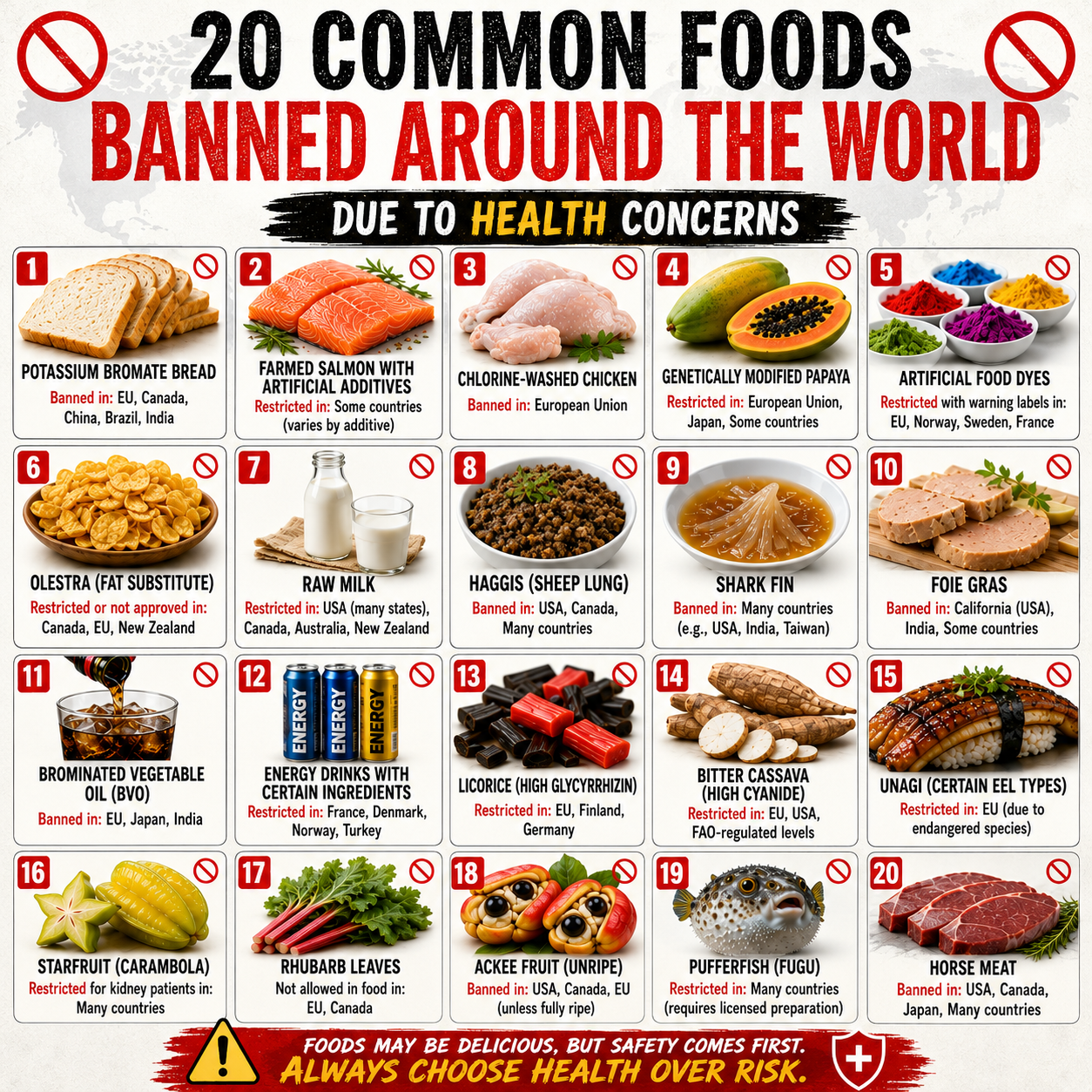
In this comprehensive guide, you’ll discover 20 Foods Banned Around the World due to health concerns, the countries where they are restricted, and the scientific reasons behind these decisions. Whether you’re a traveler, health-conscious consumer, or simply curious about global food regulations, this article provides valuable insights into international food safety practices.
Why Are Foods Banned in Different Countries?
Food regulations differ because each country evaluates scientific evidence, public health priorities, environmental concerns, and consumer expectations differently. Regulatory agencies continuously assess whether ingredients, additives, or production methods pose unacceptable risks. Some countries adopt a precautionary approach, banning substances until they are proven safe, while others permit them unless clear evidence demonstrates harm.
These differences explain why travelers often notice that identical food brands contain different ingredients depending on where they are sold. Understanding these regulations can help consumers make healthier choices and appreciate the importance of food safety standards worldwide.
1. Potassium Bromate Bread
Potassium bromate is a flour additive that improves dough strength and helps bread rise evenly. Although it creates soft, fluffy loaves, scientific studies have raised concerns about its potential cancer-causing effects in laboratory animals. Because of these findings, many countries have prohibited its use in commercial baking.
Countries including the European Union, Canada, China, Brazil, and India have banned potassium bromate in food products. However, some countries still allow its use under strict regulations, provided the chemical is reduced during baking.
2. Farmed Salmon Containing Certain Artificial Additives
Farmed salmon is widely consumed for its omega-3 fatty acids, but some farming practices involve artificial color additives and chemical treatments that have raised safety concerns. Although modern regulations have improved fish farming practices, certain additives remain controversial.
Some countries have implemented stricter regulations on salmon imports and farming methods to reduce consumer exposure to potentially harmful chemicals and environmental contaminants.
3. Chlorine-Washed Chicken
Some poultry producers use chlorine rinses to reduce bacterial contamination after processing. Critics argue that relying on chemical washing may encourage poorer hygiene during production rather than preventing contamination at the source.
The European Union prohibits imports of chlorine-washed chicken, preferring stricter hygiene standards throughout the poultry production process instead of post-processing chemical treatments.
4. Genetically Modified Papaya
Genetically modified papaya was developed to resist plant viruses and improve crop yields. Although approved in several countries, some nations maintain restrictions because of differing regulatory approaches toward genetically modified organisms (GMOs).
Countries with strict GMO regulations often require extensive safety assessments before approving genetically modified foods for commercial sale.
5. Artificial Food Dyes
Artificial colors such as Red 40, Yellow 5, Yellow 6, and others have been linked in some studies to hyperactivity in sensitive children. While scientific opinions differ, several governments require warning labels or limit their use.
Many European countries require products containing certain artificial dyes to display warning labels, encouraging manufacturers to switch to natural coloring alternatives.
6. Olestra (Fat Substitute)
Olestra was introduced as a fat-free substitute for cooking oils and snack foods. Although it reduces calorie content, some consumers experienced digestive discomfort, including stomach cramps and diarrhea. Olestra may also interfere with the absorption of certain fat-soluble vitamins.
Because of these concerns, its popularity declined significantly, and several countries have restricted or avoided its widespread use.
7. Raw Milk
Raw, unpasteurized milk contains naturally occurring bacteria that may include harmful pathogens such as Salmonella, E. coli, and Listeria. Pasteurization significantly reduces these risks while preserving most nutritional value.
Many countries restrict or tightly regulate raw milk sales to protect vulnerable populations, including children, pregnant women, and older adults.
8. Haggis (Traditional Scottish Dish)
Traditional haggis includes sheep lung, an ingredient prohibited in food production in some countries because of concerns related to disease transmission and food safety regulations.
Although haggis remains a cultural favorite in Scotland, export restrictions have limited its availability in certain international markets.
9. Ackee Fruit (Unripe)
Ackee is Jamaica’s national fruit, but unripe ackee contains hypoglycin A, a naturally occurring toxin that can cause severe vomiting and dangerously low blood sugar levels.
Only properly ripened ackee is considered safe for consumption, which is why many countries regulate its import and sale carefully.
10. Fugu (Pufferfish)
Fugu contains tetrodotoxin, one of the most powerful natural toxins known. If improperly prepared, consuming even a small amount can cause paralysis and death. Because of the extreme risk, only specially licensed chefs are allowed to prepare fugu in countries where it is legally served, while many nations prohibit its import altogether.
11. Kinder Surprise Eggs
Kinder Surprise eggs combine a chocolate shell with a small toy enclosed inside. While they are popular in many countries, some governments have restricted or banned them because the toy presents a potential choking hazard for young children. The concern is not about the chocolate itself but about consumer safety, especially for children under three years of age.
Countries with strict product safety laws have regulations against embedding non-food items inside edible products. Manufacturers have since developed alternative versions that separate the toy from the chocolate to comply with local regulations. This example shows how food safety laws can extend beyond ingredients to include packaging and product design.
12. Sassafras Oil
Sassafras oil was once commonly used to flavor root beer, teas, and herbal remedies. However, it naturally contains safrole, a compound that studies in laboratory animals linked to an increased risk of liver damage and cancer when consumed in large amounts over time.
As a result, many countries prohibit the use of safrole-containing sassafras oil in commercial foods and beverages. Today, most root beer is made using artificial or safrole-free flavorings that provide a similar taste while meeting modern food safety standards.
13. Beluga Caviar
Beluga caviar is considered one of the world’s most luxurious foods, but its sale is restricted or banned in several countries primarily to protect the endangered beluga sturgeon. While the ban is largely based on conservation concerns, it also supports sustainable food systems and helps prevent illegal wildlife trade.
Consumers looking for sustainable alternatives can choose farmed caviar from responsibly managed fisheries. This demonstrates how food regulations often balance environmental protection alongside public health and ethical considerations.
14. Shark Fins
Shark fin soup has long been regarded as a delicacy in some cultures, but concerns over sustainability and food safety have led to restrictions worldwide. Shark meat may accumulate high levels of mercury and other environmental contaminants, particularly in large predatory species.In addition to health concerns, many countries have banned or restricted the shark fin trade to reduce overfishing and protect declining shark populations. Choosing sustainable seafood options benefits both human health and marine ecosystems.
15. Foie Gras
Foie gras is produced from the liver of ducks or geese that have been specially fed to enlarge the liver. Although it is considered a gourmet delicacy, the production method has raised significant animal welfare concerns.Several countries and regions have prohibited the production or sale of foie gras because of ethical issues surrounding force-feeding practices. While the ban is not primarily based on nutritional health risks, it reflects how food regulations can also incorporate ethical and welfare standards.
16. Unpasteurized Fresh Cheese
Fresh cheeses made from raw milk can contain harmful bacteria if proper hygiene standards are not maintained. Pathogens such as Listeria monocytogenes, Salmonella, and E. coli may survive in unpasteurized dairy products, posing a higher risk to pregnant women, older adults, and individuals with weakened immune systems.
Many countries require aging periods, pasteurization, or strict testing before these cheeses can be legally sold. Consumers should always check product labels and purchase dairy products from reputable producers.
17. Foods Containing Brominated Vegetable Oil (BVO)
Brominated Vegetable Oil (BVO) has been used in citrus-flavored soft drinks to help keep flavoring evenly distributed. Concerns have emerged over long-term exposure, as excessive bromine intake may affect the nervous system and thyroid function.
Several countries, including members of the European Union and Japan, have prohibited BVO in food products. In recent years, many beverage manufacturers have voluntarily reformulated their drinks by replacing BVO with safer alternatives.
18. Certain Energy Drinks
Highly caffeinated energy drinks have come under increasing scrutiny due to concerns about excessive caffeine intake, especially among children and adolescents. Large amounts of caffeine can contribute to increased heart rate, elevated blood pressure, anxiety, sleep disturbances, and other health issues in sensitive individuals.
Rather than banning all energy drinks outright, many countries have introduced age restrictions, warning labels, limits on caffeine content, or marketing regulations. Consumers should monitor their caffeine intake and avoid combining energy drinks with alcohol or other stimulants.
19. Foods Containing Certain Artificial Sweeteners
Artificial sweeteners are widely used in sugar-free foods and beverages, but regulatory approaches vary across countries. Some sweeteners have faced restrictions due to concerns raised in earlier animal studies, although many have since been reevaluated by international food safety authorities.
Today, approved sweeteners are generally considered safe when consumed within established acceptable daily intake (ADI) limits. Nevertheless, regulatory differences continue to exist, leading to varying approval statuses worldwide.
20. Fresh Cashew Fruit and Raw Cashew Shells
Although roasted cashew nuts are perfectly safe to eat, raw cashew shells contain urushiol, the same irritating substance found in poison ivy. Direct contact with the shell can cause severe skin irritation and allergic reactions.
Commercial cashews undergo specialized processing to remove these toxic compounds before reaching consumers. This is why truly raw, shell-on cashews are rarely available in retail markets and are restricted in many countries.
Comparison Table: Foods Banned Around the World
| Food | Main Concern | Common Reason for Restriction |
| Potassium Bromate Bread | Possible carcinogenic effects | Food additive safety |
| Chlorine-Washed Chicken | Food processing methods | Production hygiene standards |
| Artificial Food Dyes | Behavioral concerns in sensitive children | Additive regulations |
| Raw Milk | Harmful bacteria | Foodborne illness prevention |
| Ackee Fruit | Natural toxin | Poisoning risk |
| Fugu | Tetrodotoxin | Extremely poisonous if improperly prepared |
| Kinder Surprise Eggs | Choking hazard | Consumer product safety |
| Sassafras Oil | Safrole content | Potential carcinogenicity |
| Shark Fins | Mercury & sustainability | Health and environmental concerns |
| Brominated Vegetable Oil | Long-term health concerns | Beverage additive regulations |
| Energy Drinks | Excess caffeine | Public health protection |
| Raw Cashew Shells | Urushiol toxin | Natural chemical hazard |
What Can Consumers Learn from These Food Bans?
Food bans do not always mean a food is universally dangerous. In many cases, restrictions are based on the precautionary principle, where regulators choose to minimize potential risks even when scientific evidence is still evolving. Differences in regulations also reflect varying public health priorities, cultural practices, and levels of acceptable risk.
For consumers, the key takeaway is to stay informed, read food labels, follow dietary guidelines, and choose minimally processed foods whenever possible. A balanced diet rich in fruits, vegetables, whole grains, lean proteins, and healthy fats remains one of the most effective ways to support long-term health.
Frequently Asked Questions (FAQs)
1. Why are some foods banned in one country but legal in another?
Food regulations differ because each country has its own food safety authority, scientific review process, and public health policies. Some governments follow the precautionary principle, banning ingredients if there is even limited evidence of potential harm, while others allow products unless strong scientific evidence proves they are unsafe. Cultural preferences, environmental concerns, and consumer protection laws also influence these decisions.
2. Does a banned food mean it is always unsafe to eat?
Not necessarily. A food may be banned for several reasons, including health concerns, environmental protection, animal welfare, or manufacturing practices. In many cases, the restriction is based on reducing potential long-term risks rather than preventing immediate harm. Consumers should always consider the context of the ban and follow guidance from trusted health authorities.
3. Which countries have the strictest food safety regulations?
Countries and regions known for stringent food safety standards include:
- European Union (EU)
- Canada
- Japan
- Australia
- New Zealand
- Singapore
These regions often require extensive scientific evaluations before approving new food additives, pesticides, or genetically modified ingredients.
4. Are artificial food additives harmful?
Many artificial additives approved by food safety authorities are considered safe when consumed within regulated limits. However, some additives have been restricted or banned in certain countries because of concerns raised in scientific studies or because safer alternatives are available. Reading ingredient labels and limiting highly processed foods can help reduce unnecessary exposure.
5. Is raw milk healthier than pasteurized milk?
Raw milk enthusiasts claim it contains more natural enzymes and beneficial bacteria. However, major public health organizations recommend pasteurized milk because it significantly reduces the risk of foodborne illnesses caused by harmful bacteria such as Salmonella, E. coli, and Listeria. For most people, the safety benefits of pasteurization outweigh the minimal nutritional differences.
6. Why is potassium bromate banned in many countries?
Potassium bromate has been used as a flour improver in bread making. Animal studies have suggested it may have carcinogenic potential, leading many countries to ban its use as a precaution. Many bakeries now use safer alternatives that achieve similar baking results without the associated concerns.
7. Can travelers unknowingly consume banned foods?
Yes. Food regulations vary by country, so travelers may encounter products that are legal in one destination but unavailable or restricted in another. It’s a good idea to familiarize yourself with local food laws, especially if you have dietary restrictions or health concerns.
Key Takeaways
- Food bans differ across countries because regulations are based on scientific evidence, public health priorities, and local laws.
- Some foods are restricted due to potentially harmful additives, while others are banned because of natural toxins, contamination risks, or unsafe production methods.
- Not every banned food is proven to be dangerous, but many restrictions are intended to reduce possible long-term health risks.
- Reading food labels and choosing minimally processed foods can help you make healthier dietary choices.
- Understanding international food regulations can help travelers, consumers, and health-conscious individuals make informed decisions.
Conclusion
The foods we eat every day often seem ordinary, but their safety can depend on how they are produced, processed, and regulated. As this list of 20 common foods banned around the world due to health concerns demonstrates, governments take different approaches to protecting public health. Some prioritize precaution by restricting additives that show potential risks, while others focus on manufacturing standards, environmental sustainability, or consumer safety.
Rather than causing unnecessary alarm, these bans remind us of the importance of staying informed about what we eat. Scientific research continues to evolve, and food regulations change as new evidence becomes available. By choosing fresh, minimally processed foods, reading ingredient labels carefully, and maintaining a balanced diet, you can reduce your exposure to unnecessary additives while supporting your overall well-being.
Read Our Latest Blog 21 Foods You’ll Think Twice About After Learning What’s Inside