The Importance of Vaccinations in Preventing Infectious Diseases
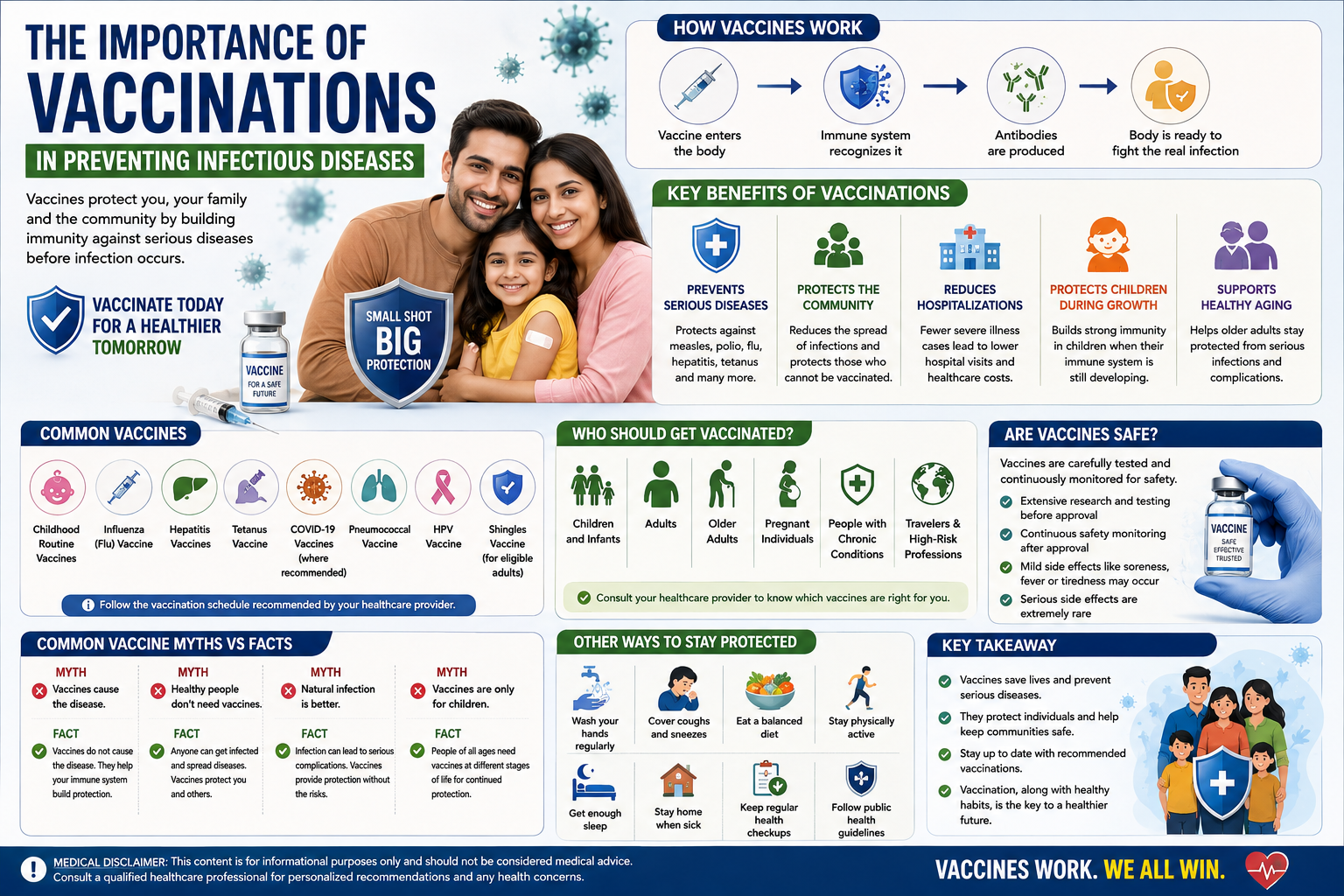
Vaccinations are one of the most effective public health measures for protecting people from infectious diseases. They help the body’s immune system recognise and respond to harmful germs, reducing the risk of serious illness and limiting the spread of many preventable diseases.
Vaccines have played a major role in controlling or reducing illnesses such as measles, polio, tetanus, hepatitis, and influenza in many parts of the world.
What Are Vaccinations?
Vaccinations are medical interventions that prepare the immune system to recognize and fight specific disease-causing organisms.
Rather than causing the disease, vaccines safely train the immune system to respond more effectively if the person is exposed to the infection in the future.
How Vaccines Work
When a vaccine is given:
- The immune system recognizes harmless vaccine components.
- Protective antibodies are produced.
- Immune memory develops.
- The body can respond more quickly if exposed to the real infection later.
This process helps lower the risk of severe illness.
Benefits of Vaccinations
1. Help Prevent Serious Diseases
Vaccines help protect against many infectious diseases, including:
- Measles
- Polio
- Hepatitis B
- Influenza (Flu)
- Tetanus
- Diphtheria
- Whooping cough (Pertussis)
Vaccination greatly reduces the risk of severe complications from these diseases.
2. Protect the Community
When a large portion of the population is vaccinated, the spread of certain infectious diseases is reduced.
This provides indirect protection for people who cannot receive some vaccines due to medical reasons, such as certain health conditions or age.
3. Reduce Hospitalizations
Vaccination helps reduce the number of severe infections that require hospitalization, easing the burden on healthcare systems.
4. Protect Children During Growth
Children’s immune systems continue developing as they grow.
Following the recommended childhood immunization schedule helps protect them from several serious diseases during early life.
5. Support Healthy Aging
Older adults are at greater risk of complications from infections such as influenza and pneumonia.
Recommended vaccines can help reduce these risks.
Common Vaccines
Depending on age, health status, and local immunization schedules, commonly recommended vaccines may include:
- Childhood routine vaccines
- Influenza (Flu) vaccine
- Hepatitis vaccines
- Tetanus vaccine
- COVID-19 vaccines (where recommended)
- Pneumococcal vaccine
- HPV vaccine
- Shingles vaccine (for eligible adults)
Always follow the vaccination schedule recommended by your healthcare provider or local public health authority.
Who Should Get Vaccinated?
Vaccination recommendations vary based on:
- Age
- Medical history
- Pregnancy status
- Occupation
- Travel plans
- Underlying health conditions
Consult your healthcare provider to determine which vaccines are appropriate for you or your child.
Are Vaccines Safe?
Vaccines undergo extensive testing and continuous safety monitoring before and after approval.
Like any medical treatment, vaccines may cause mild side effects such as:
- Temporary soreness at the injection site
- Mild fever
- Fatigue
Serious side effects are rare. Discuss any concerns with your healthcare professional before vaccination.
Common Vaccine Myths and Facts
Misinformation about vaccines can cause unnecessary concern. Understanding the facts helps people make informed healthcare decisions.
Myth 1: Vaccines Cause the Disease They Prevent
Fact: Vaccines are designed to train the immune system without causing the disease they protect against. Some vaccines may cause mild, temporary reactions such as soreness or a low-grade fever, which are normal signs that the immune system is responding.
Myth 2: Healthy People Don’t Need Vaccines
Fact: Even healthy individuals can become infected and spread infectious diseases to others. Vaccination helps protect both the individual and the wider community.
Myth 3: Natural Infection Is Better Than Vaccination
Fact: Contracting an infectious disease may lead to serious complications, hospitalization, or long-term health problems. Vaccination provides protection without exposing the body to the risks associated with the disease itself.
Myth 4: Vaccines Are Only for Children
Fact: Vaccination is important throughout life. Adults, older adults, pregnant individuals, and people with certain medical conditions may need additional vaccines or booster doses based on medical recommendations.
Additional Ways to Prevent Infectious Diseases
Vaccination works best when combined with other healthy habits.
These include:
- Washing hands regularly
- Covering coughs and sneezes
- Eating a balanced diet
- Staying physically active
- Getting enough sleep
- Keeping recommended medical checkups
- Staying home when sick
- Following public health guidance during outbreaks
Frequently Asked Questions
Why are vaccines important?
Vaccines help protect individuals from many serious infectious diseases and reduce the spread of infections within communities.
Are vaccines safe?
Vaccines undergo extensive research, testing, and ongoing safety monitoring before and after approval. Most side effects are mild and temporary.
Can adults still need vaccines?
Yes. Adults may require booster doses or vaccines recommended for their age, occupation, travel, pregnancy, or medical conditions.
What should I do if I miss a vaccine?
Contact your healthcare provider. In many cases, missed vaccinations can be safely rescheduled according to recommended catch-up schedules.
Can vaccines completely prevent every infection?
No vaccine provides 100% protection. However, vaccines significantly reduce the risk of severe illness, hospitalization, and complications from many infectious diseases.
Key Takeaways
- Vaccines are one of the most effective tools for preventing infectious diseases.
- They help protect individuals and reduce disease transmission within communities.
- Vaccination is important for children, adults, and older adults according to medical recommendations.
- Vaccines are extensively tested and continuously monitored for safety.
- Combining vaccination with healthy hygiene and lifestyle habits provides the best protection against infectious diseases.
Conclusion
Vaccinations have transformed public health by preventing millions of infections and saving countless lives worldwide. Staying up to date with recommended vaccines not only protects you but also helps safeguard vulnerable members of your family and community. Together with healthy daily habits such as hand hygiene, good nutrition, adequate sleep, and regular medical care, vaccination remains one of the strongest defenses against infectious diseases.
Always consult your healthcare provider to ensure you and your family receive the vaccines appropriate for your age, health status, and individual needs.