How to Prevent Dehydration and Heat-Related Illnesses in Summer
Hot summer weather can increase the risk of dehydration and heat-related illnesses, especially during prolonged exposure to high temperatures. Children, older adults, outdoor workers, athletes, and people with certain medical conditions are particularly vulnerable.
Fortunately, simple preventive measures such as staying hydrated, avoiding excessive heat exposure, and dressing appropriately can help protect your health throughout the summer months.
What Is Dehydration?
Dehydration occurs when your body loses more fluids than it takes in, making it difficult to perform normal functions.
Common causes include:
- Excessive sweating
- High temperatures
- Fever
- Vomiting
- Diarrhea
- Inadequate fluid intake
What Are Heat-Related Illnesses?
Heat-related illnesses occur when the body cannot regulate its temperature effectively.
Common heat-related conditions include:
- Heat cramps
- Heat exhaustion
- Heat stroke (medical emergency)
Early prevention is essential to avoid serious complications.
Signs and Symptoms of Dehydration
Watch for symptoms such as:
- Dry mouth
- Increased thirst
- Dark yellow urine
- Reduced urination
- Dizziness
- Headache
- Fatigue
- Muscle cramps
Severe dehydration requires immediate medical attention.
Tips to Prevent Dehydration and Heat-Related Illnesses
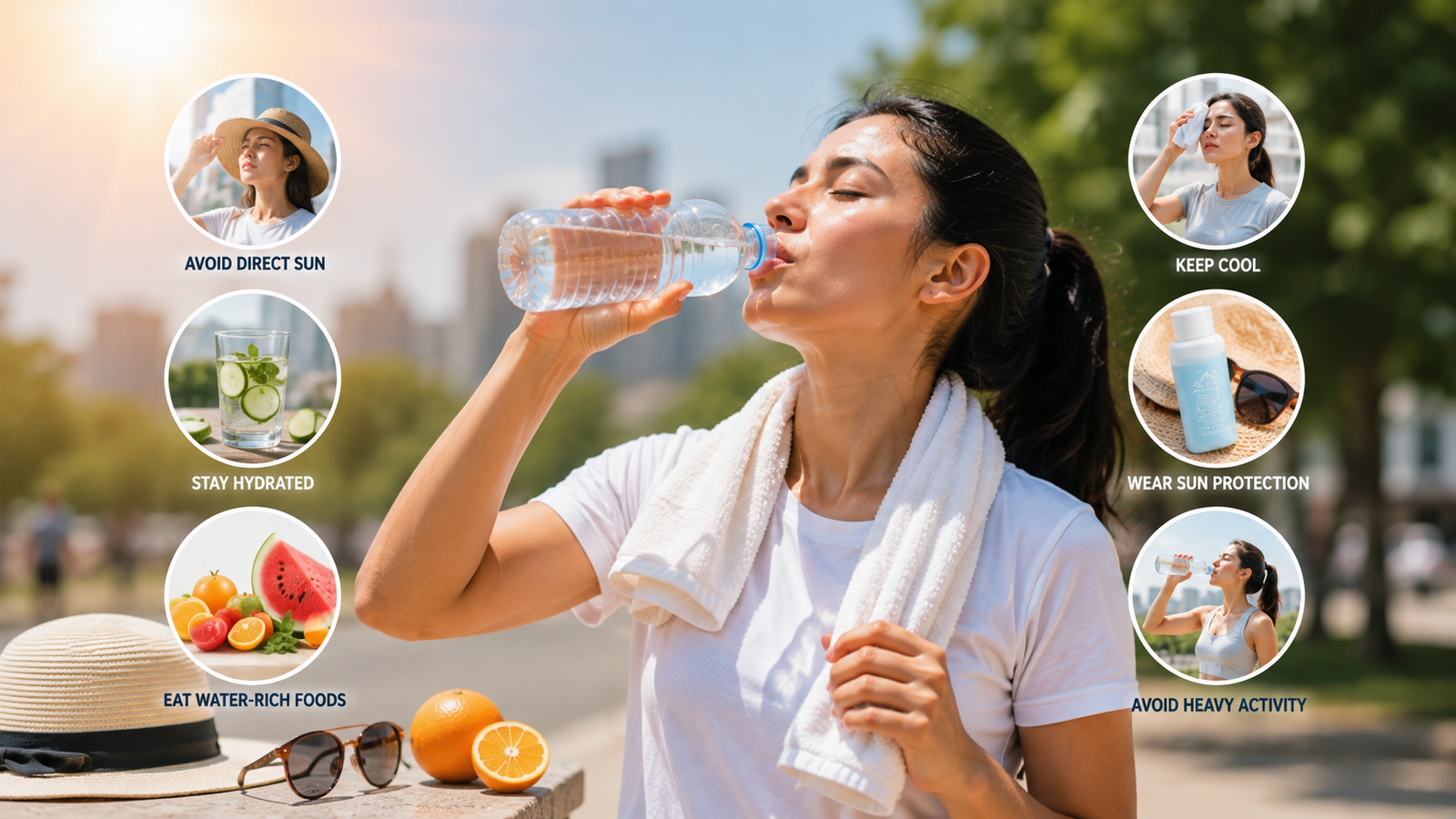
1. Drink Plenty of Water
Drink water regularly throughout the day, even if you do not feel thirsty.
Increase fluid intake when:
- Spending time outdoors
- Exercising
- Working in hot environments
2. Eat Water-Rich Foods
Many fruits and vegetables help increase fluid intake naturally.
Examples include:
- Watermelon
- Cucumber
- Oranges
- Strawberries
- Tomatoes
- Lettuce
- Celery
3. Avoid Excessive Heat Exposure
Stay indoors during the hottest part of the day whenever possible, usually between late morning and late afternoon.
Seek shade if you must be outside.
4. Wear Lightweight Clothing
Choose:
- Light-colored clothing
- Loose-fitting fabrics
- Breathable materials such as cotton
These help your body stay cooler.
5. Protect Yourself from the Sun
When outdoors:
- Wear a wide-brimmed hat.
- Use sunglasses.
- Apply sunscreen with appropriate SPF.
- Seek shaded areas whenever possible.
6. Limit Strenuous Physical Activity
Reduce intense exercise during periods of extreme heat.
Exercise during cooler times of the day, such as:
- Early morning
- Evening
7. Replace Fluids After Sweating
After heavy sweating due to exercise or outdoor work, replenish fluids according to your healthcare provider’s advice.
For prolonged intense activity, electrolyte replacement may be appropriate in some situations.
8. Never Leave Children or Pets in Parked Vehicles
Temperatures inside vehicles can rise rapidly, creating extremely dangerous conditions within minutes.
Always check your vehicle before leaving.
9. Monitor High-Risk Individuals
Pay extra attention to:
- Infants
- Young children
- Older adults
- Pregnant individuals
- People with chronic illnesses
Ensure they remain hydrated and avoid prolonged heat exposure.
10. Know the Warning Signs of Heat Exhaustion
Symptoms may include:
- Heavy sweating
- Weakness
- Dizziness
- Nausea
- Cool, pale skin
- Rapid pulse
Move to a cool place, drink fluids if appropriate, and seek medical advice if symptoms do not improve.
Who Is Most at Risk?
Higher-risk groups include:
- Older adults
- Infants and children
- Athletes
- Outdoor workers
- People with heart disease
- Individuals with diabetes
- People taking certain medications
These individuals should take additional precautions during hot weather.
Heat Stroke: A Medical Emergency
Heat stroke is the most serious heat-related illness and requires immediate emergency medical attention.
Warning Signs of Heat Stroke
Symptoms may include:
- Very high body temperature
- Hot, red, or dry skin (although skin may sometimes remain moist)
- Confusion or difficulty speaking
- Rapid heartbeat
- Severe headache
- Dizziness
- Seizures
- Loss of consciousness
Call emergency medical services immediately if heat stroke is suspected.
While waiting for medical help:
- Move the person to a cool or shaded place.
- Remove excess clothing.
- Cool the body with cool water, wet towels, or fans if available.
- Do not delay seeking professional medical care.
Summer Hydration Tips
Staying hydrated becomes especially important during hot weather.
Helpful habits include:
- Carry a reusable water bottle.
- Drink water before, during, and after outdoor activities.
- Increase fluid intake during illness or heavy sweating if advised by your healthcare provider.
- Choose water as your primary beverage.
- Include water-rich fruits and vegetables in your meals.
- Pay attention to signs of thirst and dehydration.
Frequently Asked Questions
How much water should I drink during summer?
Fluid needs vary depending on:
- Age
- Activity level
- Weather conditions
- Overall health
Drink water regularly throughout the day and increase your intake when sweating more than usual.
What are the first signs of dehydration?
Common early signs include:
- Thirst
- Dry mouth
- Fatigue
- Headache
- Dark-colored urine
- Dizziness
Recognizing these signs early can help prevent more serious dehydration.
Which drinks are best for hydration?
Water is usually the best choice for hydration.
Other options may include:
- Milk
- Unsweetened beverages
- Oral rehydration solutions when recommended
- Water-rich fruits
Limit sugary drinks and excessive caffeinated beverages.
Can children become dehydrated quickly?
Yes. Infants and young children are more vulnerable to dehydration because their bodies lose fluids more rapidly.
Caregivers should encourage regular fluid intake and monitor for signs of dehydration during hot weather.
When should I seek medical care?
Seek prompt medical attention if someone experiences:
- Confusion
- Fainting
- Persistent vomiting
- Severe dehydration
- Heat stroke symptoms
- Difficulty staying awake
- High fever with signs of heat illness
Key Takeaways
- Drink water regularly throughout hot weather.
- Eat fruits and vegetables with high water content.
- Avoid prolonged exposure to extreme heat.
- Wear lightweight, breathable clothing.
- Protect yourself from direct sunlight.
- Monitor children, older adults, and other high-risk individuals closely.
- Recognize the warning signs of dehydration and heat-related illnesses.
- Heat stroke is a medical emergency requiring immediate professional care.
Conclusion
Summer heat can increase the risk of dehydration and heat-related illnesses, but many cases are preventable with simple daily habits. Drinking enough water, choosing water-rich foods, avoiding excessive heat exposure, wearing appropriate clothing, and recognizing early warning signs can help protect you and your family. Staying informed and taking preventive measures is the best way to enjoy the summer safely while maintaining your overall health.