Simple Ways to Reduce the Risk of Kidney Disease
Your kidneys play a vital role in keeping your body healthy. They filter waste products, remove excess fluid, balance minerals, regulate blood pressure, and help produce hormones essential for normal body function. When the kidneys become damaged over time, waste and fluid can build up in the body, leading to chronic kidney disease (CKD).
The good news is that many risk factors for kidney disease can be managed through healthy daily habits.
What Is Kidney Disease?
Kidney disease occurs when the kidneys gradually lose their ability to function properly.
Common types include:
- Chronic Kidney Disease (CKD)
- Acute Kidney Injury (AKI)
- Kidney infections
- Kidney stones
Chronic kidney disease often develops slowly and may not cause noticeable symptoms during its early stages.
Who Is at Higher Risk?
Risk factors include:
- Diabetes
- High blood pressure
- Obesity
- Smoking
- Family history of kidney disease
- Older age
- Heart disease
- Long-term use of certain medications
Regular medical checkups are especially important for people with these risk factors.
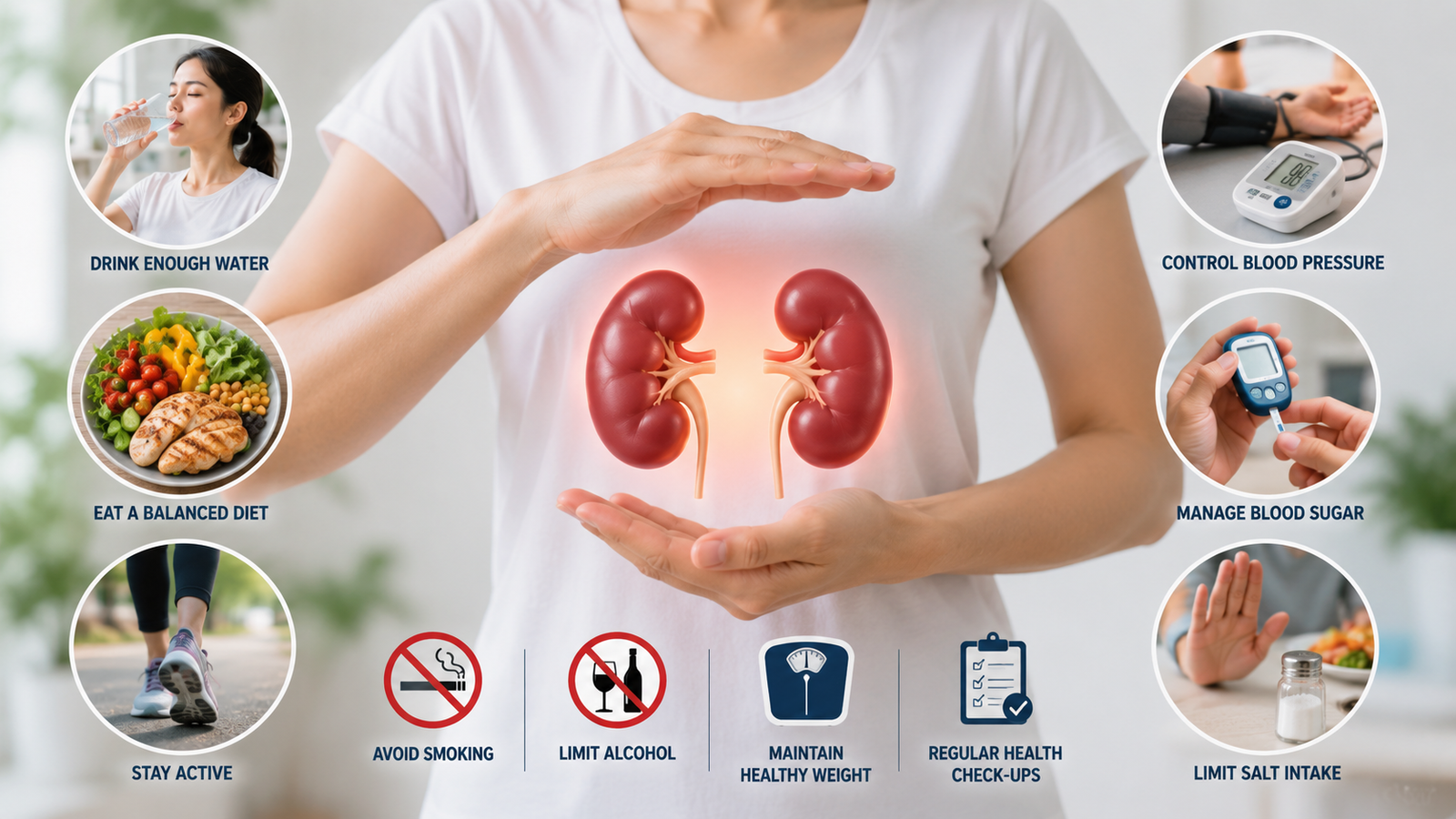
Simple Ways to Reduce the Risk of Kidney Disease
1. Stay Hydrated
Drinking enough water helps the kidneys remove waste products and maintain normal body functions.
Fluid needs vary depending on:
- Age
- Activity level
- Climate
- Overall health
Follow your healthcare provider’s advice regarding appropriate fluid intake.
2. Control Blood Pressure
High blood pressure is one of the leading causes of chronic kidney disease.
Healthy habits that support blood pressure include:
- Reducing excess sodium intake
- Regular physical activity
- Maintaining a healthy weight
- Managing stress
3. Manage Blood Sugar Levels
People with diabetes should work with their healthcare provider to maintain healthy blood sugar levels.
Good diabetes management helps reduce the risk of kidney damage.
4. Eat a Balanced Diet
A kidney-friendly eating pattern includes:
- Fruits
- Vegetables
- Whole grains
- Lean proteins
- Healthy fats
Limit excessive intake of:
- Salt
- Added sugars
- Highly processed foods
- Sugary beverages
5. Maintain a Healthy Weight
Being overweight or obese increases the risk of diabetes, high blood pressure, and kidney disease.
Healthy eating and regular exercise support weight management.
6. Exercise Regularly
Aim for regular physical activity appropriate for your age and fitness level.
Examples include:
- Walking
- Cycling
- Swimming
- Yoga
- Strength training
Exercise supports heart health and healthy blood pressure.
7. Avoid Smoking
Smoking damages blood vessels and reduces blood flow to the kidneys.
Quitting smoking benefits both kidney health and overall health.
8. Limit Alcohol Intake
Excessive alcohol consumption may contribute to high blood pressure and other health problems that affect kidney function.
If you drink alcohol, do so in moderation according to medical advice.
9. Use Medications Responsibly
Some medications, especially pain relievers such as nonsteroidal anti-inflammatory drugs (NSAIDs), may affect kidney function when used frequently or improperly.
Always use medications according to your healthcare provider’s instructions.
10. Get Regular Health Checkups
Routine health screenings can help detect kidney problems early.
Your healthcare provider may recommend:
- Blood pressure measurement
- Blood sugar testing
- Kidney function blood tests
- Urine tests
Early detection improves the chances of effective management.
Early Signs of Kidney Problems
Kidney disease may not cause symptoms early on, but possible warning signs include:
- Swelling in the feet or ankles
- Fatigue
- Changes in urination
- Foamy urine
- Blood in urine
- Persistent high blood pressure
- Difficulty concentrating
Consult a healthcare professional if you experience persistent symptoms.
Additional Habits That Support Kidney Health
Healthy kidneys benefit from consistent lifestyle choices. In addition to a balanced diet and regular exercise, these habits may help protect kidney function.
Reduce Salt Intake
Eating too much sodium can contribute to high blood pressure, which is a major risk factor for kidney disease.
Simple ways to reduce salt include:
- Limiting packaged and processed foods
- Choosing fresh ingredients
- Reading nutrition labels
- Avoiding excessive table salt
Eat More Fresh Fruits and Vegetables
A diet rich in fruits and vegetables provides important vitamins, minerals, fiber, and antioxidants that support overall health.
Choose a colorful variety of produce whenever possible.
Get Enough Sleep
Quality sleep supports healthy blood pressure, metabolism, and overall body function.
Most adults benefit from 7–9 hours of sleep each night.
Manage Stress
Long-term stress may contribute to unhealthy lifestyle habits and increased blood pressure.
Healthy stress-management techniques include:
- Meditation
- Deep breathing
- Walking
- Yoga
- Spending time with loved ones
Avoid Dehydration During Hot Weather
Drink water regularly during:
- Summer months
- Exercise
- Outdoor work
- Illness causing fluid loss
Follow your healthcare provider’s advice if you have existing kidney disease or fluid restrictions.
Frequently Asked Questions
Can kidney disease be prevented?
Not all kidney diseases can be prevented, but managing risk factors such as diabetes, high blood pressure, obesity, and smoking can significantly reduce the risk of chronic kidney disease.
Is drinking more water always better for kidney health?
Adequate hydration supports healthy kidney function for most people. However, individuals with certain medical conditions or advanced kidney disease may need personalized fluid recommendations from their healthcare provider.
What foods are good for kidney health?
A balanced diet including:
- Fruits
- Vegetables
- Whole grains
- Lean proteins
- Healthy fats
supports overall health and may help reduce kidney disease risk.
Can high blood pressure damage the kidneys?
Yes. Persistent high blood pressure can damage the small blood vessels in the kidneys over time, reducing their ability to filter waste effectively.
When should I see a doctor?
Consult a healthcare professional if you experience:
- Blood in urine
- Swelling of the legs or feet
- Persistent fatigue
- Changes in urination
- Persistent high blood pressure
- Ongoing back pain near the kidneys
- A family history of kidney disease with additional risk factors
Key Takeaways
- Drink enough water to stay properly hydrated.
- Manage blood pressure and blood sugar levels.
- Eat a balanced, low-sodium diet.
- Exercise regularly and maintain a healthy weight.
- Avoid smoking and limit alcohol intake.
- Use medications responsibly.
- Schedule regular medical checkups for early detection.
- Healthy daily habits support long-term kidney health.
Conclusion
Your kidneys work around the clock to remove waste, regulate fluids, and support many essential body functions. Protecting them starts with simple daily choices such as eating nutritious foods, staying active, maintaining healthy blood pressure and blood sugar levels, avoiding smoking, and getting regular health screenings. By adopting these healthy habits consistently, you can help reduce the risk of chronic kidney disease and support your overall well-being for years to come.