How to Reduce the Risk of Foodborne Illness at Home
Foodborne illnesses, commonly known as food poisoning, affect millions of people every year. They are caused by consuming food or beverages contaminated with harmful bacteria, viruses, parasites, or toxins. Fortunately, many foodborne illnesses can be prevented by following proper food safety practices at home.
Simple habits like washing your hands, cooking food thoroughly, and storing food correctly can significantly reduce the risk of foodborne infections.
What Is Foodborne Illness?
Foodborne illness occurs when harmful microorganisms or toxins contaminate food and are consumed.
Common causes include:
- Bacteria (such as Salmonella, E. coli, and Listeria)
- Viruses (such as Norovirus)
- Parasites
- Chemical contaminants
- Improper food handling
Common Symptoms of Foodborne Illness
Symptoms may include:
- Nausea
- Vomiting
- Diarrhea
- Stomach cramps
- Fever
- Headache
- Weakness
- Dehydration
Symptoms can range from mild to severe depending on the cause and the individual’s overall health.
Tips to Reduce the Risk of Foodborne Illness at Home
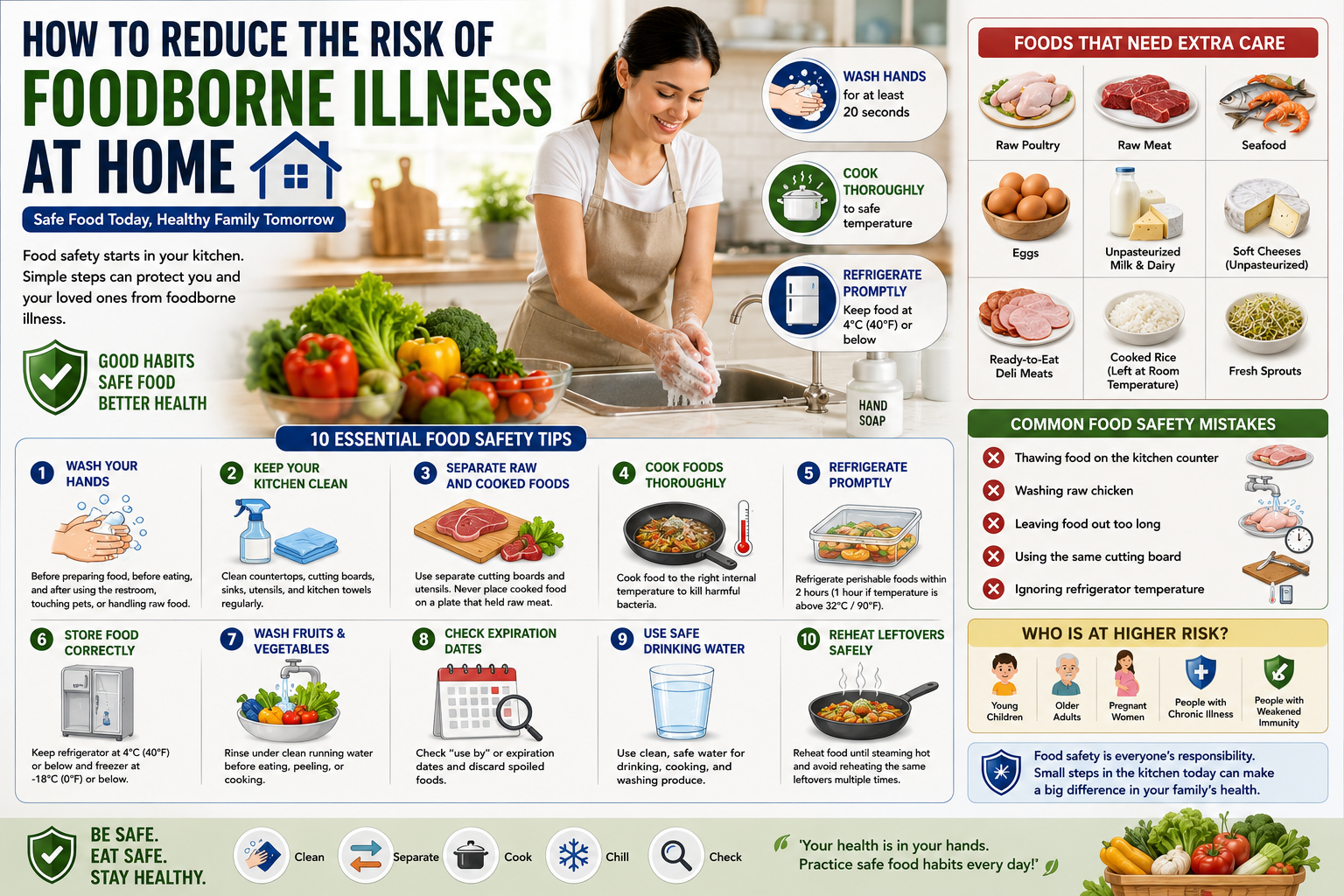
1. Wash Your Hands Properly
Always wash your hands with soap and clean running water for at least 20 seconds, especially:
- Before preparing food
- Before eating
- After handling raw meat, poultry, seafood, or eggs
- After using the restroom
- After touching pets
- After taking out the trash
Hand hygiene is one of the most effective ways to prevent food contamination.
2. Keep Your Kitchen Clean
Regularly clean:
- Countertops
- Cutting boards
- Knives
- Sinks
- Kitchen towels
- Cooking utensils
Use clean cloths or disposable paper towels to wipe surfaces.
3. Separate Raw and Cooked Foods
Avoid cross-contamination by keeping raw foods away from cooked or ready-to-eat foods.
Use separate cutting boards for:
- Raw meat
- Vegetables
- Fruits
- Bread
Never place cooked food back onto a plate that previously held raw meat.
4. Cook Foods Thoroughly
Cooking food to the appropriate internal temperature helps destroy harmful microorganisms.
Pay particular attention to:
- Chicken
- Turkey
- Ground meat
- Seafood
- Eggs
Use a food thermometer when appropriate to ensure foods reach safe cooking temperatures.
5. Refrigerate Perishable Foods Promptly
Do not leave perishable foods at room temperature for extended periods.
Store foods such as:
- Dairy products
- Meat
- Poultry
- Seafood
- Cooked leftovers
Refrigerate leftovers within 2 hours, or within 1 hour if the room temperature is above 32°C (90°F).
6. Store Food Correctly
Keep your refrigerator at 4°C (40°F) or below and your freezer at −18°C (0°F) or below.
Store raw meat on the lowest shelf in sealed containers to prevent juices from dripping onto other foods.
7. Wash Fruits and Vegetables
Rinse fresh fruits and vegetables under clean running water before eating, peeling, or cooking them.
Do not use soap or detergents unless specifically recommended for produce.
8. Check Expiration Dates
Before consuming packaged foods:
- Check expiration or “use by” dates.
- Discard foods that appear spoiled or have an unusual smell, texture, or color.
9. Use Safe Drinking Water
Use clean, safe water for:
- Drinking
- Cooking
- Washing produce
- Preparing infant formula
If the safety of your water supply is uncertain, follow local public health recommendations.
10. Reheat Leftovers Safely
When reheating leftovers:
- Heat food thoroughly until steaming hot.
- Stir food evenly during reheating to ensure consistent temperature.
Avoid reheating the same leftovers multiple times.
Foods That Require Extra Caution
Certain foods are more likely to become contaminated if not handled properly.
Take extra care with:
- Raw poultry
- Raw meat
- Seafood
- Eggs
- Unpasteurized milk and dairy products
- Soft cheeses made from unpasteurized milk
- Ready-to-eat deli meats
- Cooked rice left at room temperature
- Fresh sprouts
These foods should always be stored, prepared, and cooked according to food safety recommendations.
Common Food Safety Mistakes to Avoid
Thawing Food on the Kitchen Counter
Frozen food should never be thawed at room temperature.
Instead, thaw food:
- In the refrigerator
- In cold water (changing the water regularly)
- In the microwave if cooking immediately afterward
Washing Raw Chicken
Washing raw chicken is not recommended, as it can spread bacteria to kitchen surfaces, utensils, and nearby foods through splashing water.
Cooking chicken thoroughly is the safest way to eliminate harmful bacteria.
Leaving Food Out Too Long
Cooked foods should not remain at room temperature for extended periods.
Prompt refrigeration helps reduce bacterial growth.
Using the Same Cutting Board
Using one cutting board for both raw meat and fresh produce increases the risk of cross-contamination.
Keep separate cutting boards whenever possible.
Ignoring Refrigerator Temperature
Your refrigerator should remain at 4°C (40°F) or below to help keep perishable foods safe.
Check appliance temperatures regularly if possible.
Frequently Asked Questions
What causes foodborne illness?
Foodborne illness is caused by consuming food contaminated with harmful bacteria, viruses, parasites, toxins, or chemicals.
How can I prevent food poisoning at home?
The most effective prevention strategies include:
- Washing hands regularly
- Keeping the kitchen clean
- Separating raw and cooked foods
- Cooking foods thoroughly
- Refrigerating foods promptly
- Using safe drinking water
Is reheating food enough to make it safe?
Proper reheating can reduce the risk from some microorganisms, but it may not eliminate toxins produced by certain bacteria. Safe storage is just as important as safe reheating.
How long can leftovers stay in the refrigerator?
Many leftovers are best consumed within 3–4 days when stored properly in the refrigerator. Follow local food safety guidance and discard food if it appears spoiled.
Who is most at risk from foodborne illness?
Higher-risk groups include:
- Young children
- Older adults
- Pregnant individuals
- People with weakened immune systems
- Individuals with certain chronic medical conditions
These groups should take extra precautions with food safety.
Key Takeaways
- Wash your hands before handling food.
- Keep kitchen surfaces and utensils clean.
- Separate raw and cooked foods to avoid cross-contamination.
- Cook foods thoroughly using safe cooking practices.
- Refrigerate perishable foods promptly.
- Wash fruits and vegetables before eating.
- Check food expiration dates and store food safely.
- Good food safety habits help protect your entire family.
Conclusion
Foodborne illnesses are largely preventable with proper food handling, preparation, cooking, and storage practices. By following simple daily habits—such as maintaining kitchen hygiene, preventing cross-contamination, refrigerating food promptly, and cooking foods thoroughly—you can significantly reduce the risk of food poisoning at home. Consistent food safety practices not only protect your own health but also help keep your family safe from preventable infections.